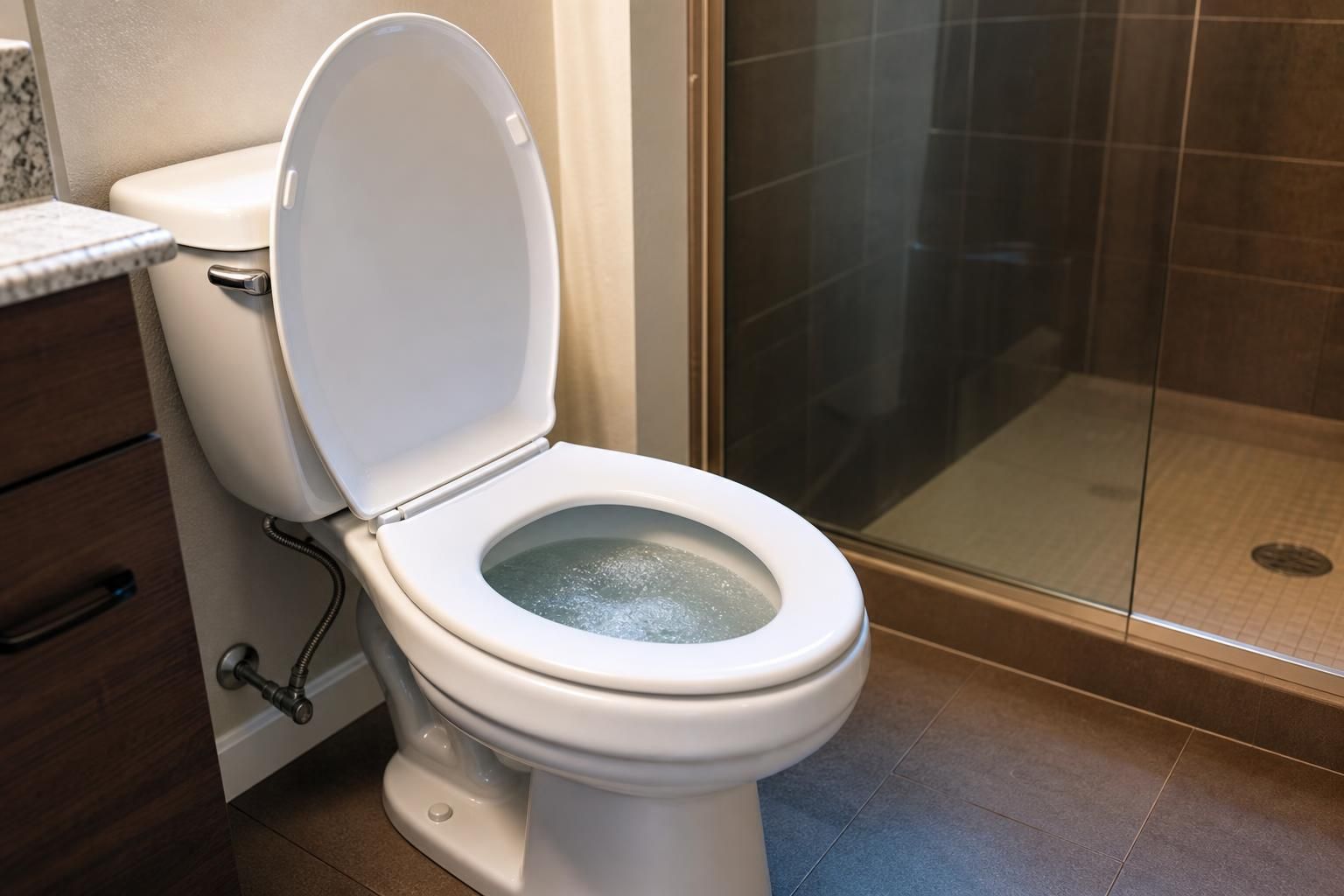
If the shower drains and your toilet bubbles or gurgles, trapped air is usually being forced through the toilet because water can’t move or vent normally. The problem may be a simple vent issue, but toilet bubbling can also be a main sewer clog symptom. For related context, see our guide to sewer camera inspection vs hydro jetting.
- Stop running extra water.
- Check whether other sinks, tubs, or toilets are slow.
- Call a plumber if wastewater backs up or several fixtures act up.
Why a Toilet Bubbles When Another Fixture Drains
If the toilet bubbles when the shower drains, the shower water is likely pushing air through the toilet instead of letting it move smoothly through the pipe. For related context, see our guide to hydro jetting for grease clogs.
Think of your drain system like a straw. Water can only flow well if air can move behind it. If the pipe is partly blocked, or if air can’t enter through the plumbing vent, pressure builds. That pressure looks for the easiest escape path. Often, that’s the toilet trap, which is the curved, water-filled bend inside the toilet that blocks sewer gas. For related context, see our guide to what causes sewer odor in the.
A simple example: the shower drains, water rushes into a shared drain line, and the toilet gurgles once or twice. That can mean air is being displaced through the toilet as water passes. It doesn’t automatically mean the toilet itself is broken. For related context, see our guide to main sewer line clog symptoms and.
But if it keeps happening, don’t keep testing it with more water. Repeating symptoms may need professional drain cleaning: https://waterwaysplumbingllp. com/drain-cleaning-and-repair/ or a sewer camera inspection: https://waterwaysplumbingllp. com/sewer-camera-inspection/ to find the restriction.
Simple Vent Issue or Main Line Restriction?
A vent pipe is the plumbing “air intake” that helps water drain smoothly. A main sewer line is the large pipe that carries wastewater away from the house. Either one can make a toilet gurgle, but the pattern of symptoms gives you clues.
| Symptom pattern | More likely issue | Urgency |
|---|---|---|
| Toilet gurgles only when the shower drains | Vent problem or branch drain restriction | Monitor once, then call if it repeats |
| Shower, toilet, and sink all drain slowly | Main line restriction | Stop heavy water use |
| Water appears in tub after flushing or laundry | Possible sewer backup path | Call a plumber now |
| Clog clears, then bubbling returns | Partial blockage still present | Schedule diagnosis |
So what does this mean in practice? If one bathroom fixture acts up, the problem may be close to that bathroom. If several fixtures struggle at the same time, think bigger: the blockage may be downstream of them all.
Don’t guess with chemicals. A plumber may recommend drain cleaning: https://waterwaysplumbingllp. com/drain-cleaning-and-repair/ first, then sewer camera inspection: https://waterwaysplumbingllp. com/sewer-camera-inspection/ if the bubbling keeps coming back.
Warning Signs of a Sewer Line Backup
A sewer line backup means wastewater can’t leave the house normally, so it looks for the easiest path back in. Often, that path is the lowest drain, like a tub or shower.
Watch for these signs:
- The toilet bubbles when shower drains, especially if it also gurgles when the washer, tub, or sink runs.
- Water appears in the tub or shower after you flush the toilet or run laundry.
- You smell sewage near drains, toilets, or floor drains.
- A clog clears for a day or two, then the bubbling comes back.
If it’s one mild gurgle and everything else drains normally, you can monitor it briefly. But if multiple fixtures are affected, stop running water as much as possible and call a plumber. Don’t flush repeatedly or start laundry “to test it.” More water can make a backup messier.
What Homeowners Should Avoid
Treat toilet bubbles when the shower drains as a drainage symptom, not a toilet parts problem. The flapper, fill valve, or handle usually won’t cause bubbling when another fixture is draining.
- Don’t keep flushing to “push it through.” That adds more water to a line that may already be struggling.
- Don’t run the shower, dishwasher, or washing machine to test it. Multiple fixtures can overload a restricted drain faster.
- Don’t pour harsh chemical drain cleaners into the toilet or shower. They can sit in backed-up water and make the next repair messier.
- Don’t ignore a pattern. If the clog clears, then the toilet bubbling comes back, the blockage may only be partly opened.
- Don’t remove cleanout caps if sewage is already backing up. Pressure can release wastewater quickly.
If it’s one light gurgle and drains are normal, watch it briefly. But if several fixtures slow down or water backs up into a tub, stop using water and call for drain cleaning and repair: https://waterwaysplumbingllp. com/drain-cleaning-and-repair/. If the cause isn’t obvious, ask about a sewer camera inspection: https://waterwaysplumbingllp. com/sewer-camera-inspection/.
How a Plumber Diagnoses the Cause
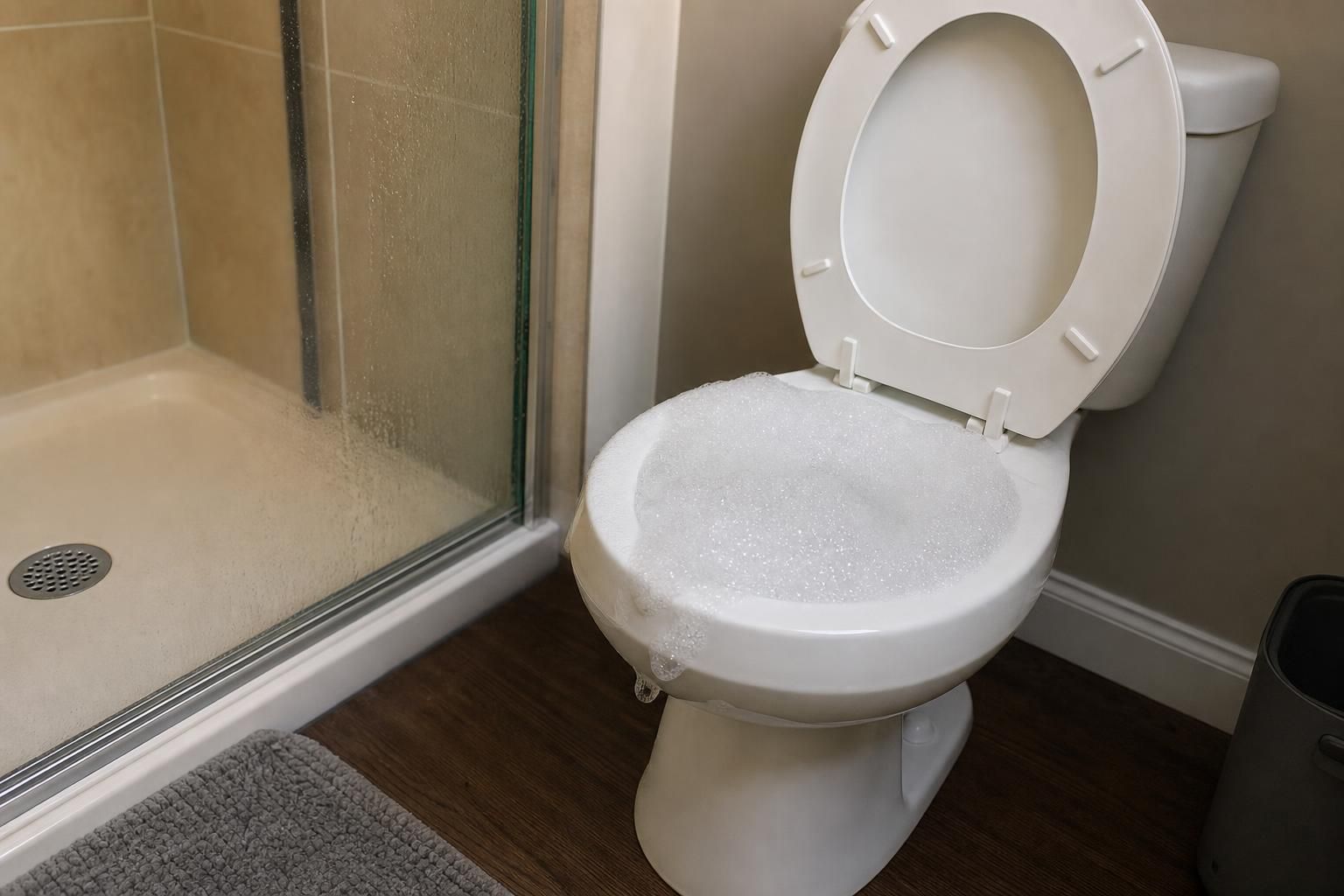
A plumber isn’t guessing between “bad toilet” and “sewer problem.” They’re trying to find where air or water is getting blocked.
- Ask when it happens. They’ll note whether the toilet bubbles only when the shower drains, when the washer runs, or after every flush. That timing points to the shared pipe involved.
- Test fixtures one at a time. They may run the sink, shower, toilet, and laundry separately. If one bathroom acts up, the issue may be in a branch drain, which is a smaller pipe serving that area. If several areas react, the main sewer line becomes more likely.
- Check the cleanout. A cleanout is an access point to the drain line. Standing wastewater there can be a strong clue that flow is restricted downstream.
- Clear or inspect the line. If the clog seems reachable, they may use professional drain cleaning and repair: https://waterwaysplumbingllp. com/drain-cleaning-and-repair/. If the same bubbling returns, a sewer camera inspection can show roots, pipe bellies, breaks, or heavy buildup: https://waterwaysplumbingllp. com/sewer-camera-inspection/.
The goal is simple: prove the cause before choosing the fix.
Drain Cleaning, Camera Inspection, or Hydro Jetting?
Choose the fix based on what the test shows, not just the noise. If the toilet bubbles when shower drains and it happens once, you may only need monitoring. If it repeats or more drains slow down, act sooner.
- Use drain cleaning when a clog is likely in the shared drain line. A plumber may run a professional cable or other tool to break up buildup. Start here when the blockage seems reachable: https://waterwaysplumbingllp. com/drain-cleaning-and-repair/.
- Use a sewer camera inspection when the clog comes back, several fixtures act up, or nobody knows what’s inside the pipe. The camera shows roots, cracks, sagging pipe, grease, or heavy sludge without guessing: https://waterwaysplumbingllp. com/sewer-camera-inspection/.
- Use hydro jetting only when the pipe condition supports it. Hydro jetting means cleaning the line with high-pressure water. It can remove stubborn buildup, but it shouldn’t be the first move if the pipe may be damaged.
If wastewater backs up into a tub or shower, stop running water and call a plumber. That’s no longer a “wait and see” symptom.
FAQ
Is it Safe to Keep Using the Shower if the Toilet Bubbles?
If the bubbling happens once and every drain still works normally, you can watch it briefly. But stop running water if several fixtures slow down, sewage smells appear, or water backs up into a tub or shower. That points to a drainage problem that can get messy fast.
Does a Bubbling Toilet Mean the Toilet is Broken?
Usually, no. A toilet gurgles when the shower drains because air is being pushed through the toilet trap, which is the curved water-filled part that blocks sewer gas. The cause is often downstream of the toilet, such as a shared drain clog, vent issue, or main line restriction.
How Does a Plumber Confirm the Cause?
A plumber runs water at different fixtures, checks whether one drain or several drains are affected, and may access the cleanout, which is an opening used to reach the sewer line. If the clog keeps returning, a sewer camera inspection can show roots, sludge, cracks, or sagging pipe.
Conclusion
A toilet that bubbles when the shower drains is an airflow and drainage clue, not something to ignore or fix with toilet parts. One mild symptom may be worth monitoring, but multiple slow drains, sewer odors, recurring clogs, or water backing up into the shower mean you should stop using water and get help.
The practical next step is to find out whether you’re dealing with a vent issue, a branch drain clog, or a main sewer line restriction. For professional help, start with drain cleaning and repair at https://waterwaysplumbingllp. com/drain-cleaning-and-repair/, and ask about a sewer camera inspection at https://waterwaysplumbingllp. com/sewer-camera-inspection/ if the problem keeps coming back.