If your kitchen sink keeps clogging after you’ve already plunged it, flushed it, or cleaned the visible gunk, you’re probably not dealing with a one-time blockage. Recurring clogs usually mean something is building up inside the drain pipe. That “something” is often grease, food waste, soap residue, or a mix of all three. Sometimes, though, the problem sits farther down the drain line.
This guide will help you narrow it down without guessing. You’ll learn what different symptoms mean, what you can safely try first, and when repeated kitchen drain clogs point to a bigger plumbing issue.
Best for: Homeowners with a kitchen sink that drains slowly, clogs repeatedly, or improves briefly before clogging again. Not ideal when: Water is backing up in several fixtures at once or you suspect a sewage backup. Good first step if: The sink drains slowly but no other drains in the home are acting strange. Call a pro if: The clog keeps returning, multiple drains are slow, or you hear gurgling from nearby fixtures.
Quick Summary
- Recurring kitchen sink clogs usually come from buildup along the pipe walls, not just one stuck object.
- Grease can cool, harden, and trap food particles even if it looked liquid when poured down the drain.
- A disposal can run normally while the drain line beyond it is still clogged.
- Multiple slow drains or gurgling can point to a main drain problem.
- Avoid harsh chemical drain cleaners because they can create safety risks and may not solve buildup.
Why Kitchen Sinks Clog Again and Again
A kitchen sink clogs again and again because the inside of the drain pipe is narrowing over time. Think of it like a road losing lanes. Water can still move at first, but every bit of grease, soap film, and food residue leaves less room for flow.
A kitchen sink slow drain that improves after plunging but clogs again within days is a classic sign of pipe-wall buildup. Plunging may open a small path through the blockage. But it doesn’t always clean the pipe itself. So the water moves better for a short time, then slows again.
- Grease from pans, sauces, oils, and dressings
- Food particles from plates and cookware
- Coffee grounds, rice, pasta, peels, and fibrous scraps
- Soap scum, which is sticky residue from soap and minerals in water
- Disposal habits that send too much waste into the drain
- Poor pipe slope, which means the pipe doesn’t angle well enough for water to carry debris away
If you want a deeper look at repeated drain problems beyond the kitchen, this guide to drains keep clogging explains why “cleared” drains sometimes act up again.
Grease and Food Waste Buildup
A grease clog in kitchen sink plumbing forms when oils and fats cool inside the pipe and stick to the walls. Hot water can fool you here. It may carry grease out of sight, but that doesn’t mean the grease stays liquid all the way through the drain line.
Picture bacon grease in a pan. It’s runny when warm. Later, it turns thick and sticky. The same thing can happen inside your drain. Once grease coats the pipe, tiny food bits start sticking to it. Over time, that sticky layer gets thicker.
Food waste makes the problem worse. Coffee grounds don’t dissolve. Rice and pasta swell. Potato peels and onion skins can bunch up. Celery strings and other fibrous scraps can wrap together like wet thread.
A food waste drain clog often starts with “just a little” going down every day. That small amount adds up. Scrape plates into the trash before rinsing. Let grease cool in a container, then throw it away. Wipe oily pans with a paper towel before washing them. If grease has already become a repeating issue, professional methods like hydro jetting for grease clogs may be needed to clean the pipe walls more completely.
Garbage Disposal Problems vs Drain Line Problems
A disposal problem usually affects grinding, while a drain line problem affects how water leaves the sink. That difference matters because a disposal can sound fine and still sit above a clogged drain pipe.
The garbage disposal is the motorized unit under many kitchen sinks. It grinds soft food scraps into smaller pieces. But it isn’t a trash can. It also doesn’t make grease, coffee grounds, rice, pasta, or peels disappear. Those materials still have to travel through the drain line.
Use this symptom comparison to narrow things down:
| Disposal hums or won’t spin | Disposal issue | Jammed or stuck grinding plate | Turn it off and avoid forcing it |
|---|---|---|---|
| Disposal runs but water drains slowly | Drain line issue | Clog may be past the disposal | Stop adding food waste |
| Sink improves after plunging, then clogs again | Grease or buildup | Pipe walls may be coated | Reduce grease and waste immediately |
| Other drains are slow too | Main drain concern | Problem may be farther downstream | Check for whole-home symptoms |
If the disposal runs but the kitchen drain keeps clogging, don’t assume the disposal is the main problem. The blockage may be in the trap, branch drain, or deeper kitchen drain line. The trap is the curved pipe under the sink that holds water to block sewer smells. The branch drain is the pipe that carries water from your kitchen toward the larger home drain system.
The common mistake is feeding the disposal more water and hoping it clears itself. That can add more volume behind a partial clog. Instead, stop using the disposal until you know water is draining normally.
When a Kitchen Clog Points to the Main Line
A kitchen clog may point to the main line when other drains in your home are also slow, noisy, or backing up. The main line is the large drain pipe that carries wastewater away from the house.
A single slow kitchen sink often means a kitchen-only clog. But if the kitchen sink slows down while a bathroom sink, tub, shower, or floor drain also acts strange, the issue may be farther down the system. Gurgling is another clue. Gurgling means air is struggling to move through the drain because water is not flowing freely.
Watch for these warning signs:
- The kitchen sink gurgles when another fixture drains
- Water backs up repeatedly after basic clearing
- You smell sewer-like odors near drains
- A lower-level drain acts up when the kitchen sink is used
Don’t keep testing the system by running more water if several fixtures are affected. That can make a backup worse. For a clearer breakdown of whole-home warning signs, review main sewer line clog symptoms before deciding whether the issue is still isolated to the kitchen.
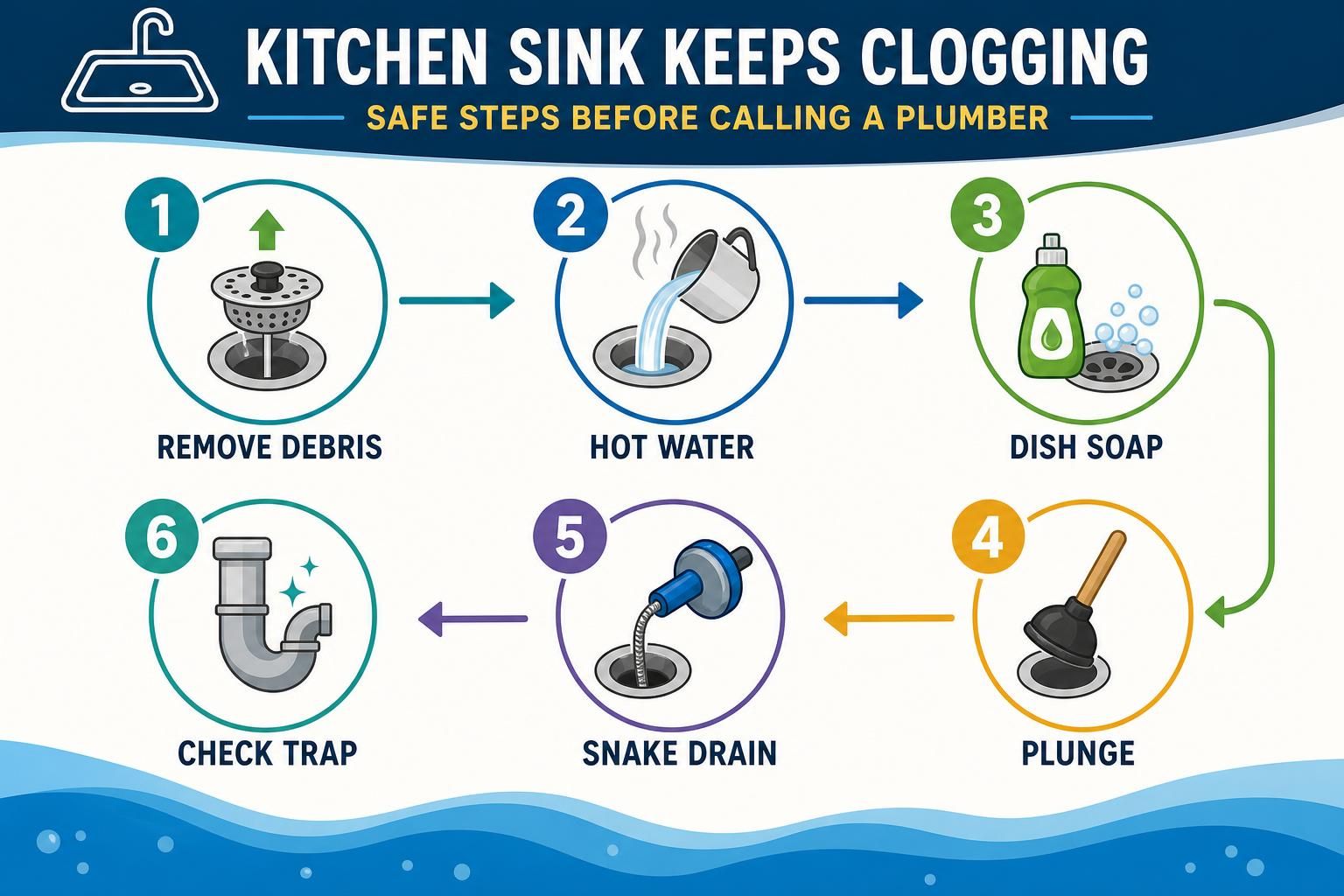
Safe Steps Before Calling a Plumber
The safest first steps are to stop adding waste, avoid chemical drain cleaners, and try simple checks that don’t put you or your plumbing at risk. You’re not trying to rebuild the drain. You’re trying to confirm whether this is a minor kitchen clog or a recurring buildup problem.
Gather a few basic items first: rubber gloves, a bucket, towels, a sink plunger, and a flashlight. A sink plunger is a small rubber cup used to push and pull water pressure through the drain. Don’t use one that has been used on a toilet.
- Stop using the disposal.
Turn it off and don’t add more scraps. If water is standing in the sink, adding ground-up food can make the clog denser.
- Remove visible debris.
Check the drain opening. Pull out loose food scraps with gloves. Don’t push them farther down.
- Try gentle hot water flushing.
Run hot tap water for a short flush only if the sink is still draining slowly. Don’t pour boiling water into the drain, especially if you’re unsure about the pipe material.
- Plunge the sink.
Cover the drain opening with the plunger cup. Use steady up-and-down motions. If you have a double sink, block the other drain with a stopper or wet rag.
- Check the trap only if you’re comfortable.
Place a bucket under the curved pipe. Loosen it carefully if it has hand-tight fittings. Stop if the pipe looks corroded, stuck, or fragile.
Avoid harsh chemical drain cleaners. They can sit in backed-up water, splash during later work, and may not remove grease coating the pipe walls anyway.
Professional Drain Cleaning Options
Professional drain cleaning is worth considering when the same kitchen sink clog keeps coming back after basic steps. Repeated clogs usually need more than a small opening through the blockage. They may need the line cleaned, inspected, or cleared farther downstream.
A plumber may start with a drain inspection. This can include checking the trap, testing flow, and looking for signs that the clog is local or connected to a larger drain issue. From there, a drain snake may be used. A drain snake is a flexible cable that reaches into the pipe to break through or pull out a clog.
For tougher buildup, hydro jetting may be recommended. Hydro jetting uses high-pressure water to wash buildup from the pipe walls. This can be especially useful when grease and food residue keep narrowing the line. You can learn more about service options through drain cleaning and repair, including when a basic cleaning may be enough.
If the issue looks like heavy pipe-wall buildup, Waterways also provides hydro jetting services at https://waterwaysplumbingllp. com/hydro-jetting-services/. A plumber can help decide whether that approach fits your drain condition, because some older or damaged pipes may need inspection before aggressive cleaning.
FAQ
Why Does My Kitchen Sink Keep Clogging After I Plunge It?
Your kitchen sink may keep clogging because plunging only opens a temporary path through the buildup. Grease, soap scum, and food particles can remain stuck to the pipe walls. Water drains better for a while, then debris collects again and slows the sink.
Can Grease Clog a Kitchen Sink Even if I Use Hot Water?
Yes. Hot water may move grease farther down the drain, but grease can cool and thicken inside the pipe. Once it sticks to the pipe walls, it can trap food scraps and create a recurring grease clog in kitchen sink plumbing.
What Foods Should Not Go Down the Kitchen Drain?
Avoid coffee grounds, rice, pasta, potato peels, onion skins, celery, eggshells, and large amounts of plate scrapings. These materials can clump, swell, or stick to greasy pipe walls. Even with a disposal, they can create a food waste drain clog.
How Do I Know if It’s the Disposal or the Drain Line?
If the disposal hums, jams, or won’t spin, the disposal may be the issue. If it runs but water still drains slowly, the drain line may be clogged beyond the unit. Stop using the disposal until the sink drains normally.
When Should I Call a Plumber for a Recurring Kitchen Drain Clog?
Call a plumber if the clog returns after basic plunging, the sink drains slowly again within days, or other fixtures are slow too. Also call if you hear gurgling, smell sewer odors, or suspect the problem is beyond the kitchen drain.
Conclusion
When your kitchen sink keeps clogging, don’t treat it like a random nuisance. Look for patterns. Grease, food waste, disposal habits, and deeper drain buildup each leave different clues. If one safe clearing attempt helps only briefly, the pipe likely needs more attention than another quick plunge.
Start by stopping grease and scraps from entering the drain. Try the simple checks above. If the clog keeps returning or other drains act up, schedule professional drain cleaning so the real cause can be found and cleared safely.