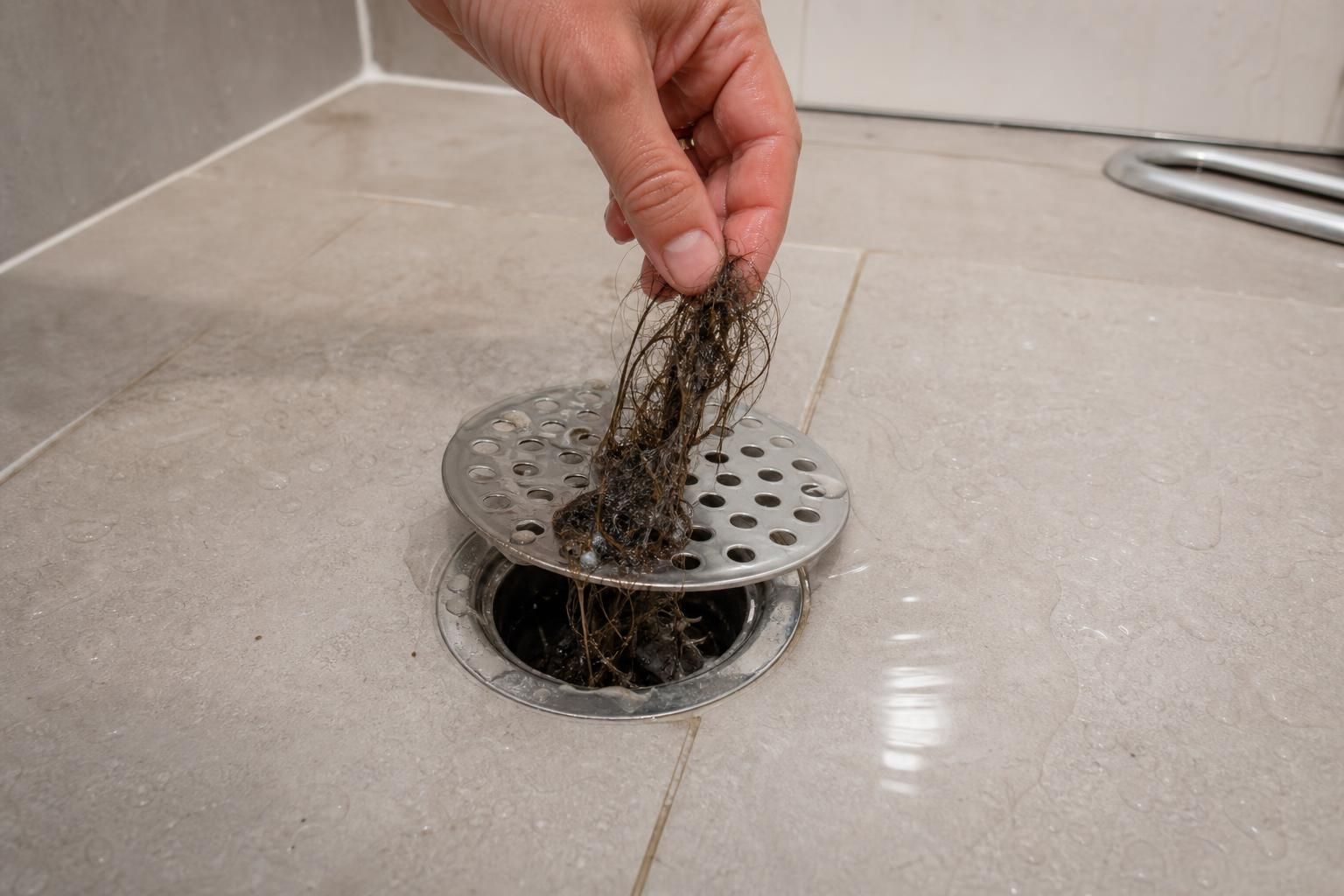
If your shower drain keeps clogging even after you clean it, the problem usually isn't that you “didn't clean enough.” It's often that the blockage is deeper, stickier, or connected to a larger drain issue. A slow shower drain can start with hair at the opening. But a recurring shower drain clog may also involve soap scum, mineral buildup, pipe shape, or a shared drain line.
In this guide, you'll learn how to tell the difference between a surface clog and a deeper problem. You'll also get safe do-it-yourself steps, mistakes to avoid, and clear signs that it's time to schedule professional drain cleaning.
- Use this for homeowners dealing with a slow shower drain that improves briefly, then backs up again after normal use.
- Pause if sewage, dirty water, or multiple fixture backups are happening, because that can signal a bigger drain issue.
- First, you can safely remove the drain cover and check for visible hair or soap buildup near the opening.
- Get expert help if the clog returns after cleaning or another drain starts gurgling, slowing, or backing up at the same time.
Why Shower Drains Keep Clogging
A shower drain keeps clogging when water can no longer move freely through the pipe because debris keeps collecting in the same area. Think of the drain like a narrow hallway. A little lint or hair on the floor may not block the hallway at first. But if more keeps sticking there, traffic slows down.
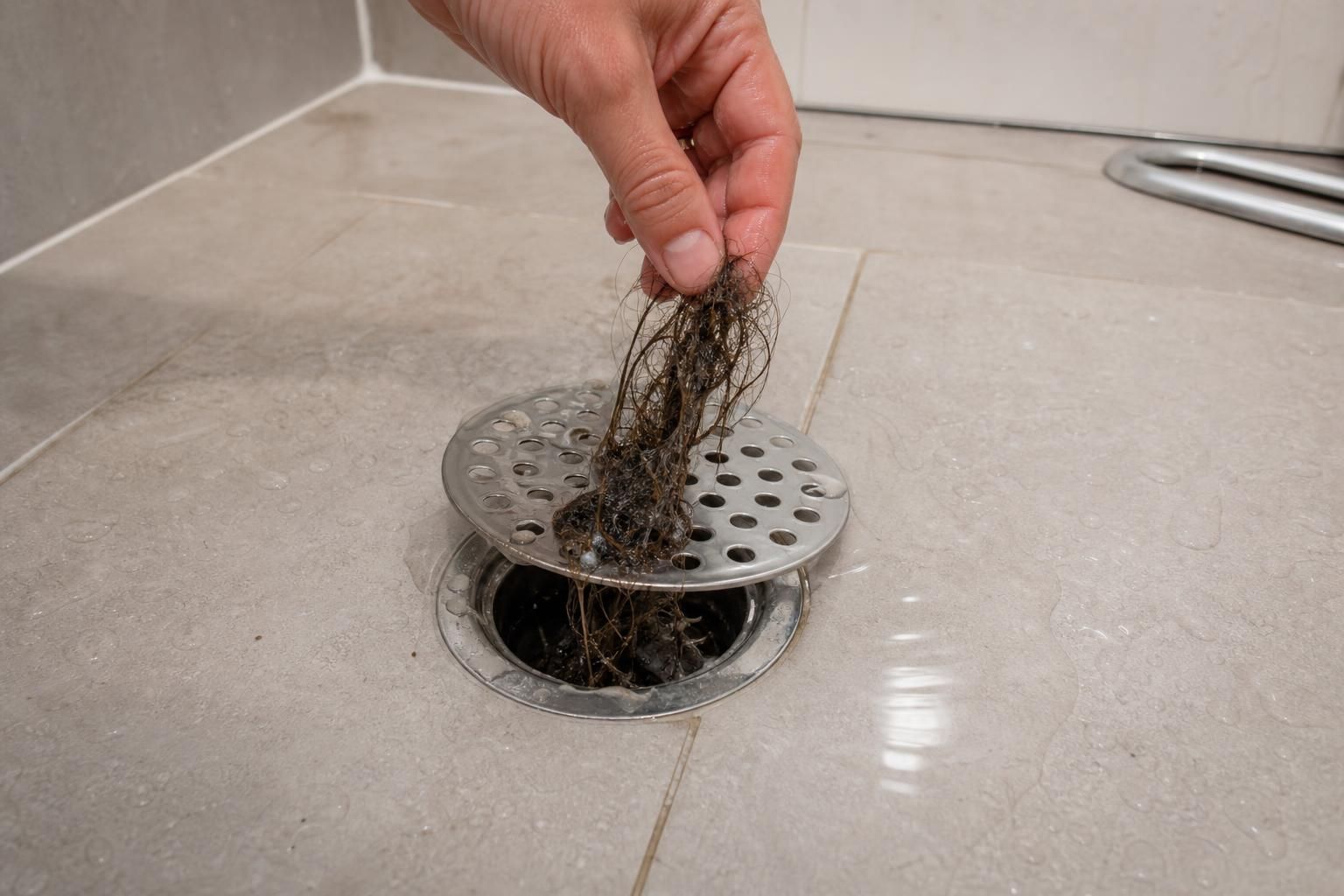
Most shower clogs start small. Hair slips through the drain cover. Soap residue sticks to the pipe wall. Conditioner, shaving cream, skin oils, and small bits of debris cling to that sticky layer. Over time, the opening inside the pipe gets narrower.
| Symptom | Likely location | What it suggests | First action |
|---|---|---|---|
| Water drains slowly but clears | Near the drain opening | Hair or soap buildup | Remove cover and inspect |
| Water backs up after cleaning | Farther down the pipe | Deeper buildup remains | Try safe flushing steps |
| Several bathroom drains are slow | Shared drain line | Wider drainage restriction | Watch for warning signs |
| Toilet gurgles when shower drains | Main or shared line | Air is trapped in piping | Stop DIY clearing |
If several drains act up, multiple drains backing up can point to a problem beyond the shower itself.
Hair and Soap Scum Buildup
Hair and soap scum buildup is the most common reason a shower drain slows down, especially when the clog keeps coming back. Hair acts like a net, while soap scum helps it hold more debris deeper in the pipe.
Watch for these signs of a hair-clogged shower drain.
- Water pools around your feet during a shower.
- The drain improves after you remove hair, then slows again quickly.
- You see gray, slimy buildup on the drain cover or stopper.
- The clog gets worse after long showers or back-to-back showers.
If the drain works briefly after hair removal, the visible clump may be only the top layer. For recurring clogs elsewhere, why drains keep clogging explains how leftover buildup keeps catching debris.
When the Problem is Past the Drain Opening
If you remove visible hair but the shower still drains slowly, the clog is likely farther inside the pipe. Buildup can stick to pipe walls, and the bend under the drain often catches hair and soap residue.
- Remove the drain cover if it's easy to access.
- Pull out visible hair with a plastic drain tool.
- Run warm water for a short time.
- Watch how quickly the water leaves.
- Stop if the water rises instead of draining.
If standing water remains, don't force tools deeper. You could push the clog farther down or damage older piping. A recurring clog after snaking may mean the blockage was only partly cleared. See sewer line keeps clogging after snaking.
Warning Signs of a Shared Drain Line Issue
A shared drain line issue is more likely when your shower clog appears with other drainage problems. The shower may not be the source. It may simply be where the blockage shows up first.
- The bathroom sink drains slowly at the same time as the shower.
- The toilet gurgles when the shower drains.
- Dirty water backs up into the tub or shower.
- A floor drain or another fixture reacts when you run water.
- You smell sewer odor near the drain.
Don't ignore gurgling. If your toilet bubbles when the shower runs, toilet bubbles when shower drains explains why. If more than one fixture backs up, reduce water use until the cause is identified.
Safe DIY Steps and What to Avoid
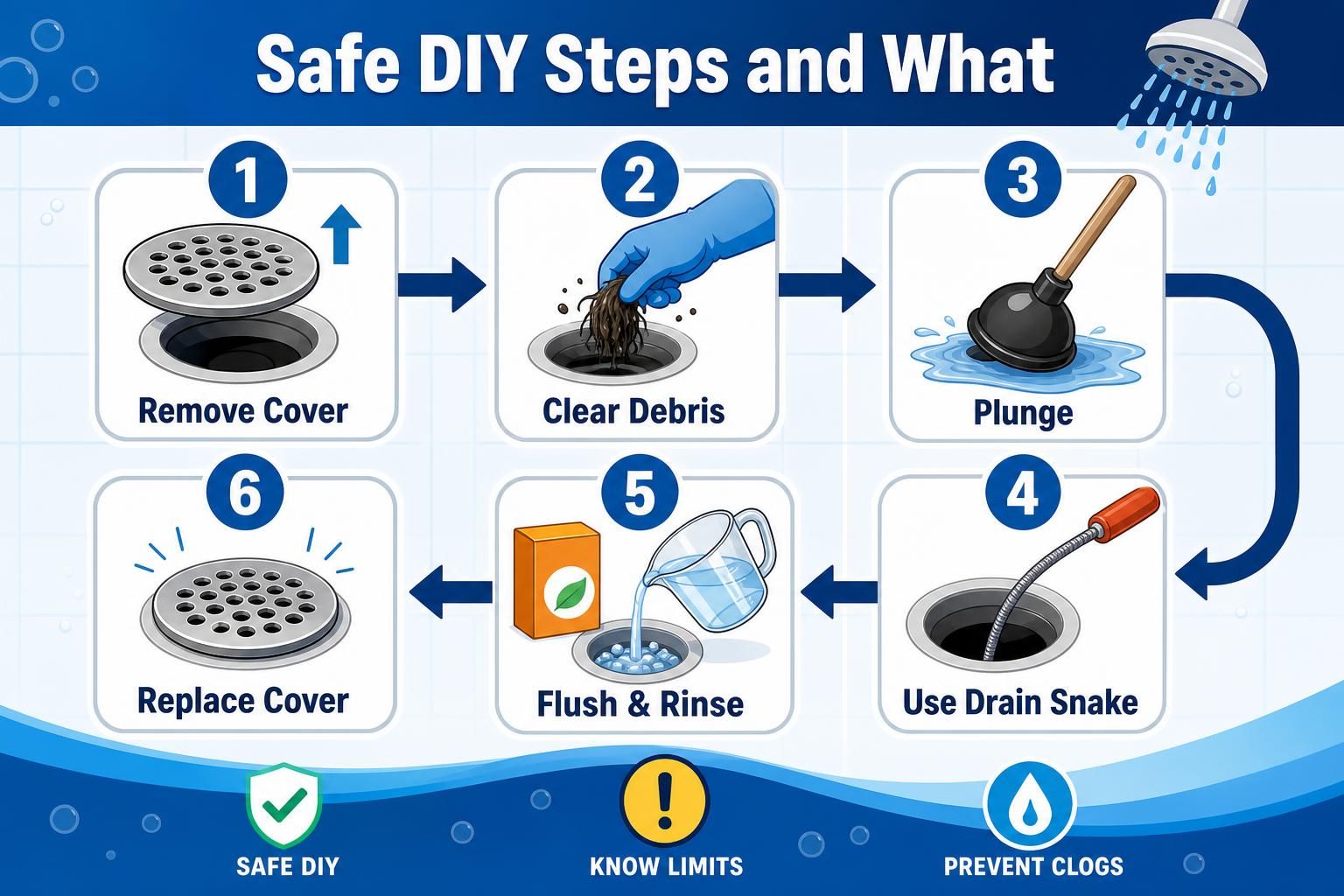
The safest DIY approach is to remove visible debris, test the drain gently, and stop if the clog returns or affects other fixtures.
Gather rubber gloves, a screwdriver if needed, a plastic drain tool, a small trash bag, and a flashlight.
- Turn off the shower and let standing water drain as much as possible.
- Remove the drain cover carefully.
- Pull out visible hair with gloved fingers or a plastic drain tool.
- Wipe soap scum from the cover and the top of the drain.
- Run warm water for a short test.
- Repeat once if more hair is visible.
- Replace the drain cover when water flows normally.
Avoid harsh chemical cleaners and deep metal tools. If the clog returns, it likely needs better equipment.
When to Schedule Professional Drain Cleaning
You should schedule professional drain cleaning when the same shower drain keeps clogging after cleaning, especially if the improvement only lasts a few showers. At that point, you're not dealing with a one-time clump. You're dealing with a pattern.
A professional can inspect the symptoms, clear the line with the right tool, and decide whether the buildup is local, deep, or connected to a shared drain. Basic cleaning may remove a soft clog. More stubborn buildup may need a different method, such as hydro jetting. Hydro jetting means cleaning pipes with a controlled stream of high-pressure water.
You don't need to guess forever; schedule help if the drain keeps clogging, backs up after hair removal, gurgles, smells like sewer odor, or slows along with another drain.
- The drain clogs again within days.
- Hair comes out but water still backs up.
- You hear gurgling from nearby fixtures.
- Another drain slows down at the same time.
- You smell sewer odor from the shower drain.
- Do-it-yourself steps don't create lasting improvement.
FAQ
A recurring shower clog usually means something is still inside the drain line after the first cleaning. That “something” may be hair, soap scum, mineral buildup, or a deeper restriction.
Use the answers below to match your symptom with the most likely next step. Keep it simple. If the drain acts worse or multiple fixtures react, stop troubleshooting and schedule service.
Why Does My Shower Drain Clog Again After I Remove Hair?
Hair at the opening may be only part of the clog. Soap scum inside the pipe catches new hair fast, causing the drain to slow again.
Is a Slow Shower Drain Always Caused by Hair?
No. Hair is common, but soap scum, debris, pipe buildup, or a shared drain restriction can also slow shower drainage and cause recurring problems.
Can I Use Chemical Drain Cleaner for a Recurring Shower Clog?
It's best to avoid chemical drain cleaner. It can sit in standing water, create splash hazards, and often fails to remove the buildup causing repeat clogs.
What Does it Mean if My Shower Drain Gurgles?
Gurgling usually means air is struggling through a partially blocked drain. If other fixtures also slow down, the problem may involve a shared drain line.
When Should I Stop Trying to Fix the Clog Myself?
Stop if the clog returns quickly, another fixture backs up, or you smell sewer odor. Also stop before forcing tools deep into the drain. Those signs suggest a deeper blockage or shared line issue that may need professional equipment.