If your drain snake didn’t work, don’t keep forcing it. A snake can poke a small path through a clog without cleaning the pipe walls, so the drain may run briefly and then slow again.
- Stop using the fixture if water is backing up.
- Check whether only one drain is affected or several drains are slow.
- Match the symptom to the likely next step: cleaning, inspection, or repair.
A kitchen sink that clogs again within days may have grease buildup. A bathroom drain that gurgles or backs up may point to a deeper line issue. If the problem keeps returning, hydro jetting after snaking may help clean the pipe more fully: https://waterwaysplumbingllp. com/hydro-jetting-services/. But if roots, pipe damage, or an unknown blockage are possible, start with a sewer camera inspection: https://waterwaysplumbingllp. com/sewer-camera-inspection/.
Why a Drain Snake May Not Fully Clear the Problem
A drain snake can poke through a clog without removing the whole blockage. Think of it like pushing a straw through packed mud. Water may pass for a little while, but the sides of the pipe are still coated.
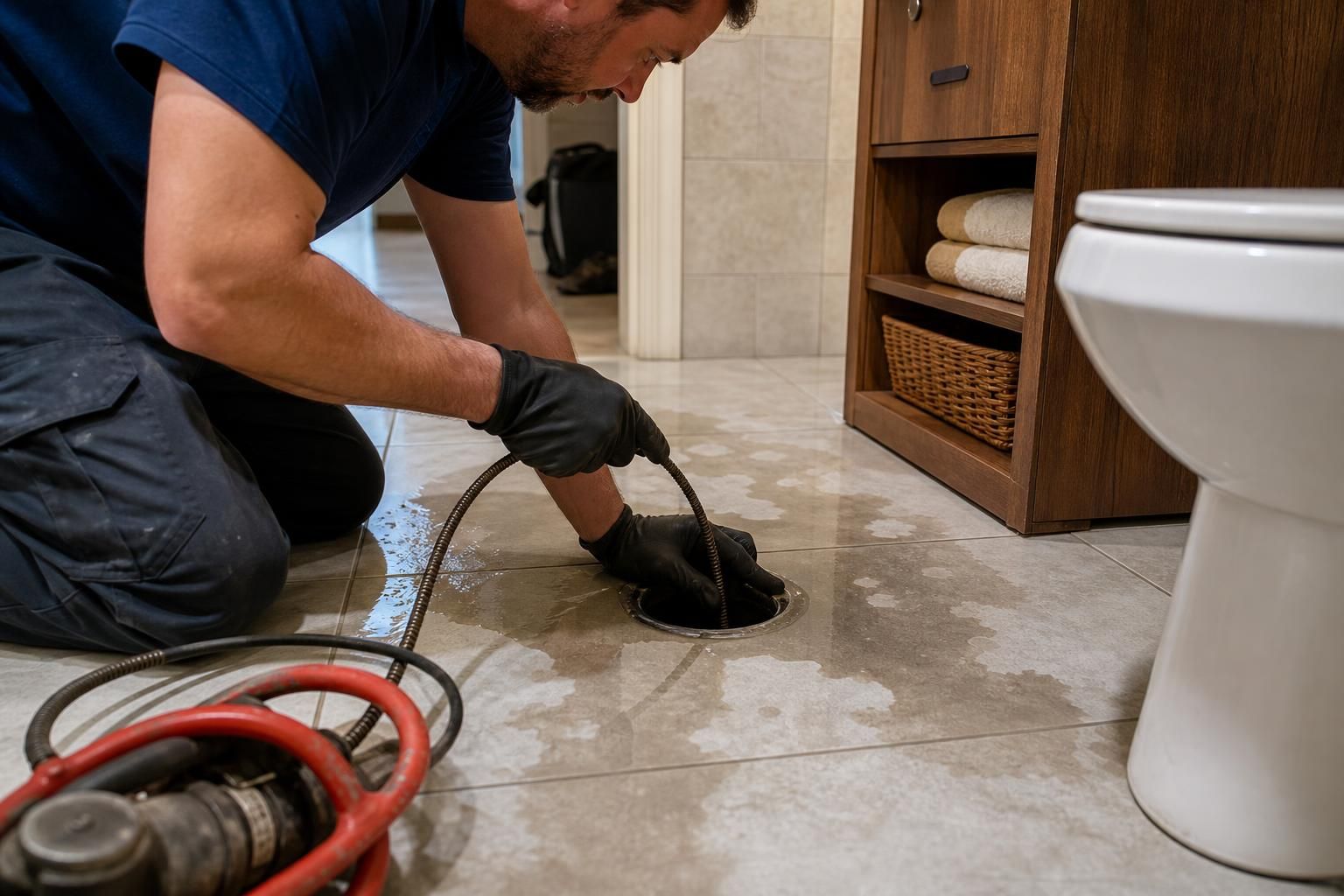
That’s why a kitchen sink might drain briefly after snaking, then clog again a few days later. The snake may have opened a small channel through grease, soap film, or food sludge. Once you run more water, that soft buildup can slump back into place.
This can happen after a do-it-yourself attempt or even after basic professional snaking. A snake is good at breaking through some blockages, but it doesn’t always clean the pipe walls. It may also stop before reaching the real clog, especially if the blockage is farther down the drain line.
If the drain snake didn't work, don’t assume you just need “more snaking.” The better next step depends on what’s left inside the pipe. Heavy buildup may call for hydro jetting: https://waterwaysplumbingllp. com/hydro-jetting-services/. Unknown blockages, roots, or possible pipe damage may need a sewer camera inspection first: https://waterwaysplumbingllp. com/sewer-camera-inspection/.
Signs the Clog is Deeper in the Line
A deeper clog usually shows up in more than one place, or it acts like it moved instead of disappeared. Think of your drain system like a tree: each sink or tub has a small branch line, and those branches feed into a larger main drain line. If the problem is in the trunk, clearing one branch won’t fix it.
| Symptom | What it may mean | Safer next step |
|---|---|---|
| One drain slows again within days | Clog may be past the trap or branch line | Stop snaking and diagnose |
| Bathroom drain gurgles or backs up | Air is trapped by a deeper blockage | Check nearby fixtures |
| Several drains slow at once | Main line may be restricted | Call for inspection |
| Toilet bubbles when sink runs | Sewer line may be affected | Avoid using more water |
Do a quick fixture check before trying anything else.
- Run water in the problem drain for 10 seconds.
- Listen for gurgling in nearby drains or toilets.
- Flush a toilet and watch whether tubs or showers bubble.
- Check whether the lowest drain in the house backs up first.
If more than one fixture reacts, the clog is probably deeper than a hand snake can reliably clear.
Buildup, Roots, and Pipe Damage
Some clogs aren’t one solid plug. They’re layers stuck to the pipe walls, so the snake may make a narrow path while the pipe stays dirty.
- Grease: A kitchen sink may drain briefly after snaking, then clog again within days because sticky grease keeps catching food scraps.
- Scale: Scale is mineral buildup, like the crust around an old faucet. Inside a drain, it narrows the pipe and slows water.
- Tree roots: Roots can enter tiny cracks in an underground sewer line. A snake may cut through some roots, but the root mass can remain.
- Pipe damage: A sagging, cracked, or collapsed pipe can trap waste in the same spot over and over.
So what does this mean in practice? If the clog keeps returning, you’re not just dealing with “something stuck.” You may need pipe cleaning or a closer look first.
Hydro jetting can wash heavy buildup from the pipe walls when the pipe is in good condition: https://waterwaysplumbingllp. com/hydro-jetting-services/.
If roots or damage are possible, start with a sewer camera inspection: https://waterwaysplumbingllp. com/sewer-camera-inspection/.
When Hydro Jetting is the Next Step
Hydro jetting is usually the next step when the drain can still pass some water, but the inside of the pipe is coated with grease, sludge, soap film, or mineral scale. Think of a snake like poking a straw through a thick milkshake. Hydro jetting is more like rinsing the whole cup clean.
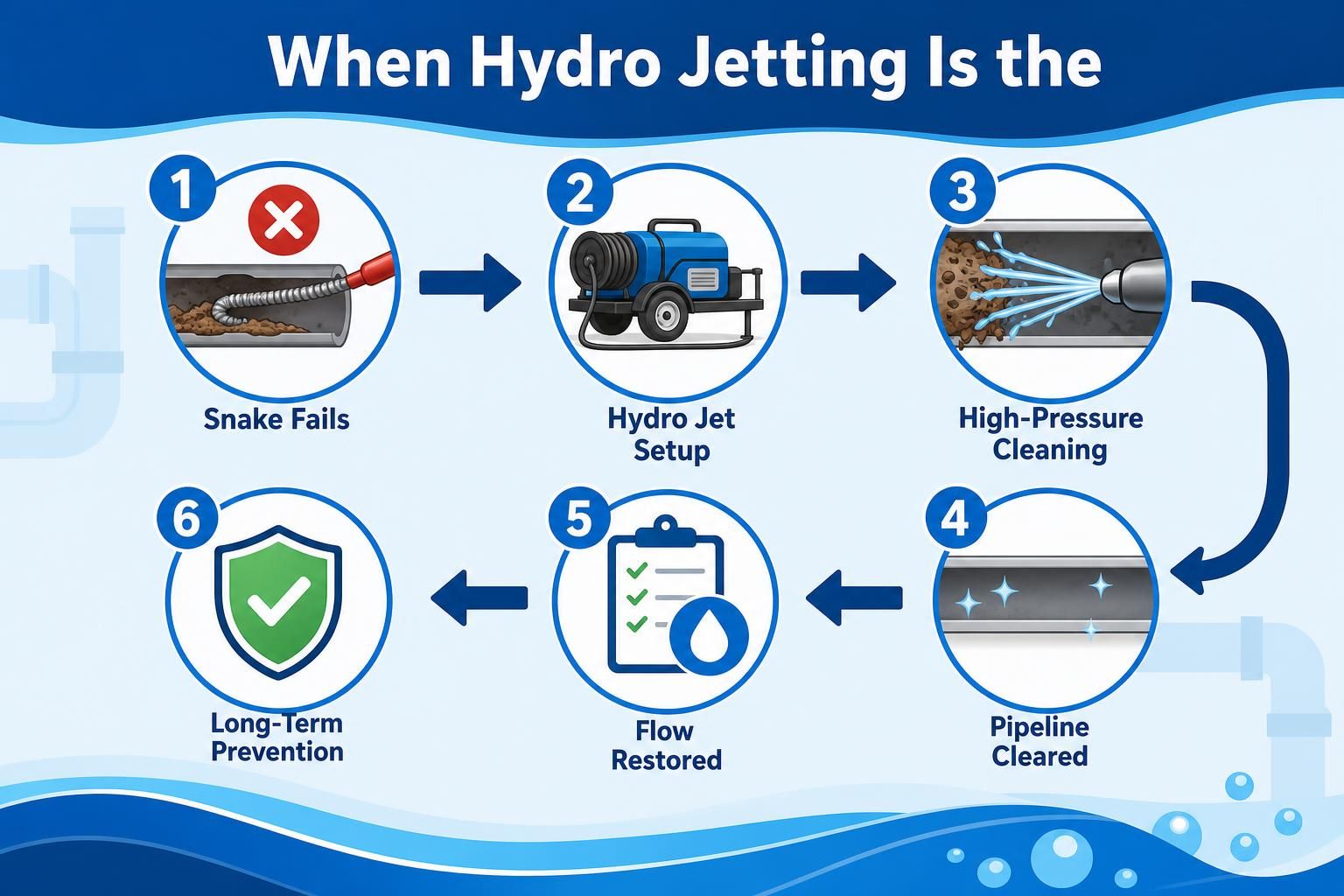
A good example is a kitchen sink that drains for a day or two after snaking, then clogs again. That often means the snake opened a small channel through greasy buildup, but the pipe walls stayed dirty.
- Notice whether the drain improves briefly after snaking.
- Check whether the same drain slows again within days or weeks.
- Pay attention to recurring clogs in grease-heavy areas, especially kitchen lines.
- Ask a plumber whether the pipe condition is suitable for high-pressure cleaning.
That last step matters. Hydro jetting uses pressurized water to scrub the pipe, so it’s best when the pipe is strong enough and the problem looks like buildup rather than collapse, severe root damage, or a broken section.
When a Sewer Camera Inspection Comes First
A sewer camera inspection should come before more cleaning when you don’t know what the snake hit. A sewer camera is a small waterproof camera sent through the pipe so the plumber can see cracks, roots, heavy scale, low spots, or a collapsed section.
- The snake hits a hard stop and won’t pass.
- The clog comes back after every cleaning.
- You hear gurgling or get backup after a bathroom drain was snaked.
- The main line seems to “move” the clog, but never fully clears.
- You have older pipes, large trees near the sewer line, or repeated sewer odors.
- Stop forcing the snake.
- Have the line inspected with a camera: https://waterwaysplumbingllp. com/sewer-camera-inspection/
- Review what’s actually inside the pipe.
- Choose the next service based on the condition of the line.
If the camera shows buildup and the pipe is in good shape, hydro jetting may be the next step: https://waterwaysplumbingllp. com/hydro-jetting-services/. If it shows broken pipe, severe root damage, or a sagging section, cleaning alone won’t solve the real problem.
How to Avoid Repeat Clogs
Preventing the next clog starts with treating the drain like a narrow pipe, not a trash chute. Even when water disappears, grease, soap, hair, food scraps, and grit can stick to the pipe walls and slowly rebuild the same problem.
Use these habits after the line has been properly cleared.
- Scrape plates into the trash before rinsing dishes.
- Pour cooking grease into a container, let it cool, and throw it away.
- Add hair catchers to showers and tubs, then clean them weekly.
- Run plenty of cold water when using a garbage disposal.
- Avoid “flushable” wipes. They don’t break down like toilet paper.
- Don’t rely on chemical drain cleaners. They can be harsh on pipes and often don’t remove the real blockage.
If one drain keeps slowing down every few weeks, don’t just snake it again and hope. That pattern usually means something is still inside the line or the pipe has a shape problem that catches debris.
For homes with older plumbing, large trees, or repeat main line backups, schedule preventive inspections or cleaning based on what a plumber finds, not on a fixed guess. The goal is simple: remove the cause before it turns back into an emergency.
FAQ
Why Did My Drain Clog Come Back After Snaking?
The snake may have opened a small path through the clog without cleaning the pipe walls. Think of poking a straw through thick mud. Water moves for a while, then grease, soap film, hair, or food scraps collapse back into the opening and slow the drain again.
Should I Try Snaking the Drain Again?
Only if the first attempt clearly pulled out debris and the drain is improving. If the snake keeps hitting the same spot, comes back clean, or the clog returns within days, stop repeating it. You may be dealing with buildup, roots, or pipe damage that needs a different approach.
Is Hydro Jetting Better Than Snaking?
Hydro jetting can be better when the pipe is coated with grease, sludge, or scale because it washes the inside of the line instead of just punching through one spot. But pipe condition matters. A plumber may recommend checking the line first before using high-pressure water.
When Do I Need a Sewer Camera Inspection?
Get a sewer camera inspection when the clog repeats, affects multiple drains, or seems to move without fully clearing. A camera shows what’s actually inside the pipe, such as roots, a sagging section, cracks, or heavy buildup, so you don’t guess at the next repair.
If your drain snake didn’t work, the safest next step is to match the symptom to the likely cause. A drain that clears briefly may need deeper cleaning. A drain that gurgles, backs up elsewhere, or keeps failing may need inspection before more cleaning.
For heavy buildup, ask about hydro jetting services at https://waterwaysplumbingllp. com/hydro-jetting-services/. For repeat clogs or unknown pipe conditions, start with a sewer camera inspection at https://waterwaysplumbingllp. com/sewer-camera-inspection/. Use the diagnosis, not guesswork, to choose the next step.