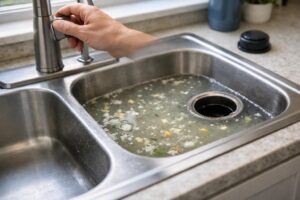
Recurring clogs are frustrating because they rarely come from one simple blockage. More often, they point to buildup, grease, sludge, or debris that keeps catching new material. Understanding hydro jetting vs snaking helps you choose a fix for the cause, not just what you can see at the drain opening. This guide explains how each method works, what each clears best, and why some drains improve briefly and then slow down again. You will also get a practical comparison focused on repeat clogs and when it is time to bring in a plumber.
- Snaking is designed to punch through or pull out a blockage so water can flow again.
- Hydro jetting uses high-pressure water to wash pipe walls clean and flush debris out.
- If clogs keep returning, pipe wall buildup is often the real issue, not a single obstruction.
- The safest choice depends on pipe condition, the type of clog, and access points.
- DIY attempts can help for hair or small obstructions, but repeat backups call for diagnosis.
Hydro jetting vs snaking: the quick difference
The key difference is opening the line versus cleaning the line. A drain snake is a flexible cable fed through a pipe to break up a clog, hook debris, or push through it to restore flow. It works best for localized clogs.
Hydro jetting sends pressurized water through the line using a specialized hose and nozzle. It scours pipe walls and flushes loosened material downstream. That pipe-wall cleaning is why hydro jetting is often favored for recurring clogs.
How drain snaking works
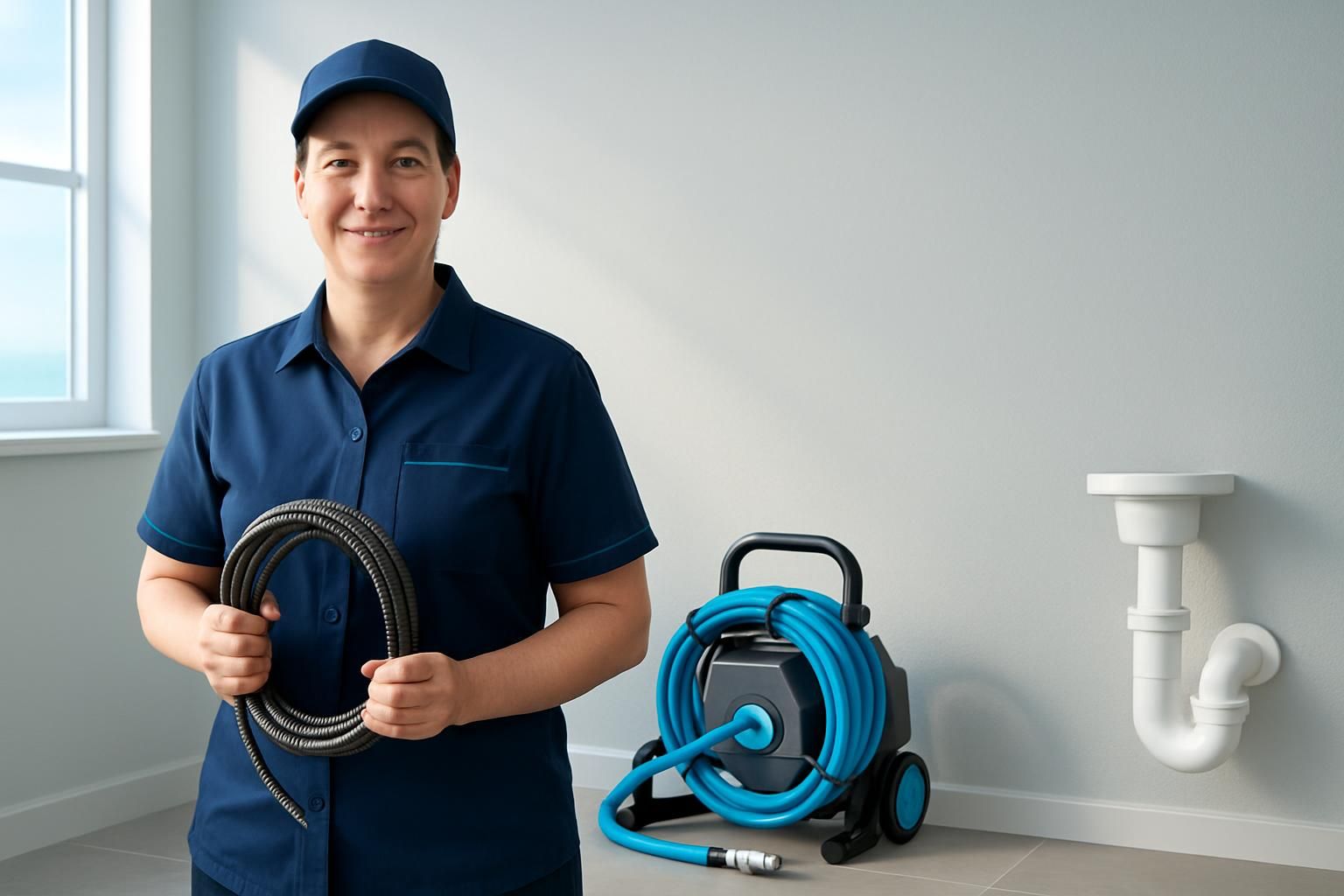
Drain snaking is mechanical. The cable moves through the pipe until it hits resistance, then spins or pushes to break through, grab material, or pull it back. Hand augers are common for sinks, tubs, and showers; motorized snakes handle longer runs or tougher blockages. The goal is to reach the obstruction and restore flow.
Snaking is often the first step because it’s direct and fast for a single clog. The limitation is that many repeat clogs are caused by residue on pipe walls that creates snag points, so a snake may restore flow without removing what keeps catching new debris.
What a snake is best at clearing
A snake works best when there is a specific obstruction that can be pierced, broken apart, or retrieved. Common examples include hair clumps in bathroom drains, small foreign objects, or debris sitting in a bend or trap. It’s also useful when you need a quick return to normal use.
In practice, snaking vs hydro jetting often comes down to a single clog versus broader buildup. If the issue is a discrete blockage, snaking is usually the most efficient tool and can help pinpoint where resistance occurs.
When snaking becomes a temporary fix
Snaking becomes temporary when it creates a narrow channel through soft buildup instead of removing the coating inside the pipe. Grease, soap scum, sludge, and mineral scale can narrow the line and leave a rough surface. The drain may improve, but residue remains and quickly catches more debris.
If you keep weighing snaking vs hydro jetting because clogs return, pipe wall buildup is often the real issue. Recurring clogs can also point to problems a snake cannot fix, such as poor slope, a belly in the line, or root intrusion that repeatedly traps debris.
How hydro jetting works
Hydro jetting uses a machine that pressurizes water and sends it through a jetting hose into the drain. The nozzle typically sprays forward to break up material and backward to propel the hose while blasting the pipe walls. The goal is to flush debris out of the line, not just loosen it.
Because it cleans more thoroughly, hydro jetting is often chosen for repeat problems and grease-prone lines. In a snaking vs hydro jetting comparison, jetting is usually the deeper clean, but it must match pipe condition. A plumber can adjust pressure and technique based on the material, age, and likely cause.
What hydro jetting removes that a snake leaves behind
Hydro jetting removes layers of buildup that coat pipe walls: grease film, soap residue, sludge, and settled debris that reduce the pipe’s effective diameter. A snake may restore flow but often leaves that coating behind.
This is the main difference in a hydro jetting vs traditional drain snaking comparison for recurring clogs. When the interior surface is cleaner and smoother, it is less likely to snag new debris. Hydro jetting also flushes out fine particles that can remain after a clog is broken up, reducing the chance they regroup downstream.
Side by side comparison for recurring clogs
For recurring clogs, the real question is what keeps causing the backup: buildup along the line, a structural issue, or an intrusion that repeatedly catches debris. Snaking is usually best for a discrete blockage you can disrupt. Hydro jetting is usually best when residue is spread through a section of pipe.
One method does not always replace the other. In some cases, a plumber may snake first to open the line and restore flow, then hydro jet to clean the walls and reduce repeat clogs. The right choice depends on what is inside the pipe and how the system is behaving.
Cleaning power and pipe wall buildup
Think of snaking as creating a path through a clog, while hydro jetting rinses the pipe clean through a section of line. For pipe wall buildup, hydro jetting typically has the advantage because it is designed to scour, not just pierce.
Hydro jetting is often favored for:
- Grease-heavy kitchen lines with gradual residue buildup
- Bathroom drains narrowed by soap scum over time
- Drains that mostly work but drain slowly, smell, or gurgle
- Lines that have been snaked repeatedly without lasting improvement
Snaking still makes sense for a dense, localized blockage like hair near a fixture, where jetting may be more than you need.
Results over time and repeat clogs
Long-term results depend on whether the method removes what causes debris to accumulate. Snaking often restores flow quickly, but if pipe walls stay coated, the line can return to reduced capacity. That is why snaking can feel like symptom control when the real issue is buildup.
Hydro jetting tends to deliver more durable results when buildup is the driver because water carries particles away more effectively in a cleaner pipe. However, repeat clogs can continue even after jetting if a deeper issue remains, such as a sagging section of pipe, damage, or roots that require repair.
Cost and time at the appointment
Snaking is often faster for simple clogs because it targets the immediate obstruction. Hydro jetting can take longer because it is a more complete cleaning process and may require more setup and careful progress through the line.
It also helps to think in total hassle, not just the first visit. If snaking restores flow for only a short time, repeated backups and appointments can cost more over time. A plumber can help you decide whether a one-time deep clean is more practical than repeated spot fixes.
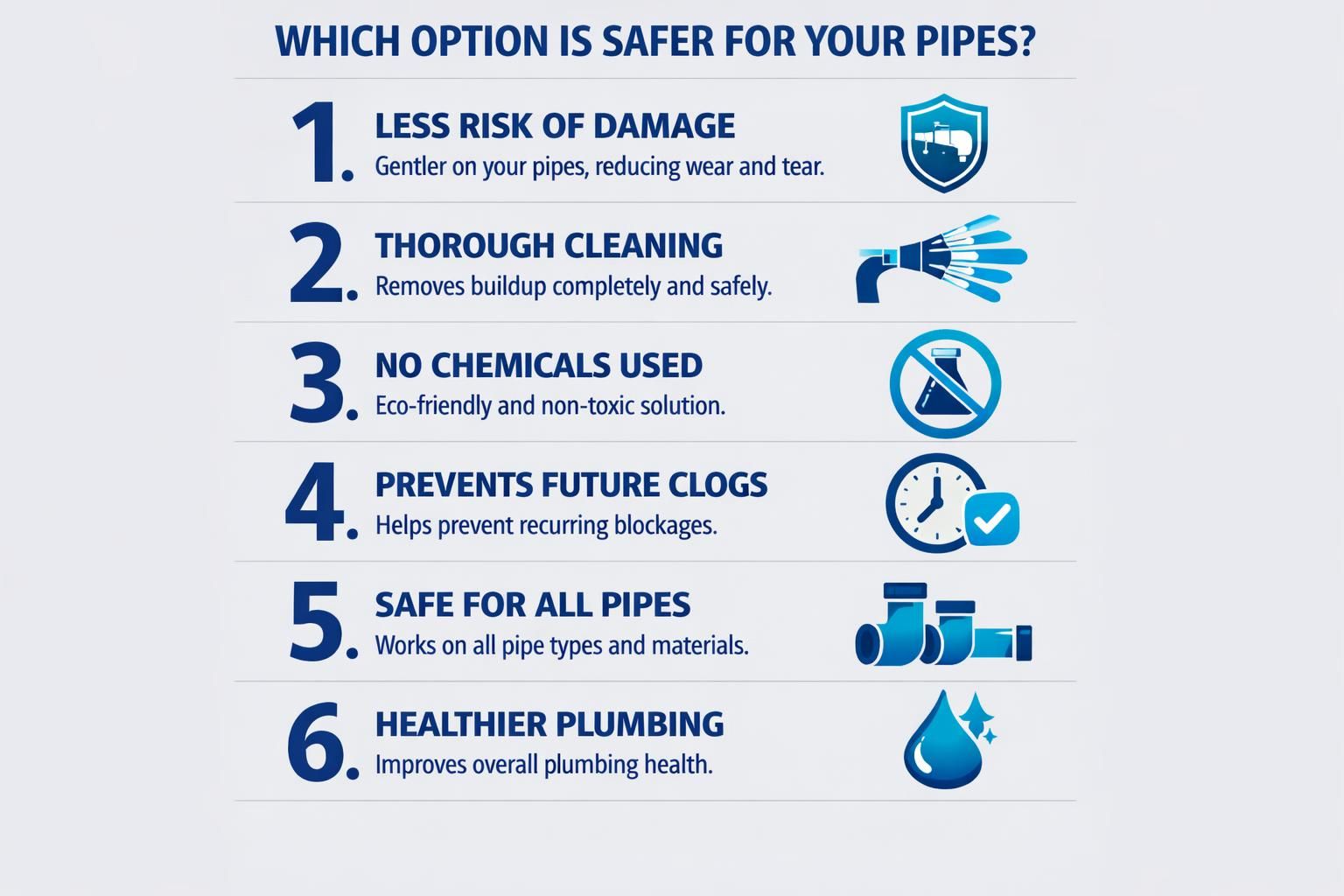
Which option is safer for your pipes
Safety depends on matching the method to pipe condition. Snaking is mechanical, so it can scrape or stress weak points if forced, especially around joints and bends. DIY snaking can also damage traps or fixtures if the cable is kinked, pushed too hard, or used with the wrong head.
Hydro jetting relies on water pressure. It can be safe for many systems when done correctly, but it should be used carefully on older or compromised lines. If a pipe has cracks, heavy corrosion, or failing joints, high-pressure water could worsen existing damage. The best snaking vs hydro jetting plumbing choice balances clearing power with the condition of the line being cleaned.
When to call a plumber instead of repeating DIY fixes

DIY tools can help with minor, occasional clogs, but recurring backups are a sign to stop guessing. If plunging or a home auger keeps producing short-lived results, the issue may be deeper buildup, beyond the fixture branch, or structural. Repeated DIY attempts can also push debris farther into the system, making removal harder.
Consider calling a plumber if you notice:
- Multiple fixtures draining slowly at the same time
- Backups in a tub or shower when the toilet is flushed
- Gurgling sounds or sewer-like odors that return after cleaning
- Water backing up repeatedly in the same drain within days or weeks
- Any sign of a main line issue, such as widespread slow drains
A professional can choose between plumbing snaking vs hydro jetting based on symptoms, access points, and likely causes, rather than treating each clog as a separate event.
FAQs about hydro jetting vs snaking
If you are still deciding between snaking vs hydro jetting, these questions can help match the method to what you are dealing with.
Is hydro jetting always better than snaking? Not always. Hydro jetting is often better for recurring clogs caused by grease, sludge, soap scum, and pipe wall buildup. Snaking can be better for a single, localized obstruction, especially close to the fixture. In some cases, the best approach is both: open the line, then clean it thoroughly.
Can I hydro jet my own drains? Hydro jetting requires specialized equipment and control of water pressure. Consumer tools exist, but improper use can cause leaks, mess, or incomplete cleaning. If you are considering hydro jetting vs snaking because DIY methods keep failing, it is usually safer to have a plumber evaluate the line and choose the right approach.
Will snaking remove grease buildup? Snaking can punch through grease and restore flow, but it often leaves a coating behind. That residue can keep catching debris and cause another clog. In a hydro jetting vs traditional drain snaking comparison, grease-heavy lines are a clear case where jetting is commonly preferred because it washes grease and sludge off the walls instead of only creating a passage.
How do I know if my clog is in the main line? Common clues include multiple fixtures backing up, the lowest drain overflowing first, or backups that show up when using a different fixture. Main line issues can make sink, tub, and toilet symptoms appear connected. If you suspect a main line problem, stop running water and call a plumber to reduce the risk of overflow and water damage.
Conclusion
Choosing between hydro jetting vs snaking comes down to whether you need a fast opening through a blockage or a deeper cleaning that addresses pipe wall buildup. Snaking is often the right first move for isolated clogs, especially hair or small obstructions near a fixture. Hydro jetting is typically the stronger option for recurring clogs tied to grease, soap scum, sludge, and residue that keeps narrowing the line over time. If you have been stuck in a repeat cycle of backups, the practical next step is to stop re-treating symptoms and get the drain evaluated so the cleaning method matches the real cause. That is the quickest path to fewer repeat clogs and more reliable drainage.