A kitchen drain that “sort of” clears and then backs up again is usually dealing with more than a simple obstruction. Grease clogs in drain lines form gradually, starting as a thin coating that builds into a sticky layer that catches food particles and soap residue. Over time, the passage narrows until normal dishwashing triggers slow drainage or standing water. This article explains why grease clogs return, how to recognize a grease-based blockage, which DIY steps are safe to try first, and why hydro jetting is one of the most effective ways to restore full flow. You will also learn prevention habits that reduce repeat kitchen backups.
- Grease clogs often return because grease coats the pipe walls, not just the center of the line
- Slow drains, gurgling, and recurring odors often point to grease instead of a single stuck item
- Safer DIY attempts focus on hot water, dish soap, and better capture of solids, not harsh chemicals
- Hydro jetting removes grease buildup in pipes by scouring the entire interior surface
- Prevention is mostly about what you do at the sink: cooling, scraping, straining, and smart rinsing
Why grease clogs keep coming back
Grease rarely becomes a problem overnight. Warm fats, oils, and greasy residue leave the sink in liquid form, then cool inside the plumbing and cling to pipe walls. This is more likely in older lines, rough pipe interiors, slight sags, long horizontal runs, or low-flow use that doesn’t fully carry waste through. Once a coating forms, it catches rice, pasta, coffee grounds, and soap scum, turning a thin film into a restriction.
Grease clogs repeat because many quick fixes only open a small channel through the middle. Water moves again, but the pipe remains lined, so everyday cooking and dishwashing quickly rebuild the blockage and may require hydro jetting. If the coating spans a longer section, symptoms can return even after plunging or snaking because the underlying grease was never removed.
Signs your clog is grease based
Grease clogs often follow a pattern: the drain runs slow most days, then gets worse after heavy cooking or a dishwasher cycle. You might see brief improvement after very hot water, then a slowdown again once the pipes cool. That “better, then worse” cycle often points to a coating that may need hydro jetting rather than one hard object.
Smell and sound are clues, too. Grease holds food particles that decay, causing recurring odors. Gurgling can happen when water squeezes past a narrowed area and pulls air through the trap. If both the sink and dishwasher drain poorly, the sewer cleanout is often coated with grease, not just blocked at the opening.
DIY steps that are safe to try first
Start with low-risk methods that improve flow without damaging plumbing. Many store-bought drain cleaners are harsh, can stress older joints or seals, and often burn a small pathway through buildup instead of removing it. That can make the drain seem fixed while the coating remains.
Stick to what you can safely access. Clear debris at the strainer and around the disposal splash guard. If you’re comfortable, clean the P-trap and check the trap arm for buildup. Avoid repeated, aggressive plunging that can push a soft plug deeper or trigger an overflow. If the sink backs up quickly or repeatedly, stop before you flood the cabinet and consider professional help.
Hot water and dish soap flush
Dish soap helps loosen oils, and hot water keeps grease softer longer. This won’t remove heavy buildup deep in the line, but it can help with early-stage residue and can confirm grease is involved. Use it when the drain is slow (not fully blocked), and avoid boiling water if your plumbing may be sensitive to extreme heat.
A practical approach is:
- Remove standing water from the sink if possible
- Pour dish soap directly into the drain
- Follow with very hot tap water for several minutes
- Repeat once if you notice improvement, then reassess
If the improvement fades within a day or two, the problem is usually wall buildup over a longer section, not something soap can solve on its own.
Strainers and better disposal habits
The safest “fix” is reducing what enters the drain to prevent backups. Grease clogs worsen when food particles enter a pipe that’s already coated. A simple strainer limits solids that grease can grab and also helps reduce odor.
Build a routine that supports the plumbing:
- Scrape plates into the trash or compost before rinsing
- Wipe greasy pans with a paper towel before washing
- Collect cooled cooking oil in a container instead of pouring it out
- Avoid sending starchy leftovers, fibrous peels, and coffee grounds down the drain
These steps don’t remove existing buildup, but they slow the cycle and help any professional cleaning last longer.
Why hydro jetting works for grease
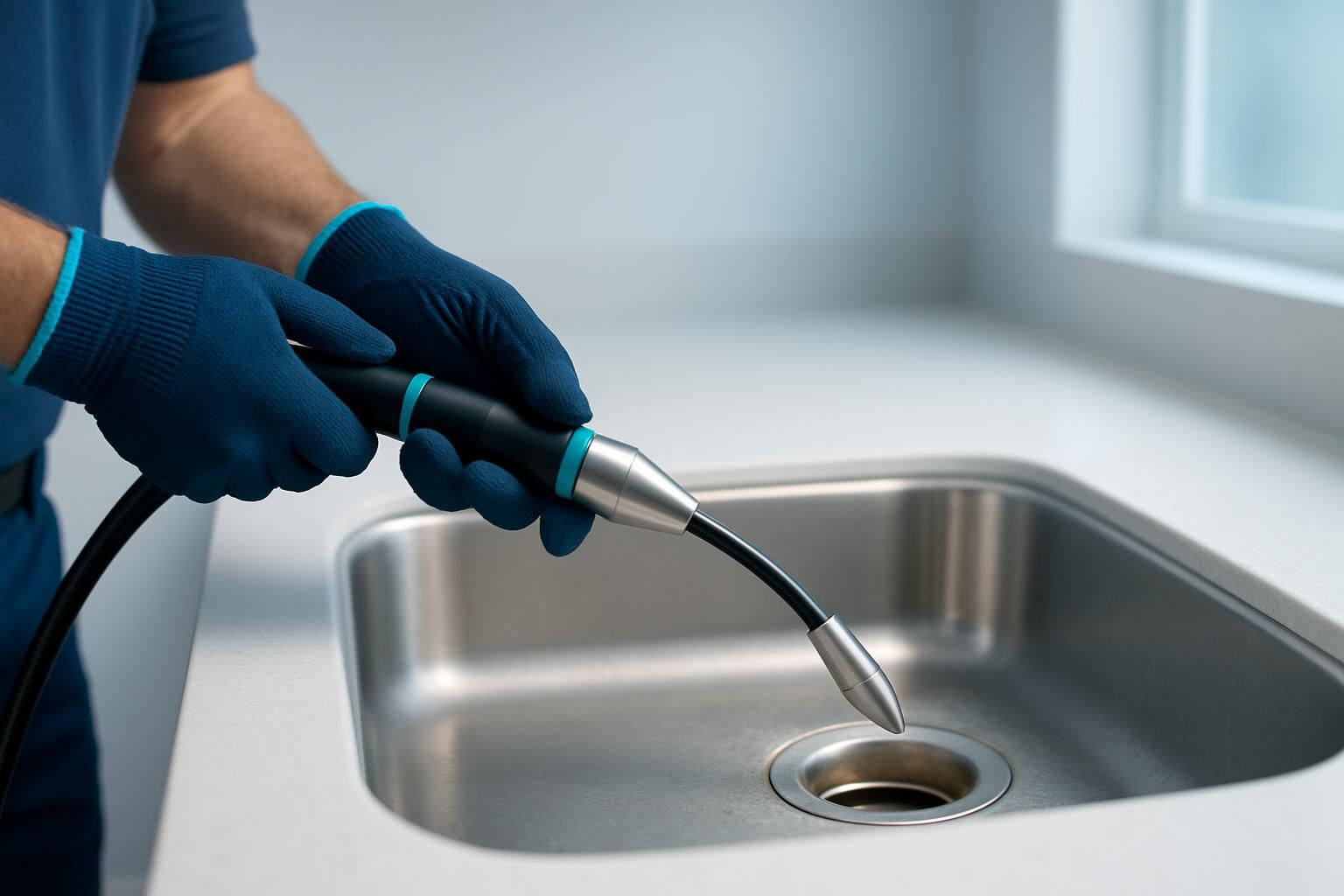
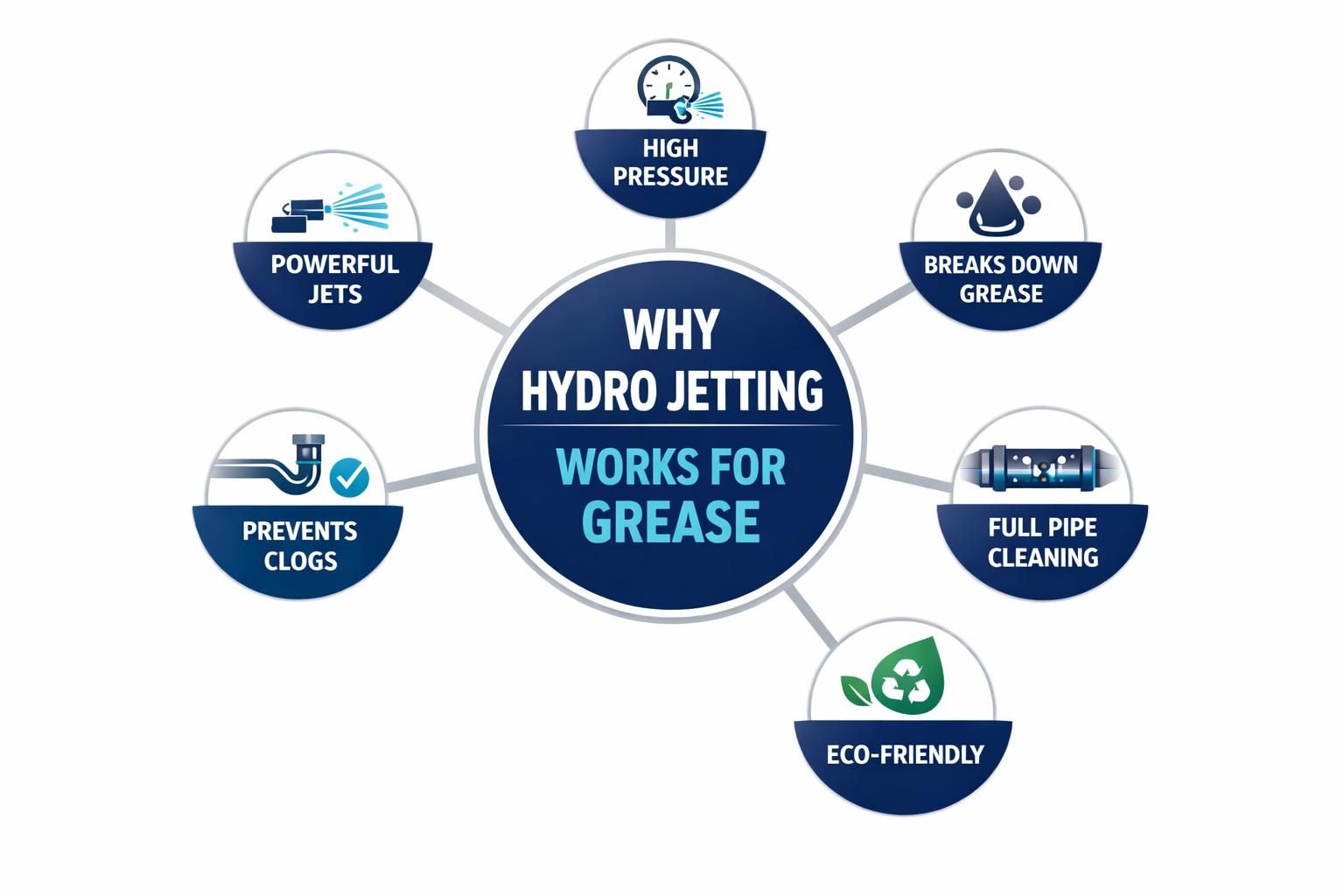
Hydro jetting uses high-pressure water through a specialized hose and nozzle to clean the inside of drain and sewer lines. The key difference is coverage. A snake can reopen flow, but it often leaves grease on the pipe walls. Hydro jetting scours the interior surface and flushes loosened material downstream.
For kitchen lines, that matters because grease is rarely one plug. It’s often a continuous layer that narrows the pipe and traps debris, especially at bends, tees, and transitions. When performed by a professional who matches pressure and nozzle type to the pipe material and condition, Hydro Jetting Services can restore the line close to its original interior diameter.
Grease, sludge, and pipe wall biofilm
Kitchen drains build more than grease. They collect sludge: emulsified fats, soap residue, fine food particles, and organic film on pipe walls. That film creates a tacky surface that helps new grease stick, which is why a drain can seem like it never fully improves after plunging or occasional snaking compared to hydro jetting.
Hydro jetting targets the full interior surface, disrupting biofilm and flushing away the soft layers that fuel repeat buildup. Cleaner walls improve flow and help water carry particles through instead of leaving them behind. If a line is heavily coated or keeps acting up, a plumber may recommend a camera inspection to confirm the pipe is sound and to identify low spots, bellies, or rough transitions where grease settles.
Grease trap vs household kitchen drains
Grease traps are common in restaurants and commercial kitchens, where large volumes of fats and food debris enter plumbing daily. They slow the flow so grease can separate and be captured before it reaches main lines. When maintained, they reduce downstream buildup; when neglected, they can create odors and backups.
Most homes don’t have a traditional grease trap, so the kitchen drain line becomes the collection point. That makes sink habits more important and allows grease problems to extend beyond the P-trap and branch line into longer sections. Homes with a secondary kitchen, wet bar, or long kitchen runs can behave more like light commercial systems. In those cases, methods that restore full pipe diameter, such as hydro jetting, can be especially useful when symptoms return.
How to prevent future grease clogs

Prevention is mainly about keeping grease out and keeping flow steady. The most effective rule is simple: don’t pour fats, oils, or greasy drippings down the sink, even with hot water. Hot water keeps grease liquid briefly, but once it cools it clings to pipe walls and restarts the cycle. Let grease cool in a container and discard it appropriately.
Also reduce what can stick to any residue. Use a sink strainer, scrape plates, and don’t rely on the garbage disposal as your main way to handle food waste. If you use the disposal, run enough water to move particles through the line, and keep it running briefly after grinding. Flushing with hot tap water and a small amount of dish soap after washing greasy cookware can help minimize new deposits. If you have repeated backups, consider periodic professional drain cleaning based on your cooking habits and plumbing layout.
FAQs about grease clogs and hydro jetting
Many people wonder whether they need professional service or if a simple tool will do. If the clog is minor and localized, basic cleaning and safe flushing may restore flow. Repeated symptoms usually mean the problem is coating and accumulation, not a single object. At that point, cleaning the full pipe interior matters more than reopening a narrow path.
Common questions include what to avoid and when to change tactics. Be cautious with harsh chemicals, be realistic about what plungers and small hand snakes can accomplish, and take recurrence seriously. If the kitchen line backs up often, affects the dishwasher, or produces sewer odor, it’s usually time to consider a more thorough cleaning method. Hydro jetting isn’t the only option, but it’s a strong choice when the goal is to remove grease broadly rather than temporarily relieve symptoms.
Conclusion
Recurring kitchen backups are often a sign that residue is lining the pipe walls, not just blocking the center of the line. A grease clog in drain plumbing can keep returning when quick fixes only create a small opening through a larger, sticky coating. Safe first steps like hot water and dish soap, sink strainers, and better disposal habits can help, especially early on. But when symptoms repeat, hydro jetting stands out because it cleans the full interior surface and removes grease buildup in pipes more thoroughly than many spot treatments. If your drain clears and re-clogs on a predictable cycle, your next practical step is to schedule a professional evaluation for drain cleaning and discuss whether hydro jetting is appropriate for your specific kitchen line.