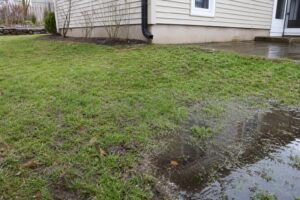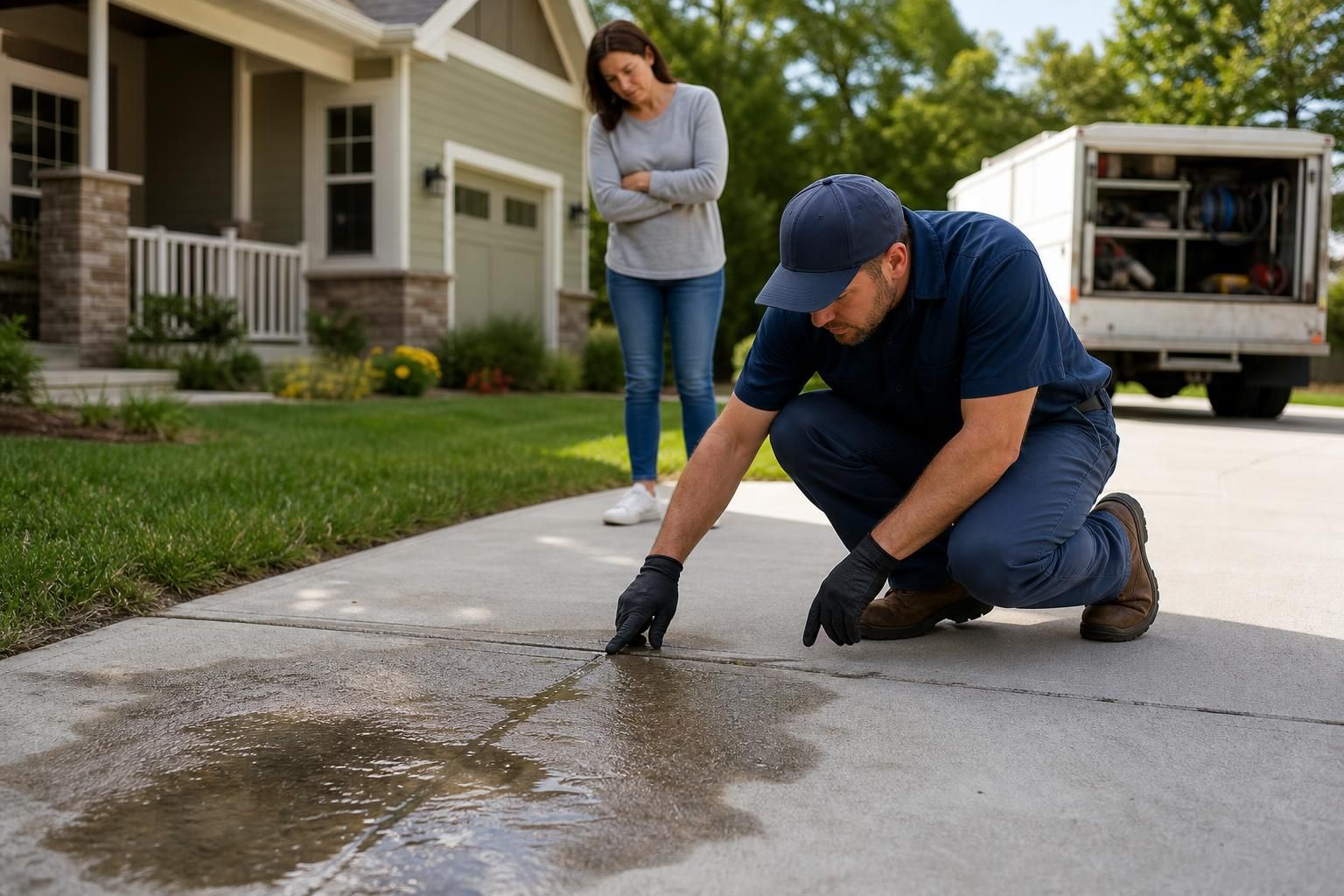
A damp patch that keeps coming back on your driveway can point to a water line leak under driveway, especially if the weather has been dry and you don’t see an indoor plumbing leak.
Start with simple observations before you assume the worst:
- Check whether the same driveway area stays wet or stained.
- Compare your latest water bill with normal use.
- Notice whether home water pressure feels weaker than usual.
This guide walks you through the driveway-specific signs, why buried leaks are easy to miss, what a plumber checks first, and how repair compares with replacement.
Signs a Water Line May Be Leaking Under the Driveway
A hidden driveway leak usually shows up as a surface pattern, not a dramatic spray of water. The service line, which is the buried pipe bringing fresh water from the meter to your house, may run under or beside the driveway.
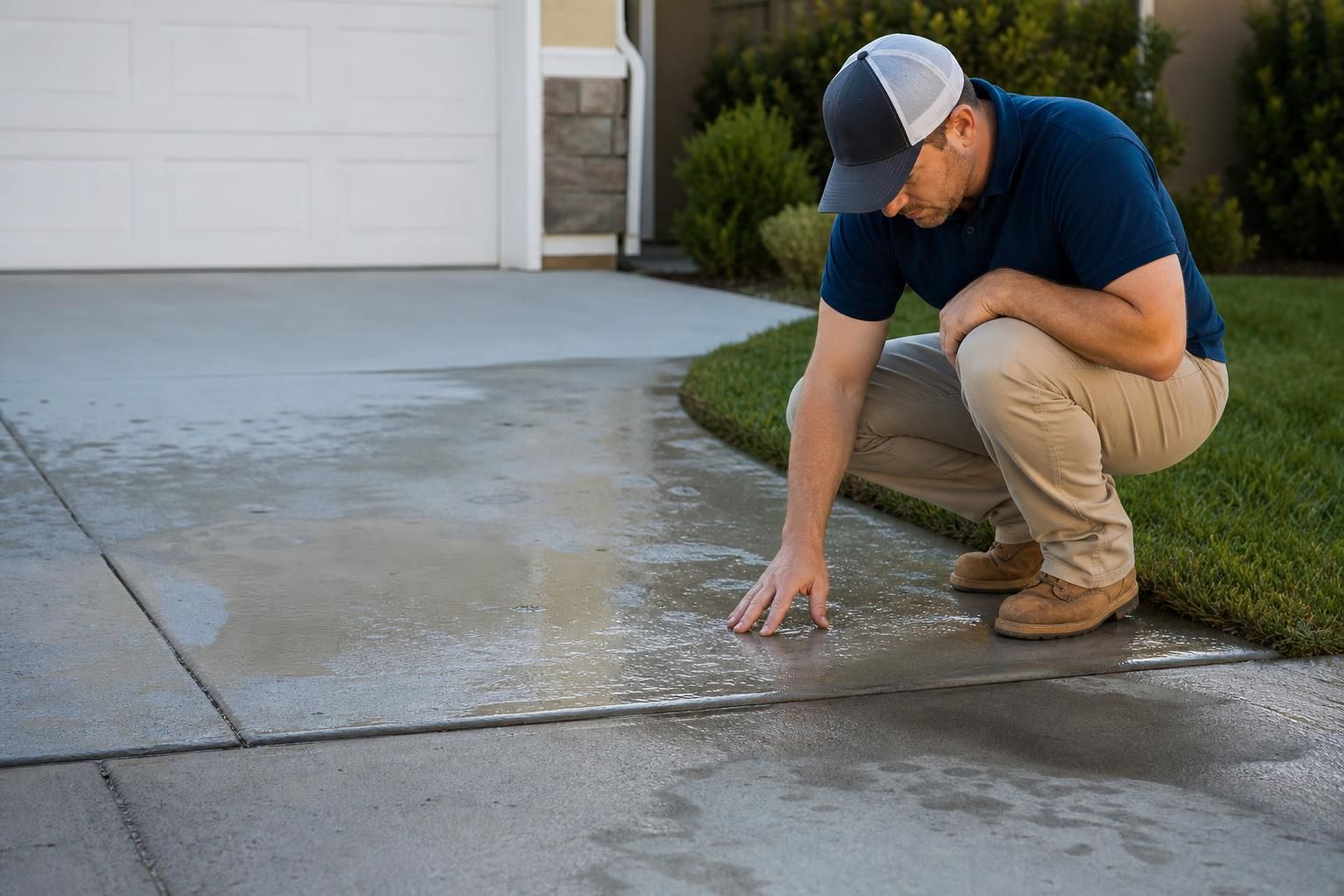
Watch for driveway-specific clues like these.
- One section stays damp after several dry days.
- A wet patch dries, then comes back in the same spot.
- Concrete or pavers develop brown, green, or mineral-looking stains.
- The edge of the driveway feels soft, muddy, or sunken.
- A crack widens near the likely path between the meter and the house.
- One slab or paved section starts to settle slightly lower than the rest.
- Soil, mulch, or gravel beside the driveway shifts for no clear reason.
Don’t assume every damp driveway means a broken water line. Sprinklers, grading, or runoff can mimic a leak. But if the same spot keeps changing while nearby areas stay normal, take photos over a few days and consider scheduling professional water line repairs: https://waterwaysplumbingllp. com/water-line-repairs/.
Why Underground Leaks Are Easy to Miss
Concrete and pavers hide the “story” a leaking pipe would normally tell. You can’t see the pipe, the escaping water, or the soil washing away beneath the surface. Think of the driveway like a lid on a pot. By the time you notice something above it, the leak may have been moving underground for a while.
A water service line is the pipe that carries fresh water from the meter to your house. If that line runs under the driveway, water may spread sideways through compacted soil or gravel before it reaches the surface. That makes the clue show up several feet away from the actual break.
Driveways also confuse the timing. Sun, shade, slope, irrigation overspray, and normal runoff can all make one area look different from another. And because the pipe is pressurized, a small opening can leak steadily without making noise.
So don’t look for one dramatic symptom. Look for a pattern that doesn’t match weather, watering, or normal drainage.
Water Bill, Pressure, and Wet Spot Clues
Use the driveway clues together, not one by one. A higher bill alone doesn’t prove a buried leak, but it matters more if the driveway is also acting strange.
- Compare your latest water bill with the same month last year. Look for a jump that doesn’t match extra watering, guests, or seasonal use.
- Check water pressure at two or three fixtures. Water pressure means how strongly water comes out. If showers and faucets feel weaker while the driveway has soft ground, staining, or a repeating damp area, the service line may be losing water before it reaches the house.
- Watch the wet spot for a few dry days. Mark the edge with chalk or take a photo. If it returns in the same area after the surface dries, that pattern is more useful than a single puddle.
- Look near cracks or slight settling. Water moving under concrete can wash soil away, so a section may shift before the leak becomes obvious.
If these clues line up, ask a plumber about driveway-focused water line repairs: https://waterwaysplumbingllp. com/water-line-repairs/. If the pipe may be failing across a longer run, water service replacement may also come up: https://waterwaysplumbingllp. com/water-service-replacement/.
Repair vs Replacement Considerations
Repair means fixing one damaged section of the buried pipe. Replacement means installing a new water service line, which is the pipe that carries fresh water from the meter or street connection to your house. Under a driveway, the choice often comes down to access, pipe condition, and how much concrete or paving has to be disturbed.
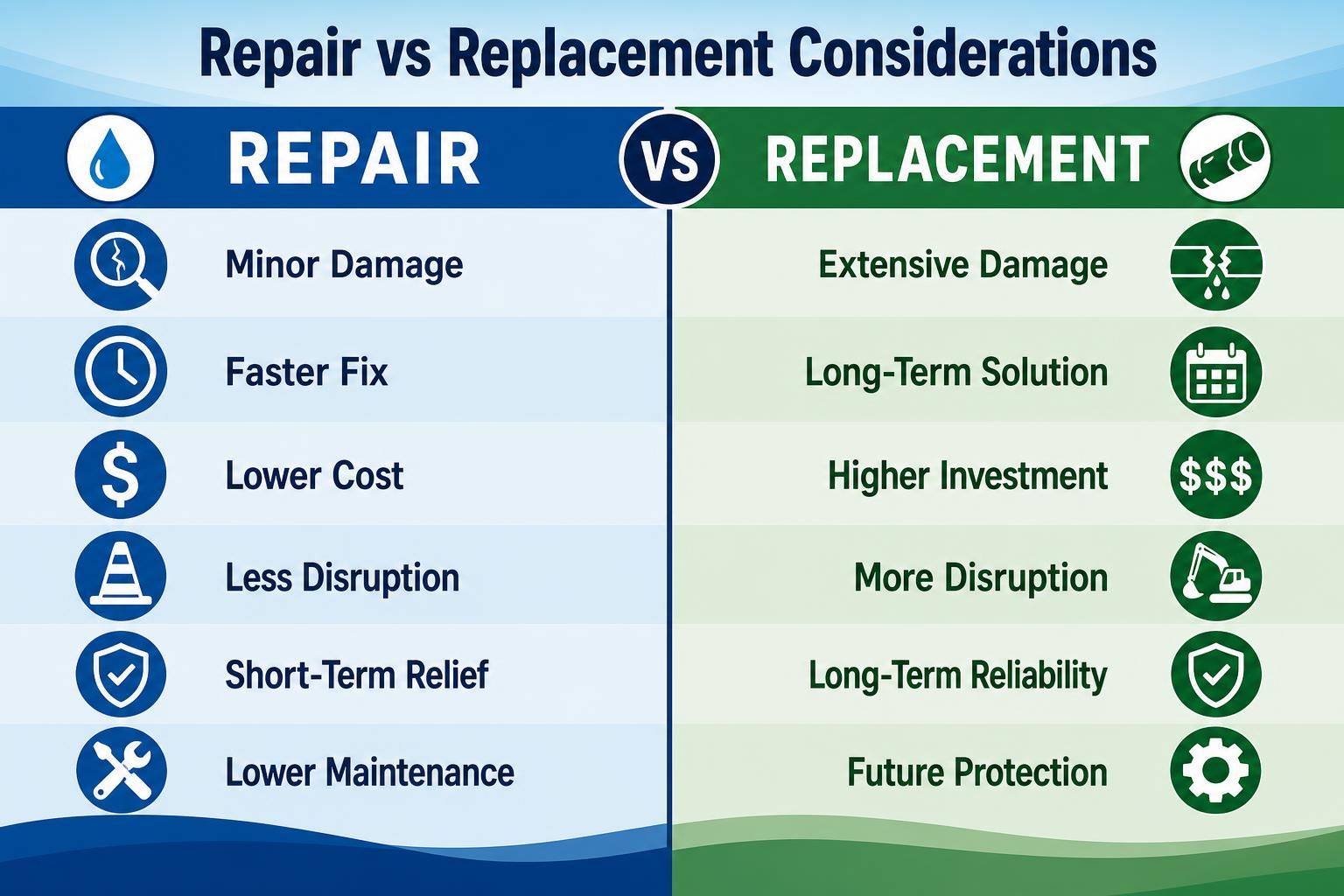
Start by asking one simple question: does this look like one bad spot, or does the whole run seem unreliable?
| Driveway finding | Targeted repair may make sense | Replacement may make sense | Ask the plumber |
|---|---|---|---|
| Repeating damp spot in one small area | Leak appears isolated | Pipe is old or brittle nearby | Can you locate the break closely? |
| Crack or settling over the line path | Damage may be below that section | Soil washout extends farther | Is the driveway being undermined? |
| Weak pressure plus driveway staining | One restriction or break is found | Multiple weak points are suspected | Is the line failing beyond one spot? |
A targeted repair can be the less invasive option when the plumber can pinpoint the leak and the rest of the line looks sound. Under a driveway, that may still involve cutting or lifting part of the surface, so “small repair” doesn’t always mean “simple access.”.
Replacement comes up when the pipe material is deteriorating, the leak is hard to isolate, or the driveway area suggests broader underground movement. In that case, water service replacement may prevent repeated digging in the same expensive surface area.
For driveway-focused water line repairs, see https://waterwaysplumbingllp. com/water-line-repairs/. For longer-run replacement planning, see https://waterwaysplumbingllp. com/water-service-replacement/.
What a Plumber Checks First
A plumber’s first job is to narrow the leak area without tearing up the driveway too soon. Think of it like finding the shortest path to the problem before opening the surface.
- Check the water meter. The plumber may shut off water use inside the house, then watch the meter. If it still moves, water may be escaping somewhere in the buried service line.
- Test pressure behavior. Weak pressure can help show whether the line is losing water before it reaches the house. The plumber may compare pressure at an outside hose bib, the main shutoff, or another accessible point.
- Look at driveway edges and entry points. They’ll check where the pipe likely runs from the street or meter toward the home. Edges, joints, and nearby soil often give better clues than the middle of a slab.
- Decide if the issue looks isolated. One tight leak area may point toward a targeted repair. Several suspicious areas, older pipe material, or movement across a wider driveway section may push the conversation toward replacement.
Why Fast Action Matters
Act quickly because water under a driveway doesn’t just disappear. It can wash soil away from beneath the slab or pavers. Think of it like pulling sand out from under a stepping stone. The surface may still look solid for a while, but the support underneath is getting weaker.
- Stop heavy use of the driveway if you see settling, widening cracks, or soft ground near the edge.
- Take photos of the area so you can show whether the surface is changing.
- Avoid digging or breaking concrete yourself. You could hit the service line or make access harder.
- Call a plumber to check whether a targeted repair makes sense or whether the buried service line is too damaged.
For a localized issue, start with professional water line repairs: https://waterwaysplumbingllp. com/water-line-repairs/.
If the pipe is older, damaged across a wider run, or hard to access under the driveway, water service replacement may be the better conversation: https://waterwaysplumbingllp. com/water-service-replacement/.
FAQ
Can I Keep Using Water if I Suspect a Leak Under My Driveway?
You usually can use water for basic needs, but don’t ignore the pattern. If the driveway area keeps getting damp, soft, stained, or settled, reduce unnecessary water use and call a plumber soon. If water is actively surfacing or the driveway is shifting, treat it as urgent.
Will a Plumber Have to Break up My Driveway?
Not always. A plumber will usually check pressure behavior, nearby shutoff points, and the likely route of the service line first. The goal is to narrow the problem before opening concrete, asphalt, or pavers. If access is needed, a smaller targeted opening may be possible.
How Do I Know Whether I Need Repair or Replacement?
A targeted repair may work when the leak is isolated and the rest of the buried line looks sound. Replacement becomes more likely when the pipe is old, damaged in multiple spots, or difficult to access under the driveway. Compare water line repairs at https://waterwaysplumbingllp. com/water-line-repairs/ with water service replacement at https://waterwaysplumbingllp. com/water-service-replacement/.
A water line leak under a driveway is a subsurface problem, so the best clues are patterns: recurring dampness, soft ground, staining, pressure changes, bill changes, or driveway movement near the service line path. None of these proves the pipe is leaking by itself, but together they’re enough reason to get the area checked.
The practical choice comes down to location, pipe condition, access, and how much of the line appears affected. Document what you see, avoid digging around the suspected line, and schedule a plumber to inspect the driveway area before the damage spreads.