If you’ve ever wondered where is main water shut off valve in your home, you’re already ahead of the chaos. When a pipe bursts or a supply line pops off, seconds matter. Knowing where the main shutoff is lets you stop the flow before water soaks floors, walls, and everything you own. In this guide, you’ll learn the most common indoor and outdoor spots, how to confirm you’ve found the right valve, and what to do if it won’t budge.
Best for: Homeowners and renters who want to stop water fast during leaks, appliance failures, or plumbing work.
Not ideal when: You can’t safely access the valve due to flooding, electrical hazards, or a damaged pipe area.
Good first step if: You see active leaking and need to stop water to the whole house before calling for help.
Call a pro if: The valve is seized, crumbling, or the shutoff doesn’t fully stop water inside the home.
Quick Summary
- Your main shutoff controls water to the whole house, not just one sink or toilet.
- Most homes have the valve where the water line first enters, often in a basement, garage, or utility area.
- Outdoor shutoffs may be near the foundation, in a meter box, or at the street.
- Test the valve by shutting it off and checking whether faucets stop flowing after pressure drops.
- Don’t force stuck valves, since a broken valve can turn a small problem into a big one.
Why Every Homeowner Should Know This
Knowing your main water shut-off valve is the fastest way to limit damage from a burst hose, failed fitting, or sudden leak. The main shutoff stops water from the city supply or well from entering the house; once it’s off, faucets run briefly as pressure drains, toilets won’t refill, and many leaks stop or slow. It also makes planned repairs possible when fixture shutoffs are missing or stuck. For larger supply-side problems, water line repair basics covers common failures and repair approaches. Find the valve now, confirm you can operate it, and make sure everyone knows where it is and how to reach it fast.
Common Indoor Locations
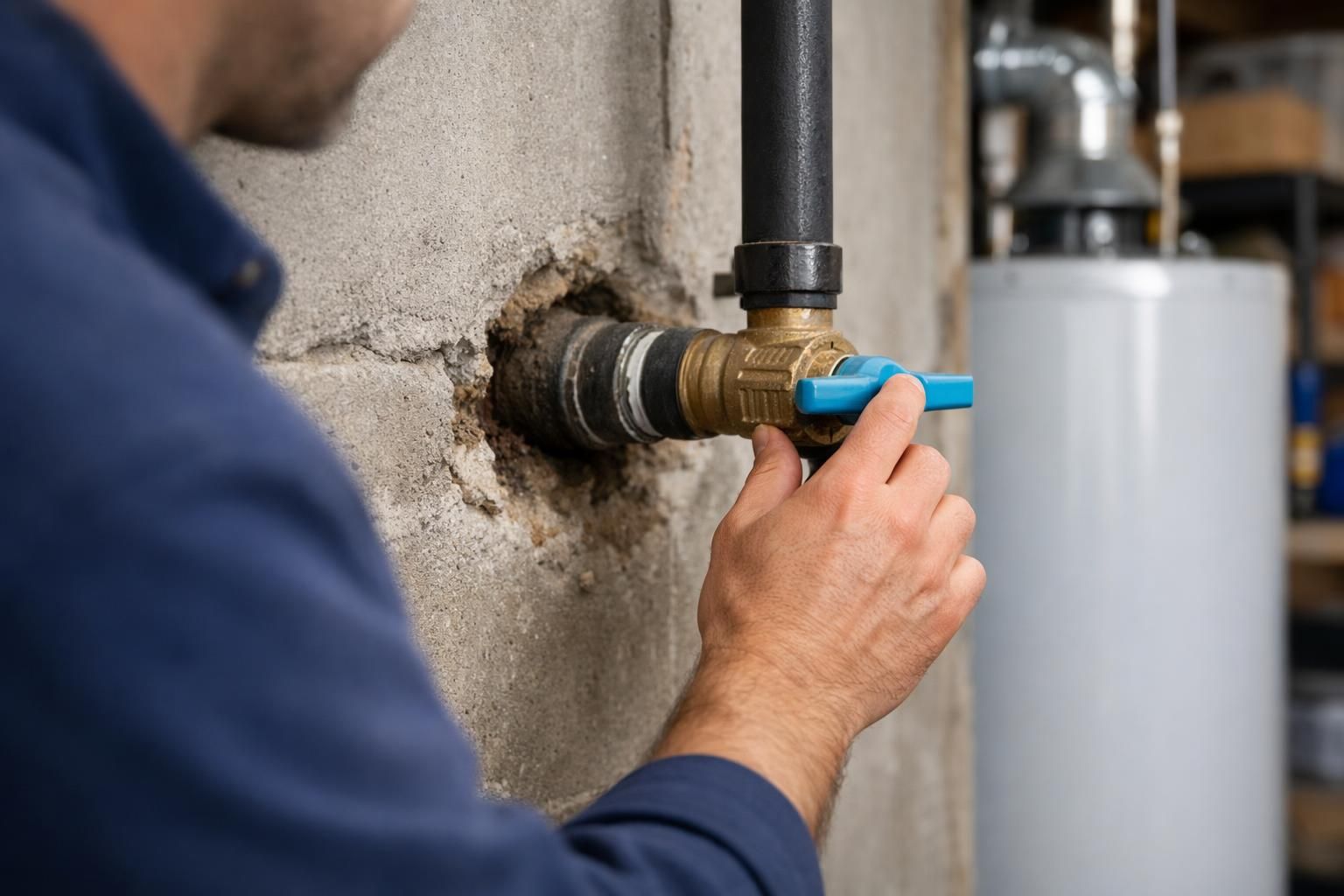
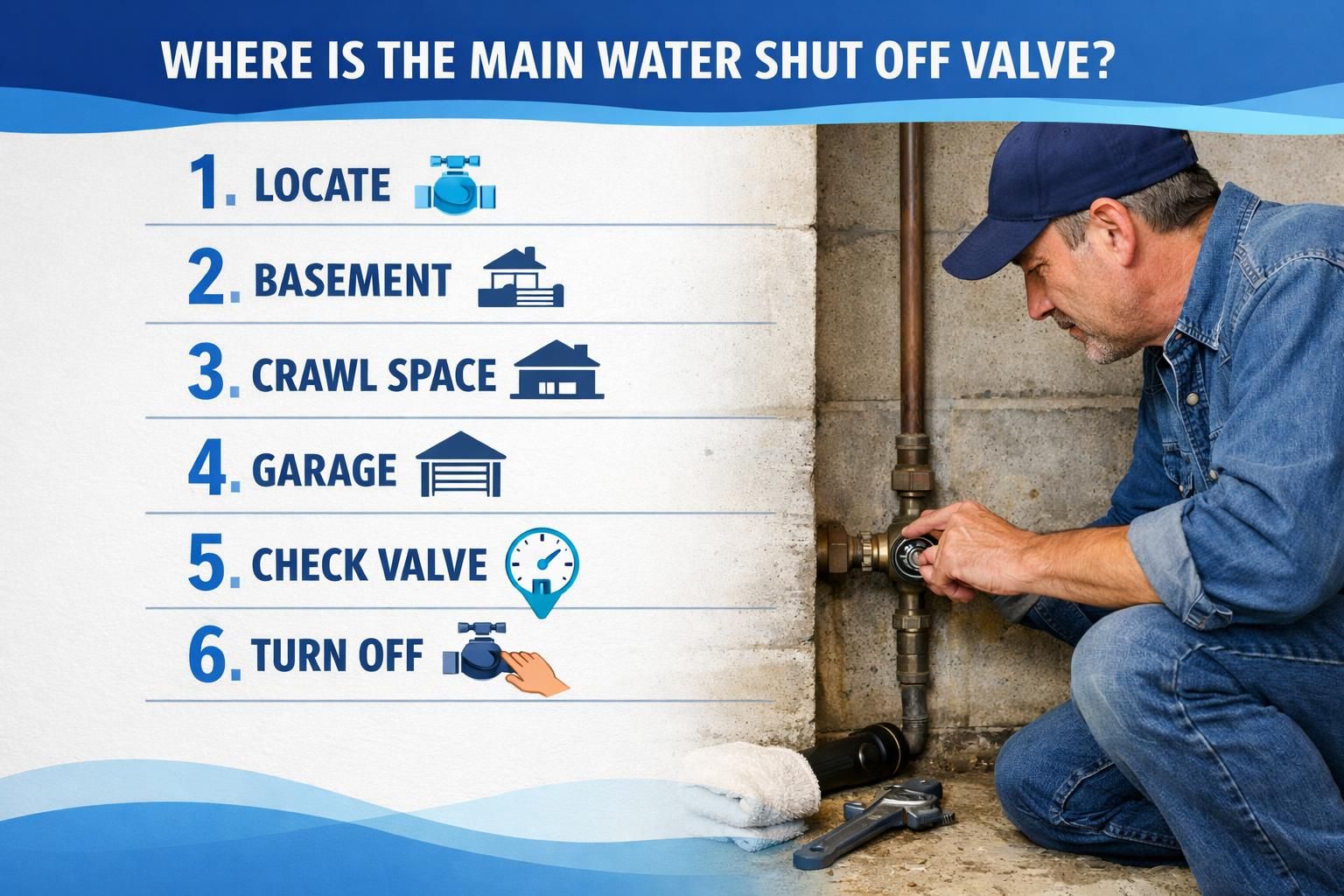
The main water shut off valve is usually indoors near where the service line enters the house, placed for plumbing convenience. Start near the water heater, utility room, or laundry area and look for the largest cold-water pipe, often 3/4 inch or 1 inch, entering through a wall or floor, then follow it to a valve. Common spots include basements along the front foundation wall, crawl space entry areas, garages on the street-facing wall, and near a water softener or filter by the entry point. Valve types are gate valves with a round wheel or ball valves with a quarter-turn lever. Ball valve: parallel is open, perpendicular is closed. Gate valve: turn clockwise to close.
Common Outdoor Locations
If there’s no indoor shutoff, the main is often outside near the water meter or where the service line reaches the house, especially in warmer climates and slab homes. Look for a meter box in the ground near the sidewalk or curb; inside is the meter and often a valve that shuts water to the home. Also check an access box near the foundation, near irrigation tie-ins, or along the driveway where utilities run. Some homes have a second shutoff closer to the street. Use caution with flooded or buried pits, or if you smell gas or see damaged wiring, and call for help. For well systems, check near the pressure tank.
How to Test if You Found it
You’ve likely found the right valve if turning it off stops water to the entire house after pressure bleeds down. Test when you can go a few minutes without water.
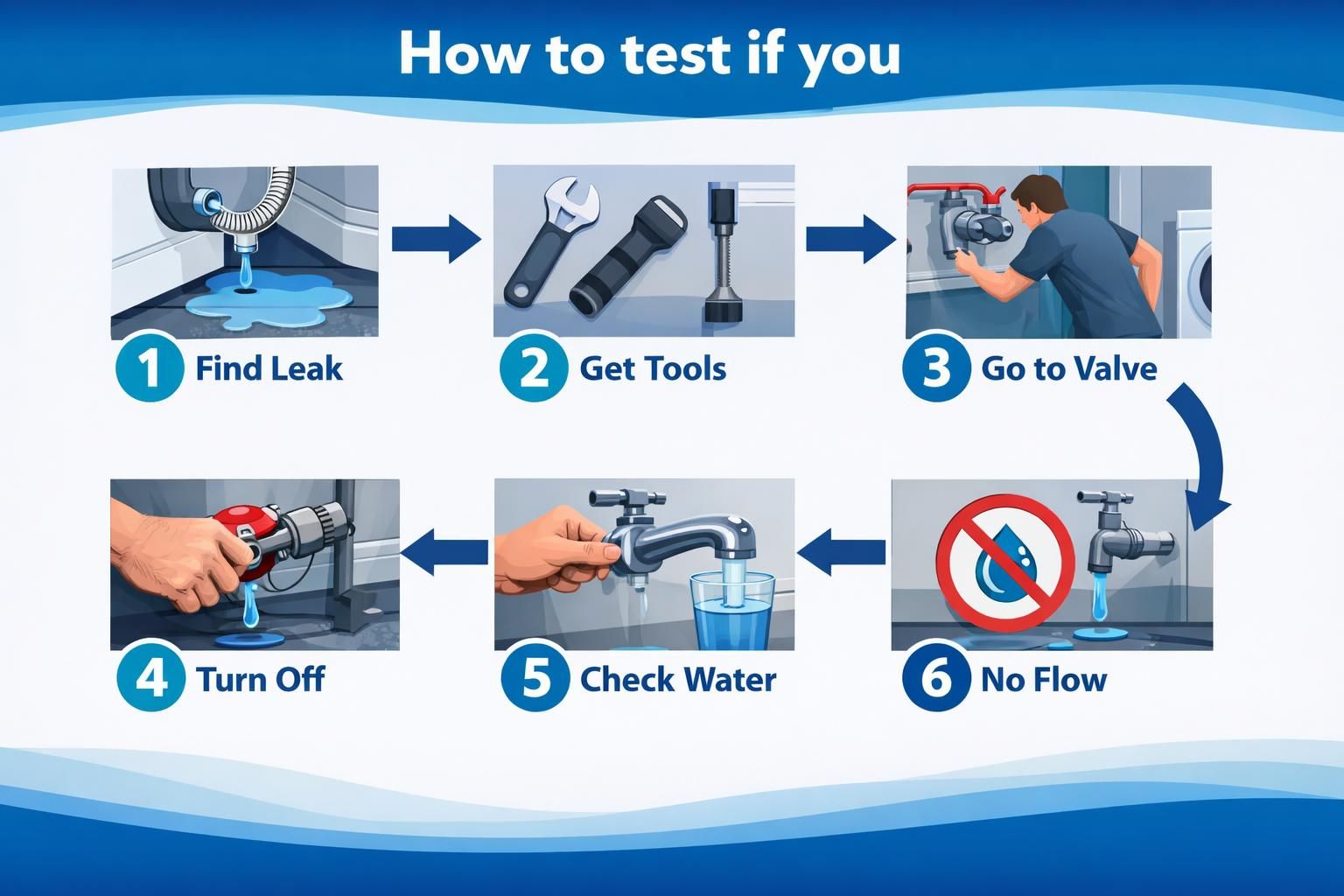
1) Tell everyone you’re testing. 2) Stop water-using appliances. 3) Open a faucet and leave it running. 4) Turn the suspected main valve toward OFF slowly. 5) The faucet should slow, then stop. 6) Flush a toilet once; the tank should not refill. 7) Turn the valve back ON slowly and confirm normal flow returns.
If water keeps running strongly and toilets refill, you may have shut off only a branch line, an outdoor spigot line, or a nonworking valve. Trace the largest incoming pipe back to where it enters the home and look for another shutoff.
After testing, clear storage away, add a simple label, and keep a flashlight nearby so you can reach it fast during a leak.
What if the Valve is Stuck?
If the valve is stuck, don’t force it. Corrosion and mineral buildup can seize old shutoffs, and forcing one can snap the stem, crack a fitting, or start an uncontrollable leak. Confirm the closing direction, usually clockwise, then apply steady pressure, not a jerk. On wheel handles, nudge slightly tighter, then slightly looser, then back toward closed to help break it free. Don’t tighten the packing nut just to “help,” because it can increase resistance. Stop if you hear creaks, see pipe flex, or notice moisture. A ball valve that won’t move is a bad sign, and a gate valve may feel closed while still passing water. Replacement is often the fix; see water service replacement overview.
When to Call a Plumber
Call a plumber if you can’t fully shut off water or the valve feels like it might break. Don’t DIY if it needs extreme force, turns but doesn’t stop flow, or shows corrosion, cracks, or damage. Stop if water beads at the stem while operating it, or if the space is so tight tools could slip and stress the pipe, especially with older piping. A plumber can replace the shutoff or add a more accessible main valve. If the issue extends into the supply line, see main line repair options. In an emergency, avoid wet electrical areas and call for help.
FAQ
Is the Water Meter Valve the Same as the Main Shutoff?
Often, yes: the valve by the meter can shut off the home. Some houses also have an indoor shutoff after the meter, which is faster to reach.
How Do I Turn Off Water to House With a Lever Handle?
Turn the lever a quarter turn until it’s perpendicular to the pipe, which usually means closed. Move slowly. If it won’t move, stop; forcing can crack it.
What if I Turn it Off and Still Hear Water Running?
It may be water draining, or you closed the wrong valve. Check faucet flow and toilet refill. If water continues steadily, the valve may be failing.
Should I Shut Off the Water When Leaving Town?
If you’ll be away for days, shutting off the main can prevent major leak damage. Turn it back on slowly when you return. It may also stop irrigation.
What’s the Difference Between a Main Shutoff and a Fixture Shutoff?
The main shutoff stops water to the whole house. A fixture shutoff stops one item, like a sink or toilet. Fixture shutoffs won’t help with leaks inside walls.
Conclusion
Finding your main shutoff before an emergency is one of those simple tasks that pays off fast. Walk your home, check the common indoor and outdoor spots, and test the valve on a calm day. If it’s stuck or doesn’t fully stop water, get it addressed before you need it. Now you won’t be guessing where is main water shut off valve when a leak is already spreading.