No hot water in the house can feel like everything in your routine just broke at once. And because hot water systems involve electricity, gas, and pressure, the smartest move is to start with safe, simple checks that don’t put you at risk. In this guide, you’ll learn how to figure out whether the problem is one faucet or the whole home, what usually goes wrong with gas, electric, and tankless units, and when it’s time to stop poking around. You’ll also get a clear idea of what a plumber will look at so you’re not guessing.
Best for: Homeowners who suddenly lost hot water and want quick, safe checks before deciding on a repair visit.
Not ideal when: You smell gas, see leaking water near the heater, or have tripped breakers that won’t reset.
Good first step if: You can safely confirm whether only one tap is affected and check obvious power or gas supply issues.
Call a pro if: The heater has error codes, repeated shutdowns, scorch marks, or any signs of overheating or pressure problems.
Quick Summary
- Start by confirming whether the issue is at one faucet or every hot-water tap in your home.
- If every fixture is cold, focus on the water heater’s fuel source: gas supply, electricity, or control settings.
- If only one tap is affected, the problem is often the faucet cartridge, a clogged aerator, or a stuck shutoff valve.
- Tank heaters fail differently than tankless units, so the troubleshooting steps change based on your heater type.
- Safety beats speed: gas smells, leaks, or electrical burning odors mean you stop and get help.
First: is it One Fixture or the Whole House?
If only one faucet has no hot water, the heater is usually fine and the issue is at that fixture. If every fixture is cold, focus on the heater and its power or fuel supply.
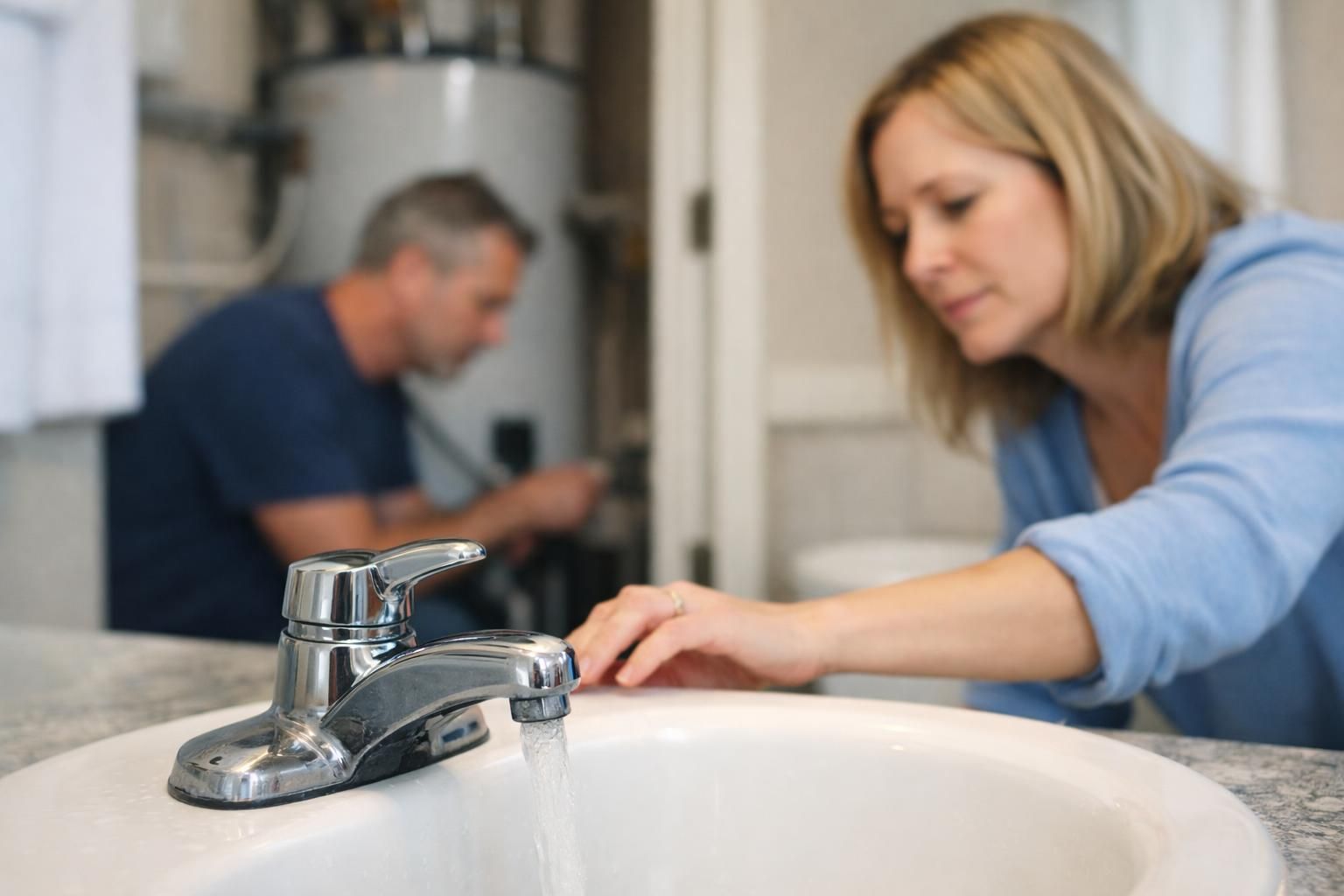
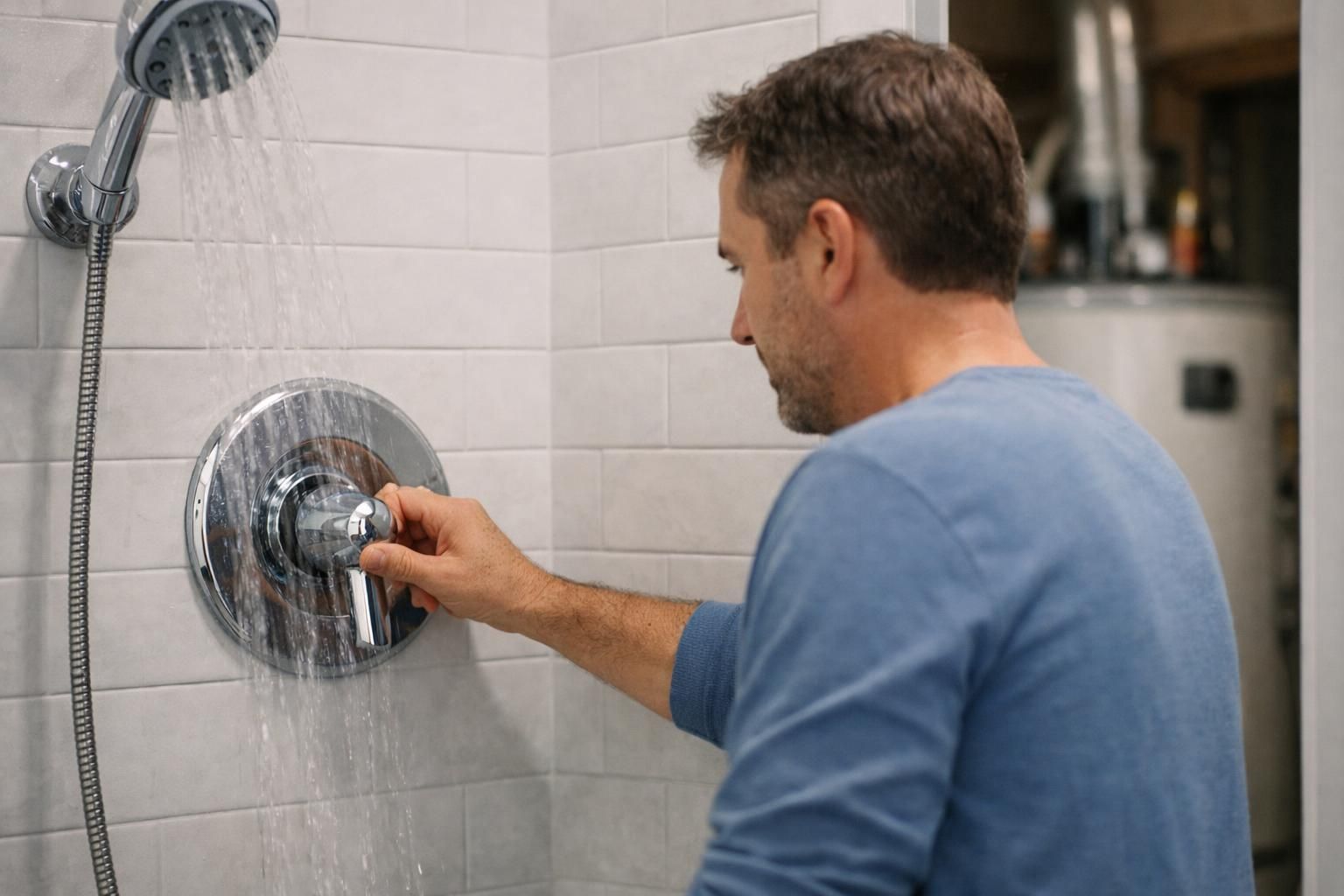
Do a quick test at a bathroom sink, the tub or shower, and the kitchen sink. If all are cold, it’s a system problem. If one works and one doesn’t, suspect a restriction or failed mixing part at that fixture. If water starts warm then turns cold fast, you may be using stored hot water without reheating, or cold may be mixing into the hot line.
For one-fixture problems, confirm the hot-side shutoff is fully open, rinse the faucet aerator, and consider a failed single-handle cartridge. On showers, an anti-scald limiter can cap temperature. If the whole house has no hot water, move to heater troubleshooting. Low hot pressure suggests a clog or valve issue; normal pressure but cold suggests heating failure. See common water line problems.
Gas Water Heater Causes
A gas water heater usually stops heating because the burner isn’t firing, the pilot is out (older units), or a safety device is preventing ignition. Either it isn’t getting gas, or it can’t safely light it.
Start with the safest checks. If you smell gas, leave the area and don’t operate switches, phones, or flames. Check the shutoff valve by the heater: handle parallel to the pipe is on, perpendicular is off. Check other gas appliances; if none work, it may be a supply issue. Confirm the control isn’t set to “vacation” or very low. Look for a status light or error code and note the pattern.
Common causes include a bad thermocouple or flame sensor, a dirty burner or blocked combustion air, and venting problems that trigger shutdown. Water on the floor can indicate a leaking tank and worsening failure. For repair decisions, see water heater repair options. Relighting steps vary by model.
Electric Water Heater Causes
An electric water heater usually loses hot water because power is interrupted, an element fails, or the high-limit safety reset trips. Many tanks have two elements, so one failure can leave you with brief warm water but not sustained heat.
Start with checks that don’t require opening panels. Check the breaker labeled “water heater” and flip it fully off, then back on once. If it trips again, stop, because repeat tripping points to a real fault. Confirm other circuits work; if multiple circuits are out, the problem may be upstream. After using hot water, listen near the tank; faint heating sounds can suggest it’s trying to run.
If power seems normal, common failures are behind the upper and lower access covers: thermostats, elements, and wiring. A burned-out lower element often gives a short burst of warm water, then cold. Loose or overheated connections can cause intermittent heat or breaker trips.
Do not remove covers unless you can verify power is off. Popping can indicate sediment burying an element and shortening its life.
Tankless Water Heater Causes
A tankless water heater usually loses hot water because it can’t detect enough flow to turn on, it shuts down with an error, or it lacks fuel or power. Since it doesn’t store hot water, any interruption shows up immediately.
Flow is the first check. If flow is too low, many units won’t ignite or energize, so a barely opened faucet may stay cold while opening it more can trigger heat. Check the display for an error code and write it down. Verify the cold-water supply valve is fully open. Confirm the unit has power; even gas models need electricity for controls and ignition. Try another hot tap and open it more to rule out a single clogged fixture.
Common causes include mineral scale that reduces flow and heat transfer, a clogged inlet screen filter, venting or combustion-air issues on gas units, and ignition or sensor failures controlled by electronics. Stop-and-go use can cause a “temperature sandwich,” where bursts of hot and cold water alternate as the burner cycles on and off.
When to Stop DIY Checks
Stop DIY checks if you smell gas, see active leaks, have repeat breaker trips, or notice signs of overheating or pressure problems. Water heaters combine flammable gas, high voltage, and hot pressurized water, so small mistakes can become dangerous quickly.
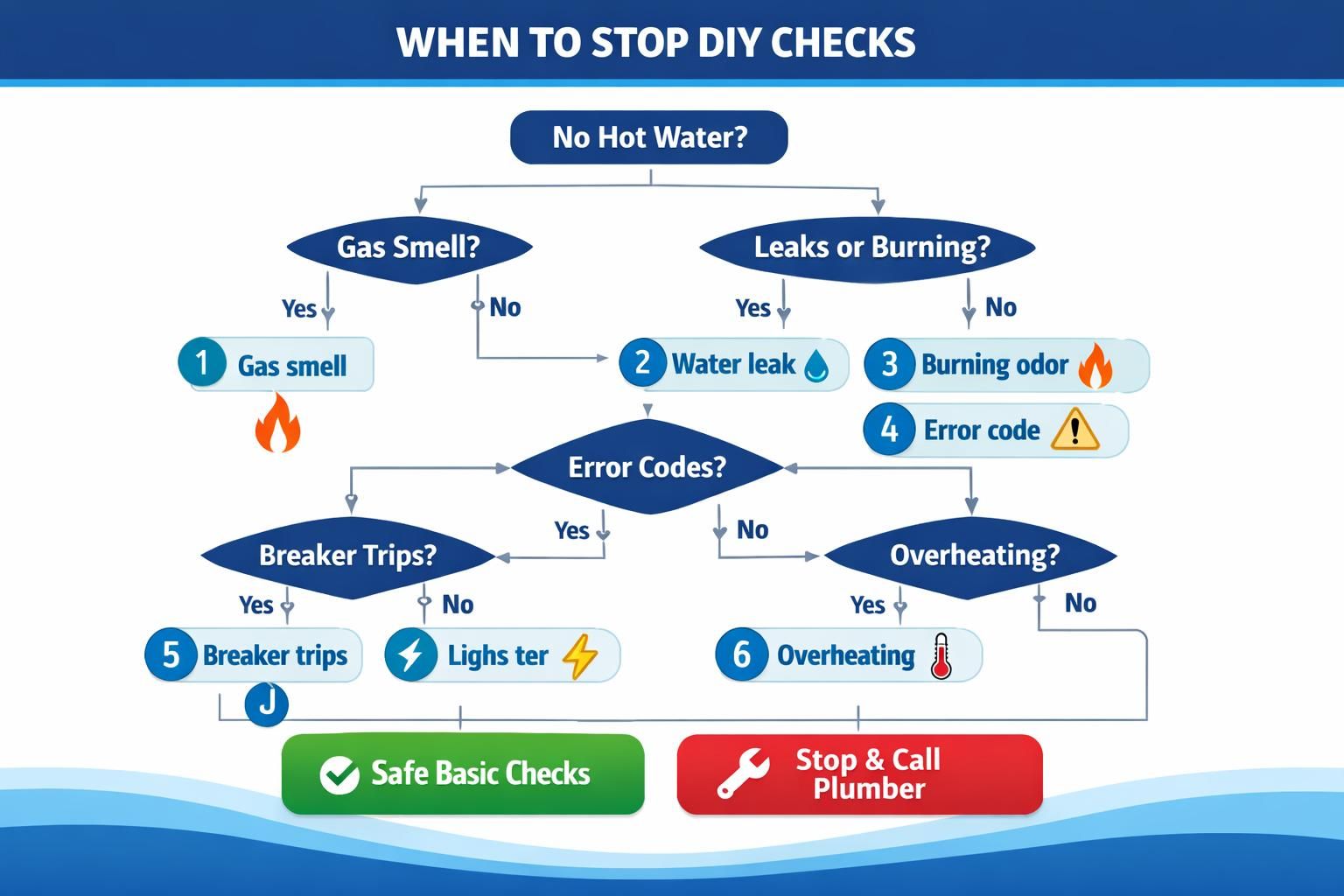
Stop and call for help if:
- You smell gas near the heater or gas line.
- Water is dripping from the tank body or pooling at the base.
- The breaker trips again after one reset.
- You see scorch marks or smell burning plastic.
- The temperature-pressure relief valve is steadily dripping or discharging.
- You see heavy corrosion on gas connections or wiring.
Never bypass safety parts. If a sensor, relief valve, or high-limit switch stops operation, it may be preventing a hazardous condition.
In rentals or shared buildings, document what you see and contact maintenance. If you suspect the issue is broader than the heater, learn the main-line symptoms in when water service fails.
What a Plumber Will Inspect
A plumber will inspect supply, controls, safety devices, and water flow to find why the heater isn’t heating. They confirm the symptom at multiple fixtures, identify heater type (tank vs tankless, gas vs electric), and check shutoff valves and settings, including “vacation” mode. They verify power or gas supply safely, inspect venting and combustion air on gas units, and look for leaks, corrosion, and tank condition. They test components such as elements, thermostats, igniters, flame sensors, control boards, and flow sensors. They also check for contributing causes like sediment, scale, or whole-house mixing from a stuck valve or failed shower cartridge.
FAQ
Why Do I Have No Hot Water but Cold Water Works?
If cold water works, your main supply is likely fine. The failure is usually in the hot-water system: tripped breaker, pilot/burner issue, or tankless error shutdown.
Can a Single Faucet Cause No Hot Water in the Whole House?
Yes. A failed single-handle shower cartridge can cross-mix cold into the hot line and cool other taps. It’s uncommon, so test multiple fixtures to confirm.
What Should I Check First When Hot Water Not Working?
Check whether it’s one fixture or all fixtures. Then check supply: breaker for electric, gas shutoff and status light for gas. If you smell gas or see leaks, stop.
Why Does My Hot Water Go Cold After a Few Minutes?
A tank may do this if an element fails (electric) or the burner won’t stay on (gas). Tankless units do it with low flow, scale, or error cycling.
Is it Safe to Relight a Gas Water Heater Myself?
It can be safe if the lighting instructions are on the unit and you don’t smell gas. If it won’t stay lit or you’re unsure, stop and call.
Conclusion
If you’ve got no hot water in the house, the fastest path is still a calm, safe process: confirm whether it’s one fixture or the whole home, then match your checks to the heater type. Gas units often fail at ignition or safety sensors. Electric units often fail at breakers, elements, or resets. Tankless units often fail at flow, scale, or error lockouts. And if you see leaks, smell gas, or have breakers that won’t hold, stop troubleshooting and bring in a pro.