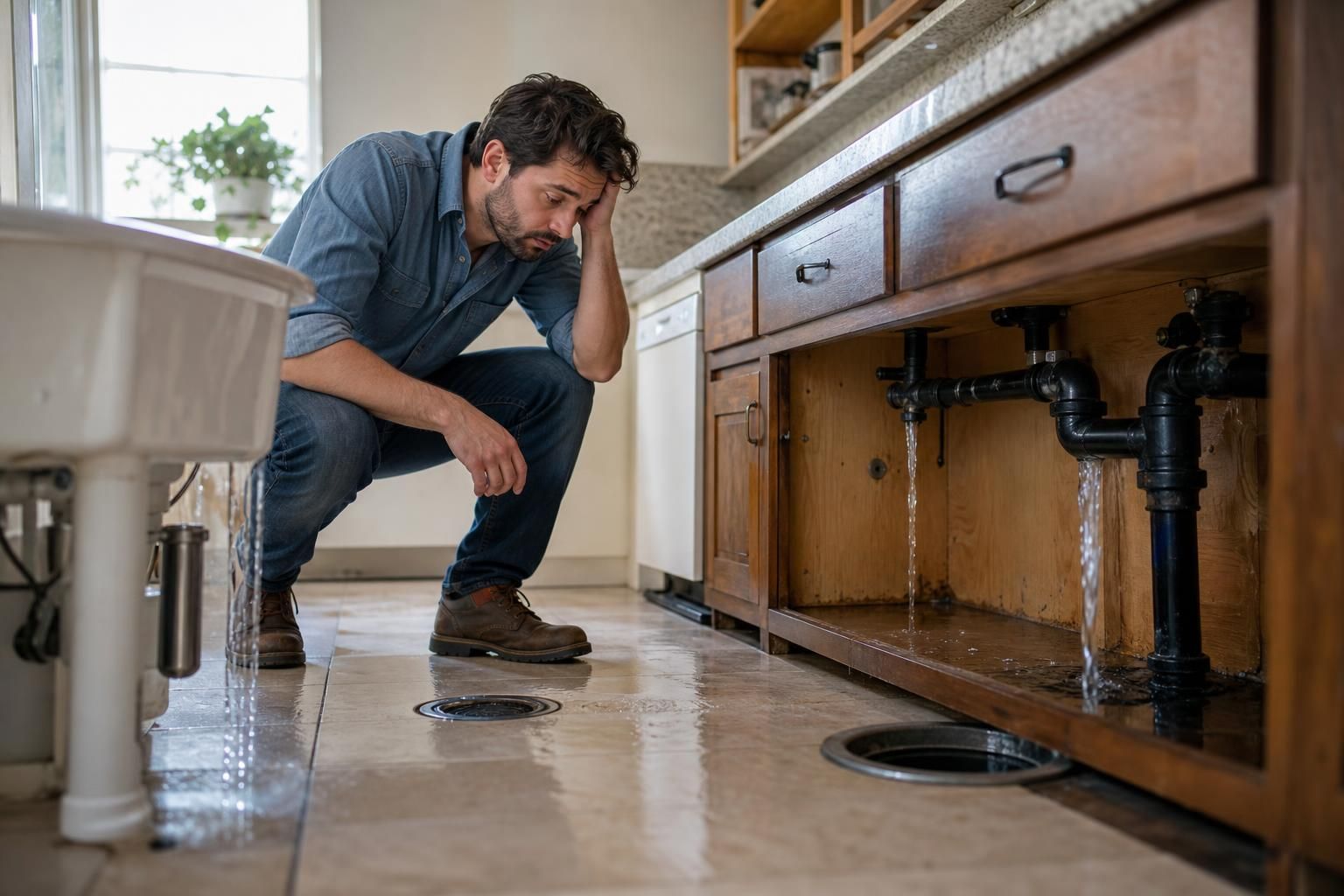
If your toilet bubbles while the shower drain fills with dirty water, don't treat it like a normal clog. Multiple drains backing up at once usually means the blockage is farther down the plumbing system, where several fixture drains meet. That shared pipe may be your main drain or sewer line.
This guide will help you read the symptoms, stop the damage from getting worse, and understand what a plumber may do next. You'll learn the difference between one clogged sink and whole-home drainage trouble, including main drain clog signs, sewer line backup symptoms, and when hydro jetting may help.
- Use this for homeowners seeing several fixtures react together and needing a calm way to sort the warning signs.
- Pause if only one sink drains slowly and every other fixture in the home works normally.
- First, you can safely stop water use and check which fixtures are backing up first.
- Get expert help if sewage, wastewater, or repeated backups appear in tubs, showers, toilets, or floor drains.
Why Multiple Drains Backing up is a Red Flag
Multiple drains clogged at the same time are a red flag because they often share the same blocked downstream pipe. Think of your plumbing like a tree. Each sink, tub, shower, and toilet has a small branch drain. Those branches connect to larger pipes, then to the main drain or sewer lateral, which carries wastewater away from the home.
A single slow kitchen sink may only have food, grease, or soap buildup in that one branch. But if sinks, tubs, and toilets all react together, the problem is probably past the branches. That's why a toilet and shower backing up when the washing machine drains is more concerning than one sluggish bathroom sink.
You may see the lowest tub, shower, or basement floor drain back up first. That happens because wastewater looks for the easiest exit. If you want a deeper symptom checklist, this guide to main sewer line clog symptoms walks through common warning patterns. For service help, Waterways Plumbing also explains drain options at https://waterwaysplumbingllp.com/drain-cleaning-and-repair/.
How to Tell if it is a Main Drain or Sewer Line Problem
You can usually tell whether it's a main line problem by checking how many fixtures react, where they are, and when the backup happens. Start with the simplest question: is one drain acting up, or are several fixtures responding to each other?
Use this quick comparison before you touch anything else.
| Symptom pattern | More likely issue | What you may notice | Next move |
|---|---|---|---|
| One kitchen sink clogged | Branch drain clog | Other fixtures drain normally | Stop using that sink |
| Toilet gurgles when shower drains | Shared line issue | Air bubbles or slow toilet water movement | Limit water use |
| Lowest tub or floor drain backs up | Main drain warning | Dirty water appears after other fixtures run | Call for inspection |
| Several toilets and tubs react | Sewer line backup symptom | Wastewater has nowhere to go | Stop all water use |
Now test carefully without adding much water. Flush nothing if sewage is present. Instead, listen when a nearby sink drains. Does the toilet gurgle? Does the shower drain rise? If yes, the clog is likely beyond that one fixture.
A cleanout can also help plumbers access the line. A cleanout is a capped pipe opening that lets tools enter the drain system. If you're not sure what one looks like, this guide to what a cleanout is explains why it matters.
Common Causes of Whole-Home Drain Backups
Whole-home drain backups usually come from buildup, blockage, root intrusion, pipe condition, or a mix of those issues. The right fix depends on what is actually inside the line. That's why guessing can waste time.
- Grease buildup from kitchen waste that cools and sticks to pipe walls
- Wipes, paper towels, hygiene products, or other items that don't break down well
- Tree roots entering small pipe openings and catching debris
- Pipe scale, which is mineral buildup that narrows the pipe
- Bellied pipes, meaning a low spot where waste and water collect
- Cracked, offset, or damaged pipe sections
- Heavy use of older plumbing during laundry, showers, or guests
Grease is a big one in kitchens, but it can still affect shared drainage if it travels downstream and catches other debris. If your kitchen backs up repeatedly after cooking or dishwashing, this guide to grease clogs in drains explains why the clog keeps returning.
Tree roots are another common troublemaker, but they aren't the only cause. Roots usually need an opening first. Once inside, they act like a net. They catch paper, grease, and solids until the flow slows or stops.
What to Stop Doing Right Away
Stop using water right away if multiple fixtures are backing up, especially if wastewater or sewage is appearing indoors. Do not send more water into a pipe that may already be blocked.
Before the plumber arrives, take these steps.
- Stop flushing toilets. One more flush can push wastewater into the lowest shower, tub, or floor drain.
- Stop running laundry and dishwashers. These appliances release a lot of water at once.
- Stop using sinks, tubs, and showers. Even a little water can add pressure to the blocked line.
- Skip chemical drain cleaners. They can sit in backed-up water, damage surfaces, and create hazards.
- Avoid repeated plunging if sewage is present. Plunging may splash contaminated water or push waste into another fixture.
- Move items away from low drains. Clear towels, rugs, storage boxes, and anything near a basement floor drain or low shower.
If the backup has reached finished flooring or belongings, focus on safety and containment. Do not walk through wastewater barefoot, and keep children and pets away. For prevention after this problem is solved, read sewer backup prevention.
How Plumbers Clear and Inspect the Line
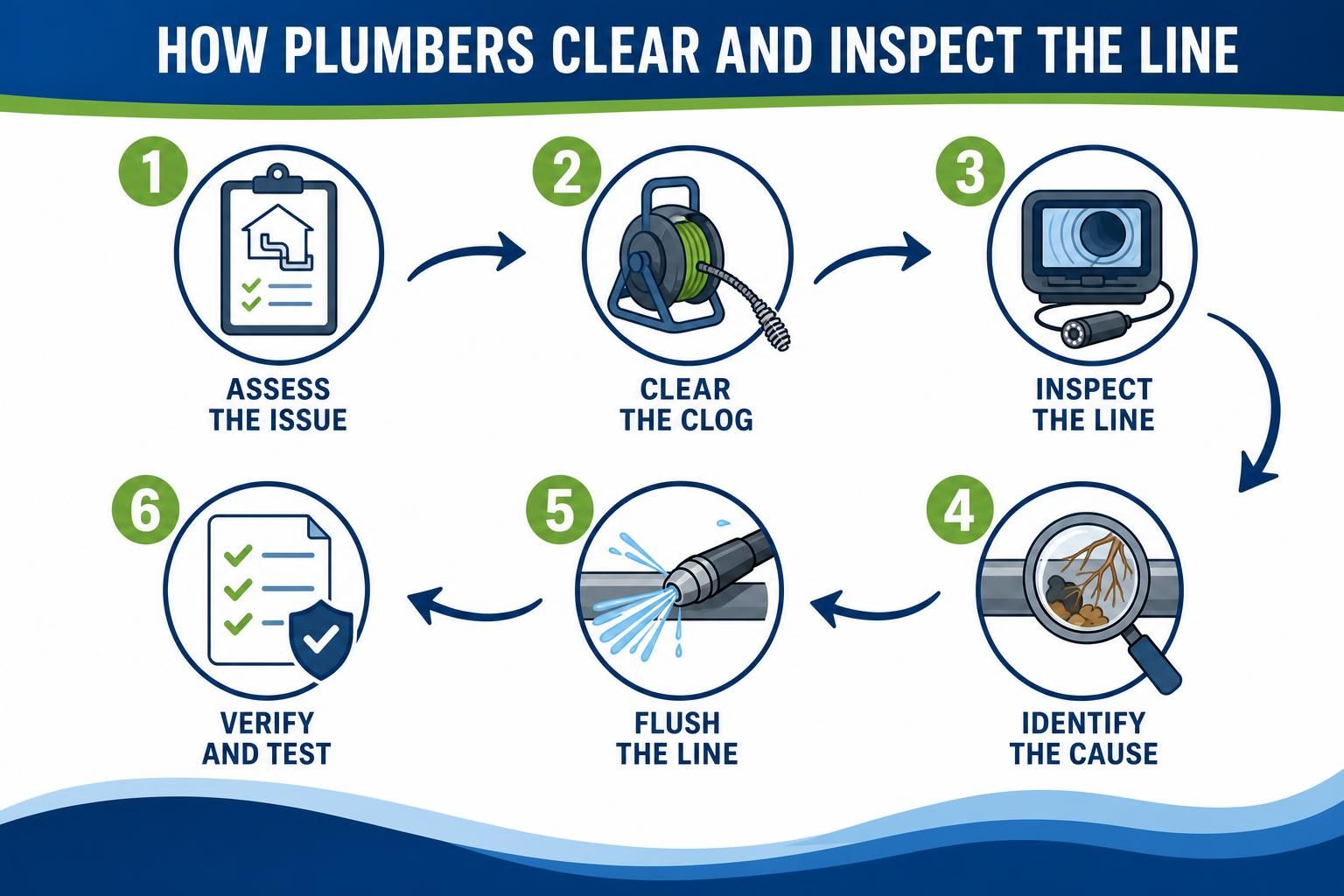
Plumbers clear and inspect the line by finding access, removing the blockage, and checking whether the pipe is damaged. A soft clog, root mass, and broken pipe do not need the same solution.
The usual process is simple.
- Find access. Cleanouts are often preferred because they provide direct access to the main drain or sewer lateral.
- Run a cable or drain snake. A rotating metal cable can break through or pull back a soft or localized blockage.
- Flush and test fixtures. The plumber may run water through several fixtures to confirm drainage has improved.
- Inspect with a camera. A small waterproof camera helps identify roots, scale, cracks, offsets, bellies, or buildup.
- Recommend cleaning or repair. Intact pipe may only need cleaning; broken, sagging, or severely damaged pipe may require repair or replacement.
Camera inspection is especially helpful when clogs return soon after snaking. For the order of these services, read camera inspection vs hydro jetting. Waterways Plumbing also outlines sewer service options at https://waterwaysplumbingllp.com/sewer-cleaning-repair-replacement/.
When Hydro Jetting is Recommended
Hydro jetting is recommended when the pipe needs a more thorough cleaning than a basic cable can provide and the line is in suitable condition. Hydro jetting uses high-pressure water to scour buildup from the pipe walls. Think of snaking like poking a hole through a clogged straw. Hydro jetting is more like rinsing the inside of the straw.
It can be useful for recurring grease buildup, sludge, soap residue, and some root-related debris after the line has been evaluated. It's often considered when backups return shortly after basic drain cleaning, or when a camera shows heavy buildup along the pipe walls.
But hydro jetting isn't always the first move. If a plumber suspects a collapsed pipe, badly cracked line, or serious offset, inspection should come first. Blasting water into a compromised pipe may not solve the real problem. It can also make diagnosis harder if the pipe needs repair.
That's why hydro jetting should be matched to the cause. This guide to signs you need hydro jetting can help you understand when it's more than a simple clog. Waterways Plumbing explains the service at https://waterwaysplumbingllp.com/hydro-jetting-services/.
FAQ
The most common questions about multiple drain backups come down to urgency, safety, and cause. If several fixtures are acting up together, treat the situation as more than a minor inconvenience until proven otherwise.
Use the answers below as a starting point, not a final diagnosis. Your home's pipe layout, age, cleanout access, and symptoms all affect the next best step.
Why is My Toilet Bubbling When the Shower Drains?
Your toilet may bubble because trapped air is being pushed through the water in the toilet bowl. This often happens when water from the shower can't move freely through the shared drain line. If the bubbling happens with slow drains or backups, it's a main drain warning sign.
Is a Kitchen Sink Clog the Same as a Sewer Line Backup?
No. A kitchen sink clog can be isolated to that sink's branch drain, especially if every toilet, tub, and shower works normally. A sewer line backup usually affects multiple fixtures. You may see water rise in a tub, shower, toilet, or floor drain when another fixture runs.
Should I Use Chemical Drain Cleaner for Multiple Clogged Drains?
No, don't use chemical drain cleaner when multiple drains are backing up. The product may sit in standing wastewater and create a hazard. It also won't fix many main line problems, such as roots, pipe damage, bellies, or heavy sewer buildup.
Why Does the Basement Floor Drain Back up First?
The basement floor drain often backs up first because it's one of the lowest openings in the plumbing system. When the main drain or sewer line is blocked, wastewater follows gravity and pressure. It escapes through the lowest available fixture before higher drains show symptoms.
Can Snaking One Drain Fix the Whole Problem?
Sometimes, but not always. Snaking one drain may open a path if the blockage is reachable and simple. If backups return quickly, or several fixtures keep reacting together, the main line may need camera inspection, deeper sewer cleaning, hydro jetting, or repair.
Conclusion
Multiple drains backing up at once usually means the problem is bigger than one clogged sink or toilet. Watch the pattern: lower drains backing up, toilets gurgling, sewage odors, and water appearing in showers when another fixture runs all point toward a shared line issue.
Your best next step is to stop water use, avoid chemicals, note which fixtures react, and schedule proper drain or sewer diagnosis. The right fix depends on what's in the line and whether the pipe is still in good condition.