A kitchen sink can seem “fixed” after snaking, then start draining slowly again after a few greasy dinners. That’s the frustrating pattern with grease buildup in drain lines. The problem usually isn’t one hard object blocking the pipe. It’s a sticky coating on the pipe walls that catches food bits, soap residue, and more grease every time you rinse a pan. Hydro jetting for grease buildup can work better than snaking because it washes the inside of the pipe instead of just poking a path through the clog.
- Use it for recurring kitchen clogs where grease, food particles, and sludge keep narrowing the same drain line.
- Pause if the pipe condition is unknown, damaged, or too fragile to clean without inspection first.
- Consider it if your sink improved after snaking but slowed again after normal cooking and dishwashing.
- Get expert help if multiple drains back up, dirty water returns, or the clog keeps coming back after basic clearing.
Why Grease Clogs Keep Coming Back
Grease clogs keep coming back because grease coats the pipe walls instead of staying in one neat blockage. Think of it like butter left on a plate. When it’s warm, it smears. When it cools, it sticks. Inside a drain, that sticky layer grabs crumbs, coffee grounds, sauce residue, and soap film.
A plumbing snake, also called an auger, is a flexible cable used to break through clogs. It can help when there’s a soft blockage close to the drain opening. But with grease, the drain may only seem clear because a small channel has opened through the middle. Water moves again for a while, then the greasy coating starts catching debris all over again.
You’ll often notice this after washing pans used for oil, bacon grease, butter, gravy, or creamy sauces. The sink drains slowly, gurgles, or leaves dirty water sitting in the basin. If that sounds familiar, our guide to grease clogs explains why kitchen drains are especially prone to this pattern.
How Grease Builds up Inside Drain Lines
Grease builds up inside drain lines when fats, oils, and food residue cool down and cling to the pipe surface. Hot water may carry grease into the drain at first, but it doesn’t keep it liquid forever. As the water cools, the grease thickens and starts acting like glue.
The process usually happens in layers. First, a thin film forms along the pipe wall. Next, soap residue and food particles stick to that film. Then more grease lands on top. Over time, the pipe opening gets smaller, so water has less room to move.
Here’s a simple way to picture it. A clean pipe is like a wide hallway. Grease buildup turns that hallway into a narrow path with sticky walls. Every bit of debris that passes through has a chance to get caught.
- Cooking oil rinsed from pans
- Butter, shortening, and meat drippings
- Creamy sauces, dressings, and gravy
- Food scraps from plates and prep sinks
- Soap film mixed with fats and starches
In a home, this may happen after regular cooking. In a small café, deli, or bakery, it can happen faster because grease and food particles enter the drain many times a day.
Why Snaking May Not Remove the Buildup
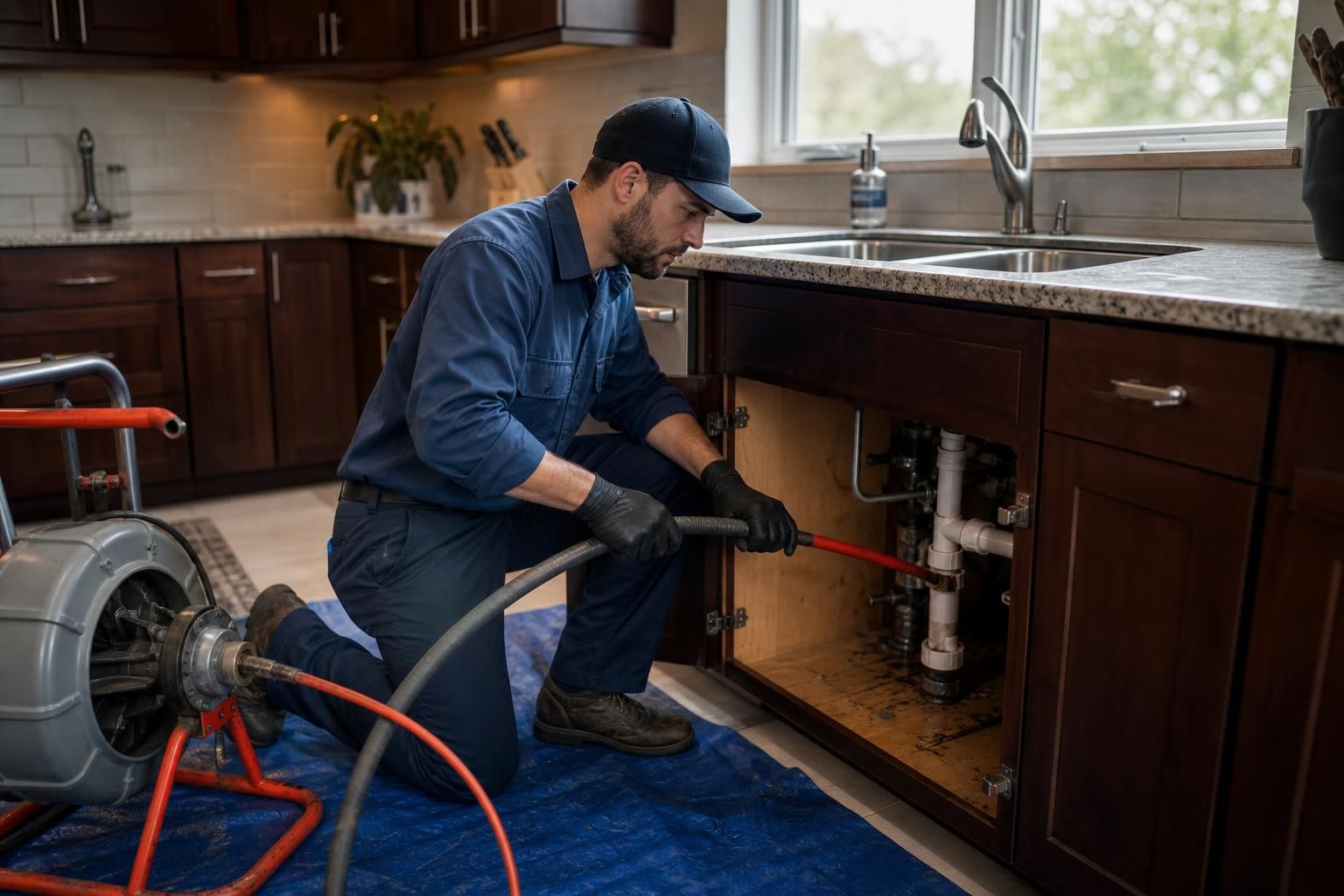
Snaking may not remove grease buildup because it cuts through the clog rather than washing the pipe walls clean. That’s the key difference. A snake is good at making an opening. It’s not designed to scrub a sticky coating from the full inside surface of the pipe.
Imagine pushing a pencil through a jar of peanut butter. You’ll create a hole, but the peanut butter is still there. Grease in a drain behaves in a similar way. Water may flow through the new path, but the sides of the pipe remain coated. The next wave of grease and food scraps has plenty to stick to.
| Method | What it does best | Grease limitation | Better fit |
|---|---|---|---|
| Snaking | Breaks through a blockage | Leaves wall coating behind | Simple, isolated clogs |
| Hydro jetting | Washes pipe walls | Needs suitable pipe condition | Recurring grease and sludge |
| Camera inspection | Shows pipe condition | Doesn’t clean by itself | Unclear or repeat clogs |
Snaking may be enough if the clog is small, close to the fixture, and not part of a repeating pattern. But if your drain improves after service and then slows again, compare the next step with hydro jetting vs snaking so you understand why grease clog removal often needs more than a cable.
How Hydro Jetting Clears Grease and Sludge
Hydro jetting clears grease and sludge by sending a strong stream of water through the drain line to scour the pipe walls. Hydro jetting is a professional drain-cleaning method that uses pressurized water, not blades or chemicals, to push buildup out of the line. For grease, that wall-cleaning action is the main advantage.
Here’s the basic process a plumber follows:
- Inspect the drain if needed. A camera may be used to look for heavy grease, pipe damage, or deeper blockage.
- Choose the right access point. The plumber uses a cleanout, which is an opening made for drain service, when available.
- Run the jetting hose. The hose moves through the line while water sprays in targeted directions.
- Flush the loosened material. Grease, sludge, and food debris move downstream and out of the problem area.
- Test the drain. Water flow is checked to confirm the line is moving properly again.
This is why hydro jetting grease is different from simply opening a hole. It’s closer to rinsing a dirty bottle than poking through the center of it. If you’re looking for professional help, you can review hydro jetting services to see how this type of cleaning fits recurring grease issues. For broader drain problems, Waterways Plumbing also explains drain service at https://waterwaysplumbingllp.com/drain-cleaning-and-repair/.
When Grease Problems Need a Camera Inspection
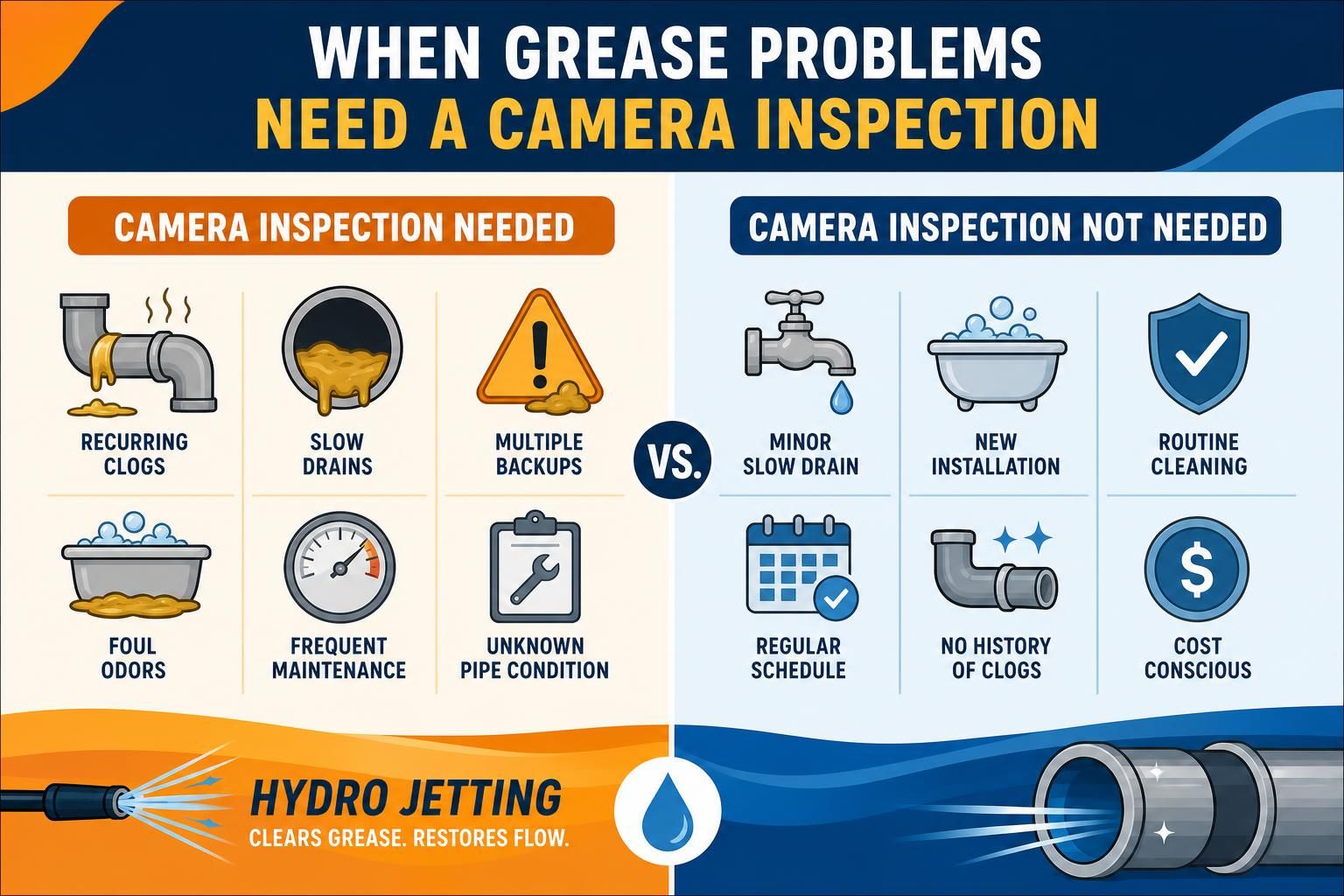
Grease problems need a camera inspection when the clog keeps returning, the pipe condition is uncertain, or the blockage may be deeper than the kitchen drain. A camera inspection means a plumber sends a small waterproof camera into the drain line to see what’s happening inside. It helps turn guesswork into a clearer plan.
This matters because not every slow drain is only grease. Grease may be part of the problem, but there could also be a sagging pipe, a broken section, roots, or heavy buildup farther down the line. A camera can also help a plumber decide whether hydro jetting is a smart next step for that specific pipe.
Consider inspection before jetting when:
- The same kitchen drain clogs again and again
- More than one fixture backs up at the same time
- The building has older or unknown drain piping
- Grease problems happen in a food-service space
- Dirty water returns after the sink drains
A small café is a good example. If the prep sink, mop sink, and kitchen floor drain all act up, the issue may be beyond one trap or branch line. In that case, camera inspection before hydro jetting can help you understand why seeing the pipe first may save time and prevent the wrong approach.
Prevention Tips for Homes and Small Businesses
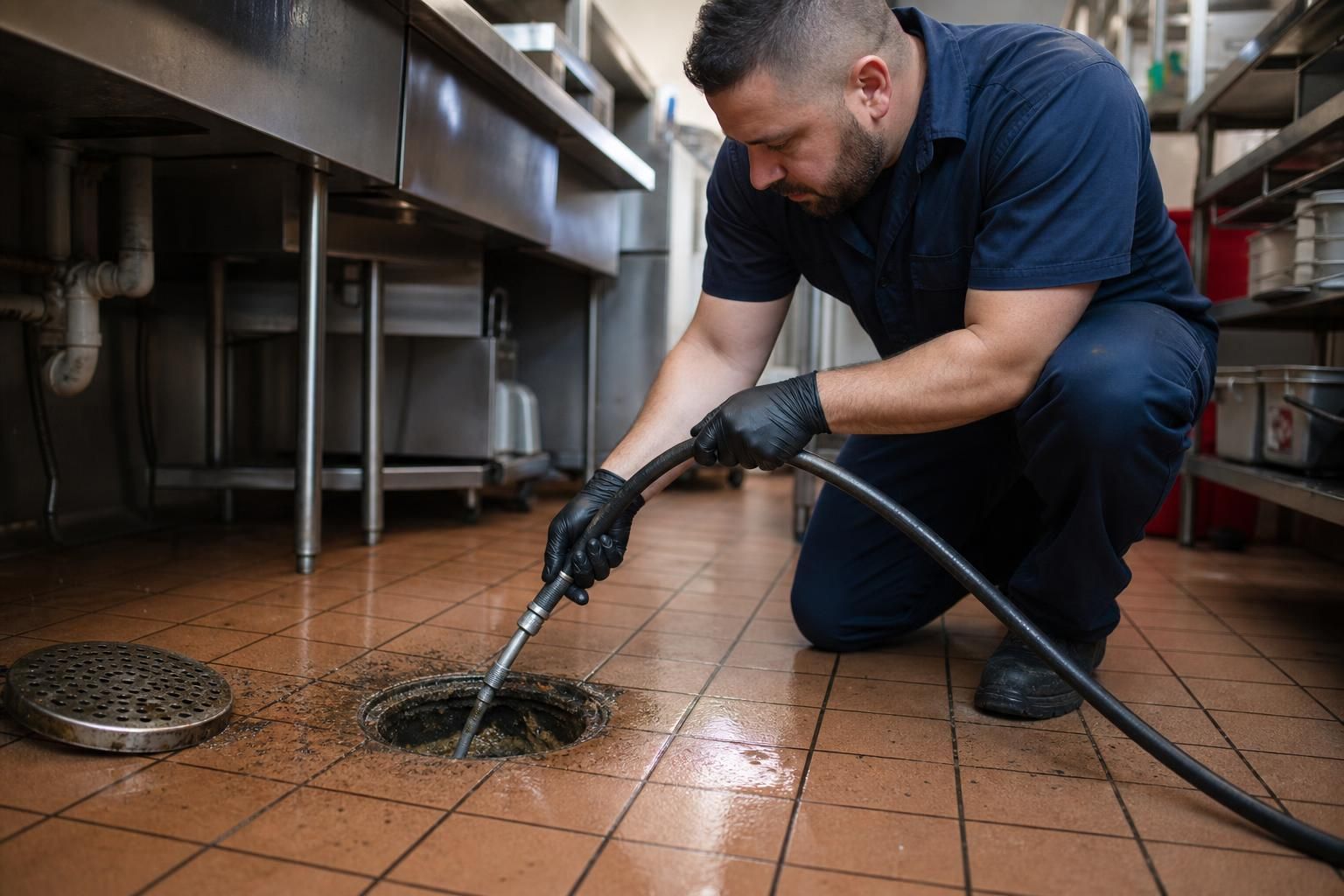
The best way to prevent grease buildup in a drain is to keep grease out of the drain in the first place. Once grease enters the pipe, hot water and dish soap can move it along temporarily, but they don’t make it disappear. The goal is to reduce how much sticky material reaches the drain.
For homes, use this simple routine:
- Let grease cool in a pan or container.
- Scrape it into the trash once it thickens.
- Use a sink strainer to catch food scraps.
- Throw coffee grounds, rice, pasta, and starchy leftovers in the trash.
- Run plenty of water while using the disposal, if you have one.
For small businesses, prevention needs to be more structured. Train staff not to rinse grease into prep sinks. Empty strainers often. Post a quick reminder near dish areas. If your business uses a grease trap, which is a device that captures fats and oils before they enter the drain line, keep it serviced on a consistent routine. You can learn more about grease trap cleaning if your kitchen handles grease throughout the day.
Common mistakes are easy to make. Don’t pour oil down the drain just because it’s liquid. Don’t rely on hot water to “melt” grease away. And don’t assume a garbage disposal can handle everything. It chops food smaller, but it doesn’t stop grease from sticking to the pipe walls.
FAQ
Can Hydro Jetting Remove a Kitchen Drain Grease Clog?
Yes, hydro jetting can remove many grease clogs because it washes the pipe walls and flushes greasy sludge out of the line. It works especially well when grease buildup coats the inside of the pipe. A plumber may inspect first if the clog is recurring or pipe condition is unknown.
Why Did My Drain Slow Down Again After Snaking?
Your drain may have slowed down again because snaking opened a path through the grease but didn’t remove the sticky coating. Water could flow for a while, but food particles and soap residue started sticking to the remaining grease. That’s why the same clog pattern can return.
Is Hydro Jetting Always Better Than Snaking for Grease?
Hydro jetting is often better for recurring grease buildup, but it’s not automatically the right choice every time. Snaking may be fine for a small, isolated clog. Hydro jetting makes more sense when grease and sludge are coating the pipe walls or when clogs keep coming back.
Should I Use Chemical Drain Cleaners on Grease?
Chemical drain cleaners aren’t a reliable long-term grease solution. They may seem to help briefly, but they don’t fully clean the pipe walls. They can also create handling risks. For a stubborn grease clog, mechanical cleaning, inspection, or hydro jetting is usually a more practical path.
How Do I Know if the Problem is Deeper Than the Kitchen Sink?
You may have a deeper problem if several drains slow down, water backs up in another fixture, or the clog returns soon after clearing. Repeated grease issues in a restaurant, café, or busy kitchen also deserve a closer look. A camera inspection can show where buildup is happening.
Conclusion
Hydro jetting for grease buildup works best when the real problem is a sticky coating inside the drain, not just one loose blockage. Snaking can be useful, but it may only punch a temporary path through grease. If your kitchen drain keeps slowing after cooking, dishwashing, or previous clearing, start by reducing grease going into the sink. Then have the line evaluated. A camera inspection and proper cleaning method can help you choose the next step with confidence.