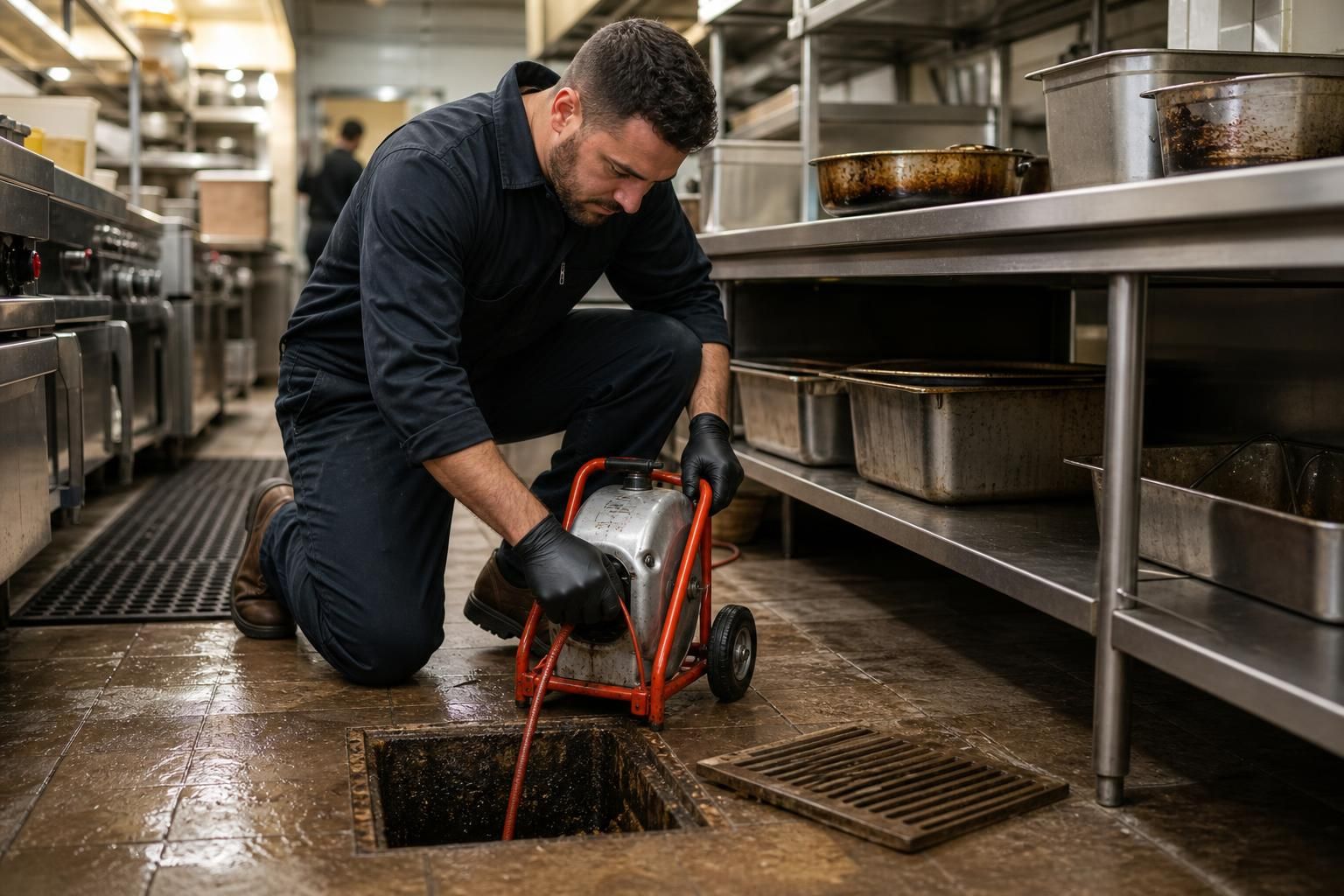
Restaurant drains don’t fail the same way home drains do. A home kitchen might deal with coffee grounds, soap, or the occasional food scrap. A restaurant drain handles grease, sauces, starches, cleaning water, mop debris, and heavy dishwashing all day. That’s why commercial drain cleaning for restaurants needs a different approach than basic drain clearing. You’re not just trying to open one slow sink. You’re trying to keep a busy kitchen moving, prevent odors, protect floor drains, and stop repeat backups before they interrupt service. In this guide, you’ll learn what causes restaurant clogs, how to spot warning signs, and when to choose restaurant drain cleaning, grease trap service, or hydro jetting.
Best for: Restaurant owners, managers, and kitchen leads trying to stop recurring grease-related drain problems before they disrupt service. Not ideal when: Wastewater is already overflowing near food prep areas and the kitchen needs immediate emergency plumbing help. Good first step if: You’re seeing slow drains, bad odors, gurgling, or floor drain backups during busy kitchen periods. Call a pro if: Multiple drains back up at once, a grease trap drain backup keeps returning, or sewage odors spread through the kitchen.
Quick Summary
- Restaurant drains clog faster because they handle grease, food waste, sludge, and heavy water flow every day.
- Grease trap cleaning and drain cleaning solve different problems, even though the symptoms can look similar.
- Slow sinks, floor drain backups, odors, and gurgling often point to buildup deeper in the line.
- Hydro jetting commercial drains can help when grease and sludge coat the inside of pipes.
- Staff habits matter. Scraping plates, controlling grease disposal, and watching floor drains reduce repeat clogs.
Why Restaurant Drains Clog Faster Than Home Drains
Restaurant drains clog faster than home drains because they handle more grease, more solids, and more wastewater in less time. Commercial kitchen drains also collect buildup in layers. Hot grease enters as liquid, then cools and sticks to pipe walls. Starchy water can turn pasty, and small food scraps stick to that coating. Over time, the pipe opening shrinks.
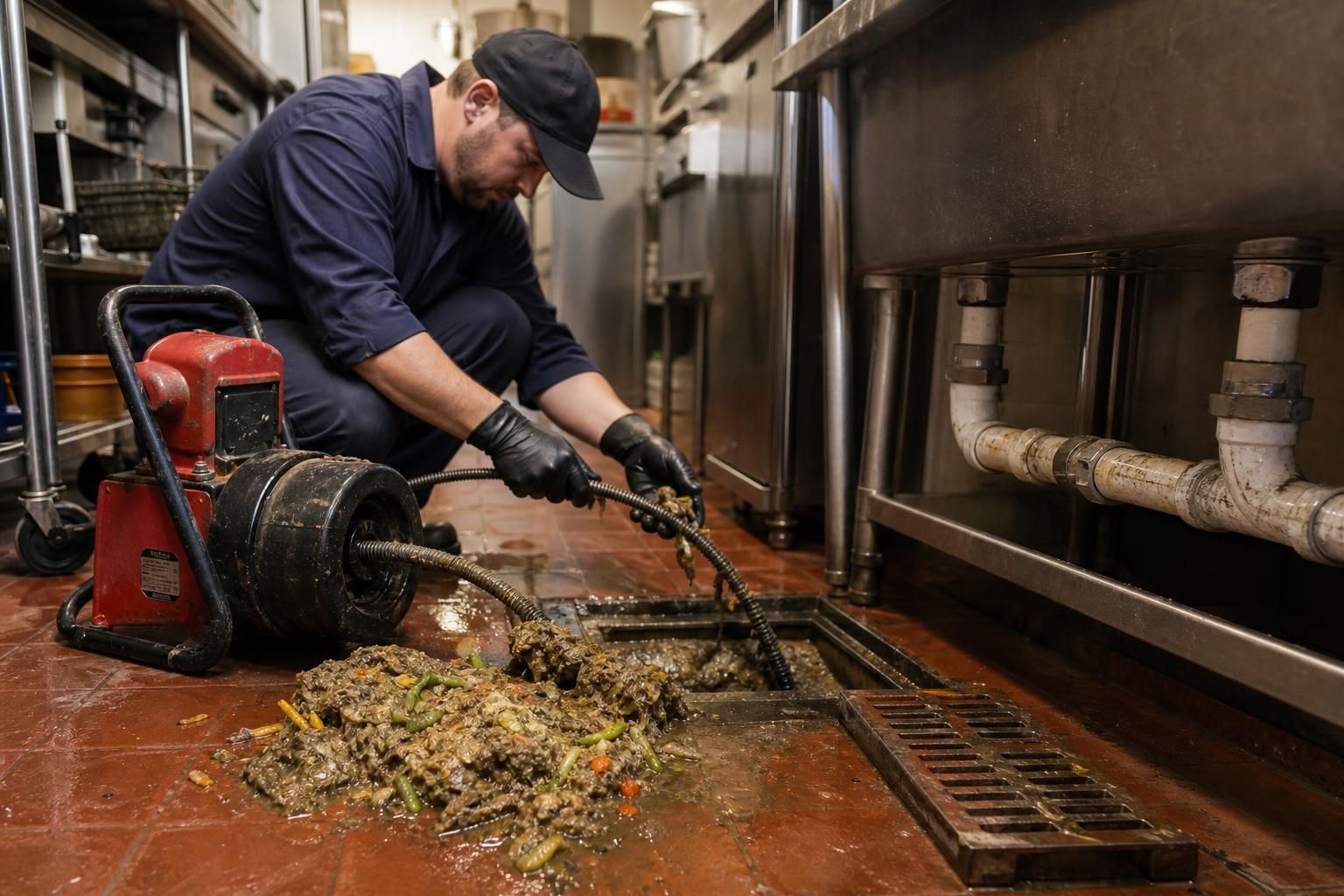
If a kitchen sink keeps slowing after clearing, the issue may be more than one clog. A closer look at a kitchen sink clogging problem can help separate grease, food waste, and main drain symptoms.
Restaurant drains do not just need clearing. They need cleaning that matches what is inside the line.
Grease, Food Waste, and Floor Drain Buildup
Grease, food waste, and floor drain debris cause recurring clogs because they collect gradually and form sticky sludge inside the pipe. It may not block the line at once, but it narrows the drain until a busy shift triggers a backup.
Watch where the problem appears. A slow sink often points to a branch line clog. A floor drain that backs up during prep or dishwashing may suggest heavier buildup farther downstream.
- Grease poured from pans, fryers, or trays
- Sauce, dairy, and fats rinsed during dishwashing
- Rice, pasta, peels, and small food scraps
- Mop water carrying dirt into floor drains
- Soap film mixing with grease in the line
Grease is especially stubborn because it cools, hardens, and clings. If it keeps returning, hydro jetting for grease clogs may be part of the solution.
Signs a Commercial Drain Needs Service
A commercial drain needs service when slow drainage, odors, gurgling, or backups keep returning after normal cleaning. Restaurant plumbing usually gives warning signs before a major overflow, so catch them early.
Check for these signs during prep, rush periods, and closing.
- Watch sinks that drain slowly even after strainers are cleaned.
- Listen for gurgling when nearby fixtures drain.
- Smell for sour, rotten, or sewer-like odors near sinks or floor drains.
- Look for water coming up through a floor drain during dishwashing.
- Notice whether several drains act up at the same time.
- Track clogs that return within a short time after clearing.
One slow sink may be local. Multiple fixtures backing up together can signal a deeper issue. multiple drains backing up is a warning sign worth taking seriously.
Drain Cleaning vs Grease Trap Cleaning
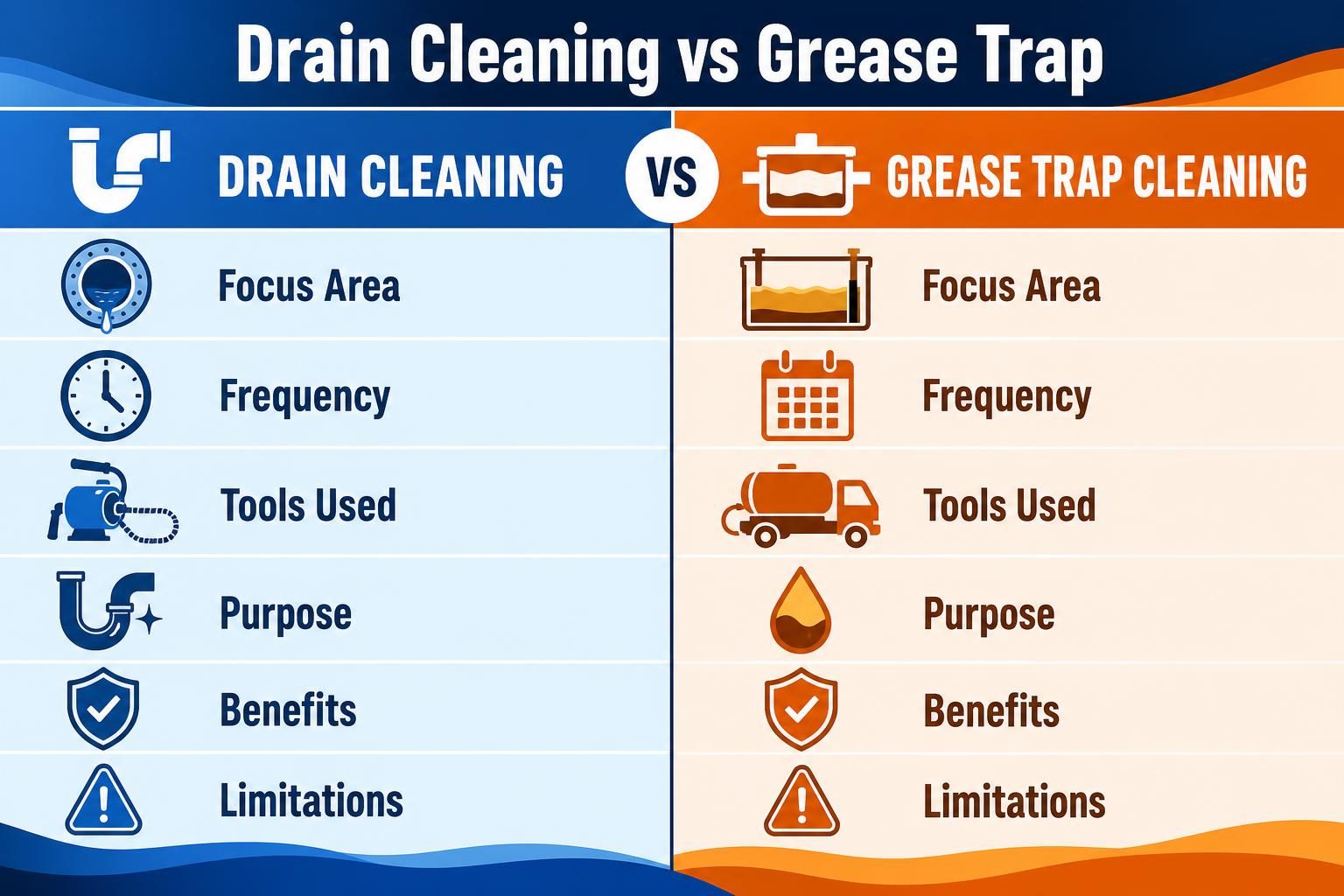
Drain cleaning clears or washes the pipe, while grease trap cleaning removes fats, oils, grease, and solids from the grease trap. These services are related, but not the same. Confusing them is one reason restaurant drain problems return.
A grease trap is a box or tank that slows wastewater so grease can separate before water enters the drain system. It works like a strainer for liquid grease, while also holding solids and oily residue. When it gets too full, grease can escape into the drain line or cause wastewater to back up.
Drain cleaning focuses on the pipe. Grease trap cleaning focuses on the trap. Sometimes you need both.
| Service | What it targets | Common symptom | Best next step |
|---|---|---|---|
| Restaurant drain cleaning | Pipe clogs and sludge | Slow sinks or floor drain backup | Clear and inspect affected line |
| Grease trap cleaning | Grease, oils, and solids in the trap | Trap overflow or recurring grease odors | Pump and clean the trap |
| Hydro jetting | Coated commercial drain lines | Repeat clogs after basic clearing | Wash pipe walls with water pressure |
- Identify the first fixture affected.
- Check whether the grease trap is full, overflowing, or smelly.
- Note whether multiple drains are slow at the same time.
- Ask whether the problem returns after basic drain clearing.
- Choose the service based on the pattern, not just the mess you can see.
If the trap is the issue, WaterWays’ <a href="https://waterwaysplumbingllp.com/grease-trap-cleaning/">grease trap cleaning</a> service can address the source before grease moves farther into the drain system. You can also compare grease trap cleaning with pipe-focused service so your kitchen doesn’t pay for the wrong fix.
When Hydro Jetting Helps Commercial Lines
Hydro jetting helps when grease, sludge, and soft buildup coat pipe walls instead of forming one simple clog. It cleans with high-pressure water through a special hose and nozzle, washing the pipe walls rather than just punching a hole through the blockage.
In restaurants, grease spreads along the pipe. A cable may open a path, but buildup stays on the sides and catches debris again.
- A line backs up after repeated basic clearing
- Grease-heavy waste has built up over time
- Floor drains overflow during high-volume dishwashing
- Odors or gurgling suggest buildup beyond one fixture
- A camera inspection shows coated pipe walls
See <a href="https://waterwaysplumbingllp.com/hydro-jetting-services/">hydro jetting services</a>. For comparisons, hydro jetting vs snaking explains method choice. Older or damaged pipes may need inspection first.
Maintenance Tips for Kitchen Staff
Kitchen staff can prevent repeat clogs by keeping grease and solids out of drains. The key is steady habits during prep, service, and closing.
- Scrape plates and pans into trash before rinsing.
- Wipe greasy cookware with disposable towels.
- Keep sink strainers in place.
- Empty strainers before they overflow.
- Sweep dry debris before mopping.
- Pour mop water only into approved drains.
- Report slow drains, odors, and gurgling fast.
- Log recurring issues by fixture and time.
Patterns help plumbers diagnose problems faster. A floor drain backing up only during dinner rush points to a different issue than a sink draining slowly all morning.
Avoid pouring grease into sinks, using hot water as a grease fix, removing strainers, or ignoring odors. For planning, how often drains should be cleaned helps guide routine service.
FAQ
How Often Should a Restaurant Schedule Drain Cleaning?
Restaurants should schedule drain cleaning based on use, symptoms, and past clog history. A high-volume kitchen may need service more often than a small cafe. Instead of guessing, track slow drains, backups, odors, and grease trap issues. That record helps set a practical maintenance schedule.
Is a Grease Trap Drain Backup the Same as a Clogged Drain?
A grease trap drain backup isn’t always the same as a clogged drain. The trap may be too full, the outlet line may be blocked, or both may be happening together. If cleaning the visible area doesn’t solve it, the connected drain line should be checked.
Can Staff Use Drain Chemicals in a Commercial Kitchen?
Staff shouldn’t rely on drain chemicals for restaurant clogs without professional guidance. Chemicals may not remove grease coating inside the pipe, and they can create safety concerns around staff, food areas, and plumbing materials. Mechanical cleaning, grease trap service, or hydro jetting is often a more targeted option.
Why Does the Floor Drain Back up During Dishwashing?
A floor drain can back up during dishwashing because high water flow reaches a partially blocked line. The line may still pass water during slow periods, then fail when sinks, dish machines, and floor drains all discharge at once. That timing usually points to buildup deeper in the system.
Does Hydro Jetting Fix Every Restaurant Drain Clog?
Hydro jetting doesn’t fix every clog, but it’s useful for many grease and sludge problems in commercial lines. It works best when the pipe can handle water pressure and the issue is buildup along the walls. Damaged, collapsed, or badly offset pipes need different repair decisions.
Commercial drain cleaning for restaurants works best when you match the service to the symptom. Slow sink after greasy prep? Start with the affected line. Full or smelly trap? Look at grease trap cleaning. Repeat floor drain backups, gurgling, and odors? Ask whether hydro jetting or a camera inspection makes sense. Your next step is simple: document which drains act up, when they fail, and whether the problem returns after cleaning. That pattern gives a plumber the clues needed to solve the right problem instead of chasing the same clog again.