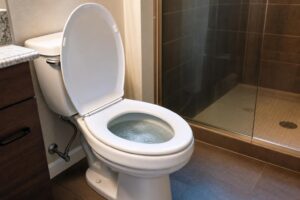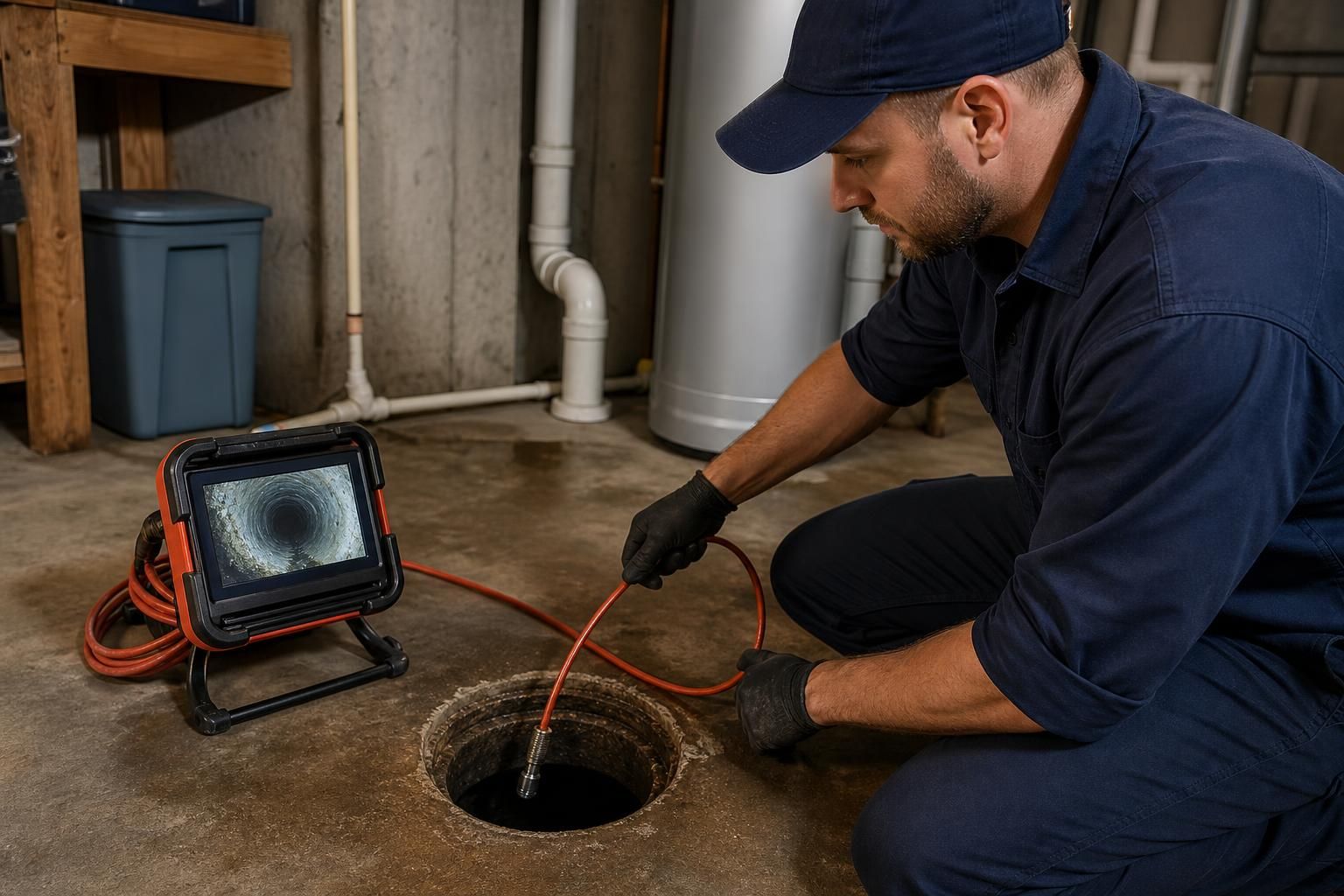
A sewer camera before drain cleaning is worth considering when the clog might be more than a simple blockage. A sewer camera inspection means a plumber feeds a small waterproof video camera into the line to see what is actually inside before choosing a cleaning method.
You do not need a camera for every slow sink. If one tub or sink clogs once and clears normally, basic drain cleaning may be enough. But if the same drain keeps clogging, several fixtures slow down, you hear gurgling, or you smell sewer odor, inspect first so you are not guessing.
Quick Summary
- Use a camera first for recurring clogs, backups, sewer odors, or slow drains in multiple fixtures.
- Skip the camera for a simple, isolated sink or tub clog that clears with standard cleaning.
- A drain camera inspection can reveal roots, sagging pipe sections, breaks, offsets, or heavy buildup.
- Camera results help choose the next step: clean, hydro jet after inspection, repair, or investigate further.
- Older or damaged pipes may limit cleaning options, so the final method should be evaluated by a licensed plumber.
- For inspection details, see https://waterwaysplumbingllp. com/sewer-camera-inspection/; for cleaning options, see https://waterwaysplumbingllp. com/drain-cleaning-and-repair/.
When a Camera Inspection is Worth it
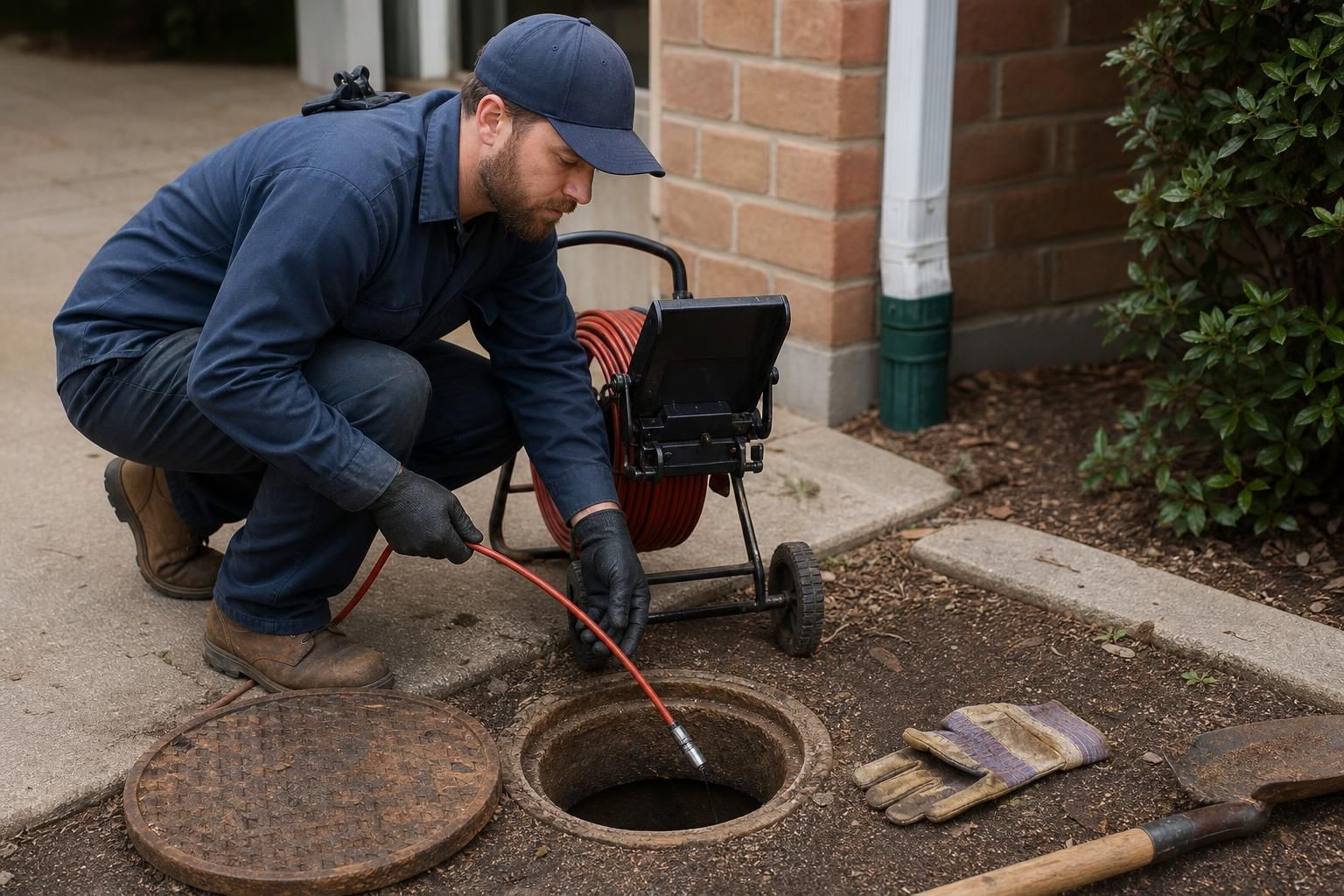
A camera inspection is worth doing before cleaning when the clog keeps coming back, affects the main sewer line, or hints at pipe damage. The main sewer line is the large pipe that carries wastewater away from your home. The camera shows what is causing the problem, so you are not paying for blind cleaning that may miss the real issue.
- Check the pattern. If the same drain clogs again after multiple cleanouts, inspect before another cleaning.
- Look for system-wide symptoms. Slow drains in more than one room, toilet bubbling, gurgling sounds, or sewer odor can point to a deeper line issue.
- Consider the property. Older homes, large trees near the sewer line, or a history of backups make inspection more useful.
- Ask for recorded findings. A good sewer camera inspection should show where the issue is and what it looks like.
Simple decision rule: if the problem is isolated and new, clean first; if it is recurring, widespread, or tied to odor or backup, inspect first.
For service details, see https://waterwaysplumbingllp. com/sewer-camera-inspection/.
When Basic Drain Cleaning May Be Enough
Basic drain cleaning may be enough when the problem looks local, recent, and easy to explain. Think of a bathroom sink slowed by hair near the stopper, or a tub that backs up after weeks of soap scum buildup. That is usually a fixture-level clog, not a whole sewer line mystery.
- Only one drain is slow or blocked.
- Toilets, showers, and sinks in other rooms work normally.
- There is no sewer smell, bubbling toilet, or gurgling from nearby drains.
- The clog has not been coming back in the same spot.
- The home does not have a known history of main line backups.
In that kind of situation, a plumber may clear the blockage with standard drain cleaning tools before recommending any inspection. If the drain opens and keeps working, you probably did not need a camera first.
If you need help with a straightforward clog or drain repair, see https://waterwaysplumbingllp. com/drain-cleaning-and-repair/.
Warning Signs the Problem is Deeper
Some symptoms point past a simple hair clog or food blockage. They suggest the problem may be in the main sewer line, which is the larger pipe that carries wastewater away from your home.
- More than one drain is slow at the same time, such as a shower, toilet, and laundry drain.
- A toilet bubbles or gurgles when you run a nearby sink or washing machine.
- Sewage backs up into a tub, shower, or floor drain.
- You notice sewer odor near drains, in the basement, or outside by a cleanout.
- The same drain keeps clogging after it has already been cleaned.
- Water drains fine for a few days, then slows again in the same spot.
If you are seeing two or more of these signs, do not treat it like a normal clog. Ask whether a sewer camera should go in before cleaning so the plumber can identify the cause and location before choosing the safest method.
Roots, Bellies, Breaks, and Heavy Buildup
A camera helps because these problems can seem like “just another clog” from inside the house. Roots enter through tiny pipe openings and catch toilet paper, grease, and debris, and repeated backups can suggest tree roots in sewer line. A belly is a sagging pipe section where water sits instead of draining. A break is a cracked or collapsed pipe. An offset is where two pipe sections no longer line up. Heavy buildup coats pipe walls with grease, scale, or sludge, leaving only a small opening.
If a drain keeps clogging in the same place after multiple cleanouts, the camera may show roots, a sagging section, or a broken pipe that changes the plan. Pipe material and condition matter too. Older clay, cast iron, or damaged lines may limit aggressive cleaning options and should be evaluated by a licensed plumber before jetting or repeated cabling.
Review sewer camera inspection details at https://waterwaysplumbingllp. com/sewer-camera-inspection/ and drain cleaning or repair options at https://waterwaysplumbingllp. com/drain-cleaning-and-repair/.
How Camera Results Help Choose the Right Fix
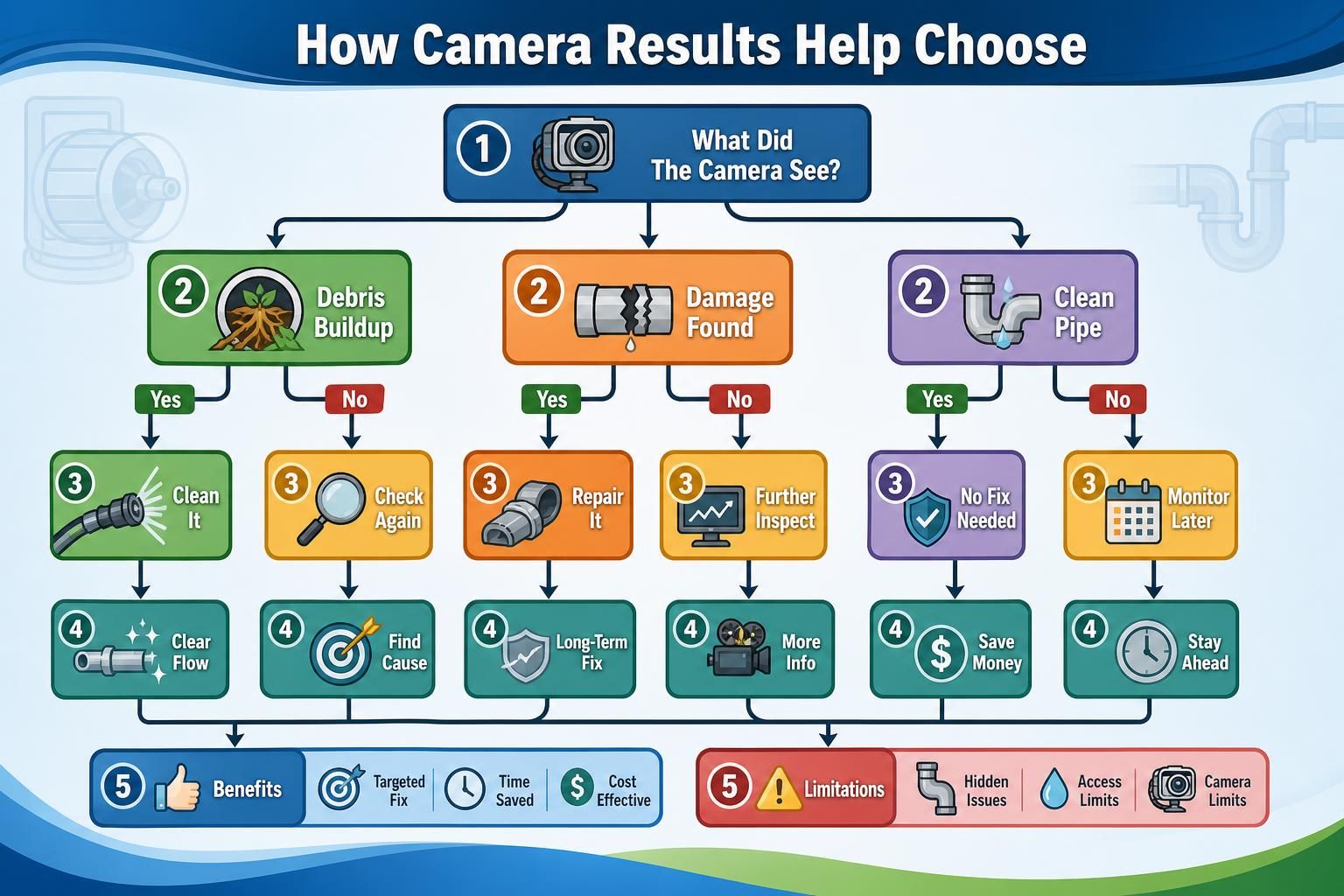
The camera result turns “we think it is clogged” into “here is what is blocking it, where it is, and what is safe to do next.” That matters because the wrong cleaning method can waste money or worsen a damaged pipe.
- Ask where the blockage is. A clog 8 feet from a sink is different from one 60 feet out in the main sewer line.
- Ask what the camera shows. Grease, sludge, roots, a low spot, or cracked pipe point to different fixes.
- Ask whether the pipe looks strong enough for cleaning. If the line is broken or collapsed, cleaning alone will not solve the problem.
- Choose the least invasive fix that matches the finding.
| Camera finding | What it usually means | Best next step |
|---|---|---|
| Soft clog near one fixture | Local blockage | Standard drain cleaning |
| Heavy buildup in an intact line | Flow is narrowed | Deeper cleaning; jetting may fit |
| Roots or repeated blockage | Openings in the pipe | Clear line, then discuss repair |
| Break, offset, or sag | Pipe shape is the issue | Repair or further evaluation |
An offset means two pipe sections no longer line up cleanly. Water may still pass, but debris catches at the lip. Clearing the clog may help temporarily, but the camera shows why it will likely return.
When Hydro Jetting Comes After Inspection
Hydro jetting makes the most sense after the camera has shown a line that is clogged by thick grease, sludge, scale, or dense debris but still looks structurally sound. In that situation, the real choice is often hydro jetting vs snaking, since a cable may open a path while jetting can clean more of the buildup from the pipe walls. Hydro jetting means cleaning the pipe with a controlled stream of high-pressure water. Think of it like pressure washing the inside of the drain, not poking a hole through the clog.
- Inspect the line with a sewer camera: https://waterwaysplumbingllp. com/sewer-camera-inspection/
- Confirm the pipe is not badly broken, collapsed, or severely offset.
- Choose the right cleaning method for what the video shows.
- Use hydro jetting only when the pipe condition supports it.
- Recheck flow if the blockage was heavy or recurring.
This matters because jetting a badly damaged pipe can make a risky situation worse. But in a heavily built-up line, the camera may show that jetting is the right next step instead of a basic cable. For cleaning options, see https://waterwaysplumbingllp. com/drain-cleaning-and-repair/.
FAQ
Does a Sewer Camera Clear the Clog?
No. A sewer camera inspection shows what is inside the pipe, but it does not remove the blockage. The cleaning still happens afterward, using a cable, hydro jetting, repair work, or another method based on what the camera finds.
Should I Get a Camera Inspection for One Slow Sink?
Usually not at first. If one sink, shower, or tub is draining slowly and everything else in the home works fine, standard drain cleaning may be enough. A camera becomes more useful if that same drain keeps clogging again or the plumber suspects the problem is farther down the line.
What Signs Mean I Should Inspect Before Cleaning?
Consider inspection first if several drains are slow, toilets gurgle, sewage backs up, sewer odors appear, or the same clog returns after cleaning. Those signs do not prove there is pipe damage, but they do suggest the blockage may be in the main sewer line instead of one small fixture drain.
Is a Sewer Camera Before Drain Cleaning Worth the Cost?
It can be worth it when the inspection prevents the wrong cleaning method or reveals roots, a sagging pipe, a break, or heavy buildup. Any price range you see online is only a general planning estimate. Always confirm current pricing with the provider before scheduling service.
Use this final checklist: one new slow drain can usually start with cleaning; recurring clogs, multiple slow fixtures, sewer odor, gurgling, or backups call for inspection first. If your symptoms point to a deeper line issue, schedule a professional sewer camera inspection at https://waterwaysplumbingllp. com/sewer-camera-inspection/ before choosing the cleaning method.