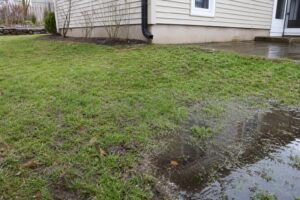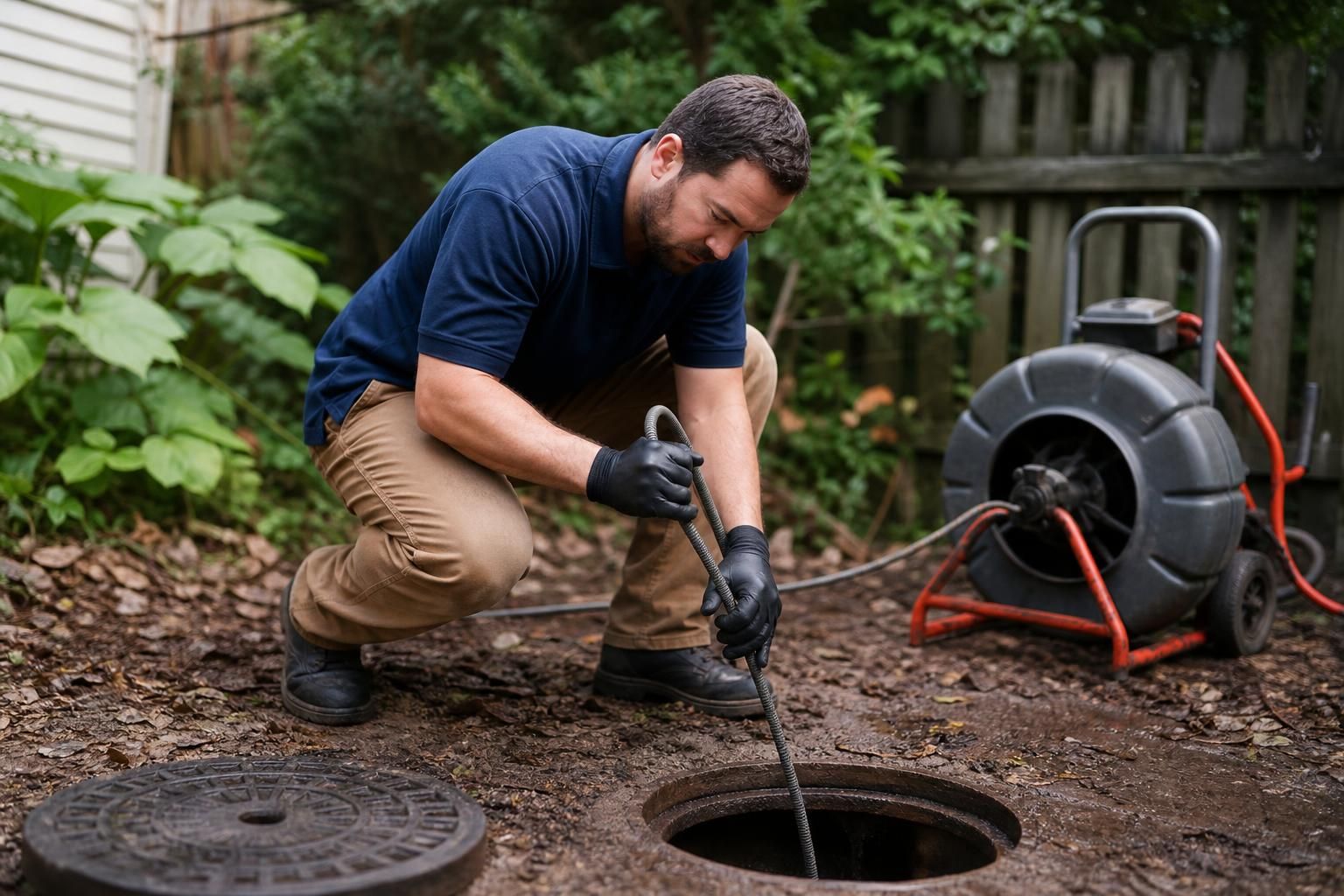
The drain seemed fixed after snaking. Then, a few days or weeks later, the sink slows down, the toilet gurgles, or dirty water backs up again. If your sewer line keeps clogging after snaking, the snake probably opened a narrow path through the blockage instead of removing the cause. For related context, see our guide to hydro jetting for grease clogs.
Snaking means using a flexible metal cable to poke through a clog. It’s useful, but it doesn’t scrub the pipe clean or show whether roots, grease, a sagging pipe, or damage is causing a recurring sewer clog. For related context, see our guide to sewer camera inspection vs hydro jetting.
So your next step isn’t “snake it harder.” It’s figuring out what keeps catching waste in the same spot. For related context, see our guide to can hydro jetting damage pipes? what.
Quick Summary
- A drain snake can punch through grease, sludge, roots, or debris without fully clearing the pipe walls.
- If several fixtures back up together, the issue may be in the main sewer line.
- Hydro jetting may help when buildup keeps returning, but pipe condition matters.
- A sewer camera inspection can find roots, cracks, offsets, bellies, or collapse.
- Homeowners in Everett, King County, and Snohomish County should stop repeated DIY snaking if backups keep coming back.
Why Snaking Sometimes Only Opens a Temporary Path
A drain snake is a cutting or boring tool, not a full pipe-cleaning tool. It can break through the middle of a clog so water starts moving again, but it often leaves grease, sludge, roots, or debris stuck to the inside walls of the pipe.
Think of it like poking a straw through packed snow. You’ve made a path, but the snow is still there. As soon as more food scraps, toilet paper, soap residue, or lint moves through the line, that narrow opening can close again.
A common example is a kitchen or laundry drain that clears after snaking, then slows down a few days later. The snake may have pushed through a soft blockage, but greasy buildup or laundry sludge stayed behind. The same thing can happen with tree roots. A snake may cut or disturb the roots, but if they’re still inside the pipe, they’ll catch paper and waste again. For related context, see our guide to hydro jetting vs snaking.
So if your sewer line keeps clogging after snaking, the real question isn’t “Did the snake work?” It’s “What did it leave behind?”
Common Reasons the Clog Comes Back
A clog usually comes back because something is still narrowing the pipe, catching waste, or slowing water after the snake passes through. Think of the sewer line like a straw with sticky residue inside. You can poke a hole through it, but the next thing flowing by can stick again.
| Reason the clog returns | What’s happening | Clue you may notice |
|---|---|---|
| Grease or sludge buildup | Pipe walls stay coated after snaking | Drains slow again within days |
| Tree roots | Roots remain in the line and catch paper | Toilets clog after temporary clearing |
| Bellied pipe section | A sag in the pipe holds water and waste | Same drain backs up repeatedly |
| Damaged or misaligned pipe | Cracks or offsets snag debris | Clogs return in the same area |
Flushed debris can also restart the problem. Wipes, paper towels, hygiene products, and thick toilet paper don’t break down like regular toilet paper. Even if a snake moves them once, they can bunch up downstream.
Older or undersized lines can worsen the pattern. They may not move waste fast enough during laundry, showers, or heavy household use. If your sewer line keeps clogging after snaking, note the timing, affected fixtures, and how quickly the backup returns.
When the Problem is in the Main Sewer Line
If several drains act up after snaking, the blockage may not be in one small drain. It may be in the main sewer line, the large pipe that carries wastewater from your home to the city sewer or septic connection.
- Flush a toilet and watch the tub or shower drain. If water gurgles or backs up there, that points past the toilet branch.
- Run water in a sink while someone watches a floor drain, tub, or lower-level toilet. Backup in another fixture is a warning sign.
- Pay attention to smell. Sewer odors after a recent snaking can mean waste is still sitting in the line.
- Notice the pattern. If the whole home drains slowly during laundry, showers, or back-to-back toilet flushes, the main line may still be restricted.
This is different from one kitchen sink slowing down again. Several fixtures backing up at once after the sewer line was snaked usually means the snake didn’t fully clear the shared pipe. For Everett, King County, and Snohomish County homes, main-line symptoms may require sewer cleaning, repair, or replacement evaluation: https://waterwaysplumbingllp. com/sewer-cleaning-repair-replacement/.
When Hydro Jetting Makes More Sense
Hydro jetting makes more sense when the clog keeps coming back because the pipe walls are coated, not just blocked in one spot. Hydro jetting uses high-pressure water to scrub the inside of the pipe. Think of it like pressure washing the pipe from the inside instead of poking a tunnel through the mess.
Use this quick filter:
- Look for recurring buildup. If grease, sludge, or debris keeps narrowing the line after snaking, hydro jetting may make more sense than another temporary pass with a snake.
- Watch for “partial clearing.” If water drains better after snaking but never feels fully normal, the snake may have opened a narrow path while leaving buildup behind.
- Be careful with roots. A snake can cut or disturb tree roots, but roots left in the line can catch toilet paper and waste again. Hydro jetting may help clear debris around roots, but damaged pipe still needs diagnosis.
- Check pipe condition first when needed. Older, cracked, or fragile lines may need inspection before jetting.
Hydro jetting is often considered for recurring sewer and drain buildup when inspection or symptoms point to coated pipe walls: https://waterwaysplumbingllp. com/hydro-jetting-services/.
When a Sewer Camera Inspection is Needed
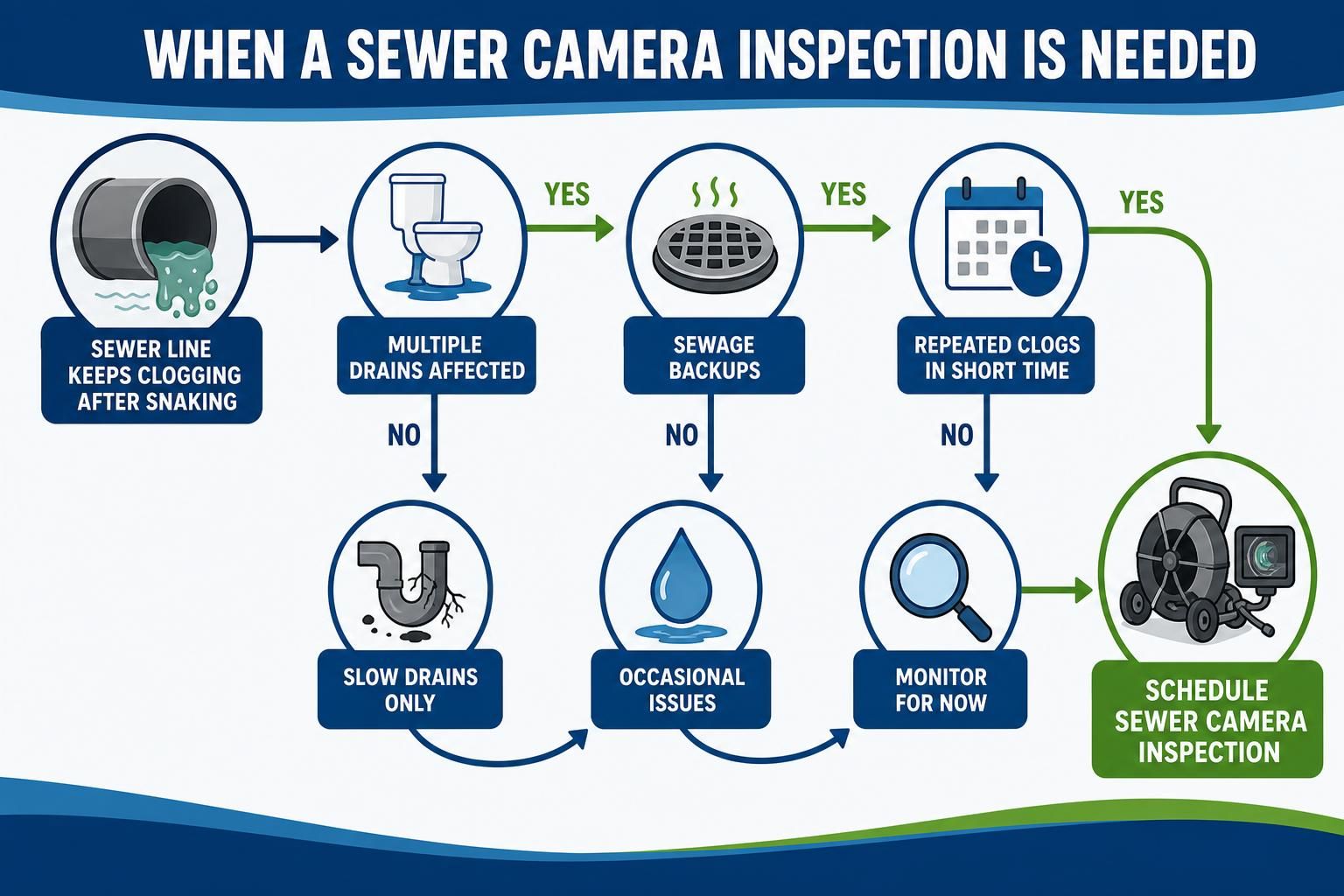
Choose a sewer camera inspection when the same line keeps clogging after snaking and you don’t know what’s inside the pipe. A sewer camera inspection means a plumber sends a small waterproof camera through the sewer line to see the actual problem on a screen.
Use it before guessing at the fix.
- Schedule inspection if backups return quickly. If the sewer line was snaked last week and the toilet, shower, or laundry drain is already slow again, the clog may be forming in the same bad spot.
- Look for hidden pipe problems. The camera can show roots, cracks, offset joints, collapsed areas, or a belly. A belly is a sagging pipe section where water and waste sit instead of flowing away.
- Match the repair to the cause. If the camera finds thick sludge, cleaning may be enough. If it finds a cracked or shifted section, more snaking won’t solve it for long.
A sewer camera inspection is the most direct way to confirm why a recurring clog keeps forming in the same line: https://waterwaysplumbingllp. com/sewer-camera-inspection/.
What Homeowners Should Do Next
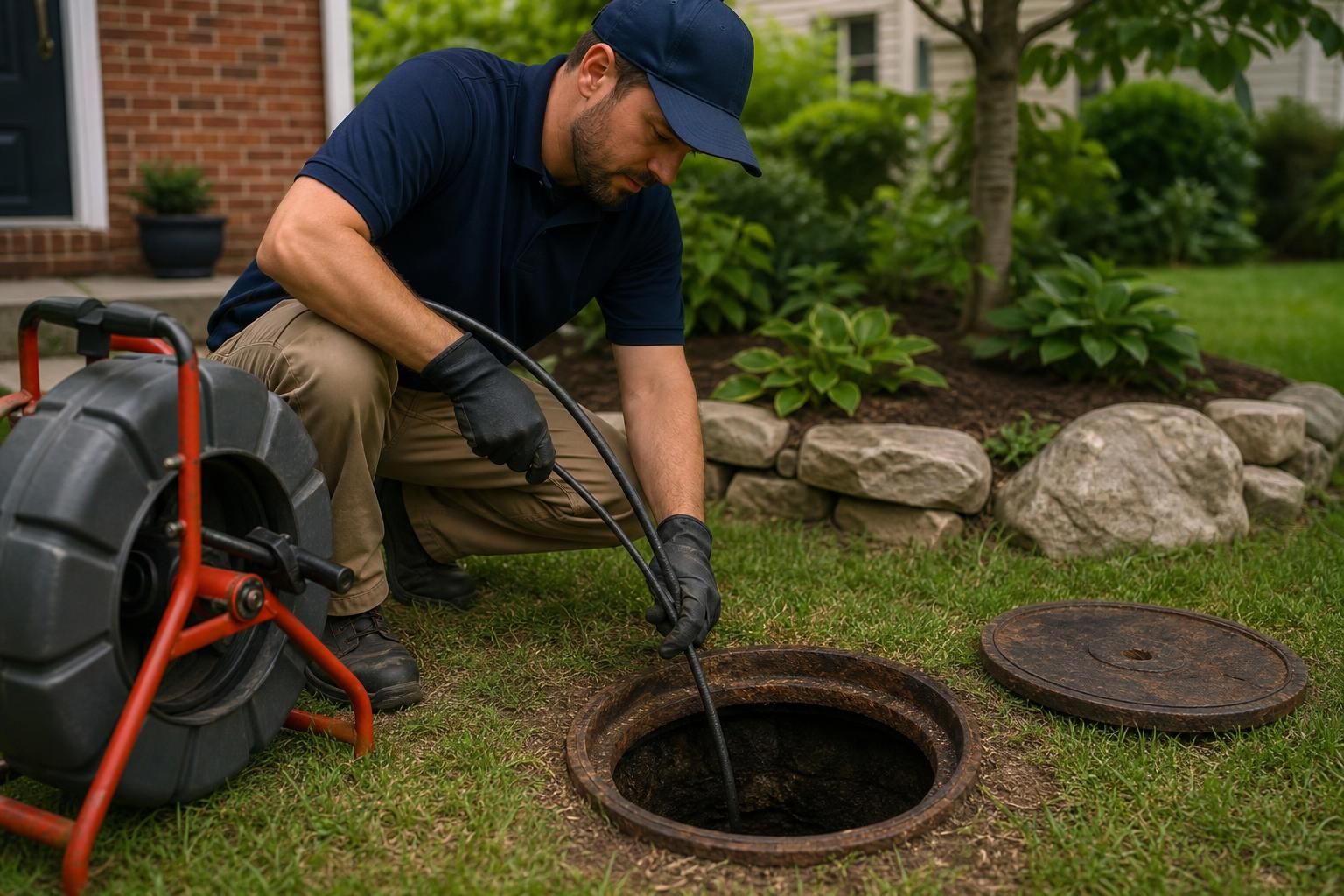
If your sewer line keeps clogging after snaking, stop treating each backup like a brand-new clog. Treat it like a pattern.
- Write down what backs up. One sink usually points to a branch drain. Several fixtures at once points closer to the main sewer line.
- Stop aggressive DIY snaking if the clog returns quickly. You can scratch older pipe, miss roots, or keep punching the same small tunnel through buildup.
- Choose the next service based on symptoms. Greasy, sludgy, recurring slow drains may call for hydro jetting. Repeated unknown clogs need a camera inspection. Cracks, offsets, bellies, or collapsed sections may need sewer cleaning, repair, or replacement: https://waterwaysplumbingllp. com/sewer-cleaning-repair-replacement/.
- Don’t use harsh chemical drain cleaners before calling. They can sit in the line and create a safety issue for anyone opening the drain.
Simple decision rule: if the backup returns within days, start with diagnosis; if several fixtures back up, treat it as a likely main-line issue; if the same spot clogs again after cleaning, ask whether the pipe itself is damaged.
FAQ
Why Does My Sewer Line Keep Clogging After Snaking?
A sewer line keeps clogging after snaking when the snake opens a small path but leaves the real problem behind. Grease, sludge, roots, or debris can still cling to the pipe walls. Once normal use starts again, paper and waste catch in the same narrowed spot.
Is Hydro Jetting Better Than Snaking for Recurring Clogs?
Hydro jetting can be better when buildup coats the inside of the pipe. It uses high-pressure water to clean the pipe walls, not just poke through the blockage. But it’s not always the first move. If the pipe may be cracked, sagging, or fragile, a camera inspection should come first.
Do Recurring Clogs Mean My Sewer Pipe is Broken?
Not always. Repeated clogs can come from heavy buildup, roots, flushed items, or an aging line that drains poorly. But if the same clog keeps returning after snaking, a broken, offset, bellied, or collapsed section becomes more likely. A camera inspection is the safest way to know.
When Should I Call a Plumber After Snaking Doesn’t Work?
Call a plumber when the clog returns within days or weeks, several fixtures back up at once, toilets bubble, tubs fill with wastewater, or sewer odors appear. Don’t keep aggressively snaking the same line. At that point, you need diagnosis, not another temporary opening.
Conclusion
Snaking is useful when a clog is simple and isolated. But if the problem keeps coming back, treat that as a clue: buildup may need hydro jetting, unknown pipe conditions may need a sewer camera inspection, and damaged sections may need cleaning, repair, or replacement.
Use this decision path: if several fixtures back up at the same time, book a main-line inspection. If buildup is confirmed and the pipe is in safe condition, consider hydro jetting. If the camera shows roots, cracks, an offset joint, a belly, or collapse, discuss sewer repair or replacement instead of repeating another temporary snake.
If you’re in Everett or nearby King/Snohomish Counties and your sewer line keeps clogging after snaking, Waterways Plumbing LLP can help you choose the right next step before another backup turns into a bigger mess.