If your toilet keeps running after you flush, it’s usually not a mystery. It’s almost always one small part inside the tank that isn’t sealing, shutting off, or moving the way it should. The good news is you can diagnose a running toilet in a few minutes with the lid off and a flashlight. In this guide, you’ll learn what the parts do, what “normal” looks like, and what to try when a toilet will not stop running. And if you’d rather skip the trial and error, you’ll also know when it’s time to call for toilet repair.
Best for: Homeowners who want to stop constant tank refilling and don’t mind a simple, careful hands-on check.
Not ideal when: The toilet overflows, water reaches the floor, or the shutoff valve won’t fully stop the water.
Good first step if: You hear refilling long after flushing and you can safely remove the tank lid to inspect parts.
Call a pro if: You’ve replaced the flapper or adjusted the float and the toilet running after flush still won’t quit.
Quick Summary
- A running sound usually means water is leaking from the tank into the bowl or the fill system won’t shut off.
- Most fixes start with three parts: the flapper, the fill valve, and the float.
- Dye testing helps confirm whether water is sneaking past the flapper into the bowl.
- Simple adjustments often work, but worn rubber and clogged valves may need replacement.
- Shut off the toilet’s supply valve if you can’t stop the flow while troubleshooting.
Why a Running Toilet Matters
A running toilet wastes clean water and can turn a minor leak into a larger repair. The tank should fill once and stay still until the next flush. If it keeps topping off, water is escaping past the seal or the fill system isn’t shutting off.
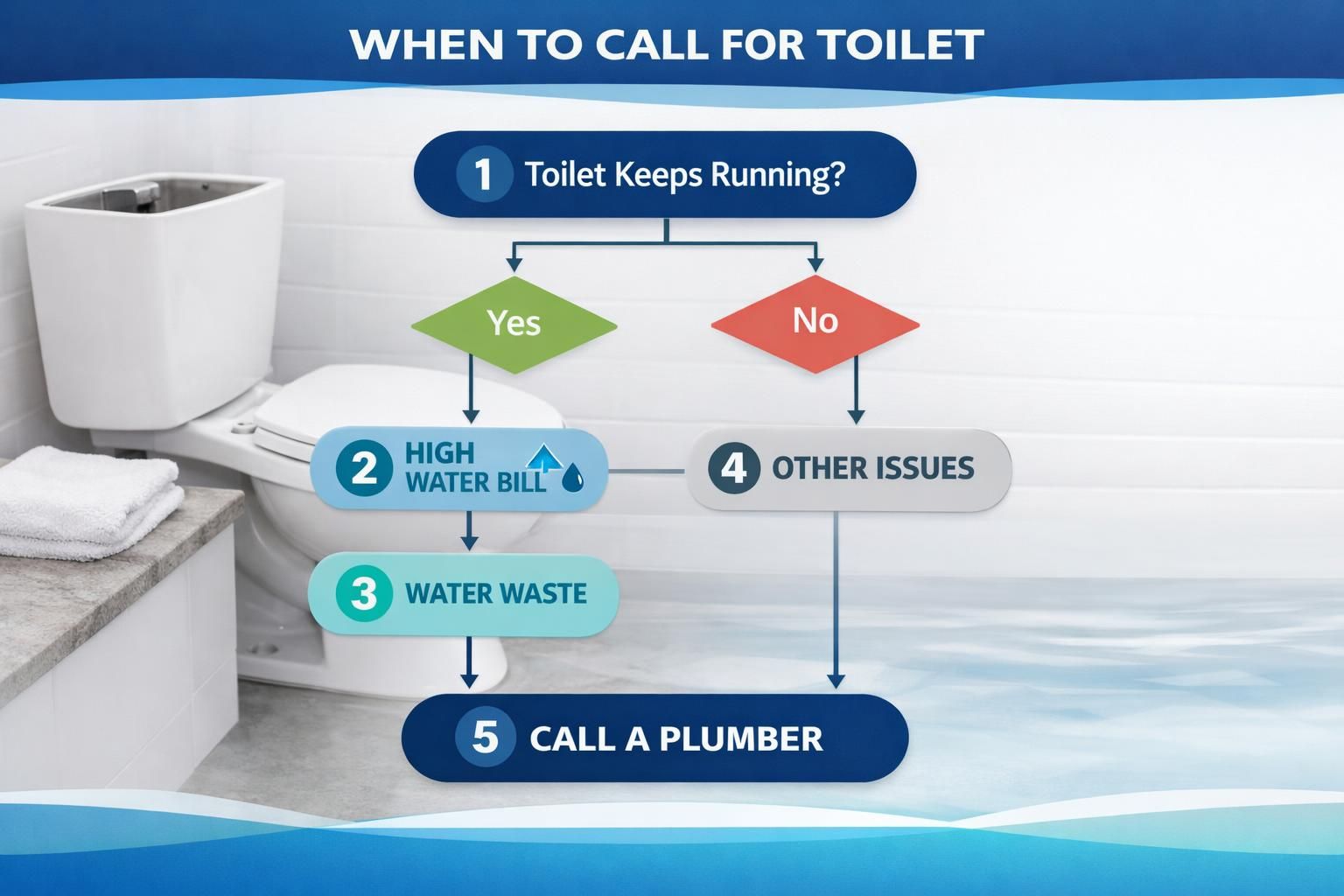
Signs include hissing or trickling when nobody used the toilet, long refill times, random bowl ripples, or needing to jiggle the handle. Constant refilling also wears out rubber and plastic parts. If slow drains are also happening, drain cleaning options can help rule out broader issues.
Why My Toilet Runs: The Most Common Reasons
If you keep wondering why my toilet runs after the tank should already be full, water is usually escaping from the tank into the bowl or the fill valve is failing to shut off completely. When the toilet is running, the sound may be constant, or the tank may briefly refill every few minutes as the water level slowly drops.
The most common causes include:
- A worn, warped, or dirty flapper that cannot create a watertight seal
- A flush chain that is too short, tangled, or caught beneath the flapper
- A float that is set too high or cannot move freely
- A worn fill valve that continues allowing water into the tank
- A refill tube positioned too far inside the overflow tube
- Damage to the flush valve seal or overflow tube
Remove the tank lid and watch the toilet complete one full flush. If water continues flowing after reaching its normal level, the float or fill valve is the likely problem. If the tank becomes quiet but starts refilling again several minutes later, water is probably leaking into the bowl through the flapper or flush valve seal.
Small adjustments may solve the issue, but repeatedly replacing parts without identifying the actual cause can waste time and water. When the toilet continues running after the basic checks, WaterWays Plumbing’s toilet repair service can inspect the tank components and determine which part needs adjustment or replacement. or replacement.
Quick Parts Check Inside the Tank
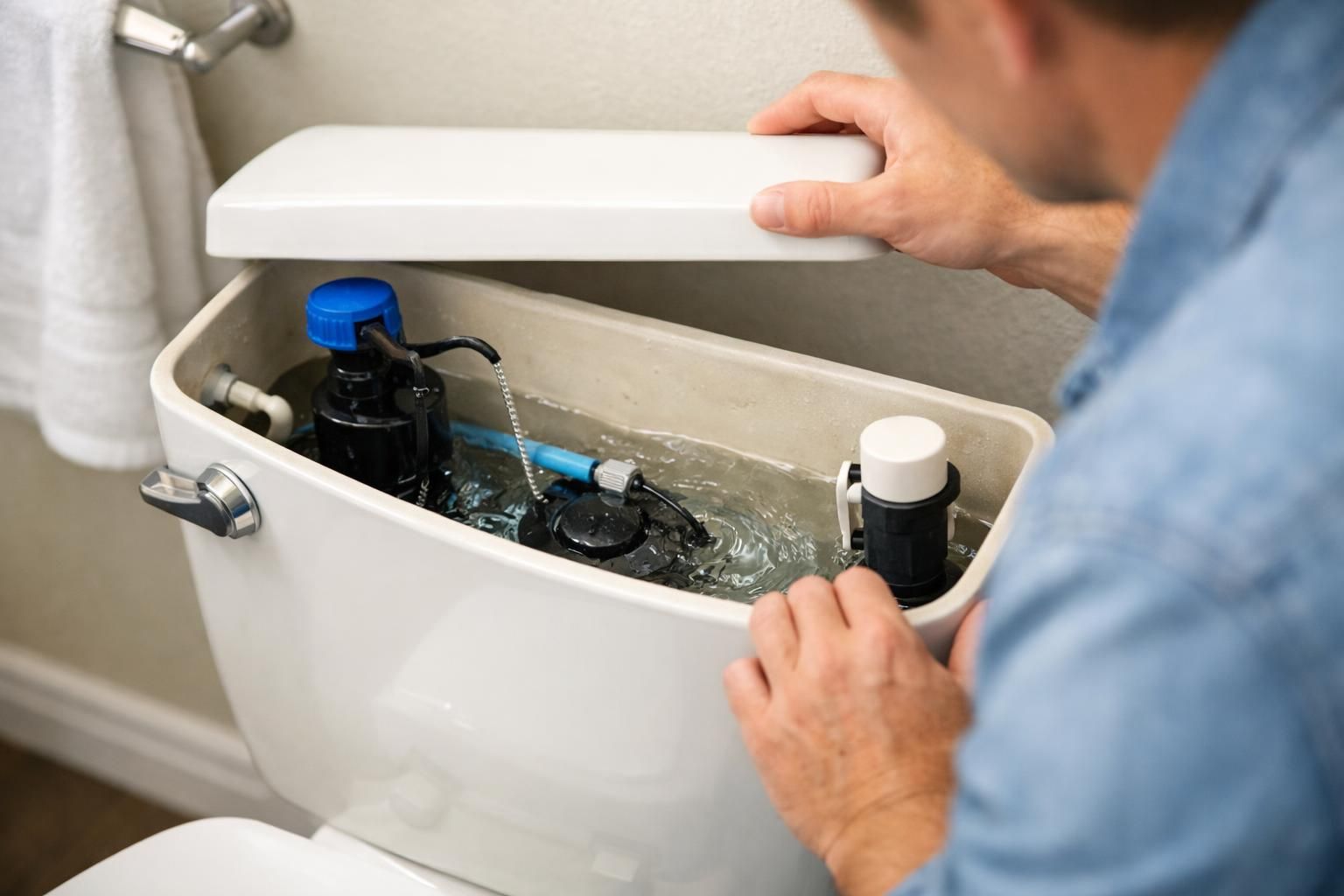
To diagnose a running toilet, watch the tank after a flush and again a few minutes later. Remove the lid and set it safely aside.
Check two systems: the flapper/flush valve seal and the fill valve/float shutoff. A leak drops tank level and triggers refilling.
Do this: 1. Flush; the flapper should drop and seal. 2. Refill should stop at a consistent height. 3. Listen for hissing after “full.” 4. Look for flow into the overflow tube.
Dye test: add food coloring, wait 10 minutes, and check the bowl.
Flapper
The flapper seals the tank to the bowl and is the most common reason a toilet won’t stop running. It lifts during a flush, then drops to seal the flush valve opening.
Leaks happen from warped, cracked, slimy, or stiff rubber, a chain that’s too tight or loose, or mineral buildup on the rim. With the tank full, gently press the flapper down. If the running stops, the seal area is the issue.
Fill Valve
The fill valve controls incoming water and often causes hissing when the tank looks full. It’s the tall assembly connected to the supply line.
If water spills into the overflow tube, the tank is overfilling, pointing to a float set too high or a bad fill valve. Also check the small refill tube: it should run only during refill. If it sits too deep, it can siphon water and restart refilling.
Float
The float tells the fill valve when to stop. If it sticks or is set too high, the toilet may overfill or keep topping off. Floats are usually a ball on a rod or a sliding cylinder.
As water rises, the float should rise and shut the valve off. If lifting the float stops the water, adjust it. If lifting doesn’t stop flow, the fill valve is failing.
Simple Fixes Homeowners Can Try
Most running-toilet fixes are beginner-friendly if you work slowly and avoid forcing parts. You’re usually either improving the tank seal or making sure the fill system shuts off at the right level.
Start with quick checks. Remove the lid and confirm the chain isn’t caught under the flapper. Adjust slack so the flapper seats fully but the handle still lifts it easily. Turn off the shutoff valve, flush to lower the water, then wipe the flapper and the sealing rim with a soft cloth to remove slime or mineral crust. Repeat the dye test, and if color shows up in the bowl, replace the flapper.
To replace it: shut off water, flush and hold the handle to empty the tank, unhook the chain, remove the old flapper, install the new one, reconnect the chain with slight slack, turn water back on, and test.
If water runs into the overflow tube, lower the float so the fill shuts off below the tube top. If the fill valve sticks, rinse debris or replace it, using the careful leak-checking approach in fixing a leaky faucet. Don’t force a stuck shutoff valve; call for help.
When to Call for Toilet Repair
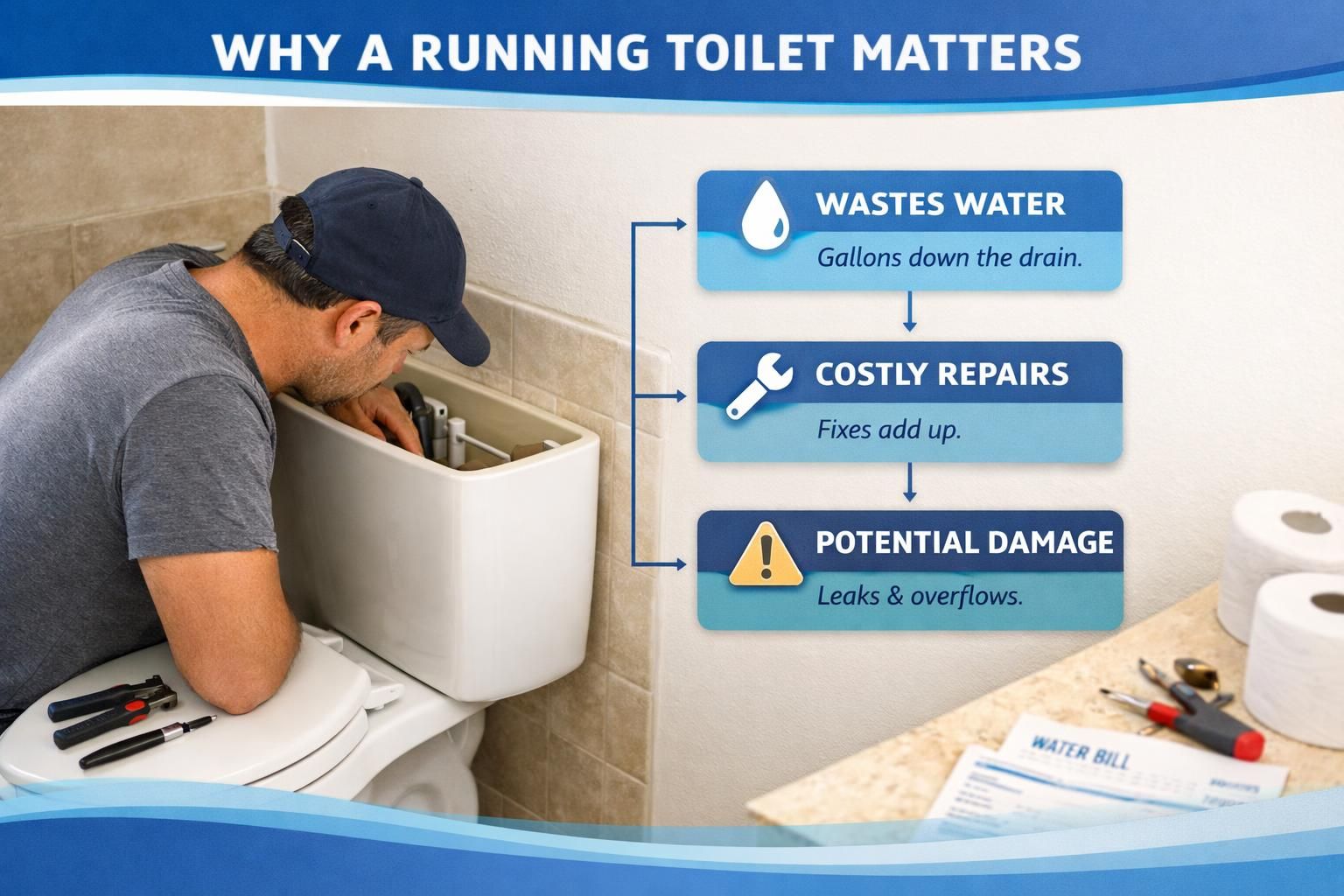
You should call for toilet repair when the problem keeps coming back after basic adjustments or when any step involves risk of leaks you can’t quickly stop. A running toilet is usually a small mechanical failure, but water damage isn’t small.
Here are clear “stop and call” situations:
- The shutoff valve won’t turn, or it turns but the water keeps flowing
- The tank has cracks, sweating, or water pooling around the base
- You replaced the flapper and the toilet still runs, which can point to a worn flush valve seat or mismatched parts
- The fill valve replacement feels confusing, or the supply connection drips after tightening
- The toilet rocks, the base is loose, or you notice leaking at the floor, which can be a separate sealing issue
FAQ
Why is My Toilet Running After Flush Even Though the Flapper Looks Fine?
A flapper can still leak if the seat is rough or crusted with minerals, or if the chain is slightly too tight. Try dye and press down.
How Do I Know if the Fill Valve is the Problem?
Suspect the fill valve if water keeps entering with the float fully up, or if water constantly spills into the overflow tube. Lift the float.
Is it Safe to Put a Toilet Tank Cleaner Tablet in the Tank?
Usually no. Many tablets degrade rubber and seals, warping the flapper and causing leaks. Use bowl-only cleaners instead for routine cleaning.
My Toilet Will Not Stop Running Unless I Jiggle the Handle. What Does That Mean?
Usually the chain catches or the lever doesn’t return, leaving the flapper partly lifted. Watch a flush and adjust chain length or alignment.
Can I Just Turn the Water Off to Stop the Running Sound?
Yes. Turn the shutoff valve clockwise to stop inflow and silence it. It’s temporary; you still must fix the leak or overfill cause.
Conclusion
If your toilet keeps running, you can usually track it down to a flapper that won’t seal, a fill valve that won’t shut off, or a float that’s set wrong. Start with a quick tank check, do the dye test, then try cleaning or simple adjustments before replacing parts. And if the shutoff won’t work, you see leaks, or the running comes back fast, it’s time to call for toilet repair and get it handled safely.