
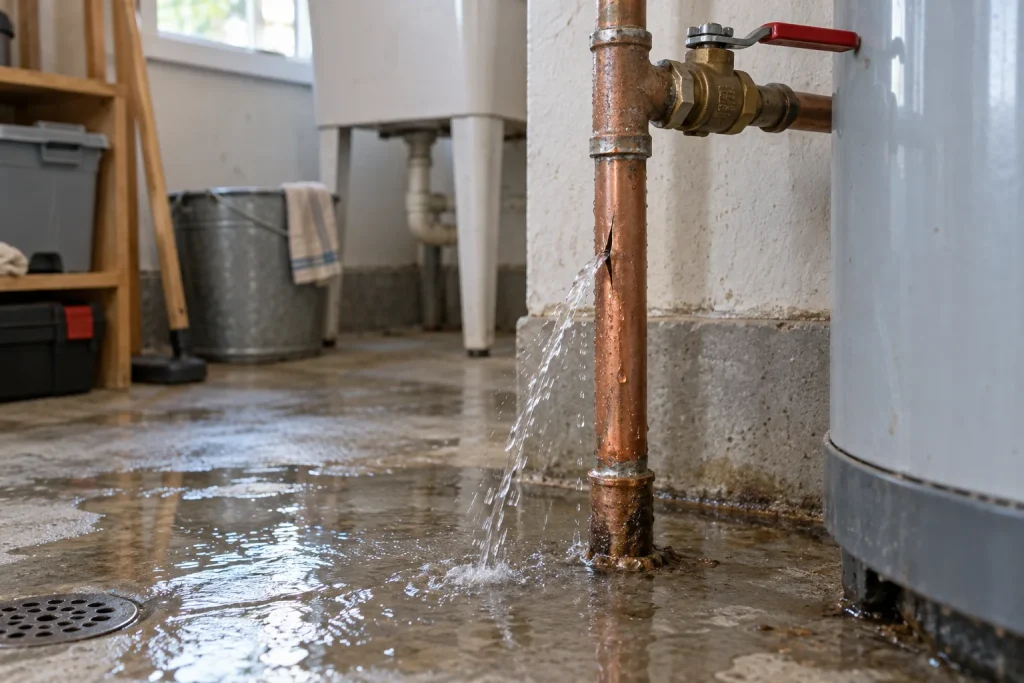
A burst pipe is one of those home problems that feels like chaos in fast-forward. If you’re searching pipe burst what to do, your goal is simple: stop the water, stay safe, and prevent extra damage until help shows up. The good news is you don’t need plumbing experience to make a big difference in the first few minutes. In this guide, you’ll learn the exact steps to take, in the right order, plus what usually causes a burst water pipe in house situations and what repairs might look like afterward.
Best for: Homeowners or renters who need a clear, step-by-step response in the first 30 minutes after a pipe bursts.
Not ideal when: Water is near your electrical panel, ceiling is sagging, or you can’t locate the main shutoff safely.
Good first step if: You can reach the main shutoff valve without standing in water and you can identify the leak area.
Call a pro if: The pipe burst is inside a wall or ceiling, water won’t fully stop, or you see any signs of electrical danger.
Quick Summary
- Stop the flow fast by shutting off the main water valve, not just a sink or toilet valve.
- Cut power only if it’s safe, then clear the area to prevent falls on wet floors.
- Open faucets to relieve pressure and help remaining water drain out of the lines.
- Move valuables and control spread with towels, buckets, and gentle water removal.
- After things calm down, figure out likely causes so the next fix isn’t just a patch.
Shut Off the Water First
Shut off the main water valve immediately. Do not waste time testing faucets or trying to hold the leak with towels. The priority is stopping new water from entering the system.
Find the main shutoff where the water line enters the home, often in a basement, crawl space, garage, or utility closet. In apartments, it may be in a shared mechanical room, and you may only have fixture shutoffs.
Steps: 1) Go to the main shutoff. 2) Turn it clockwise until it stops. 3) Open a faucet to confirm flow stopped.
Some homes also have a curb-side shutoff. If the house valve will not move or doesn’t stop flow, do not force it. Call emergency plumbing and report the main valve is not holding.
If the burst is on a fixture supply line, close the stop valve under the sink or behind the toilet as a temporary measure.
Reduce Electrical and Slip Risks
Keep people and pets away from the water. If it is safe to reach the home’s main water shut-off valve without crossing water, close it to stop additional flow. If water is near outlets, appliances, wiring, or the electrical panel, do not walk through it or touch switches or equipment. Turn off electricity only from a dry, safe location; if you cannot do that safely, leave the area and get qualified help.
If you smell gas, leave without operating electrical switches and call the gas utility or emergency services from outside. Do not stand beneath a ceiling that is bulging or holding water, and be alert to hot water that can cause burns.
Drain Pressure From the System
Draining reduces spraying and lets remaining water exit in a controlled way. Even with the main off, water trapped in the pipes can still pour out.
After shutting off the main: 1) Open the lowest cold-water faucet, often a basement sink or tub. 2) Open the highest faucet, often an upstairs sink or tub. 3) Flush toilets once to empty tanks. 4) If the leak is on the hot side, turn off the water heater before draining hot lines further.
For tank heaters, set controls to off and shut off power or fuel. For electric units, do not leave elements on if the tank may drain, because they can burn out. If unsure, stop once pressure drops and wait for the plumber.
If water keeps hissing or spraying, the valve may not be fully closed. Call for help.
Limit Water Damage While Waiting
Limit damage by controlling where water goes and how long it sits. Start at the leak: place a bucket under drips. If it’s spraying, wrap the pipe with a thick towel to reduce splashing, or use a baking sheet or plastic lid to direct water into the bucket.
Work outward. Move rugs, books, baskets, and electronics. If furniture legs are in water, slide foil, plastic, or small wood blocks under them to prevent moisture wicking.
Remove water safely. Use a wet/dry shop vacuum if available; otherwise, use towels and wring them into a sink or tub. Do not use a regular vacuum.
Dry fast to reduce mold risk. Open windows if weather allows, and run fans. Use AC or a dehumidifier if available.
Avoid opening walls or ceilings unless you know it is safe. If the burst involves the service line, review water service replacement means before approving major work.
What Causes Pipes to Burst
Pipes burst when pressure meets a weak spot. Weakness can come from age, corrosion, freezing, movement, or defects, while pressure comes from normal water flow or sudden spikes.
Freezing is a common trigger. Water expands as it freezes, creating an ice plug. Pressure builds behind that plug and the pipe splits at its thinnest point, often in exterior walls, attics, crawl spaces, or garages.
Other frequent causes include corrosion, mineral buildup that narrows the pipe, failing joints, accidental damage from nails or renovations, ground shifting on buried lines, and chronically high water pressure.
Mineral buildup can stay hidden until flow worsens and turbulence stresses joints. If you see scaling or reduced flow, read mineral buildup in pipes to address the cause.
If the issue is a cracked drain line, it may leak only when fixtures run. For that situation, see drain cleaning and repair for typical testing and repairs.
Repair vs Replacement
A temporary clamp or wrap is not a lasting repair or a substitute for checking nearby pipe. Once the water is controlled, note where the break occurred, what material is visible, and whether other areas have leaked. A plumber can determine whether a localized repair is reasonable or broader deterioration calls for replacement. WaterWays’ confirmed water line repair service covers water-line work; burst pipes do not all have the same repair scope.
Repair works when the failure is isolated and the surrounding pipe is still sound. Replacement is smarter when the line is near end of life or multiple weak points are likely to fail. Plumbers weigh access, pipe material, and the pattern of leaks.
Repair is often enough when one section split from a single freeze, a joint failed in an accessible spot, or the rest of the run looks solid rather than pitted, flaking, or brittle.
Replacement is more likely when corrosion is widespread, leaks keep recurring in the same run, the material has a known failure history, or the break is in a hard-to-reach location where patching would be risky.
For buried lines, especially the main, the goal often becomes fixing the whole line, not just the hole. See water line repairs for common approaches.
Also plan for drying and rebuild. Ask what the plumber will open for access and what should be left to restoration.
FAQ
What to Do When a Pipe Bursts and You Can’t Find the Shutoff?
Close any nearby fixture valves, then call emergency plumbing. Keep searching common spots like the basement, garage, or utility closet. In multi-unit buildings, contact maintenance for a shared shutoff.
Should You Turn Off the Water Heater After a Burst Pipe?
Yes. If the main is off and you are draining hot lines, shut off the heater to prevent damage from running low or dry. If unsure, stop and call a plumber.
Is a Burst Pipe Always Obvious?
No. Bursts can hide in walls, floors, or ceilings. Watch for new stains, bubbling paint, dripping sounds, musty odors, or an unexplained bill spike, which can signal a concealed supply leak.
Can You Use Tape or a Clamp as a Temporary Fix?
Sometimes, but not reliably. Use tape or a clamp only after shutting off the main and draining pressure. It may slow seepage, but a true burst still needs professional repair.
When Do You Need Water Damage Restoration Help?
Get restoration help when water soaked into drywall, insulation, floors, or cabinets, or when areas stayed wet beyond a brief spill. Plumbers stop leaks, but drying materials correctly is separate work.
Conclusion
After a pipe burst, what you do in the first minutes matters more than any fancy tool. Shut off the main water, stay safe around electricity, drain pressure, and control the spread while you wait. Then take a breath and get the right repair plan, because the goal isn’t just to stop today’s leak. It’s to prevent the next one. If you came here for pipe burst what to do, your practical next step is simple: locate and label your main shutoff now, so you’re faster next time.