Hard water carries dissolved minerals that can gradually collect inside plumbing. Over time, those deposits narrow the pipe’s interior, disrupt water flow, and contribute to recurring clogs. If you are dealing with mineral buildup in pipes, it helps to understand what the material is, where it forms, and which solutions remove it rather than briefly improving symptoms. This guide covers common signs of scale, why certain drains and supply lines are more vulnerable, and how hydro jetting fits into a practical plan. You will also learn what hydro jetting can and cannot do, what other professional options exist, and how to reduce future buildup with realistic maintenance steps.
- Mineral scale forms when dissolved minerals precipitate and stick to pipe walls, especially in hard water areas
- Slow drains, reduced water pressure, and recurring clogs can point to internal scale rather than a single blockage
- Hydro jetting can remove many types of scale and debris, but results depend on pipe condition and deposit hardness
- Some pipes with heavy corrosion, damage, or severe narrowing may be better served by repair or replacement
- Long-term prevention often combines water treatment, routine maintenance, and smarter habits at fixtures and drains
What mineral scale is and why it forms
Mineral scale is a hard deposit that develops when minerals in water, commonly calcium and magnesium, come out of solution and attach to surfaces. In plumbing, this often happens where water is heated, evaporates, or sits and cools, leading to the need for drain cleaning and repair. What starts as a thin film can thicken into a rough interior that catches hair, grease, soap residue, and other debris.
Hard water increases the supply of minerals available to precipitate. Temperature, pH, and flow patterns affect how fast it forms. Heating water often accelerates scaling, which is why hot water lines and water heaters are common problem areas. Even moderate deposits can reduce effective pipe diameter and create symptoms that look like ordinary clogs.
Signs you have mineral buildup in pipes
Scale builds gradually, so early symptoms are easy to ignore. Many homeowners notice drains that once cleared quickly start backing up, or a shower that slowly loses strength. Deposits are tricky because they create ongoing narrowing, so the system becomes prone to repeated clogs even after a trap is cleared or a basic cleaner is used.
Inconsistency is common. Flow may seem fine sometimes and poor at other times depending on water use, hot water demand, and whether sewer camera inspection shows debris snagged on the scaled surface. If multiple fixtures show similar issues, or if problems return soon after a temporary fix, scale may be an underlying cause.
Slow drains and reduced flow
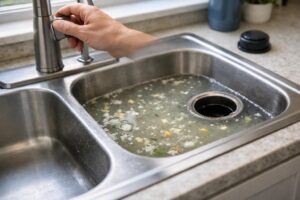
With scale in drain pipes, the drain is often not fully blocked, just increasingly restricted. Water may swirl, gurgle, or rise in the basin before slowly dropping. In showers and tubs, hair and soap scum can cling to rough scale and form a stubborn mat that returns quickly.
Reduced flow can also show up on the supply side as lower water pressure at faucets and showerheads. Aerators and cartridges may clog with mineral particles, and the interior of the pipe can become constricted. If one fixture is noticeably weaker than another nearby, scale in a branch line or at the fixture connection may be contributing.
White deposits and fixture issues
Mineral deposits are easiest to spot where water dries: around faucet repair areas, showerheads, tub spouts, and some appliances. White or off-white crust suggests hard water and often mirrors what is happening inside the plumbing. You may also see spotting on glass and fixtures, and soap may not lather well, which can lead to heavier product use and more residue entering drains.
Fixture problems often come with scaling. Aerators clog, showerheads spray unevenly, and valves may feel stiff. Cleaning can restore performance for a while, but repeated buildup can point to broader mineral activity in the water supply.
Where scale tends to build up most
Scale does not form evenly. It accumulates where conditions favor precipitation and where flow patterns allow minerals to settle. Bends, transitions, and slower sections become collection points. Older, rougher pipe interiors also give minerals more surface area to cling to.
Hot water components are frequent hotspots. Water heaters and hot water lines often scale faster because heating changes mineral behavior. In drains, kitchen lines are vulnerable because grease and food particles stick to scaled walls, creating layered buildup. Bathroom lines often combine scale with soap residue and hair, which speeds narrowing.
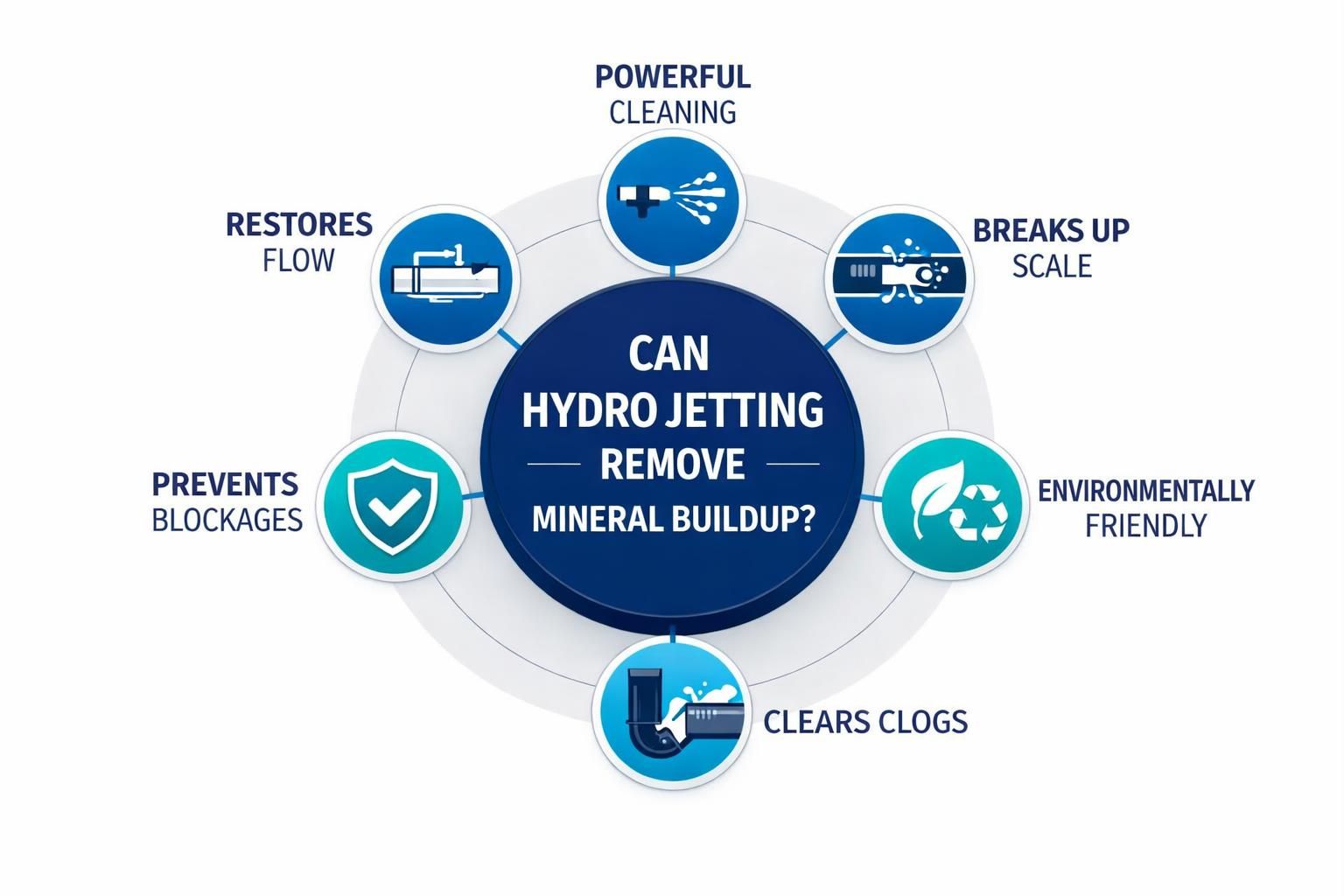
Can hydro jetting remove mineral buildup
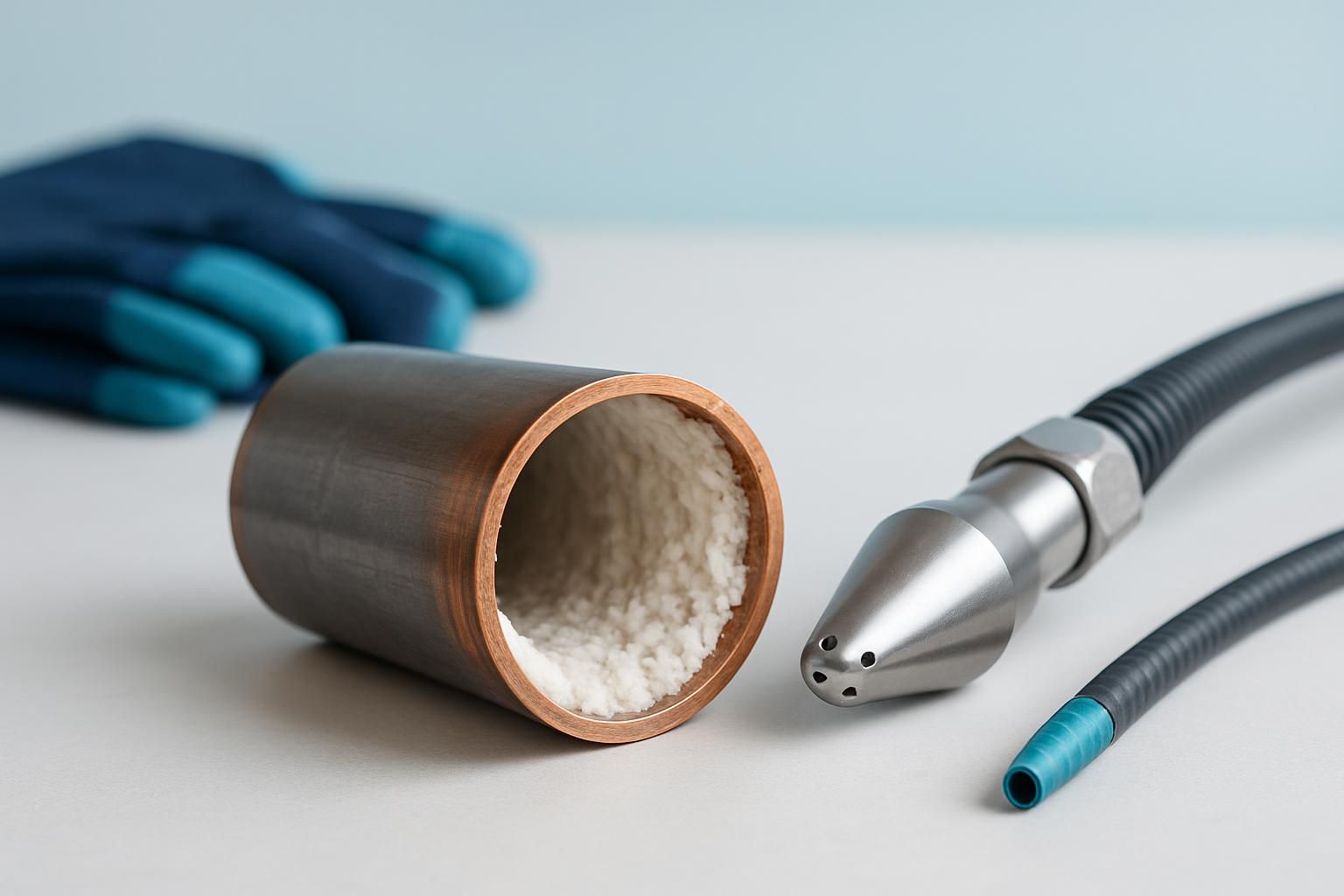
Hydro jetting uses a specialized nozzle and high-pressure water to scour the inside of pipes. Unlike snaking, which may only open a channel through a clog, jetting aims to clean pipe walls and flush loosened debris downstream. For recurring restrictions, it can be one of the most effective options because it targets the coated interior that keeps catching new material.
Results depend on the type of scale, pipe material, and overall condition. Some deposits break away under pressure; others are extremely hard or bonded to deteriorating surfaces. Professionals typically evaluate the line first, often with a camera inspection, to select the right nozzle and pressure and to clean without increasing risk.
What it can remove well
Hydro jetting often works best on mixed buildup: mineral scale combined with grease, soap scum, and sediment. The water stream can strip layers from pipe walls and carry the material away, improving diameter and leaving a smoother interior that is less likely to snag debris. It is also useful for recurring clogs caused by a narrowed, rough pipe rather than a single obstruction, making hydro jetting services an effective solution.
In practice, hydro jetting can help with:
- Scale that has not fully hardened into a rock-like mass
- Layered deposits where grease or sludge binds minerals together
- Sediment and sand that collect in low spots
- Roots and organic debris when paired with the right nozzle and suitable pipe condition
If you are researching how to clean mineral buildup in pipes, signs you need hydro jetting is often considered when DIY steps do not last or when multiple fixtures are affected.
When replacement is a better option
Hydro jetting is not a cure-all. If a pipe is structurally compromised, aggressive cleaning can expose weak areas or worsen existing damage. Old, corroded metal lines may have thin walls, flaking interiors, or sections that are nearly closed. A camera inspection can help determine whether cleaning is likely to restore function or only provide brief relief.
Replacement or repair may be the better option when a line has severe narrowing that cannot be safely cleared, when the same section repeatedly fails, or when there are cracks, offsets, or collapses. In some cases, repair & replacement of a problem segment is more cost-effective than repeated cleanings. Upgrading materials may also reduce future scaling and corrosion.
Other ways plumbers address scale
Plumbers choose methods based on pipe type, access, and deposit severity. For localized issues, they may start with fixture-level cleaning, such as descaling aerators and showerheads, or clearing a P-trap. For drain lines, mechanical snaking can open a path through buildup, but it often does not clean pipe walls as thoroughly as jetting.
In some cases, plumbers use chemical descaling products designed for plumbing systems, applied carefully with compatibility and safety in mind. This is not the same as pouring harsh drain chemicals into a fixture. Inspection remains key: a camera view can confirm whether the restriction is scale, grease, roots, or a structural defect, which helps avoid wasting time on the wrong approach when trying to remove scale buildup in pipes for good.
How to reduce future mineral buildup

Prevention usually combines water management with better habits. If hard water is driving the problem, treating the incoming supply can reduce the mineral load that becomes scale. A plumber or water treatment professional can help match an option to your water conditions and household needs. Even without new equipment, routine maintenance can keep small deposits from becoming major restrictions.
Practical steps that often help include:
- Regularly cleaning faucet aerators and showerheads to prevent restriction at the fixture
- Flushing water heaters as recommended for your setup to reduce sediment and scale
- Avoiding grease down kitchen drains, since it binds with minerals and accelerates buildup
- Using strainers in showers and sinks to reduce hair and debris that cling to rough pipe walls
- Addressing slow drains early, before partial restrictions turn into recurring clogs
If scale buildup in drain pipes is already established, periodic professional cleaning may be part of a long-term plan, especially in consistently hard water areas.
FAQs about mineral buildup and hydro jetting
Hydro jetting raises questions because it sounds intense, and homeowners want to know what to expect. The best answers depend on pipe material, age, and existing conditions, but general guidelines help set expectations. A professional evaluation can clarify whether scale is the main issue, whether grease or roots are involved, and what results are realistic.
People also compare DIY efforts with professional service. Home methods can help with fixtures and mild symptoms, but deeper restrictions in longer runs typically require specialized equipment and a plan that considers safety. For lasting improvement, it matters whether the real issue is mineral scale, a structural defect, or both.
Conclusion
Mineral scale is a gradual problem that can quietly reduce pipe capacity, worsen clogs, and affect everyday comfort at sinks, showers, and appliances. Hydro jetting can be a strong solution when deposits are accessible and the pipe is in sound condition, because it cleans the pipe walls instead of only clearing a small channel. If symptoms keep returning, the most practical next step is a professional inspection to confirm the cause and choose the right method, whether that is jetting, targeted repair, or the best way to clean a main sewer line. With the right plan and a few preventive habits, you can reduce mineral buildup in pipes and keep your plumbing flowing more reliably.