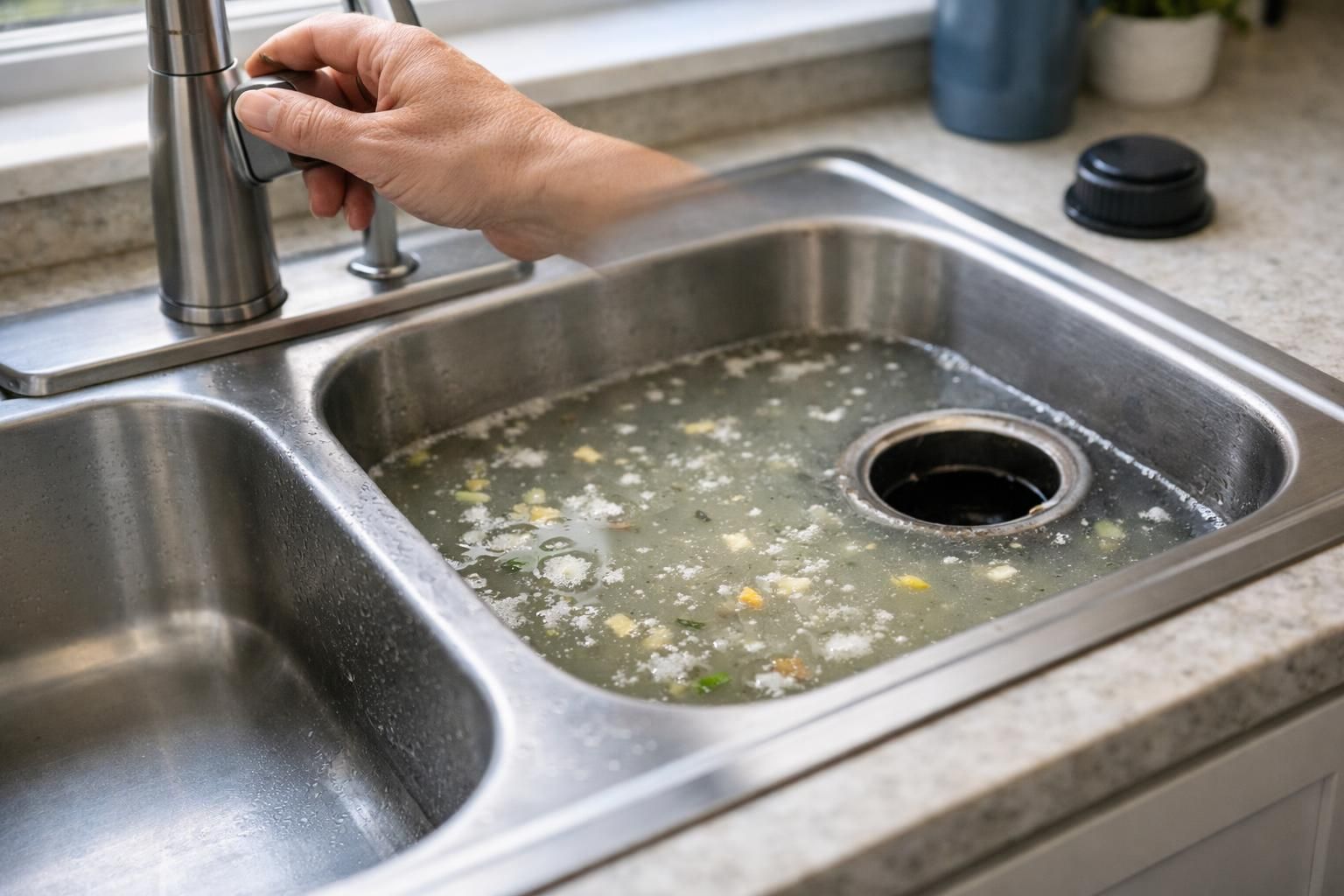
If you’re dealing with a garbage disposal backing up into sink water, you’re not looking at a “disposal problem” as much as a drain problem. The disposal is just the loud part that makes the issue obvious. When water and food bits rise into the basin, it usually means something downstream is slowing or blocking the flow. And the longer you keep running water or flipping the switch, the more mess you’ll create.
You’ll learn what causes backups, what you can safely check yourself, and when it’s time to stop and call for drain cleaning.
Best for: Homeowners seeing sink water rise or burp during use who want safe steps before making it worse.
Not ideal when: You have standing dirty water that won’t drain at all or the backup is affecting other fixtures too.
Good first step if: The sink backs up only when the disposal runs and you want to rule out simple, local clogs.
Call a pro if: Water backs up into multiple drains, you smell sewage, or plunging and basic checks don’t change anything.
Quick Summary
- A disposal backup almost always points to a clog in the kitchen drain line, not a “broken disposal.”
- Stop running the unit right away so you don’t pack debris tighter or overheat the motor.
- The most common culprits are greasy sludge, food waste buildup, or a clog at the P-trap or branch drain.
- If other sinks or tubs are also slow, the blockage may be in a shared line farther downstream.
- You can do a few safe checks with a flashlight, bucket, and basic hand tools before calling.
First: Stop Running the Disposal
Stop running the disposal immediately. Continuing can pack waste into a restricted pipe and push dirty water into the sink. A backup means the drain can’t carry water away fast enough, and the disposal rarely fixes that.
Do two safety moves: turn the switch off and limit added water to prevent overflow.
Next: 1) Unplug the disposal, or shut off the breaker if it’s hardwired. 2) Scoop standing water into a bucket so you can see changes. 3) Dry the cabinet floor so new drips stand out. 4) Don’t put your hand into the opening; even unplugged, sharp edges can cut.
A jam stops the unit from spinning. A backup means the pipe after the disposal is restricted.
Common Causes of Kitchen Sink Backups
Most disposal backups come from a sticky coating inside the kitchen drain that gradually narrows the pipe until flow can’t pass. It can look sudden even though it formed over time.
Use these patterns:
- Backing up mainly when the disposal runs often points to a close clog, commonly the P-trap or branch drain.
- Slow draining even with the disposal off can indicate buildup farther down the line.
- Gurgling, bubbling, or the other bowl rising in a double sink suggests a partial blockage trapping air.
Recent inputs matter. Grease, rice, pasta, potato peels, coffee grounds, and fibrous vegetables can swell, clump, or stick to pipe walls once they cool.
Food Waste and Grease
Grease plus food bits is a top cause of kitchen clogs because grease coats pipe walls and traps debris. Hot grease looks harmless, but it cools into a waxy film. Starches and fine scraps stick to that film and build into paste.
If the backup started after dumping drippings, grinding lots of scraps, or rinsing creamy sauces, it’s often buildup rather than one object. That’s why it can seem sudden after weeks of narrowing.
Signs of grease and sludge:
- The drain is often slow, then fully backs up under steady water.
- Backup water is cloudy with floating bits.
- You notice a sour, old-food odor.
See: grease buildup in drains.
P-trap or Branch Drain Clog
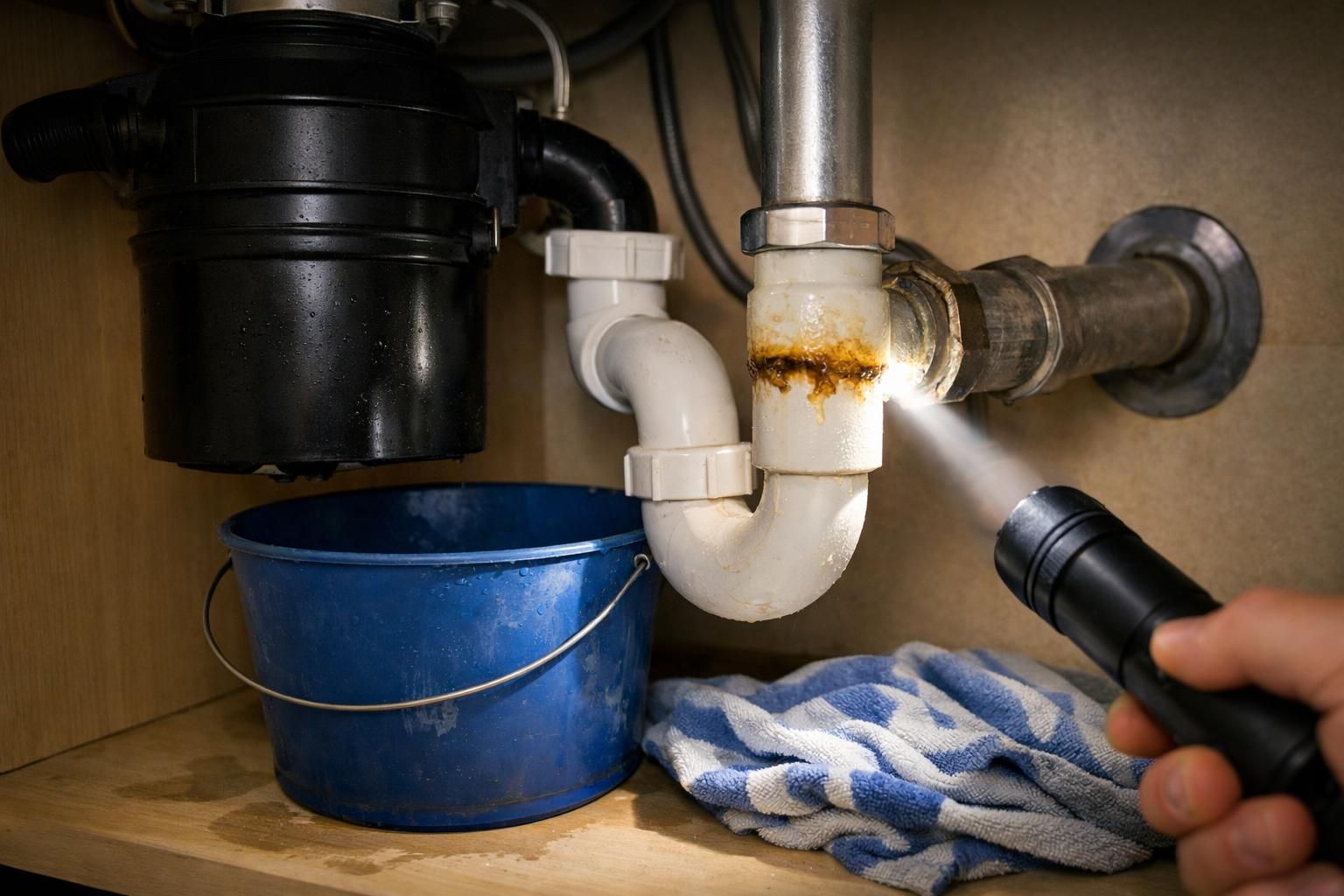
A clog in the P-trap or branch drain is common because it’s the first bend and short horizontal run after the sink, so it catches heavier debris. The P-trap is the curved pipe under the sink that holds water to block sewer gases.
When the clog is here, symptoms stay local: the sink backs up fast and may drain slowly afterward. In a double sink, one bowl may fill first. Plunging might shift the blockage but not clear it.
You can sometimes confirm by feeling the trap with a bucket underneath; a sludge-packed trap can feel heavy. Avoid chemical drain cleaners; splashing is hazardous if fittings are loosened.
Garbage Disposal Backing Up Into Other Sink: A Shared Drain Problem
When the garbage disposal is backing up into other sink, the blockage is usually not inside the disposal itself. In a double-bowl kitchen sink, both drains typically connect to the same P-trap or branch drain. Water pushed through the disposal side reaches the restriction and then returns through the second, open sink drain.
When wastewater backs up into the kitchen, it may indicate that grease, food debris, or another obstruction has built up farther down the shared drain line. The disposal can make the problem more noticeable because it rapidly forces water and ground food waste toward the clogged section.
A shared drain blockage becomes more likely when:
- Running the disposal causes water to rise in the other sink bowl
- Both sides of a double sink drain slowly
- The dishwasher causes water or debris to appear in the sink
- Gurgling occurs in another drain when the disposal is running
- Water returns shortly after the sink appears to drain
Avoid repeatedly running the disposal or adding chemical drain cleaners, as this can push more wastewater into the sink or make professional cleaning more difficult. WaterWays Plumbing can inspect the shared kitchen line and determine whether the blockage requires professional snaking, drain cleaning, or hydro jetting.
You’ll suspect a shared problem if:
- Water backs up into the other bowl or a nearby sink.
- A dishwasher drain cycle makes the sink rise.
- Running the disposal triggers gurgling in another drain.
- The kitchen drains slowly and then “burps” air.
If more than one area is slow or backing up, you may be approaching main line territory. To spot the warning signs and avoid a bigger mess, use: signs of a main clog. A shared restriction usually won’t stay “kitchen only” for long.
Safe Checks Before Calling
You can do a few safe checks to narrow the cause without taking plumbing apart. The goal isn’t to force a clog through. It’s to gather clues, clear obvious debris, and avoid making the blockage tighter.
Start simple: 1) Shine a flashlight into the drain and remove visible debris with tongs, not your hand. 2) Check the disposal reset button underneath. If it popped, press it once, but don’t run the unit while the sink is backed up. 3) If you have a dishwasher, don’t run it unless the sink drains normally. 4) Add a small amount of water and watch whether it drains, rises, or slowly drops.
For a double-bowl sink, note whether one side rises first or both rise together. Use a plunger only if you can seal it; plug the other drain and do short, firm plunges. Stop if nothing changes.
For prevention basics, see: ways to prevent clogs.
When it Needs Professional Drain Cleaning
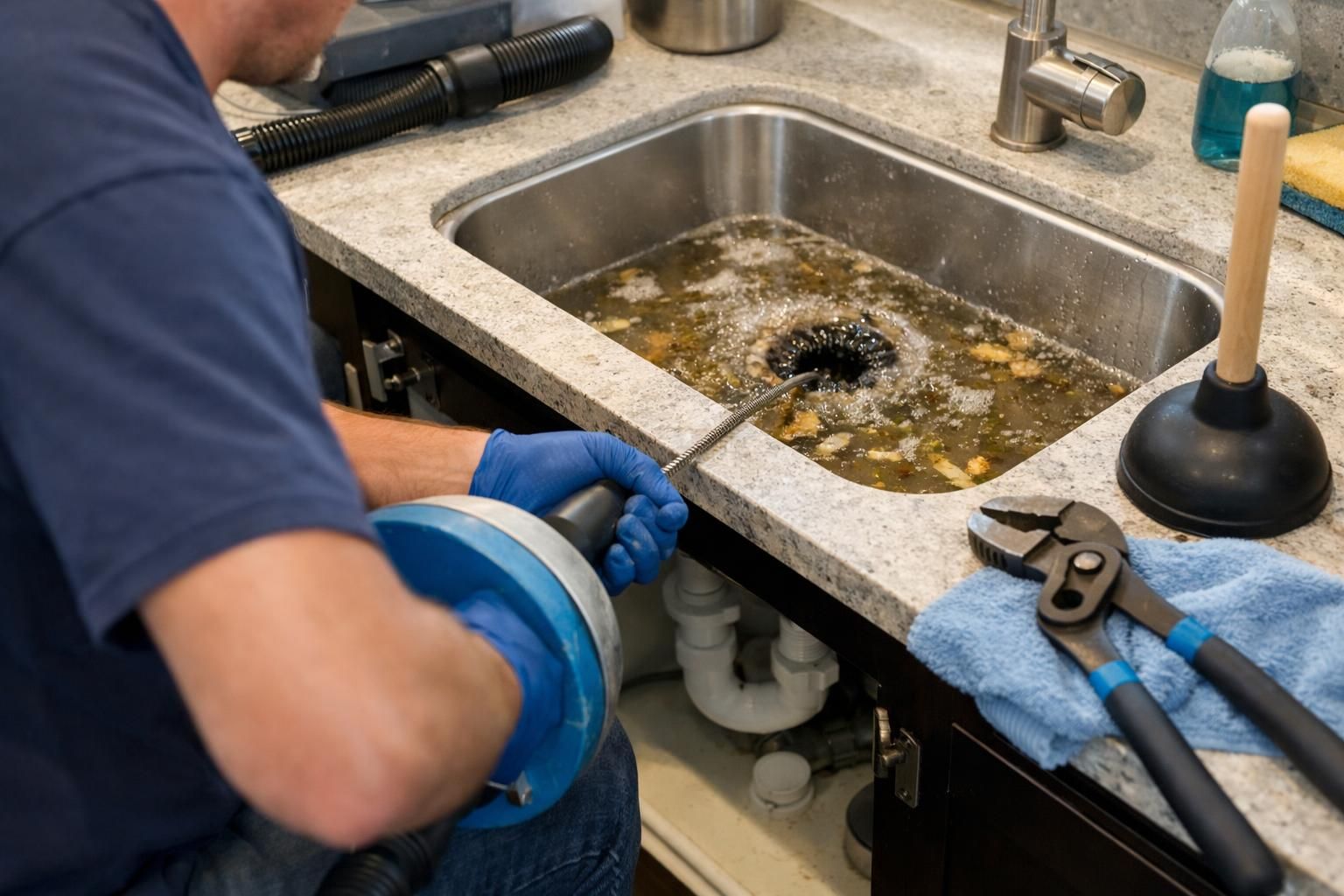
You need professional drain cleaning when the clog is beyond the trap, keeps returning, or suggests a larger line issue. The key difference is reach and tools: a pro can cable the line to pull or cut clogs and, when appropriate, clean buildup from pipe walls instead of just punching a small hole.
Stop DIY and call when:
- The sink fills fast and won’t drain after proper plunging.
- It clears, then clogs again within days or weeks.
- It backs up with disposal use and with plain running water.
- A slip joint starts leaking after plunging or pressure.
- Multiple fixtures are slow or backing up on the same floor.
FAQ
Why is My Sink Backing up When Disposal Runs?
Usually the drain after the disposal is partially blocked. The disposal pushes food and water into a narrowed pipe faster than it can drain. The clog is often in the P-trap or wall branch.
Can I Pour Boiling Water Down a Backed-up Disposal Drain?
Boiling water isn’t a safe fix. It can soften some plastic piping and won’t reliably remove grease. If water is already standing, it also increases overflow risk. Remove water and troubleshoot.
Is it Okay to Use Chemical Drain Cleaner With a Garbage Disposal?
Usually no. Cleaner can sit in the trap, then splash during plunging or disassembly. It often won’t dissolve grease sludge. If used, avoid opening pipes until it’s safely flushed.
Why Does the Other Side of My Double Sink Fill up Too?
Both bowls connect to one drain. When that shared section is restricted, water may rise into the other bowl. This is why you should plug the second drain when plunging.
Could This Be a Main Sewer Line Problem?
Yes, but mainly if other fixtures are slow or backing up. A kitchen-only backup is usually local. If other drains gurgle, rise, or back up downstairs, suspect downstream blockage.
Conclusion
A garbage disposal backing up into sink water is your cue to treat this as a drainage problem, not something you can fix by running the unit harder. Shut the disposal off, limit water, and do a few safe checks like inspecting the opening, testing flow, and plunging correctly. If the clog is persistent, affects multiple fixtures, or won’t respond to basic steps, professional drain cleaning is the next practical move.