If you fix a slow drain only to have it back up again a week later, you are not imagining it. Many clogs are only partly removed, or the cause is farther down the line, so water starts moving again while buildup keeps collecting. Learning how to keep drains from clogging is less about one big cleaning and more about controlling what goes down the pipe and doing small, consistent maintenance. In this guide, you will learn why clogs return, the daily habits that matter most in kitchens and bathrooms, and a simple monthly routine. You will also learn what not to do and when a recurring issue points to the main line.
- Most repeat clogs are caused by leftover residue that narrows the pipe, not a single solid blockage
- Grease, hair, soap scum, and lint are the most common “building blocks” of clogs
- Strainers and small habit changes prevent more problems than occasional aggressive cleaning
- Monthly hot water flushing and basic trap-area cleaning can stop slow drains from becoming full backups
- If the main drain keeps clogging, the issue may be beyond your fixtures and needs professional attention
Why drains keep clogging in the first place
A drain that “clears” can still be coated with grease, soap film, or sludge. Many quick fixes only open a small channel through the clog. Water drains again, but the pipe stays rough and sticky, so new debris catches quickly. Residue thickens, flow slows, and the problem returns.
Clogs also come back because materials combine. In kitchens, grease plus starchy water can form a paste that grabs food particles and coffee grounds. In bathrooms, hair tangles with soap scum and minerals into a dense mass. Pipe conditions can add to it: rough interiors, diameter changes, and slight sags that slow flow and give solids a place to settle.
Everyday habits that reduce clogs
The most reliable way to prevent clogs is to treat drains like a transport system for water, not a disposal for “small” scraps. That mindset prevents the first layer of buildup from forming. Small daily practices like wiping pans before washing, brushing hair before showering, and keeping lint out of a utility sink reduce what enters the pipes.
Consistency matters more than intensity. One greasy dump can undo weeks of better habits. If you live with others, repeat clogs are often a shared pattern, so agree on what never goes down drains. The sections below cover the highest-impact areas.
Kitchen tips for grease and food waste
Kitchen drains clog because grease changes as it cools. It may look harmless when it is hot, but it cools inside the pipe and coats the walls. That coating traps fine particles and thickens, especially where flow slows, like in the trap and branch line. If you are focused on how to keep drain pipes from clogging, kitchen habits usually have the biggest payoff.
Use routines that stop grease and solids before they enter the pipe:
- Wipe oily pans and plates with a paper towel before washing
- Pour cooled grease into a container and throw it away instead of rinsing it
- Use a sink strainer and empty it into the trash, not the garbage disposal
- Run cold water when using the disposal to help keep fats more solid until they pass
- Avoid sending rice, pasta, flour, or coffee grounds down the drain since they swell or clump
Even thin sauces can carry fats that stick. If you must wash something greasy, use dish soap and run water long enough to move residue through the trap instead of letting it settle.
Bathroom tips for hair and soap scum
Bathroom clogs are usually a combo: hair provides structure and soap scum provides the glue. Shampoo, bar soap, and body oils leave a film that catches strands. The mass often starts near the drain opening and creeps deeper, which is why pulling a little hair from the stopper may help briefly but does not solve it.
To keep bathroom drains moving, limit what enters and remove buildup early. A hair catcher in the tub or shower is one of the most effective tools you can add. Rinse it after each shower so it does not become a clog itself. Also clean sink stoppers periodically; toothpaste residue and soap collect around the stopper assembly and create a sticky surface that grabs hair and lint.
Laundry and utility sink habits
Laundry and utility sinks clog from lint and sediment. Lint mats together and combines with detergent residue into a dense blockage, especially in sinks that also handle mop water or project debris. Pet bedding, heavily soiled work clothes, and high-shedding fabrics increase the risk.
Keep visible lint and debris out of the sink whenever possible. Avoid dumping mop buckets full of grit; sediment settles in the trap and builds. When appropriate, empty very dirty water outdoors or into a toilet instead of a sink. If a utility sink drains slowly, treat it as an early warning and address it before lint compacts.
Quick maintenance you can do monthly
Monthly maintenance works because it interrupts buildup before it becomes a solid mass. You do not need harsh products or complicated tools for most homes. The goal is to keep enough flow that water can carry residue away and to catch early signs like gurgling, recurring odors, or steadily worsening drainage.
Pick a consistent time and check your highest-use drains: kitchen sink, main bathroom sink, shower or tub, and any utility sink. If one drain keeps clogging, start there. Repeat clogs usually mean residue remains deeper in the line, or daily habits are feeding buildup faster than it can rinse away.
The right way to flush with hot water
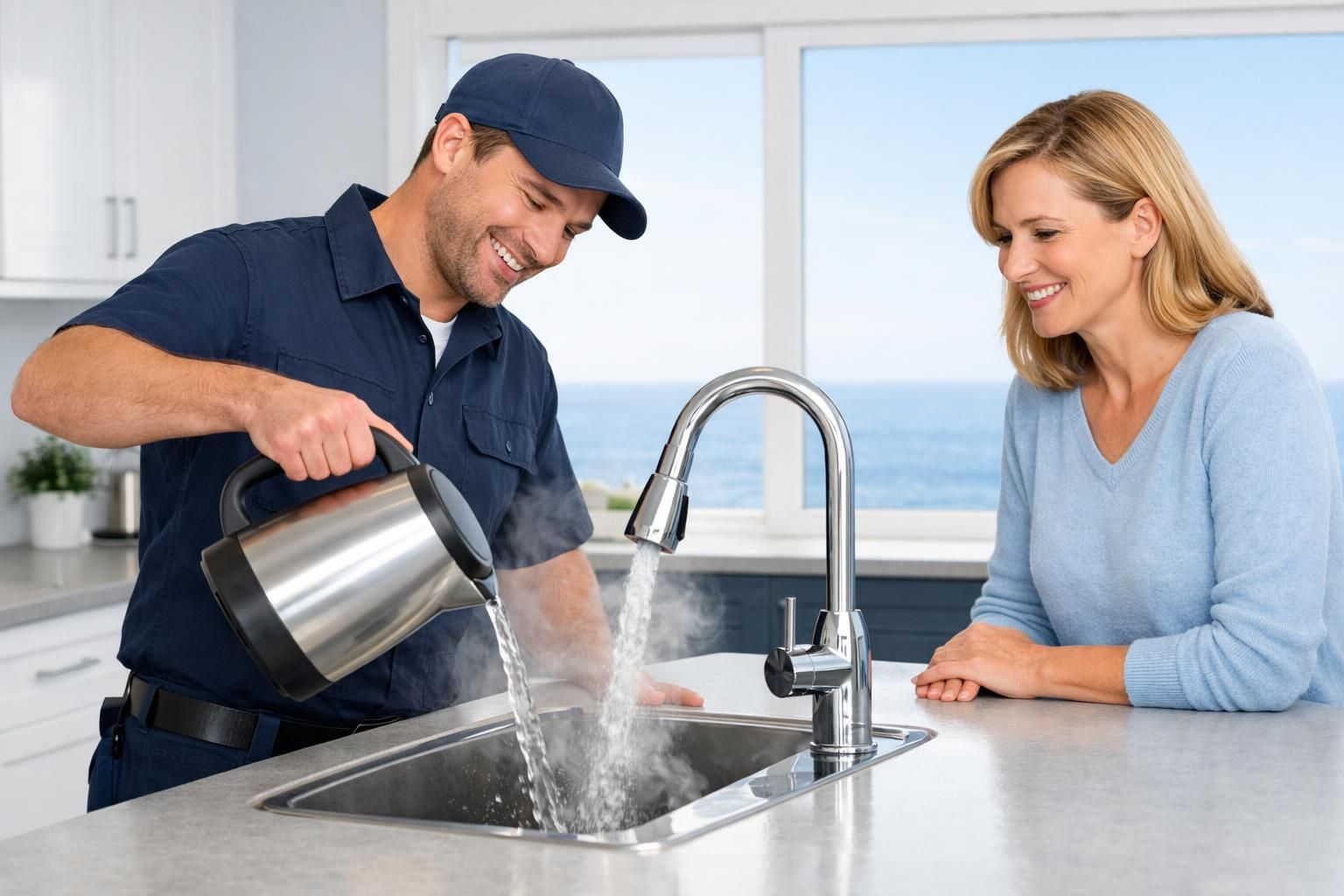
Hot water flushing helps when it is paired with better habits. It will not “fix” grease dumping, but it can soften light soap films and rinse mild residue before it thickens. The key is enough water to carry loosened material through the trap and into the larger line.
Run hot tap water long enough to warm the pipe, then keep it flowing briefly to move residue along. Avoid boiling water unless you know your plumbing can handle it; sudden temperature stress can damage some materials and components. If a drain is already slow, flush gently. Forcing a large volume into a partly blocked line can trigger a backup.
Screens, strainers, and simple upgrades
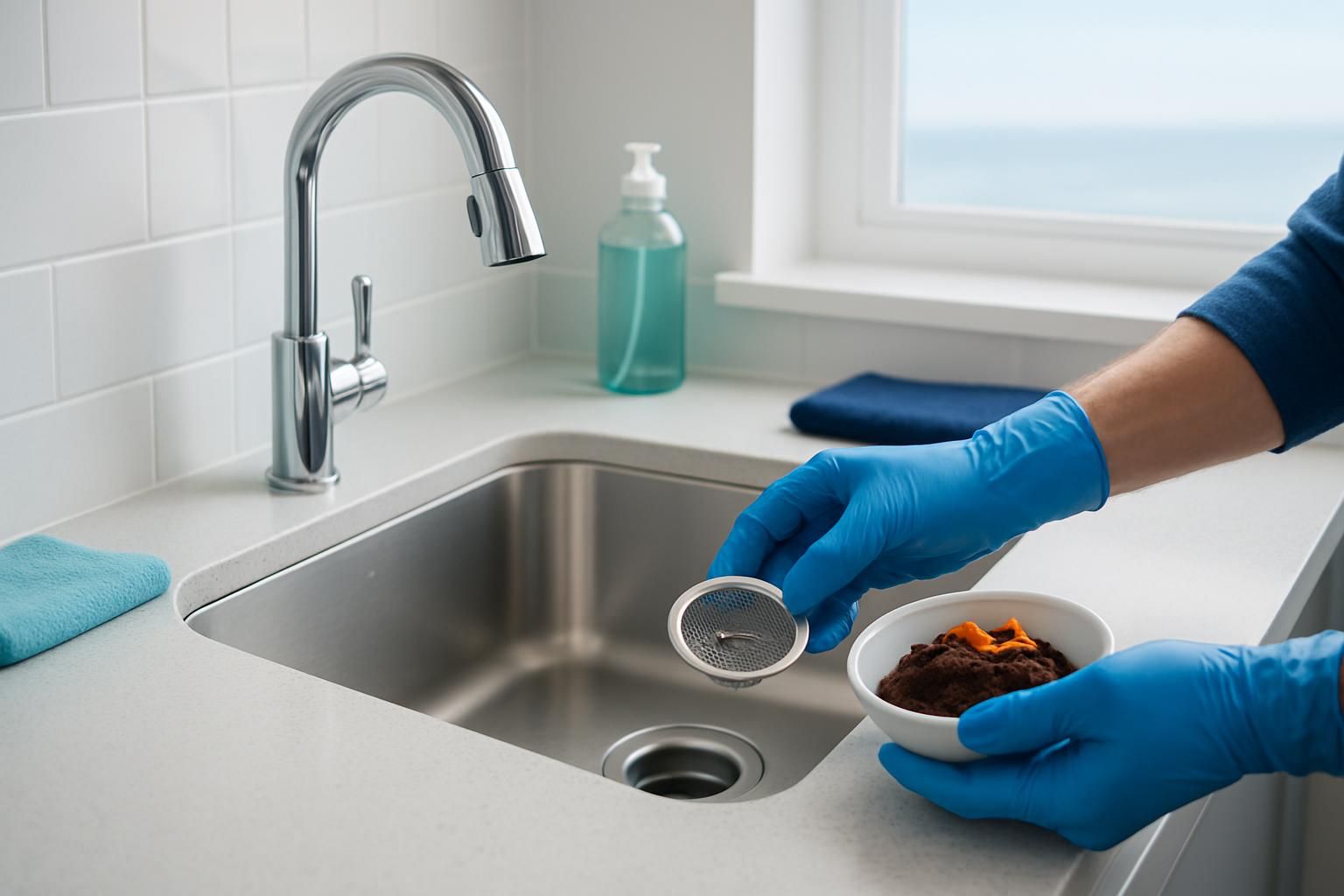
Physical barriers prevent many clogs before they start. A good strainer often does more than occasional deep cleaning because it stops the main clog ingredients at the top of the drain. For kitchens, use a strainer that catches fine particles without blocking flow and is easy to empty. For showers, choose a hair catcher that stays put and is simple to rinse.
A few other simple upgrades can help:
- Replace old or poorly sealing sink stoppers that collect residue around the pivot
- Use a lint catcher or screen in utility sinks that handle laundry water
- Consider a garbage disposal splash guard that reduces scraps slipping through
- Keep a small drain brush for quick cleaning near the opening
These only work if you empty and rinse them regularly. A strainer full of debris is still a clog risk, just a visible one.
What to avoid
Many drain problems get worse when people use quick fixes that damage pipes or push debris deeper. Prevention includes avoiding the wrong tools and products. With repeat issues, the goal is safe removal and better habits, not a short-lived opening that closes again.
Do not treat every slow drain as identical. A bathroom sink is often hair and soap near the stopper. A kitchen sink is often grease and food in the branch line. A tub that backs up when the toilet flushes can signal a larger drainage problem. Match the likely cause to the right response to prevent repeat clogs.
Chemical drain cleaners and pipe damage risk
Chemical drain cleaners are convenient, but they are a poor fit for recurring clogs. They often fail to dissolve mixed clogs, especially hair combined with grease and soap. When they do not work, you are left with standing water containing caustic chemicals, making plunging, trap removal, or snaking more hazardous.
Repeated use can also be hard on plumbing components, especially if chemicals sit in a slow line. Even if pipes survive, products can damage seals and finishes if splashed. If a drain keeps clogging, focus on mechanical removal and prevention. For deeper buildup, professional cleaning is often safer and more effective than repeating harsh treatments.
Flushable wipes and other troublemakers
Many items marketed as safe are common causes of repeat clogs, especially in toilets and main lines. “Flushable” wipes are a frequent offender because they stay intact longer than toilet paper and can snag on rough spots, roots, or existing buildup. One wipe catches, then collects more debris.
Other troublemakers include paper towels, hygiene products, cotton swabs, and dental floss. Using excessive amounts of thick toilet paper can cause similar issues. In kitchens, fibrous scraps and starchy foods clump and stick. If the main drain keeps clogging, be strict about what goes into toilets and floor drains, because main-line clogs can affect multiple fixtures and trigger messy backups.
When recurring clogs mean the main line needs help
If multiple drains act up, the issue may not be in one sink or tub. Signs of a main line problem include gurgling in one fixture when another drains, backups in the lowest drain in the house, or a toilet that bubbles when you run the shower. When the main drain keeps clogging, you may get temporary relief, but symptoms return because the obstruction remains.
Main line issues can come from accumulated sludge, foreign objects, or pipe conditions. A sagging section can hold water and solids, leading to frequent buildup. Roots can intrude and repeatedly catch debris. Recurring, multi-fixture symptoms are not a simple maintenance issue and point to the need for inspection and thorough cleaning beyond what you can do from one fixture.
How a plumber prevents repeat clogs
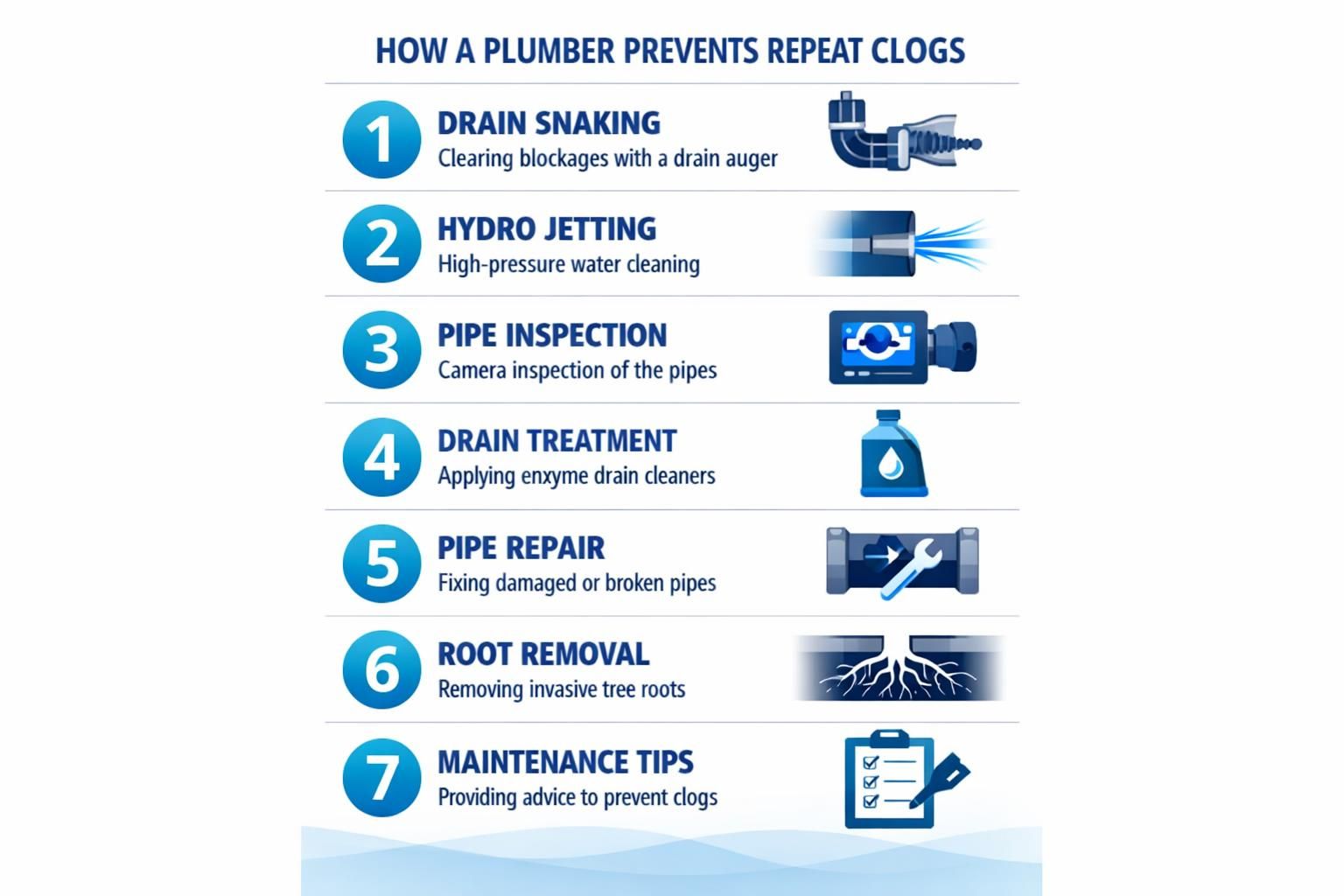
A plumber focuses on the cause, not just restoring flow. They identify where and when the clog happens, which fixtures are affected, and whether there is a pattern. From there, they may recommend evaluating the line to confirm whether the issue is in a branch line, the trap area, or the main.
Preventing repeat clogs usually requires both complete removal of buildup and practical prevention steps tailored to your home. A plumber can clear lines more thoroughly, identify pipe conditions that encourage clogging, and recommend simple upgrades like better strainers. Some homes also need more frequent maintenance because of pipe layout and use.
Snaking vs hydro jetting for long term results
Snaking and hydro jetting solve different problems. A drain snake breaks through or retrieves a blockage and restores flow. It is effective for hair clogs and many localized obstructions, but it may leave residue on pipe walls, especially in grease-heavy kitchen lines, so clogs can return.
Hydro jetting uses high-pressure water to scour the inside of the pipe, removing buildup along the walls instead of just opening a channel. For long term results, it can help when recurring clogs come from accumulated grease, sludge, or scale. The right method depends on pipe condition and clog type, because the goal is thorough cleaning without damaging plumbing.
FAQs about keeping drains from clogging
The simplest answer to how to keep drain pipes from clogging is to stop solids and fats at the source, then maintain flow with light, consistent cleaning. Use strainers in sinks and showers, keep grease out of the kitchen drain, and remove hair and stopper buildup before it compacts. A monthly routine of checking stoppers, rinsing strainers, and doing a careful hot water flush prevents many problems.
If a drain keeps clogging despite good habits, leftover buildup deeper in the line or a structural issue is likely. Note patterns: does it happen after the disposal is used, after laundry, or only in one bathroom? If multiple fixtures are involved, treat it as a possible main-line issue. When the main drain keeps clogging, professional diagnosis is often the fastest path to a lasting fix.
Conclusion
Keeping drains clear is mostly about preventing the first layer of residue that future debris sticks to. Start with daily habits: keep grease and food scraps out of the kitchen sink, catch hair in showers, and prevent lint and grit from entering utility drains. Then add a simple monthly check of strainers, stoppers, and a careful hot water flush to keep buildup from hardening. If symptoms spread across multiple fixtures, take it seriously, because the main line may be involved. With a few consistent routines and the right response when problems repeat, you can learn how to keep drains from clogging and avoid the cycle of “clear today, clogged again tomorrow.”