Sewer backup prevention starts with understanding why backups happen and what you can do before wastewater returns into your home. A backup is rarely a surprise in hindsight. Many homeowners notice early hints like slow drains or odd sounds, then dismiss them as minor clogs. This guide covers common causes, warning signs worth taking seriously, and habits and maintenance routines that lower risk. You will also learn how rain and groundwater affect risk, when DIY steps are reasonable, and when it is time to call a professional before damage spreads.
- Backups often come from blockages, root intrusion, or a stressed municipal line during heavy rain
- Multiple slow drains at once is a stronger warning sign than one slow sink
- Proper disposal habits do more than any “miracle” drain product
- Routine maintenance is different from emergency clog removal, and both have a place
- Older sewer lines benefit from periodic camera checks and a clear plan for repairs
- Knowing when to call a plumber can prevent contamination and costly cleanup
What causes a sewer backup
A sewer backup happens when wastewater cannot flow away through the sewer lateral (the pipe that connects your home to the main line) or when the public sewer is overwhelmed and sewer cleaning becomes necessary. Sewage usually shows up at the lowest drains in the house, often a basement floor drain, shower, or first-floor toilet.
Most causes fall into two buckets: restricted flow or too much volume. Common culprits include grease clogs, “flushable” items that do not break down, tree roots entering through small cracks, sagging or collapsed sections, and debris that catches and grows into an obstruction. In some areas, heavy rain overloads sewer mains and pushes sewage back toward homes without backflow protection.
Early warning signs to watch for
The best time to act is before water appears on the floor. Early signs can be easy to miss, so look for patterns. A single slow sink may be limited to that fixture; several fixtures acting up together often points to a larger issue in the main drain or sewer lateral.
Watch for changes you can spot without tools: drains emptying slower than normal, toilets flushing differently, unusual sounds after water use, and new odors. These signs do not guarantee a backup, but they are a cue to stop guessing and troubleshoot.
Slow drains in multiple fixtures
When more than one fixture drains slowly, shared piping often needs drain cleaning. A slow tub and toilet on the same level can indicate a partial restriction downstream where branches join the main drain. Water still moves, but restricted flow leads to sluggish drainage and bubbling as air struggles to pass.
Timing matters. If everything is slow consistently, buildup may be narrowing the pipe. If it comes and goes, the blockage may be shifting, such as grease and paper catching on rough pipe walls. In either case, reduce heavy water use until you identify the restriction. Laundry, long showers, and repeated flushing can turn a strained line into an overflow.
Gurgling, odors, and floor drain issues
Gurgling can happen when a drain line is partially blocked and air gets pulled through traps to balance pressure, often after flushing or when a washing machine drains. Venting problems can also cause gurgling, but gurgling plus slow drains and odor more often suggests a main line issue.
Odors can appear when traps are siphoned dry, seals are weak, or wastewater sits in the line too long. Floor drains deserve extra attention because they are often the lowest opening in the home, where backups appear first. If a floor drain burps water, leaves residue, or smells stronger after other fixtures run, treat it as urgent.
Simple prevention habits at home
Daily habits are the foundation of sewer backup prevention. Many main line clogs are not caused by one dramatic event; they build from repeated inputs that do not belong in plumbing or that harden and stick to pipe walls.
Habits only work if everyone follows them. Keep solids, fats, and fibrous materials out of drains, and avoid sudden high-volume water use if your system is already showing signs of restriction. The cleaner the line stays, the less likely it is to snag debris and form a blockage.
What not to flush or pour down drains
Your toilet is not a trash can, and your sink is not a disposal route for anything that seems “liquid enough.” Items that do not dissolve can hang up in bends, catch on rough spots, or combine with grease into a plug. A reliable rule: flush only toilet paper and human waste.
Common items to keep out of drains include:
- Wipes of any kind, even those labeled flushable
- Paper towels, tissues, cotton swabs, and dental floss
- Feminine hygiene products
- Diapers and cleaning pads
- Cat litter and other absorbent granules
- Food scraps like pasta, rice, peels, and coffee grounds
- Paint, solvents, and harsh chemicals that can damage pipes or create unsafe conditions
If you want drain maintenance tips that actually reduce risk, start with hydro jetting to clear problem materials from the system.
Grease, wipes, and buildup prevention
Grease is a major long-term contributor to sewer line trouble. It may go down hot, but it cools on pipe walls and becomes a sticky layer that traps debris. Over time, the pipe narrows and clogs more easily.
Use simple routines: wipe greasy pans before washing, collect cooking oil in a container and throw it away, and use sink strainers to catch food particles. In bathrooms, treat wipes and floss as high-risk because they snag easily. Keep small trash bins in each bathroom so people do not default to flushing.
Maintenance steps that actually help
Good habits reduce what enters the system; maintenance addresses what still accumulates. The goal is to keep the pipe interior open so debris cannot latch on, not just to punch a hole through a clog. The best approach depends on your home’s age, pipe material, nearby trees, and any history of slow drains.
Avoid relying on chemical drain products as your main plan. Some can generate heat, harden into masses, or damage certain pipes. They may also carve a small channel through a larger blockage, bringing temporary relief while the underlying problem remains. Effective maintenance is targeted: identify the likely issue, choose the right method, and confirm the line is open.
Sewer camera inspections for older lines
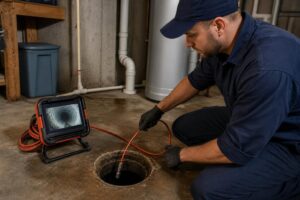
A sewer camera inspection replaces guesswork with evidence. A plumber runs a camera through a cleanout to view the sewer lateral and main drain. It can reveal root intrusion, cracked or offset joints, “belly” sections that hold water, heavy scaling, or lodged objects. It also helps separate recurring buildup from structural defects that need repair.
Older homes often have materials and joints more vulnerable to roots and shifting soil. Even newer homes can have trouble if trees are near the line or construction debris entered the system. Camera results guide the next step: roots point to root control and repairs; buildup points to cleaning methods that match pipe condition.
Snaking vs hydro jetting maintenance
Snaking (augering) and hydro jetting solve different problems. A drain snake typically breaks through a clog or retrieves an obstruction. It is useful for localized blockages and some main line stoppages when you need flow restored quickly. However, snaking can leave residue behind, so the line may clog again.
Hydro jetting uses high-pressure water to scour pipe walls, removing grease, sludge, and soft buildup. It works best when buildup is the main issue and the pipe is in good shape. Because pressure is involved, settings must match the pipe material and condition. If the line is cracked, collapsed, or fragile, jetting may not be appropriate until repairs are made. A camera inspection beforehand helps confirm which option fits.
Rain, groundwater, and backflow risk
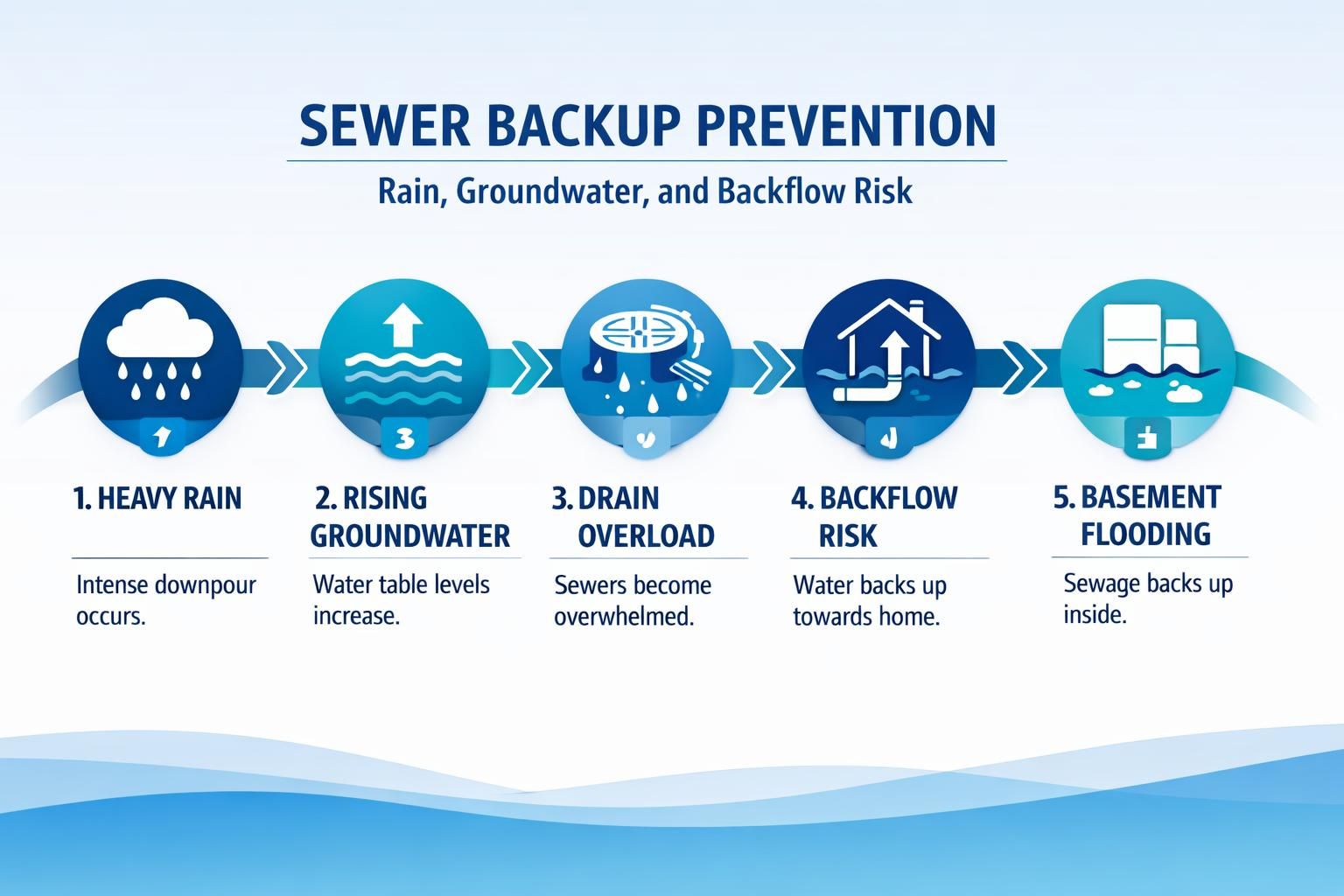
Weather can raise your risk even with good household habits. During heavy rain, stormwater can enter sewer systems in some areas through inflow points, improper connections, or overwhelmed infrastructure. When the public main is under stress, pressure can force wastewater to the lowest available outlets, including a home’s drains without effective backflow protection.
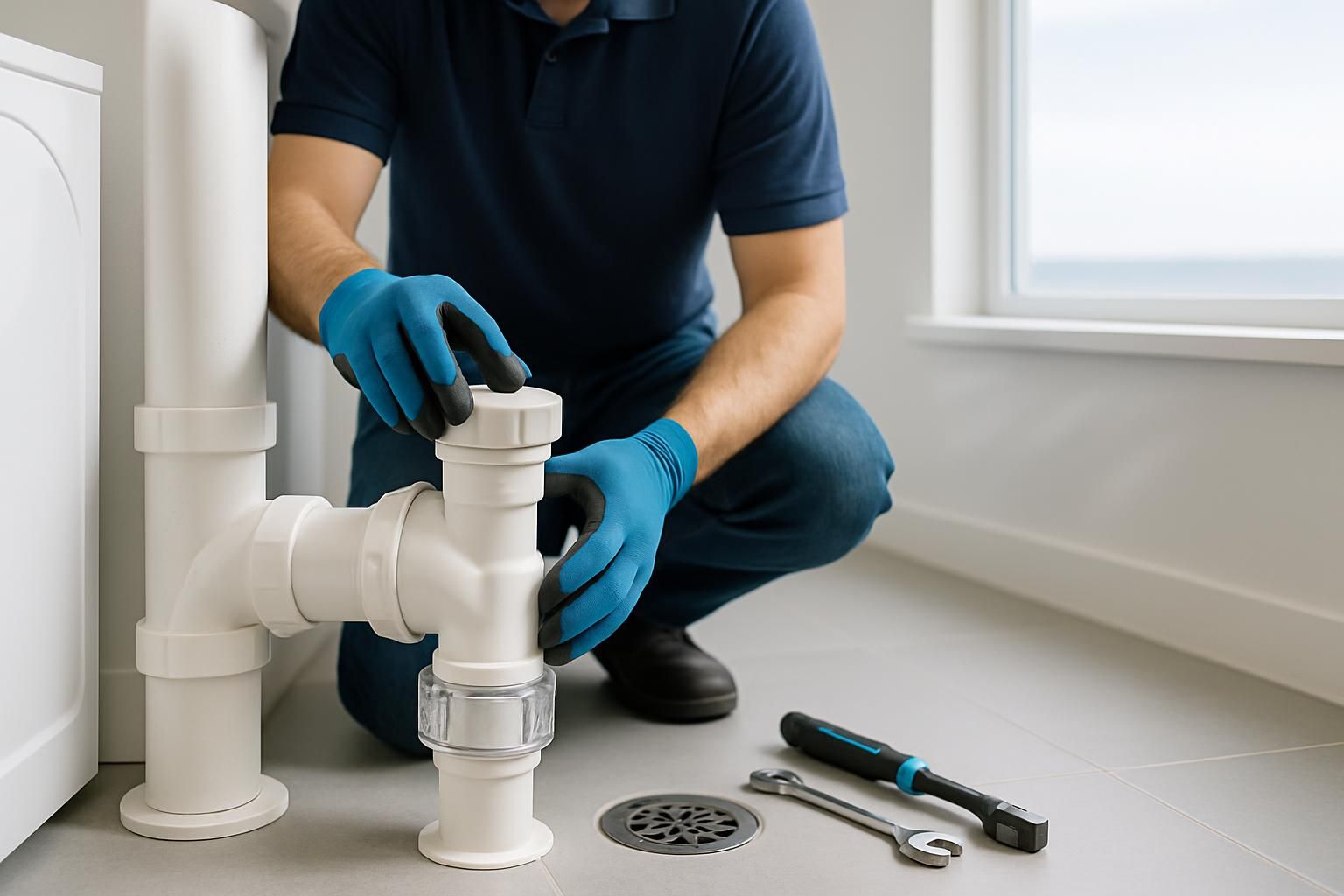
Groundwater matters too. Saturated soil can shift and stress buried pipes, worsening small cracks or misalignments. Practical risk reduction includes directing gutters and downspouts away from the foundation, maintaining grading so water flows away from the home, and adding safeguards such as a backwater valve where appropriate. If you have storm-related history, treat rain forecasts as a cue to limit water use and watch low drains closely.
When to call a plumber immediately
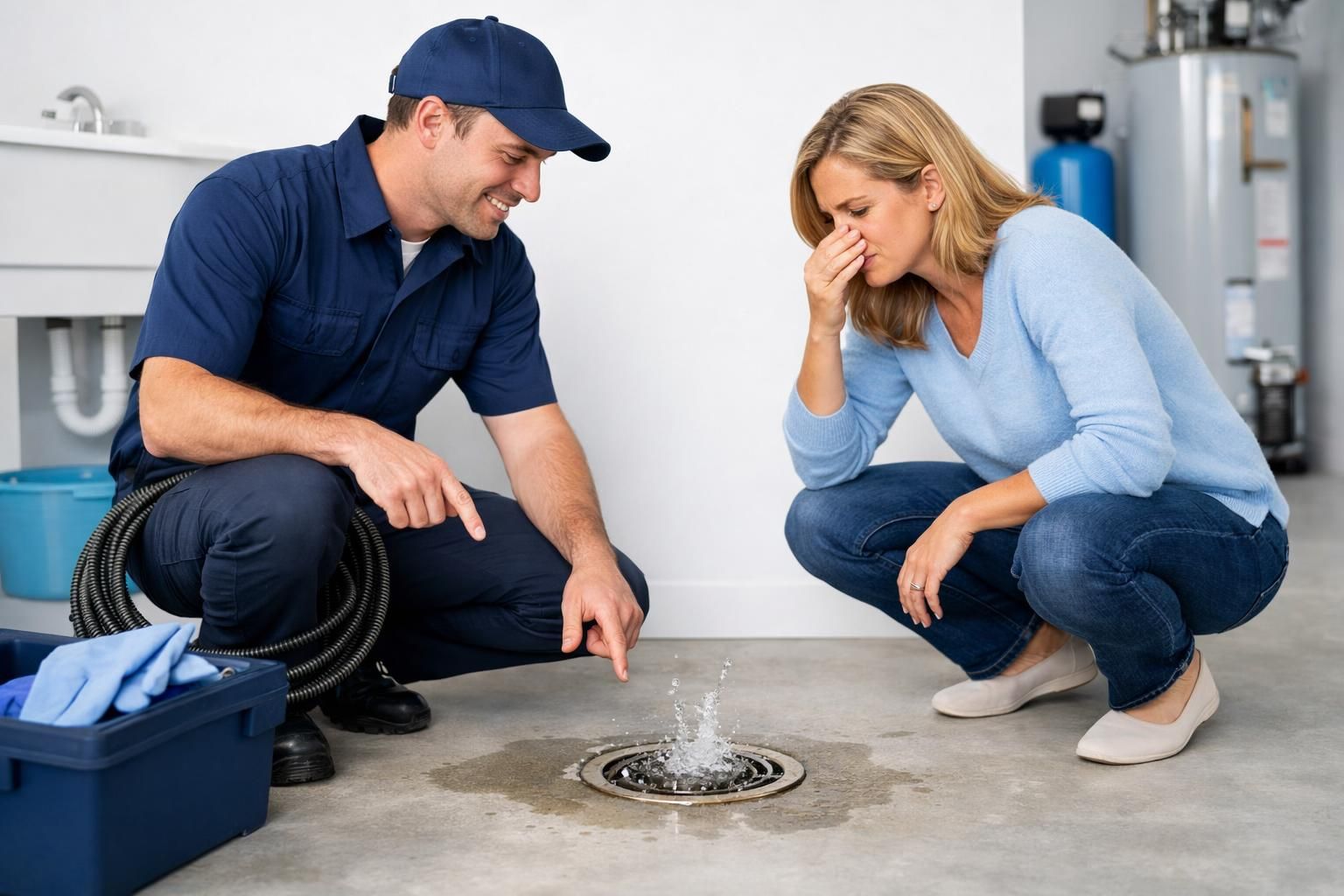
Some situations call for professional help right away. Sewage carries contaminants, and a backup can quickly damage flooring, drywall, and belongings. Continuing to run water can also turn a small overflow into a larger event.
Call a plumber promptly if:
- Sewage is coming up through a floor drain, shower, or toilet
- Multiple fixtures are backing up at the same time
- You have gurgling plus slow drains across the home, especially after using the washing machine
- You smell persistent sewage odors that do not resolve after checking for dry traps
- You have recurring clogs that return within days or weeks after being cleared
- Your home has a history of backups during rain, or you suspect a backflow event
While waiting, limit water use, avoid running dishwashers and laundry, and keep people and pets away from affected areas. A plumber can determine whether the issue is in your lateral or the municipal main and advise the safest path to restore flow.
FAQs about preventing sewer backups
Homeowners often want a clear checklist and a sense of how proactive they need to be. The answers below focus on practical decisions and common misunderstandings that can derail prevention.
If you are building a plan, start with habits, then add maintenance that matches your home’s risk factors. When in doubt, confirm the condition of the line so you are not spending effort in the wrong place.
Common questions include:
- sewer camera inspection
Conclusion
Sewer backup prevention is most effective when you combine smart daily habits with targeted maintenance and fast action on early warning signs. Keep problem materials out of the system, especially grease and wipes, and take multiple slow drains, gurgling, and floor drain changes seriously. If your home is older or you have recurring issues, a camera inspection can replace guesswork with a clear plan, and when cleaning helps it can restore full flow instead of temporary relief. As a next step, walk through your home and note any recurring slow fixtures, then adopt a few simple drain maintenance tips and schedule a professional evaluation if the signs point to a developing main line issue.