A main sewer line clog is one of those home problems that goes from “annoying” to “oh no” fast. If you’re searching for how to unclog main sewer line backups, you’re probably seeing multiple drains act up at once, or you’ve noticed gurgling and smells you can’t ignore. The good news is that some main line clogs are very fixable from your sewer cleanout (that capped access point on the main pipe). But you also don’t want to guess. In this guide, you’ll learn how to confirm it’s the main line, prep safely, use a snake correctly, and recognize the red flags that mean it’s time to stop and bring in a plumber.
Best for: Homeowners with multiple drains backing up who can access a sewer cleanout and have basic hand tools.
Not ideal when: Sewage is actively overflowing indoors or you suspect a collapsed pipe or severe pipe damage.
Good first step if: You can reduce water use, confirm main-line symptoms, and safely open the cleanout to check for standing waste.
Call a pro if: You can’t locate the cleanout, the cap won’t budge, snaking repeatedly fails, or backups return within days.
Quick Summary
- Main sewer line clogs usually show up as problems in more than one fixture, not just one sink or tub.
- Your sewer cleanout is the safest place to test and clear the blockage because it’s direct access to the line.
- Start with safety: limit water use, protect yourself, and open the cleanout slowly to avoid a messy surge.
- A drain snake (plumbing auger) clears many clogs, but it won’t fix roots, a collapsed pipe, or a sagging “belly.”
- Skip harsh chemical drain cleaner for main lines. It can be dangerous and may damage older piping.
- If the clog keeps coming back, a camera inspection can tell you what’s really happening inside the pipe.
How to Tell It’s the Main Sewer Line (not a Single Drain)
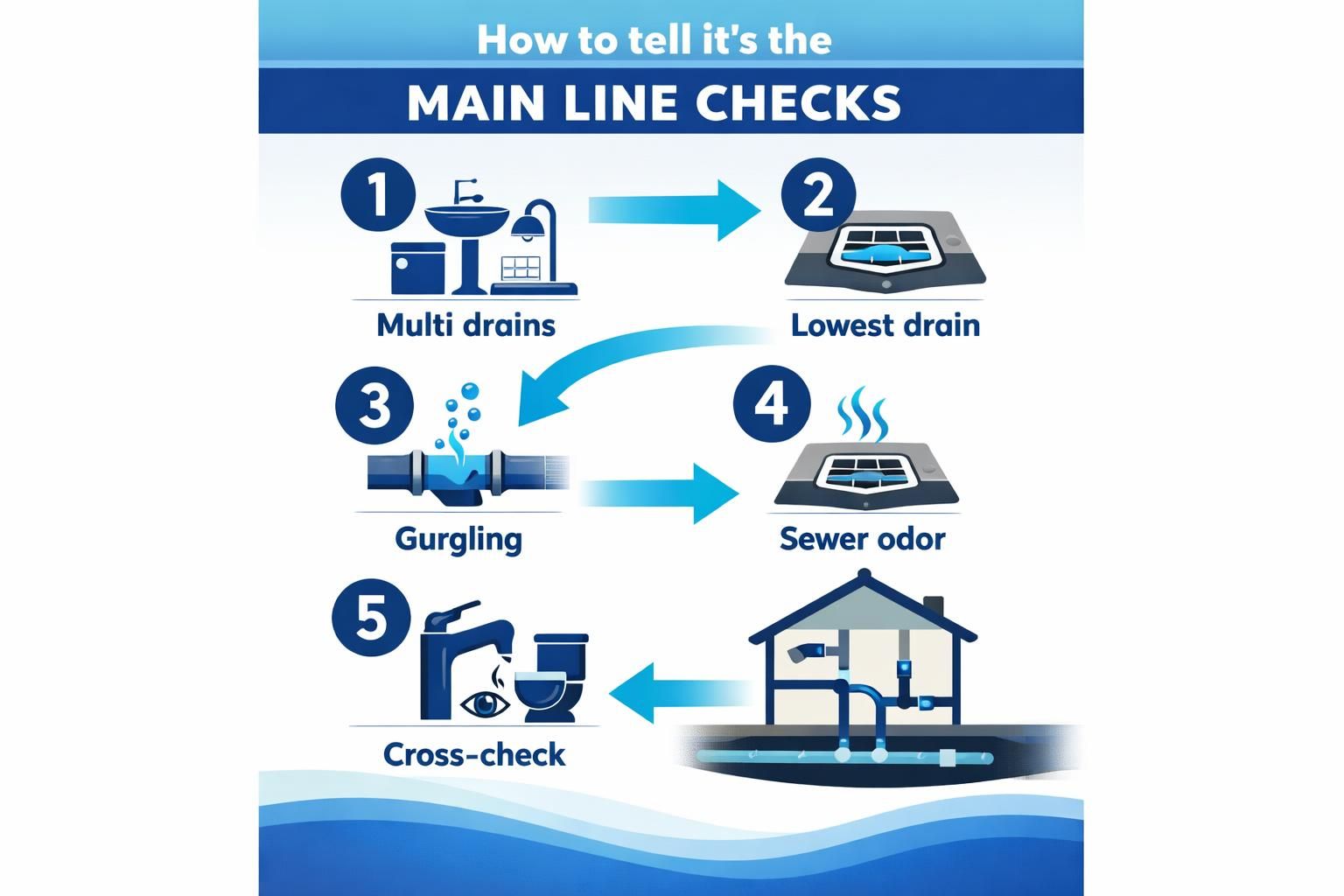
If multiple drains act up at once, suspect the main sewer line, not one fixture. Picture plumbing like a tree: fixtures are branches that meet at the trunk going to the street or septic. One clog usually affects one drain, like a slow sink. A main line clog blocks the trunk, so backups appear at the lowest drain.
Common Signs (multiple Slow Drains, Gurgling, Sewage Odor)
The most common signs are multiple slow drains and backups that seem connected. You might flush a toilet and see a shower bubble. Or you run the washing machine and hear gurgling sounds in a nearby sink.
Other clues include a sewer odor, especially near floor drains or the lowest bathroom. If that smell is strong, check out common sewer smell causes to rule out simpler issues like a dry drain trap.
Quick Checks You Can Do Before Opening the Cleanout
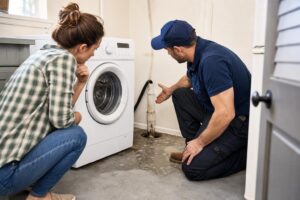
Run water at one fixture and watch another nearby. For example, run a bathroom sink for 30 seconds and check the tub or shower; rising water or gurgling suggests a shared blockage. Then identify the lowest drain, often a basement floor drain or first-floor shower. Main line clogs commonly show there first because backups follow gravity to the lowest point.
Safety Prep Before You Start
Assume anything from a sewer clog is contaminated. Reduce exposure and stop adding water to the system. Stop using water in the house: no showers, dishwashers, laundry, and avoid flushing unless necessary, because extra flow can turn a partial clog into a backup. Ventilate the area by opening windows, and keep kids and pets away. Protect nearby floors with plastic or towels. Don’t add chemicals, and treat the line as hazardous if drain cleaner was used.
Protective Gear, Shutoff Steps, and Contamination Precautions
Wear waterproof gloves, eye protection, long sleeves, and shoes you can disinfect. Keep a bucket, rags, and trash bags ready. Shut off anything that can add water automatically, such as an ice maker line or a sump pump tied into plumbing. If you share a building drain, coordinate so others don’t run water. Clean sewage with hot soapy water, then disinfect, and wash hands.
Tools and Supplies You’ll Need
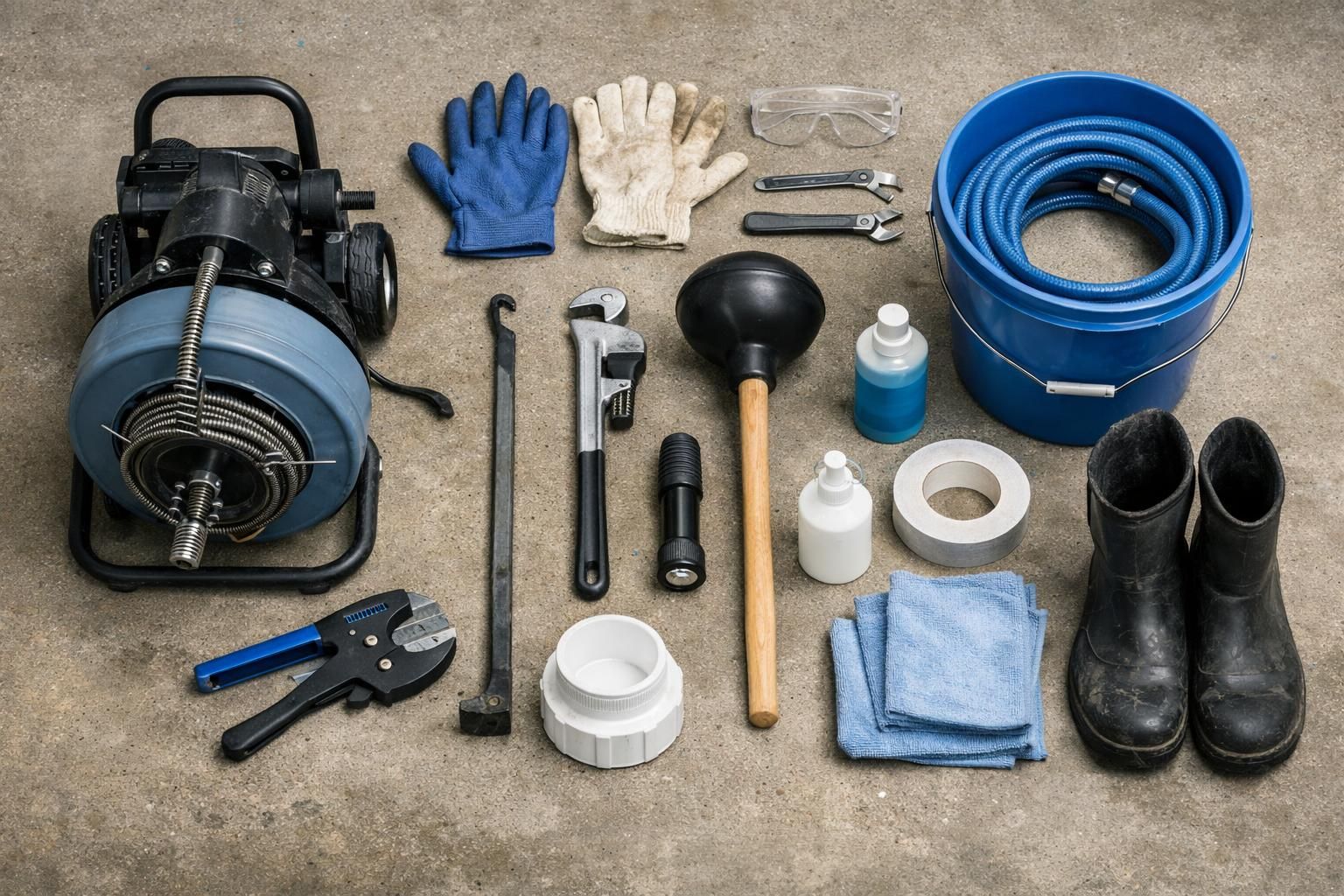
Main sewer clogs are deeper than sink clogs, so small handheld snakes often won’t reach or cut effectively. Plan on a drain snake/plumbing auger, a wrench or pliers for the cleanout cap, a garden hose for flushing, and cleanup supplies. A wet/dry vacuum helps with standing water at floor drains and shallow debris before snaking. If you’re unsure what you’re looking for, see what a sewer cleanout is.
Drain Auger Vs. Drum Auger, Hose, Wrench, Bucket, Cleanup Materials
A manual auger is hand-cranked and inexpensive but slower for long runs. A drum auger keeps the cable contained and usually works better for longer pushes. Motorized augers add power but can kink cables or harm fragile pipe if forced. Practical kit: an auger with enough cable, adjustable wrench or channel-lock pliers for the cap, a garden hose with spray nozzle, a bucket and old towels, plus plastic sheeting, disinfectant, trash bags, and gloves for cleanup.
Step-by-step: Unclogging the Main Sewer Line From the Cleanout
he foundation, in a basement or crawl space, or just outside. Some homes have multiple cleanouts; use the one closest to the suspected blockage or where the line exits the house.
Open the Cleanout Safely and Confirm Flow Direction
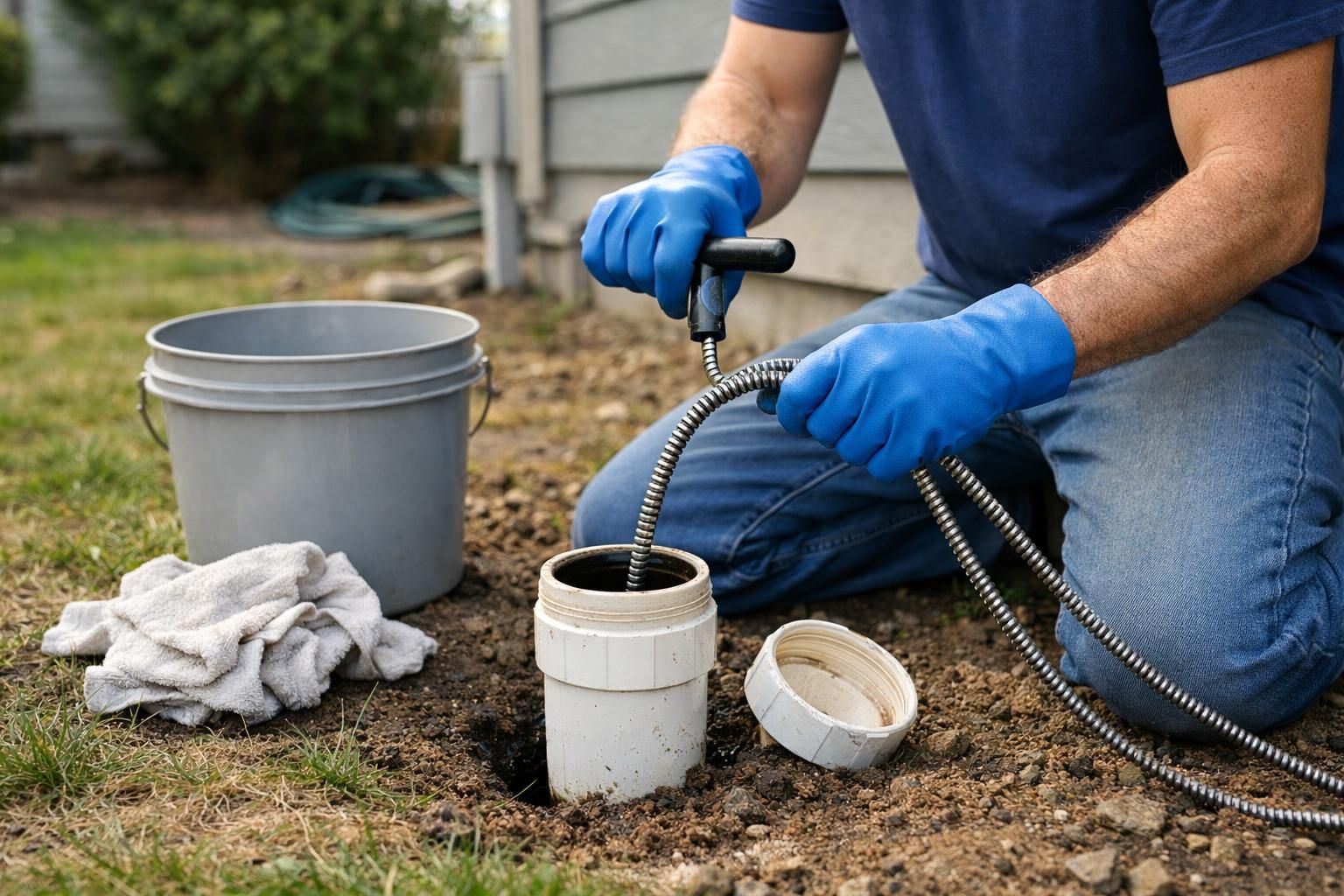
Open the cleanout slowly; pressure can build behind a clog. Stand to the side, set a bucket below, and place towels around the opening. Loosen the cap slightly and pause to watch for seepage, letting it drain into the bucket. After pressure drops, remove the cap fully. Shine in a flashlight. If the cleanout is full, the blockage is downstream toward the street or septic. If mostly empty, suspect upstream or a localized issue.
Snake the Line and Flush to Verify the Clog is Cleared
Feed the snake into the cleanout downstream, advancing slowly until resistance. At the clog, apply steady pressure and rotate; don’t ram, which can punch through buildup. Advance in short pushes, retracting slightly to clear the head, until it moves freely. Retrieve the cable while rotating to pull debris out. Flush with short hose bursts, then test fixtures and watch the cleanout flow.
If Snaking Doesn’t Work: Next Options (and Risks)
If snaking fails, it’s often not a soft clog. It may be grease, wipes packed tight, sediment, or a structural problem like roots or a broken line. Forcing the same tool can waste time and worsen a spill or damage older pipe. Next steps usually mean better diagnosis, not more muscle. Consider the cost to unclog main sewer line issues when DIY becomes repeated attempts, since one correct service call can be cheaper long term.
Hydro Jetting (when it Helps, When it Can Damage Pipes)
Hydro jetting blasts high-pressure water through the line to clear grease and scrub pipe walls cleaner than a snake can. It’s not always safe, though. Old clay, brittle cast iron, or already-damaged pipe can split at weak points, and a collapsed line still stays collapsed. For a plain-language comparison, see camera vs jetting comparison.
Root Intrusion, Collapsed Pipe, or “belly” (why Recurring Clogs Happen)
Recurring clogs usually have a repeatable cause. Roots enter joints or cracks and trap paper and wipes. A collapse creates a hard stop a snake can’t solve. A belly is a sag that holds water so solids settle and rebuild. Signs include: returns within days, roots on the cable, an immovable hard obstruction, or worse symptoms after heavy rain. If roots seem likely, see tree roots in sewer lines for why it keeps coming back.
When to Call a Plumber (and What to Ask For)
Call a plumber for indoor sewage, if the cleanout can’t be opened safely, or if clogs return after you clear them. Pros can use a motorized auger with the right cutter, control the mess, and diagnose the cause instead of guessing. Describe which fixtures back up, whether the cleanout was full, and what you tried. Ask how they’ll verify the line is truly clear. For prevention tips, see backup prevention habits.
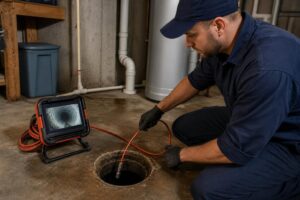
Camera Inspection, Root Cutting, Jetting, Repair/reline Options
Conclusion
The safest way to approach how to unclog main sewer line problems is to confirm the symptoms, prep for contamination, and work from the cleanout so you’re not fighting the clog through a small drain. A snake clears many blockages, especially common buildup like grease and debris. But if the clog returns, if you suspect roots or pipe damage, or if sewage is backing up indoors, stop DIY and get a camera inspection so you know what you’re dealing with before it gets worse.