If you are dealing with slow drains, recurring backups, or a sewer line that keeps acting up, it helps to understand the real difference between hydro jetting vs rooter. These services are often treated as interchangeable, but they work differently and solve different problems. In this guide, you will learn the rooter service meaning in modern plumbing, how rooter machines remove clogs, and how hydro jetting cleans pipes from the inside out. You will also see which approach fits common household issues like hair, grease, and tree roots, plus practical tips for choosing the right option for your home.
- Rooter service typically breaks through or pulls out a clog using a rotating cable and cutting heads.
- Hydro jetting uses high pressure water to wash buildup off pipe walls and flush debris away.
- Drain jetting vs auger comes down to cleaning power: augers clear a path, jetting restores flow area.
- Rooters are often best for localized blockages and tougher obstructions like roots in the right conditions.
- Hydro jetting is often better for recurring slow drains caused by grease, sludge, and buildup.
- The best sewer cleaning methods depend on pipe condition, clog type, and how often the problem returns.
What rooter service means today
Rooter service meaning has expanded beyond cutting tree roots from sewer pipes. Today, a rooter service usually means mechanical drain cleaning with a motorized cable machine (drain snake/auger). A plumber feeds a flexible steel cable into the line and rotates it with attachments to bore through, hook, or cut apart whatever is blocking the pipe.
In many homes, a “rooter” visit is the standard response to a clogged sink, tub, toilet, or main line backup because it is fast and works across many pipe sizes. The main limitation is that restored flow is not the same as cleaned pipe walls, which is where hydro jetting can be a better fit.
How rooter machines clear clogs
Rooter machines clear clogs through rotation plus scraping or cutting at the head. The cable can navigate bends and longer runs, so it works for branch lines and main lines. When the head hits resistance, it can drill through softer material, snag and pull debris back, or cut the obstruction into pieces that wash downstream.
Results depend on the clog and the head used. Smaller heads may punch through soft clogs, while larger cutters can shave tougher material or cut roots. That speed is why plumbers often start with a rooter during urgent backups.
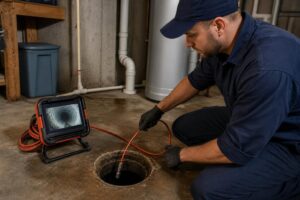
Rooter work is often paired with a camera inspection. After flow is restored, a camera can confirm whether the line is truly open or still coated, and whether there are structural issues like offsets, cracks, bellies, or root intrusion. This helps determine whether another sewer cleaning method is needed.
How hydro jetting differs
Hydro jetting uses a specialized hose and nozzle that sprays high pressure water. Forward jets help move the hose through the line, while rear-facing jets scour pipe walls and push debris toward the sewer or septic connection. Rather than cutting a narrow path through a clog, jetting removes buildup that reduces a pipe’s effective diameter.
The drain jetting vs auger difference is coverage. An auger can reopen a line but leave grease, sludge, or scale on the walls. Hydro jetting is designed to wash residue away so the pipe drains closer to full capacity. That is why jetting is commonly used for recurring slow drains, especially kitchen lines and older lines with heavy buildup.
Hydro jetting is not always the best first step. Pipe material, existing damage, and access points matter. For older or fragile piping, repeated backups, or known root issues, a plumber may recommend a camera inspection first to confirm jetting is safe and likely to help.
Hydro jetting vs rooter: what each is best for
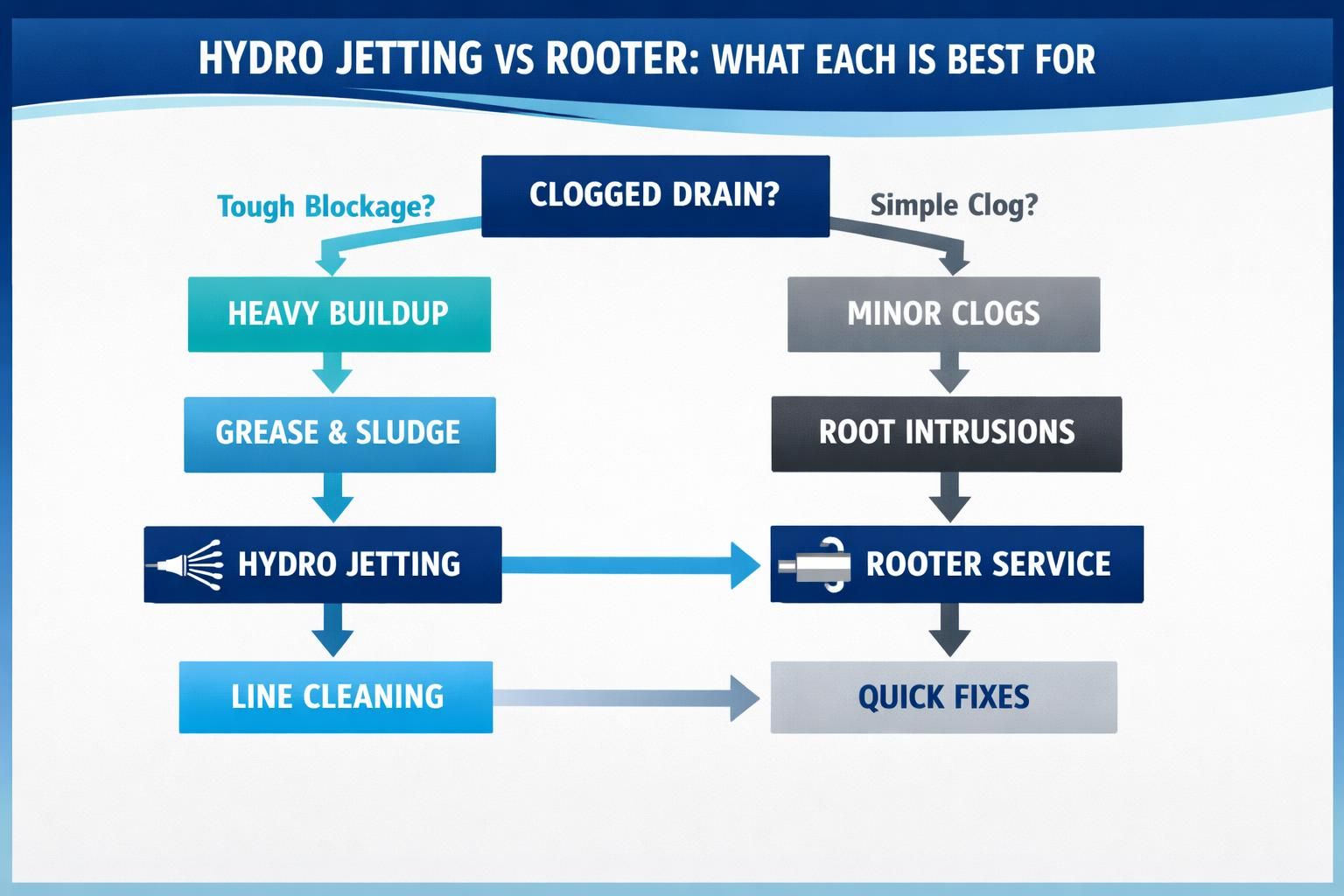
Choosing between hydro jetting vs rooter is simplest when you match the method to the restriction. Rooters are best at breaking through, snagging, or cutting discrete obstructions. Hydro jetting is best at removing widespread buildup and flushing the line clean.
Many problems are mixed: grease narrows a pipe and then catches debris, or roots catch sludge and paper. In those cases, plumbers may use a staged approach: open the line mechanically to restore flow, then decide whether jetting is appropriate to clean what remains. The right choice depends on what is in the pipe, where it is, and whether the pipe is in good condition.
Common patterns:
- Sudden blockage after a single event often points to a localized clog that a rooter can break through.
- Slow drains that gradually worsen often point to buildup that hydro jetting can remove.
- Recurring backups in the same fixture often involve both a partial blockage and coated pipe walls.
- Main line problems require identifying roots, buildup, or a structural defect, not guessing.
Hair and soft blockages
Hair, soap scum, and soft organic debris commonly clog bathroom sinks, tubs, and showers. A rooter machine is often effective because the cable can hook, pull, and break apart the mass. If the clog is close to the opening, clearing can be quick without needing a full pipe wash.
Hydro jetting can help when soap residue and biofilm coat the walls and keep trapping hair. If a shower improves briefly after snaking and then slows again, residue is often the issue. Jetting can remove that layer, but the plumber should confirm the line size and condition so the pressure is appropriate.
Grease, sludge, and pipe wall buildup
Grease and sludge are where hydro jetting usually stands out. Kitchen lines often develop a film of fats, oils, and food residue that narrows the pipe. A rooter may open a channel and stop the immediate backup, but grease can remain on the walls and quickly catch more debris.
Hydro jetting targets the full inner circumference, which is why it is often recommended for recurring kitchen clogs or slow drains driven by buildup. It can also help with some mineral scale depending on severity and pipe condition. For grease-heavy lines, jetting is typically aimed at longer-lasting flow, assuming the system can handle it.
Tree roots and heavy obstruction
Tree roots are a common reason homeowners request a rooter. With the right cutting head, a rooter can slice roots and reopen the line, often the fastest way to restore drainage during an urgent backup. However, roots typically return if the pipe has cracks, separated joints, or other entry points, so clearing is rarely a permanent fix.
Hydro jetting can help flush fine root hairs and leftover debris after cutting, but water alone does not solve root intrusion in a compromised line. Jetting may also be risky in fragile or damaged pipes. A camera inspection after clearing can show whether the intrusion is minor or a sign the line needs repair, lining, or replacement.
How to choose the right service for your home
Start with symptoms and history. If this is a first-time clog in a single fixture, a rooter service is often the most efficient first step. If multiple drains are slow, backups return after snaking, or you notice gurgling and intermittent stoppages, the issue is often broader than a single plug. In those situations, hydro jetting, or at least an inspection to check pipe condition, can be the smarter move.
Your plumbing system also matters. Older homes may have sections that are more vulnerable, while newer systems often tolerate jetting well when performed correctly. Access matters too: cleanouts make both services easier and more controlled. If you are unsure, ask how the plumber decides between drain jetting vs auger for your situation and what they expect to find based on the symptoms.
Questions to ask before approving work:
- What do you think the blockage is made of, and why?
- Will you use a camera to confirm what is in the line or to check results after clearing?
- Is the pipe material and condition suitable for hydro jetting?
- If you snake it today, what would make you recommend jetting next?
Cost and frequency comparison
Cost and frequency vary by line location, severity, access, and whether an inspection is needed. In general, rooter service is commonly used as an as-needed fix for acute clogs because it can restore flow quickly. Hydro jetting is more often used as a deeper cleaning method when clogs recur or when pipe walls are coated with grease and sludge.
Frequency depends on the cause. A one-off obstruction may not return. Grease-prone lines may benefit from periodic jetting to help keep diameter open. Root issues may require repeated cleanings until the entry point is repaired. Long-term cost is usually controlled by matching the sewer cleaning methods to the real problem and reducing what feeds clogs, such as grease, wipes, and debris.
FAQs about hydro jetting and rooter service
Hydro jetting vs rooter is not always an either-or choice. Many drain problems involve both a clog and dirty pipe walls, and the order of service matters. For main line issues, inspection is often recommended to avoid guessing.
Rooter service meaning can also vary by region and company. Some providers use “rooter” as a general term for drain clearing even when roots are not involved. When you book, confirm whether they plan to use a cable machine, hydro jetting, or both, and whether camera inspection is available.
Common questions homeowners ask:
- Is hydro jetting safe for my pipes? It can be when performed correctly and when pipe condition is suitable, but fragile or damaged lines may require a different approach.
- Will snaking fix the problem permanently? It can, if the clog is isolated. If buildup remains, the problem can return.
- Which is better for a main sewer line? It depends on whether the issue is roots, buildup, or a structural defect, which is why inspection can be valuable.
- Do I need both? Sometimes, especially when a rooter opens the line and jetting is used afterward to remove remaining residue.
Conclusion
For most homes, the choice between hydro jetting vs rooter comes down to whether you need to break through a blockage or thoroughly clean the pipe walls. Rooter service is typically best for quickly restoring flow when a drain is clogged by hair, debris, or even roots, especially in urgent situations. Hydro jetting is typically best when grease, sludge, and buildup are causing recurring slow drains and repeat backups. A practical next step is to describe your symptoms, ask what the plumber expects to find, and consider a camera inspection for main line issues. That way, you can select the sewer cleaning methods that address the cause, not just the symptoms, and avoid the same clog returning.