
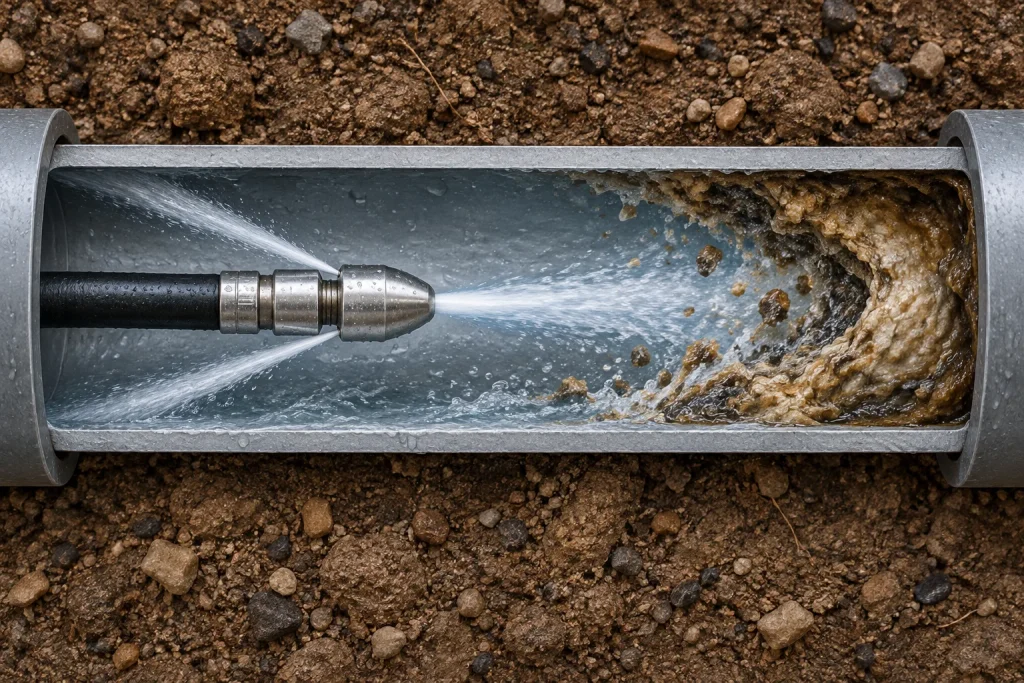
If you are dealing with recurring clogs, slow drains, or sewer line backups, you may hear a plumber mention hydro jetting. So, what is hydro jetting? It is a drain and sewer cleaning method that uses high-pressure water to scour the inside of pipes, flushing away buildup rather than just punching a hole through it. Because it cleans the full pipe wall, hydro jetting can restore flow and slow how quickly new clogs form. In this guide, you will learn how the process works, what it can remove, when it is recommended, when it is not, and how it compares to other drain cleaning options.
- Hydro jetting uses high-pressure water to clean the full interior of a pipe.
- It can remove grease, sludge, soap scum, and many types of mineral scale.
- It is often recommended for recurring clogs and heavily fouled lines, not just one-off blockages.
- It is not always appropriate for fragile or damaged piping without inspection.
- A typical appointment may include a camera inspection, cleaning, and a final verification check.
What hydro jetting is in plain terms
Hydro jetting is a professional drain- and sewer-cleaning method. A technician feeds a hose through an access point and uses a selected nozzle to direct water through the line. It can remove some grease, sludge, and other deposits from a pipe wall, but it does not repair a crack, offset, collapse, or sagging section. The method and pressure should be chosen after considering the blockage and pipe condition.
Hydro jetting uses a specialized hose and nozzle to send controlled water through an accessible drain or sewer line and flush loosened buildup. Inspection may be appropriate first when the pipe condition or cause of a recurring blockage is uncertain.
What Is a Hydro Flush?
A hydro flush is another term commonly used for hydro jetting or water jetting. The process sends controlled, high-pressure water through a drain or sewer line to break apart buildup and carry loosened debris through the plumbing system.
Unlike a drain snake, which may only create an opening through a blockage, a hydro flush can clean a broader section of the pipe walls. It may be recommended for recurring clogs, grease, sludge, mineral deposits, and certain root intrusions.
The condition of the line should be evaluated before cleaning. Older, cracked, collapsed, or weakened pipes may need a different method or repair. For WaterWays service details, see hydro jetting services. The separate drain cleaning service page covers broader drain work.
How hydro jetting works
Hydro jetting is a professional drain and sewer cleaning process that relies on pressurized water rather than blades, chemicals, or augers alone. It is similar to pressure washing, but designed for enclosed pipes and often used to address sewer odor. The goal is not only to get water moving, but to clean the pipe walls so buildup has less to cling to.
In plumbing terms, hydro jetting is deep cleaning for drains and sewers, which is why it can help with recurring grease and sludge. Many plumbers pair it with a camera inspection to confirm the cause of the blockage, verify pipe material, and avoid high pressure in lines that are cracked, collapsed, or badly corroded.
The hose and nozzle setup
The hose is flexible, reinforced, and inserted through a cleanout or access point. The nozzle controls how water is distributed, and plumbers choose nozzle types based on the blockage and pipe condition.
Common nozzle approaches include:
- Penetrating nozzles that concentrate a forward jet to open a path
- Flushing nozzles that emphasize rear jets to move debris out
- Rotary nozzles that spin to scrub walls more evenly
- Root-focused nozzles used in larger lines to break up intrusions
Nozzle selection and technique matter. Setup also accounts for sewer cleanout, hose length, controlled feed rate, and repeated passes so the line is cleaned rather than spot-treated.
Water pressure and why it matters
Pressure drives hydro jetting, but higher is not always better. A plumber adjusts pressure and flow based on pipe material and diameter, the type of buildup, and how the line responds, often guided by sewer camera inspection. When tuned correctly, the water shears grease and biofilm from pipe walls, lifts sediment, and flushes waste out.
Pressure also affects risk. Too little may only carve a small channel and leave coating behind. Too much in a compromised line can worsen cracks or dislodge weakened sections. This is why experienced operators use controlled passes and often rely on camera inspection and post-cleaning verification.
What hydro jetting can remove
Hydro jetting sends pressurized water through a suitable drain or sewer pipe to remove certain buildup from its interior. It may help with grease, sludge, and some loose material, but it cannot repair a crack, separated joint, or collapsed section. Pipe material and condition matter when choosing a cleaning method. If clogs keep returning, identify whether the cause is buildup, damage, or both before selecting a method. Learn about WaterWays’ hydro jetting service.
Hydro jetting is best viewed as pipe wall cleaning, not just clog removal. It can clear many substances that accumulate in kitchen drains, main sewer lines, and high-use commercial lines. Because it flushes debris out of the system, it can improve long-term flow when the pipe is structurally sound.
When homeowners ask what is hydro jetting a sewer line, it is often because of recurring backups or a persistently slow main line, and they also want sewer backup prevention. Hydro jetting can address many obstructions a cable machine can reach, but it typically removes more residue that leads to fast re-clogging. Debris type still matters, and some situations require different tools or repairs first.
Grease, sludge, and biofilm
Grease can begin as a thin film that traps food particles, soap residue, and organic matter. Over time it thickens, narrows the pipe, and holds sludge and biofilm. Biofilm is a slick layer of microorganisms that can remain even after basic snaking, often requiring hydro jetting.
Hydro jetting is effective because it peels these layers from the pipe wall and rinses the material down the line. For recurring kitchen drain issues, this wall-to-wall cleaning often lasts longer than simply reopening a small pathway.
Scale and mineral buildup
Mineral deposits can build up inside pipes as water leaves behind hard scale, producing mineral scale in pipes. Scale narrows the pipe and makes the interior rougher, which helps other debris catch and accumulate faster.
Hydro jetting can remove many types of scale by breaking brittle layers and flushing them away, reaching the full circumference of the pipe. If scale is severe or pipe walls are weakened, a plumber may recommend a cautious approach, confirm condition by camera, and discuss rehabilitation if needed.
Tree roots and heavy debris
Roots can enter sewer lines through cracks, joints, or compromised sections and then catch waste and grease. Hydro jetting can remove roots and flush out trapped debris to restore flow.
However, roots indicate a structural entry point. Hydro jetting may clear the blockage, but roots can return if the opening remains. For heavier intrusion, a plumber may cut roots mechanically first, then hydro jet to wash remnants out. If the pipe is offset, cracked, or collapsed, repair, lining, or replacement may be required instead of repeated cleanings.
When hydro jetting is recommended
Hydro jetting is commonly recommended for recurring clogs, chronically slow drains, or frequent main line backups after snaking for drain cleaning. It is a strong option when buildup is spread along the line rather than caused by one object. If an auger provides only brief relief, grease, sludge, or scale coating the walls is often the reason.
It is also used as preventive maintenance in high-use settings such as busy households, multi-unit buildings, and commercial kitchens. Periodic deep cleaning can reduce emergency backups. A plumber may recommend inspection first to confirm the pipe can handle jetting and to select the safest strategy.
When hydro jetting is not the right move
Hydro jetting should be used thoughtfully. If a pipe is fragile from age, corrosion, prior damage, or poor installation, high-pressure water can worsen defects. Lines with significant cracking, deteriorated material, or partial collapses usually need repair before aggressive cleaning.
It also may not be the best first step when a drain is fully blocked and there is no safe way to manage pressure or confirm what is ahead. In some cases, a plumber opens a path with a cable first, then follows with hydro jetting for full cleaning. A camera inspection helps base the decision on the actual condition of the line.
Hydro jetting vs other drain cleaning methods
Hydro jetting is one tool among several, and the best choice depends on the cause and pipe condition. Snaking or cabling can punch through many clogs and pull out some obstructions, but it often leaves residue on the walls, which can speed up the next clog.
Chemical drain cleaners can be risky for some pipe materials and often do not remove the full mass of buildup. They may reopen a small channel without solving the larger problem. Enzyme-based products can help with mild organic buildup over time, but they are not a fix for heavy grease, scale, or roots. Hydro jetting stands out when thorough, wall-to-wall sewer cleaning is needed and the pipe can safely tolerate it.
What to expect during a hydro jetting appointment
The useful questions are what line is being cleaned, how the access point and pipe condition will be assessed, and how the result will be checked. A typical sequence is to identify the affected line and symptoms, inspect first when damage or root intrusion is a concern, choose a method suited to the obstruction, then confirm that flow improved. A camera can show conditions it can reach, but inspection and cleaning are separate tasks. See sewer camera inspection vs. hydro jetting for the distinction.
During cleaning, the plumber feeds the hose into the line and makes controlled passes while debris is flushed out. You may hear the machine and water movement. Afterward, the plumber may run water, retest fixtures, and sometimes re-scope the line to confirm improvement. Ask what likely caused the buildup and what habits can reduce recurrence.
FAQs about hydro jetting
Many homeowners want to understand the basics before scheduling service, especially if they have never had their drains professionally cleaned. The questions below address common concerns about safety, effectiveness, and how the method fits into typical plumbing work. The exact process can vary based on the property layout, pipe type, access points, and the nature of the blockage.
If you are comparing options, it helps to clarify terminology. People may ask what is hydro jet drain cleaning or what is hydro jetting in plumbing, and both refer to Hydro Jetting Services using a specialized nozzle and pressurized water to clean drains and sewer lines. A plumber can explain whether hydro jetting is the right fit for your situation after evaluating symptoms and inspecting the line if needed.
Conclusion
Understanding what is hydro jetting helps you choose the right solution for slow drains and recurring sewer problems. Hydro jetting uses high-pressure water to clean the inside of pipes thoroughly, often removing the greasy films, sludge, and mineral deposits that cause repeat clogs. It can also help with certain root-related blockages, although root intrusion may require additional steps and long-term repair to prevent return. For service in the WaterWays service area, visit the hydro jetting service page. Note your symptoms and ask whether the line condition should be inspected before cleaning.