A washing machine drain backing up usually shows up at the worst moment: the washer hits the drain or spin cycle, water rushes out, and the standpipe or nearby drain can’t keep up. That mess usually points to a blockage somewhere in the laundry drain path. The problem could be close to the washer, farther down a shared branch drain, or in the main sewer line that carries wastewater away from the home. If washer water is rising, overflowing, or draining slowly during the laundry cycle, pause the washer, clean up standing water, and check which nearby fixtures are affected. Sewage smells, repeated backups, or water appearing in sinks, tubs, toilets, or floor drains are signs that the problem may be bigger than a simple washer drain clog. In this guide, you’ll learn how to read the symptoms, what to stop doing right away, and when professional drain cleaning makes more sense than another do-it-yourself attempt.
Why Washing Machine Drains Back up
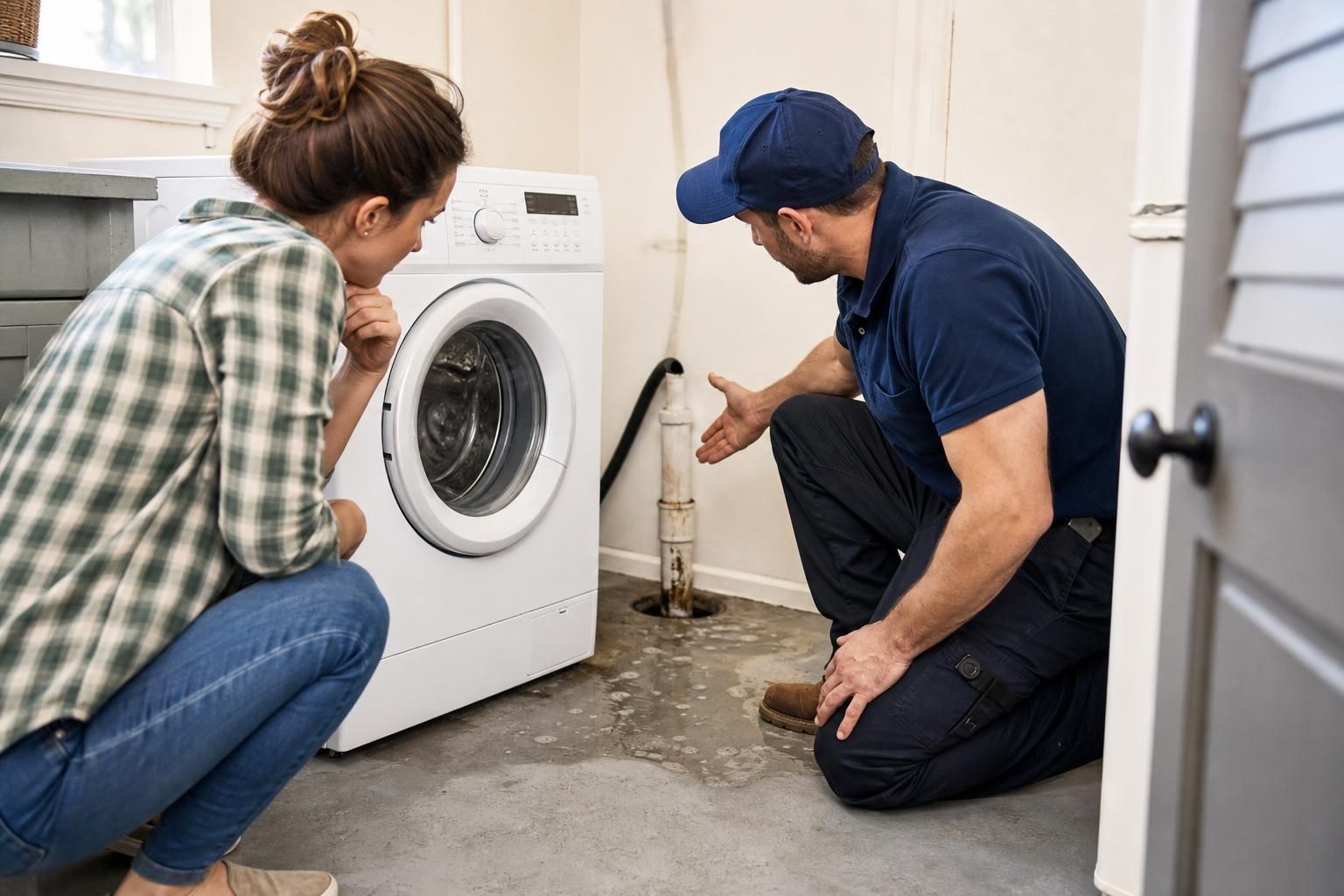
Washing machine drains back up because the washer sends water out faster than a clogged pipe can carry it away. During the drain cycle, discharge comes fast. If the pipe is partly blocked, water rises in the standpipe, spills onto the floor, or backs up into a nearby drain.
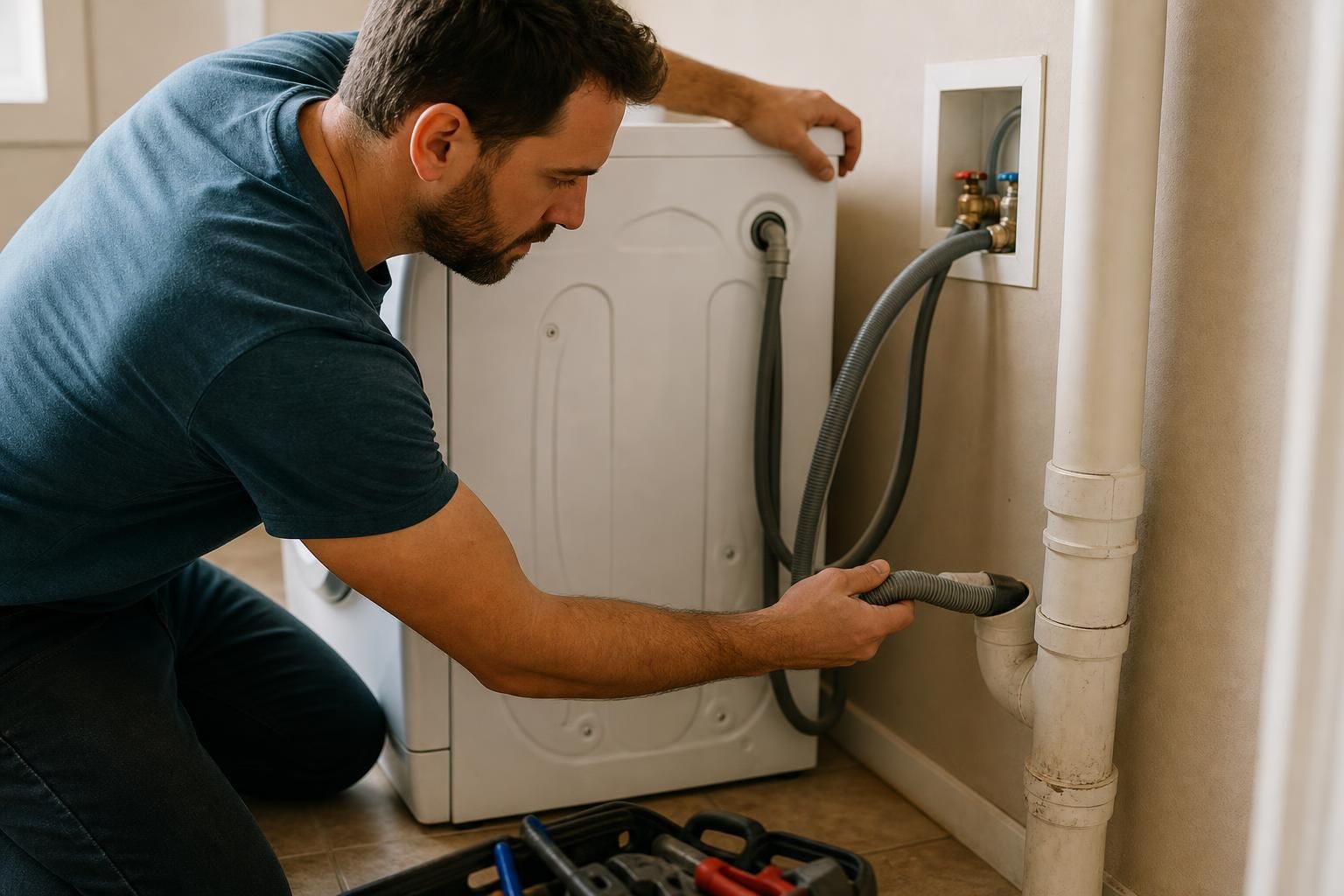
The standpipe receives the washer hose. The branch drain carries laundry water away and may connect to nearby fixtures. The main line carries wastewater from the whole home. If more than one drain reacts during laundry, see multiple drains backing up because that can signal a larger problem.
Common causes include lint, soap scum, detergent residue, dirt, hair, loosened buildup, or pipe slope and venting issues. If backups keep returning, professional drain cleaning is safer than guessing.
Standpipe, Branch Drain, or Main Line Problem?
You can often narrow down the problem by watching where water appears and which fixtures react during the washer drain cycle. This isn’t a perfect diagnosis, but it gives you a practical starting point before you call for help.
Start with the simplest observation. If the washer drains slowly and water rises only in the standpipe, the clog may be close to the laundry area. If a nearby utility sink gurgles or fills during the washer drain cycle, the branch drain may be restricted. If toilets, tubs, or floor drains react at the same time, the main line may be struggling.
| Problem area | What you may see | What it usually means | Next step |
|---|---|---|---|
| Standpipe | Water rises behind washer | Local laundry drain restriction | Stop the load and avoid forcing more water |
| Branch drain | Utility sink or nearby drain gurgles | Shared pipe may be clogged | Check nearby fixtures during draining |
| Main line | Several fixtures back up | Larger sewer path may be blocked | Schedule professional drain inspection |
- Stop the washer when water starts backing up.
- Check the standpipe behind the washer.
- Run no more laundry loads.
- Look at nearby sinks, tubs, toilets, and floor drains.
- Note whether the backup happens only during the spin or drain cycle.
- Share those observations with the plumber.
If you’re seeing toilet bubbling, tub backup, or floor drain overflow along with laundry trouble, the issue may match main sewer line clog symptoms rather than a simple washer drain clog.
Signs the Issue is Getting Worse
The problem is getting worse when backups happen more often, affect more fixtures, or return right after the drain seems clear. A washer overflow on every load usually means the pipe can no longer handle normal discharge.
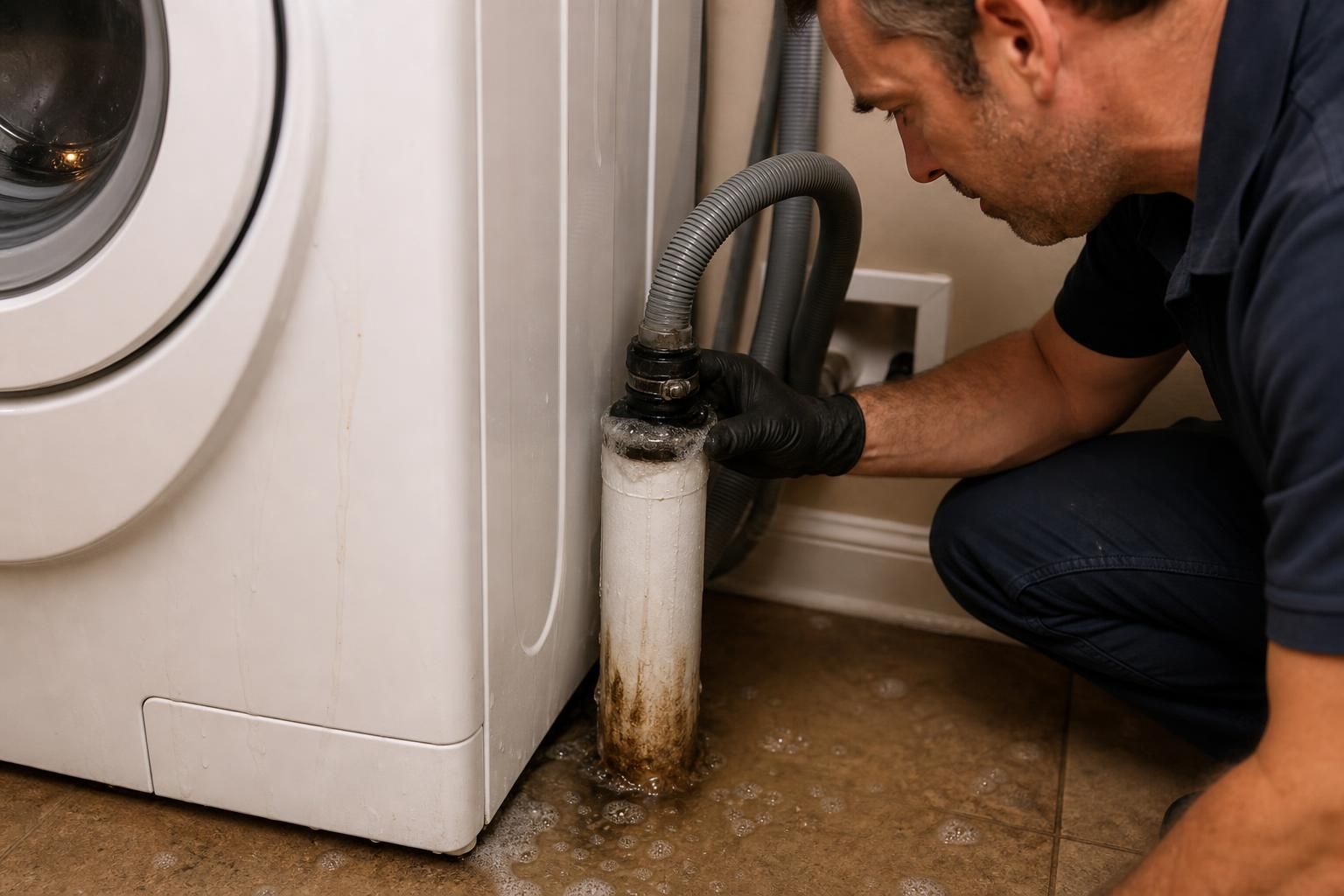
Watch the timing. If overflow happens only during spin or drain, the pipe may handle small flows but fail when the washer releases water quickly. That is common with a partial laundry drain clog.
Warning signs include water rising higher in the standpipe, brief clearing followed by the next backup, a nearby sink gurgling, a bad-smelling floor drain, toilets bubbling during laundry, or several drains slowing at once.
If only the standpipe reacts, the restriction may be local. If multiple fixtures react during laundry, suspect a shared branch or main line blockage instead.
What to Stop Doing Until it is Checked
Stop adding water to the drain until you know where the blockage is. Another cycle can turn a small overflow into a bigger mess because the washer will keep sending water into a pipe that already cannot drain fast enough.
Do not pour random drain cleaners into the standpipe. They may not reach the clog and can create safety risks if the line must be opened later.
Do this instead: pause the cycle, unplug the washer if safe, move items away from the wet area, clean up water, check nearby fixtures lightly, take a photo, and note when the backup happened.
Avoid these mistakes: running one more load, pushing the hose deeper into the standpipe, sealing the hose tightly, ignoring sewage smells, or assuming the washer is broken first.
If laundry causes repeated backups, treat it as a drain problem until proven otherwise.
How Plumbers Clear Laundry Drain Lines
Plumbers clear laundry drain lines by finding the likely blockage, opening the safest access point, and using the right method for the pipe. The goal is restoring normal washer drainage without backups.
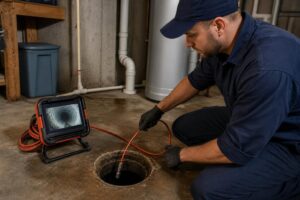
They usually start with questions. Did the backup stay behind the washer? Did a utility sink fill? Did a toilet bubble? These clues show whether the problem is local or farther downstream. They may inspect the standpipe, a cleanout, nearby drains, or main line access.
Typical steps are checking symptoms, testing affected fixtures, choosing the best access point, using a drain snake or cable if the clog is reachable, testing flow, and recommending further cleaning if buildup returns.
Snaking can open some clogs, but coated pipe walls may need more, especially if your drains keep clogging after clearing.
When Hydro Jetting May Help
Hydro jetting may help when the laundry drain or connected line has stubborn buildup along the pipe walls instead of one simple blockage. Hydro jetting means using high-pressure water to scour the inside of the pipe. Think of snaking like poking a tunnel through snow, while hydro jetting is more like washing the whole path clear.
It’s not the default fix for every washing machine drain backing up. A plumber should consider the pipe material, pipe condition, access points, and symptoms first. Older, damaged, or fragile pipes may need inspection before high-pressure cleaning is considered. If the line is broken, collapsed, or invaded by roots, cleaning alone may not solve the full problem.
- The backup returns after basic snaking.
- The drain clears briefly, then clogs again.
- Sludge or heavy residue is suspected.
- Several drains are slow because of buildup.
- The plumber confirms the pipe can handle the method.
For service information, Waterways Plumbing explains hydro jetting at https://waterwaysplumbingllp. com/hydro-jetting-services/. Ask whether inspection is recommended first, especially if the home has older drains or a history of recurring clogs.
FAQ
Most washing machine drain backup questions come down to where the water appears, when it appears, and whether other fixtures react. Use the answers below to sort the symptom you’re seeing before you run another load.
Why Does My Washer Drain Back up Only During the Spin Cycle?
Because the washer dumps water quickly during spin or drain. A partial clog may handle small flow but fail during that fast discharge and force water up the standpipe.
Can I Keep Using the Washer if the Drain Only Overflows a Little?
No. Even a small overflow means the drain cannot keep up. Another load can worsen damage, spread dirty water, and turn a minor backup into a larger cleanup.
Is a Washing Machine Drain Backup Always a Main Sewer Line Problem?
No. It may be a local standpipe or branch clog. But if multiple drains react, toilets bubble, or floor drains back up, the blockage may be farther downstream.
Will a Drain Snake Fix a Washer Drain Backing Up?
Sometimes. A snake can clear a reachable clog, but it may not remove heavy buildup on pipe walls. If backups return quickly, deeper cleaning or inspection may be needed.
Should I Pour Drain Cleaner Into the Washing Machine Standpipe?
It’s better not to. Chemical drain cleaners may miss the clog and create safety issues if the line must be opened. Stop the washer, clean up, note which fixtures react, and have the drain checked if the backup happens again.