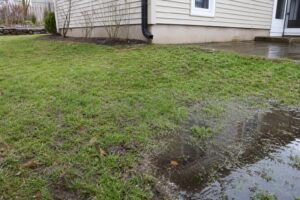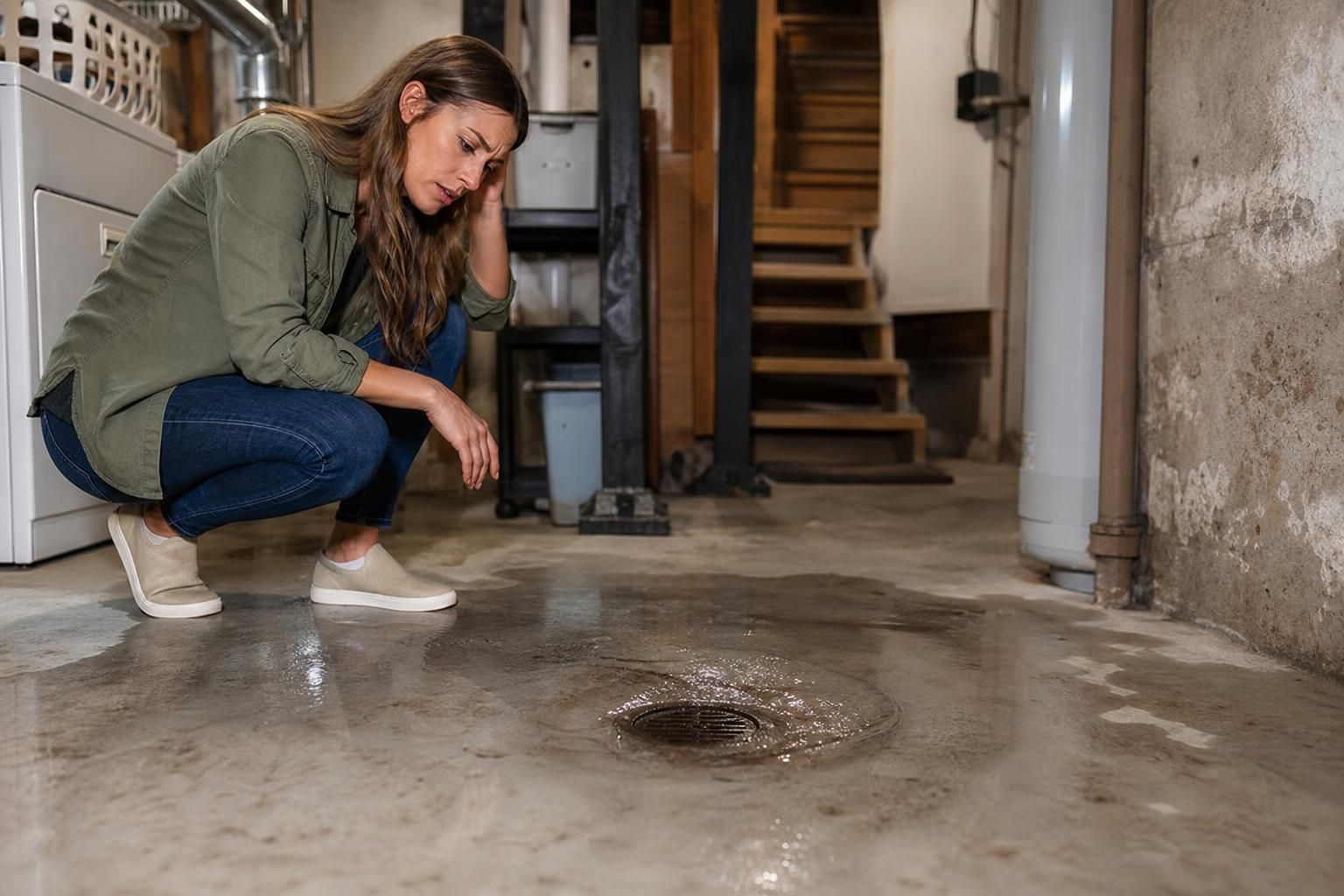
Seeing water or dirty residue around a basement floor drain after a storm is stressful, especially when you’re not sure where it came from. A basement floor drain backing up after rain usually means water can’t move away from your home fast enough, or the drain and sewer system have a blockage or restriction. It might be a simple basement drain clogged with debris. But it can also point to a main sewer line issue, a rain sewer backup, or stormwater overwhelming the system. This guide walks you through what the symptom means, what to stop doing right away, and when it’s time to call a plumber.
Best for: Homeowners who see water, odor, or residue around a basement floor drain during or after heavy rain. Call a pro if wastewater is present, toilets gurgle, several drains slow down, or the backup returns after storms.
Quick Summary
- A floor drain backing up after rain can mean a local clog, main sewer restriction, or stormwater overload.
- Sewage smell, dirty residue, toilet bubbling, and multiple slow drains are warning signs.
- Don’t run sinks, showers, laundry, or toilets to “test” the drain during an active backup.
- A plumber may use cleanout access, drain cleaning equipment, and a camera inspection.
- Recurring backups after heavy rain should be checked before the next storm season.
Why Basement Floor Drains Back up After Rain
Basement floor drains back up after rain because water or wastewater is meeting resistance somewhere in the drainage path. A floor drain may connect to your home’s drain system, a sump area, or another drainage route depending on the property. Heavy rain adds volume and pressure, exposing weak spots that stay hidden in dry weather.
- Debris, mud, or buildup inside the floor drain
- A basement drain clogged farther down the line
- A main sewer line restriction, which means the large pipe carrying wastewater away from your home is partly blocked
- Sewer surcharge, which means the public or shared sewer system is overloaded and water pushes back
- Stormwater entering places it shouldn’t, such as damaged piping or poor yard drainage
If the backup is minor and isolated, professional drain cleaning and repair may clear the line. If it involves sewage or several fixtures, treat it as a bigger warning sign.
Signs it is More Than a Simple Drain Clog
A basement floor drain backup is more than a simple clog when other plumbing fixtures act strange at the same time. One slow floor drain can be local. But a floor drain backing up while toilets gurgle or basement fixtures drain slowly suggests pressure or blockage in a larger line.
Watch for these signs:
- Dirty residue, toilet paper, or sludge around the drain
- Gurgling sounds from toilets, tubs, or sinks
- Water rising in the floor drain when someone flushes
- Several drains slowing down at once
- Backups that happen only during or shortly after storms
- The same rain sewer backup returning every heavy rain season
If wastewater can’t leave the house, it looks for the lowest opening. In many homes, that’s the basement floor drain.
If your symptoms match several items above, compare them with main sewer line clog symptoms and avoid treating the floor drain as the only problem.
Main Sewer Line vs Stormwater Problem
A main sewer line problem usually affects indoor plumbing fixtures, while a stormwater problem usually appears during rain and may involve outside drainage pressure. Both can show up as water coming through a basement floor drain. A main sewer line carries wastewater away from the house; stormwater comes from roofs, yards, driveways, and soil around the foundation.
| Problem type | What you may notice | What it often means | What to do next |
|---|---|---|---|
| Local floor drain clog | One drain backs up, nearby fixtures seem normal | Debris or buildup near that drain | Avoid chemicals and schedule drain cleaning |
| Main sewer restriction | Toilets gurgle, several drains slow, dirty water appears | Wastewater can’t leave the home easily | Stop using water and call a plumber |
| Stormwater overload | Backup happens during heavy rain, then settles later | Rainwater is stressing the drainage system | Inspect drainage and sewer conditions |
| Recurring seasonal backup | Same issue returns after storms | Temporary cleanup isn’t solving the cause | Request a full diagnosis |
If water appears only during a storm, stormwater may be involved. If it smells like sewage or arrives with toilet bubbling, the sewer line needs attention. A plumber may use a cleanout, an opening used to inspect or clear drain lines. If you’re not sure where yours is, this guide to what a cleanout is explains why it matters. Sewer service details are also available at https://waterwaysplumbingllp.com/sewer-cleaning-repair-replacement/.
Why You Should Avoid Using More Water
Avoid using more water because every flush, shower, sink, or laundry cycle can add volume to a system that may already be backing up. Don’t “test” the drain. Running water may make the basement backup larger. Chemical drain cleaners can sit in standing water, create splash hazards, and fail to reach a deeper blockage.
Use this active-backup checklist:
- Stop using sinks, tubs, showers, toilets, dishwasher, and laundry.
- Check nearby fixtures without running more water.
- Note when the backup started and whether rain was heavy.
- Take photos if it’s safe.
- Call for help if wastewater, odor, or multiple slow drains are involved.
The finish point is simple: the backup should stop rising, and no new indoor water should be added until the line is checked.
How a Plumber Diagnoses the Problem
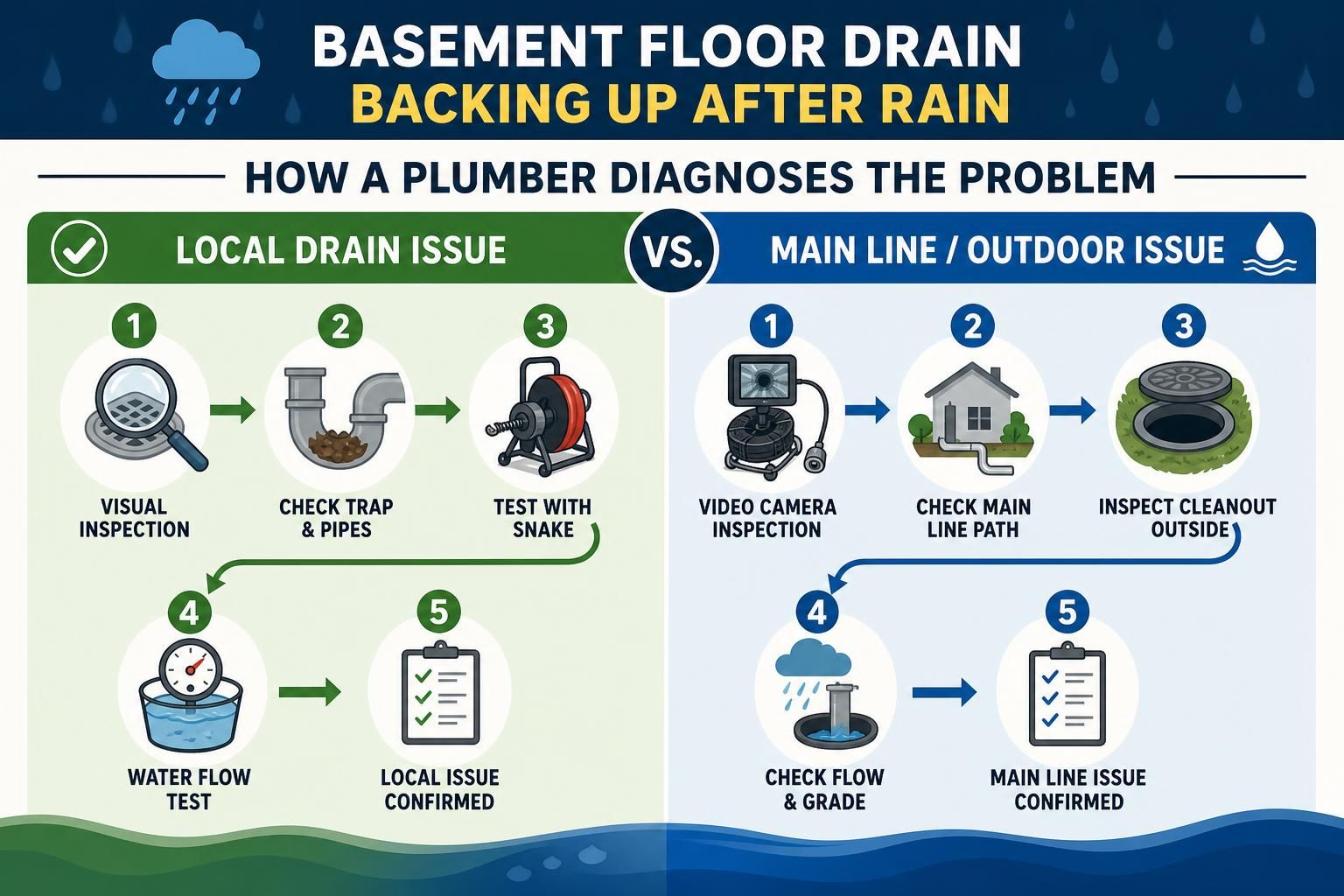
A plumber diagnoses the problem by checking whether the backup is isolated to the floor drain or connected to the larger sewer and drainage system. The goal isn’t just to make the water disappear. It’s to find out why it came up in the first place.
Expect a plumber to start with basic fixture checks. They may ask which drains are slow, whether toilets gurgled, and whether the issue appeared during rain. Then they’ll look for safe access to the drain or sewer line. If a cleanout is available, it often gives better access than working only through the floor drain.
Depending on the symptoms, the plumber may use:
- Drain cleaning equipment to clear soft clogs or debris
- A sewer machine for larger line restrictions
Depending on the symptoms, the plumber may use drain cleaning equipment, a sewer machine, hydro jetting, a camera inspection, or a drainage evaluation around the home.
- A camera inspection, which sends a small waterproof camera through the pipe
- Drainage evaluation around the home if stormwater appears involved
If buildup keeps returning, signs you need hydro jetting can help you understand why a basic cable cleaning may not be enough. Tree roots, pipe damage, heavy buildup, or poor slope may need a different fix than a one-time clearing.
Prevention Tips for Heavy Rain Seasons
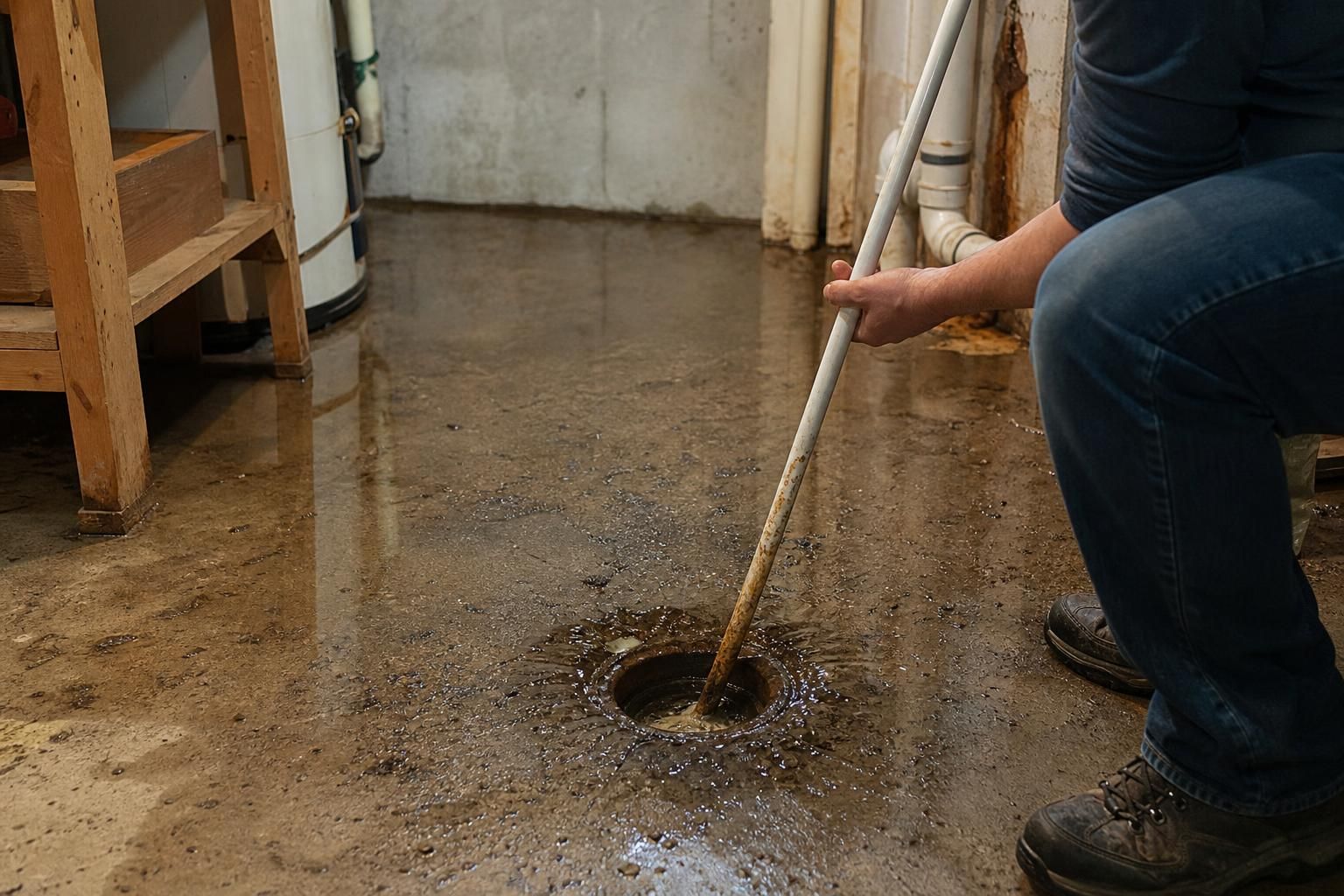
You can reduce the chance of a basement drain backup after heavy rain by keeping drain paths clear and dealing with recurring symptoms before the next storm. Prevention here doesn’t mean guaranteeing water will never appear. It means lowering risk and catching warning signs early.
Start with the floor drain itself. Remove visible debris from the grate. Don’t sweep dirt, drywall dust, pet hair, or storage-room mess into it. If the drain has a trap, which is a bend that holds water to block sewer gas, a plumber can tell you how it should be maintained for your setup.
Before heavy rain seasons, take these practical steps:
- Schedule drain or sewer maintenance if backups have happened before
- Keep basement floor drains uncovered and easy to inspect
- Make sure sump pumps, if present, turn on properly
- Watch for slow basement fixtures after storms
- Ask about sewer inspection if dirty residue appears after rain
If backups happen every year, don’t keep cleaning up and hoping. Use sewer backup prevention as a planning guide, then have the line inspected. A recurring storm-related backup usually deserves more than a mop and a fan.
FAQ
These quick answers help you decide what your basement floor drain symptoms mean and what action makes sense next.
Is a Basement Drain Backup After Heavy Rain Always Sewage?
No, it isn’t always sewage. It may be stormwater, drain water, or wastewater depending on the system and blockage location. But if it smells like sewage, leaves dirty residue, or contains toilet paper, treat it as a wastewater concern and call a plumber.
Can I Use a Plunger on a Basement Floor Drain?
You can try light plunging only if the backup is clean water and isolated to that one drain. Don’t plunge standing water that smells like sewage. And don’t keep forcing it if other fixtures are gurgling or slow, because the problem may be in the main sewer line.
Why Does the Floor Drain Back up Only When it Rains?
Rain can add pressure around your home and into drainage systems. If there’s a partial clog, pipe defect, or overloaded sewer condition, that extra water can reveal the problem. The drain may seem fine in dry weather because the system isn’t under the same stress.
Should I Pour Drain Cleaner Into the Floor Drain?
No. Chemical drain cleaners aren’t a good choice for floor drain backups after rain. They may not reach the blockage, and they can sit in standing water. If the backup involves a sewer line or stormwater pressure, chemicals won’t fix the real cause.
When is This an Emergency?
It’s an emergency when wastewater is present, the water level is rising, multiple fixtures are affected, or the backup keeps returning during storms. Stop using water and call a plumber. The sooner the cause is found, the easier it is to limit damage and mess.
Conclusion
A basement floor drain backing up after rain is a symptom, not a diagnosis. It may point to a simple clog, but sewage odor, toilet gurgling, multiple slow drains, or recurring storm backups suggest a larger sewer or stormwater issue. Don’t run more water to test it. Stop indoor water use, observe the warning signs, and schedule professional drain or sewer diagnosis before the next heavy rain makes the problem worse.