Catching main water line leak signs early can save you a lot of mess and stress. Your main water line is the pipe that brings water from the street (or well) into your home. When it leaks, it can waste water, damage your yard, and sometimes even affect your foundation (the structure your house sits on). The tricky part is that many leaks happen underground, so you won’t see water dripping under a sink. In this guide, you’ll learn the most common warning signs, what they usually mean, and what a plumber will do to confirm the problem.
Best for: Homeowners who notice unexplained wet spots, falling water pressure, or a sudden jump in water use with no clear cause.
Not ideal when: You only have a single leaky fixture, since that points to a local plumbing issue instead of the main line.
Good first step if: You can safely check your water meter to see whether water is moving when everything in the house is off.
Call a pro if: You suspect an underground water leak near the home, smell gas, see foundation cracks growing, or can’t keep water pressure stable.
Quick Summary
- A main water line leak often shows up as yard dampness, sinkholes, or strange soft spots in the ground.
- Pressure changes and a high water bill leak are common clues, especially when your daily habits haven’t changed.
- Cloudy or rusty water can happen when soil or corrosion gets pulled into the line.
- Plumbers confirm leaks with meter testing, pressure testing, and leak detection tools before digging.
- Repairs can be simple if the damage is in one spot, but replacement makes sense when the pipe is old or failing in multiple areas.
Quick Signs of a Main Water Line Leak
Fast clues include sudden whole-house low pressure, unexplained wet areas, and a water bill that jumps without a routine change. Because the main line feeds everything, problems there often affect the entire home.
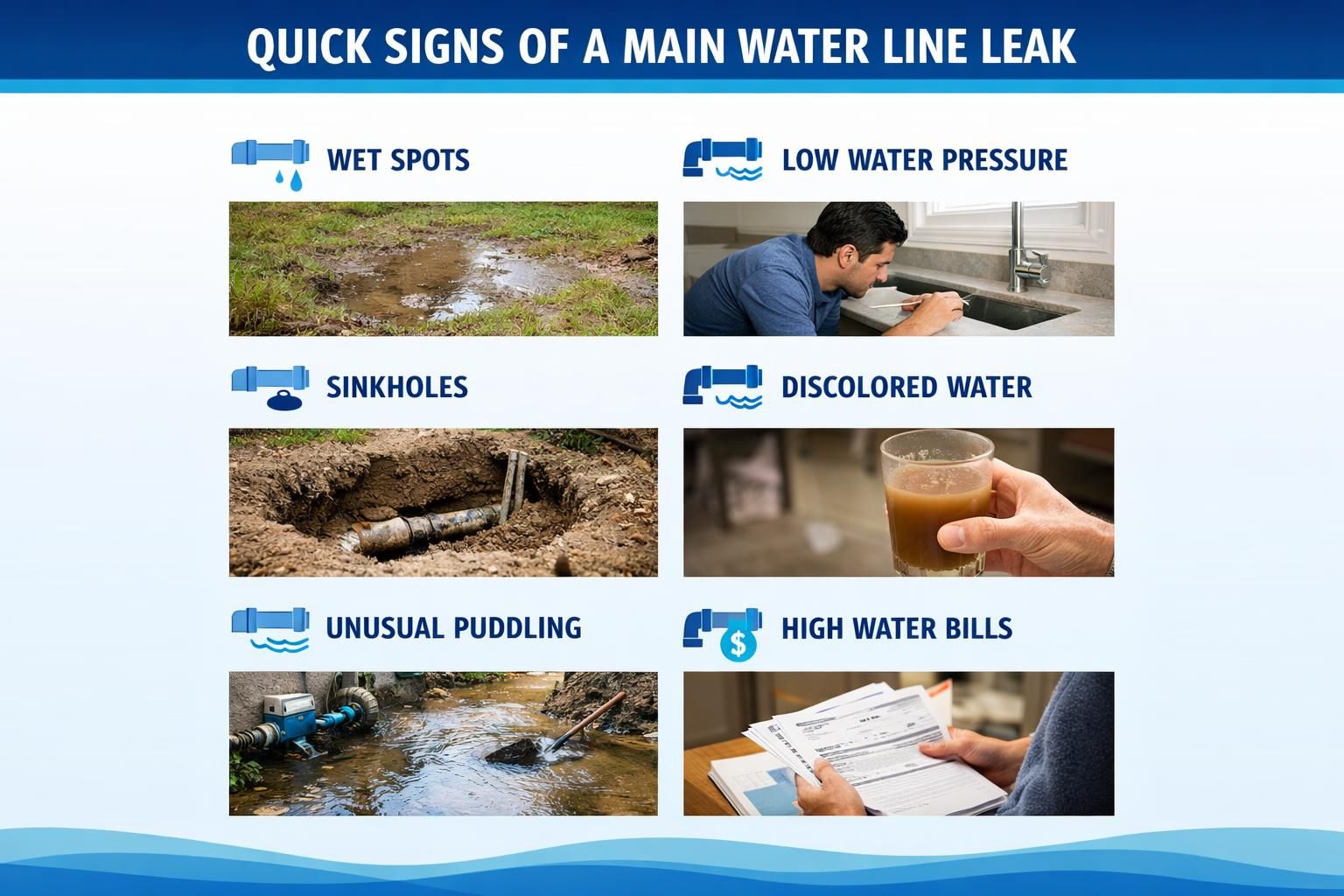
Think “whole-house” versus “one fixture.” One weak sink is often a clogged aerator. But if every tap is weaker, suspect the main supply. Some leaks never surface, so a normal-looking yard doesn’t rule them out.
Easy-to-miss signs:
- Faint hissing or rushing when no water runs
- Bubbling water from soil or a driveway seam
- Sump pump running more than usual
- Dampness near the foundation without rain
Simple check: turn off all water use and watch the meter. If it still moves, water is flowing somewhere, and the main line is a possible source.
Yard and Ground Clues
Yard symptoms are often the clearest leak clue because a buried line can feed water into soil nonstop. Underground, it acts like a constant sprinkler, changing how the ground looks, feels, and smells.
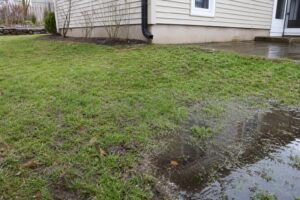
Look for one area that stays different from the rest. A leak may not create a puddle. It can keep soil too wet, making grass greener, mossy, or unusually fast-growing. In dry weather, a stubborn lush patch can be a bigger warning than a brown one.
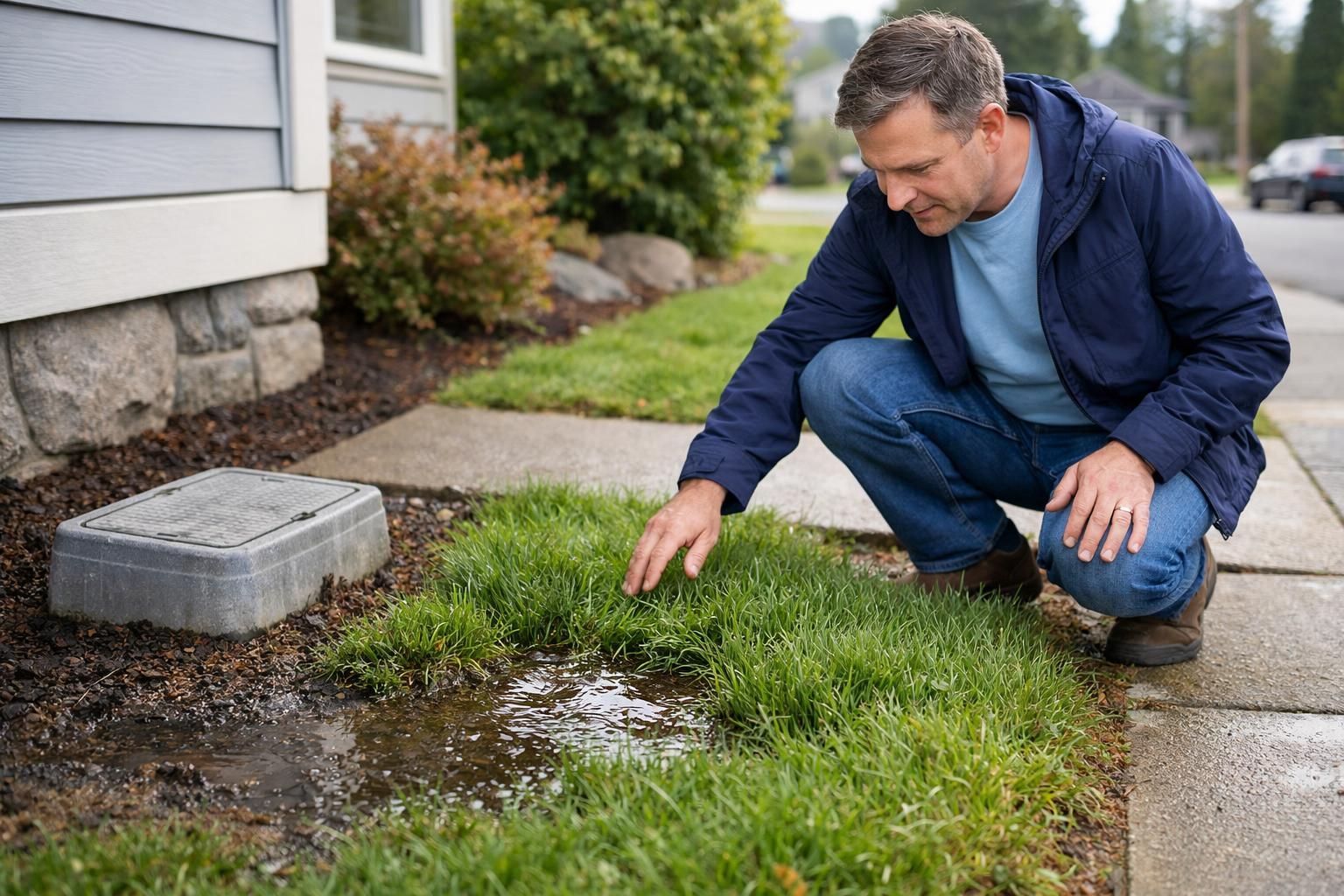
Watch for spongy soil that squishes, mud that never dries out, small sinkholes or dips forming in a straight line toward the street, cracks or lifting in driveways or walks near the service route, and pooling near the curb box.
Location helps. Main lines usually run fairly direct from street to house, often entering near your indoor shutoff side. For typical fixes before digging, water line repair options is a good starting point.
Don’t assume every wet yard is a main leak. Sprinkler breaks and drainage issues can look similar. If it appears with irrigation off and keeps returning, the main line is more likely.
Pressure and Water Bill Clues
A whole-house pressure drop plus a sudden bill increase is a strong leak pattern. Pressure is the push that moves water. If water escapes before reaching fixtures, every outlet can feel weaker.
Common signs:
- Lower flow at every faucet
- A shower that weakens when another fixture runs
- Pressure that pulses or surges
A high bill is your paper trail. If usage jumps without guests, pool filling, or new watering, investigate. Remember bills lag; the leak may have started weeks earlier.
Quick meter test: 1. Turn off all water users, including ice makers and irrigation. 2. Don’t flush during the test. 3. Photograph the meter. 4. Wait 15 to 30 minutes. 5. Recheck. Any movement means water flowed.
If it moves, rule out indoor culprits, especially toilets with worn flappers. If indoor checks pass and pressure is also dropping, an underground main leak becomes more likely.
At night, listen near where the line enters. A steady whoosh or vibration can be a clue.
Water Quality Changes
Changes in color, clarity, or taste can signal trouble in the main supply line. A leak can alter flow and disturb sediment, corrosion, or even allow soil in, depending on the break and pipe type.
Common changes:
- Cloudy or milky water that clears after a minute
- Rusty or brown water from corrosion or stirred sediment
- Grit or sand-like particles
- New metallic taste or smell
Not every change means a leak. Hydrant flushing, nearby maintenance, or utility work can discolor water temporarily. Focus on timing and consistency. If it persists and matches other leak signs, investigate.
Quick check: run cold water into a clear glass. Cold comes from the main, while hot reflects the water heater. If only hot looks rusty, the heater may be the issue. For heater symptoms, see water heater repair basics.
If water is heavily discolored, has debris, or seems unsafe, use bottled water for drinking and cooking until a plumber confirms the cause.
Main Water Line to House Leaking: What to Do First
If the main water line to house is leaking, the first priority is to limit water loss and prevent additional damage. A main water line leak can affect water pressure throughout the property and may saturate the yard, soil around the foundation, or areas beneath driveways and walkways.
Start by checking whether water is still moving through the meter while all faucets, toilets, appliances, and irrigation systems are turned off. If the meter continues to register usage, there may be an active leak somewhere between the utility connection and the plumbing inside the home.
Until the line can be inspected:
- Avoid using unnecessary water inside the house
- Turn off irrigation systems and outdoor fixtures
- Keep people away from soft, sunken, or unusually wet ground
- Document visible water, meter movement, and pressure changes
- Shut off the main water supply if the leak is severe or water is approaching the foundation
Do not dig around the suspected leak without knowing the route and depth of the pipe. Water lines may run near electrical, gas, sewer, or communication utilities. WaterWays Plumbing can locate the damaged section and determine whether a targeted repair or a larger replacement is appropriate. Learn more about our water line repair services or schedule an inspection before the leak causes further property damage.
What a Plumber Checks
A plumber confirms whether water is escaping, where, and why before recommending a fix. The right solution depends on pipe material, leak location, and whether the line is failing in one spot or along its length.

Most start non-invasive and also rule out indoor problems that mimic a main leak, like a running toilet or a softener stuck cycling.
Typical steps: 1. Visual inspection for wet soil, cracked pavement, and the likely line route. 2. Meter confirmation to see if flow shows when everything is off. 3. Pressure test by isolating the line and watching for a pressure drop. 4. Leak locating using listening gear or other detection tools to narrow the area. 5. Shutoff check to confirm the main valve operates.
Don’t confuse water line issues with sewer problems. If you’re also seeing backups, compare symptoms using signs your sewer line is clogged.
After narrowing the leak, they’ll discuss access: yard, driveway, porch, or where the pipe enters the house. Access often drives cost and scope.
Repair vs Replacement Considerations
Repair is usually best when the leak is in one accessible spot and the rest of the pipe is sound. Replacement is safer when the line is old, has multiple weak points, or keeps failing after past repairs. Think patching a tire versus replacing a cracked one.
Repair often makes sense when the leak is localized at one crack or joint, the pipe material is still reliable, access won’t require tearing up critical areas, and there’s no history of repeat leaks.
Replacement often makes sense when leaks have happened more than once along the line, corrosion, scaling, or wear appears widespread, remodeling already opens the route, or the size or layout needs updating for demand.
Method matters too. Some replacements require trenching; others can be less disruptive depending on the path and conditions. For a plain-language view of what service replacement involves, see water service replacement overview.
Avoid choosing only by the smallest immediate dig area. If the plumber finds failing material, a “cheap” repair can become repeated emergencies and more yard damage.
FAQ
Can a Main Water Line Leak Stop on Its Own?
Usually no. Soil may temporarily block the opening, but pressure changes can reopen it. Treat any confirmed leak as active until it’s repaired by a plumber.
How Do I Know if the Leak is Inside the House or Underground?
Do a meter test with everything off. Then shut the house main valve. If the meter stops, it’s inside. If it moves, it’s between meter and house.
Is Low Water Pressure Always a Leak?
No. It can come from clogged aerators, a failing pressure regulator, or mineral buildup. But a sudden, whole-house pressure drop makes a main water line leak more likely.
What Should I Do if Water is Pooling Near My Foundation?
Treat it as urgent. Shut off the main water if safe, avoid using water indoors, and call a plumber to locate the leak and limit foundation and soil damage.
Can Tree Roots Cause a Main Water Line Leak?
Yes, especially at joints or small cracks roots can enter. Roots usually exploit existing weak spots. A plumber can confirm whether the leak matches root paths and soil conditions.
Conclusion
If you’re seeing main water line leak signs like yard wet spots, whole-house pressure drops, and a bill that doesn’t match your habits, don’t wait for a bigger failure. Do the simple meter test, look for consistent ground changes, and stop guessing if the clues line up. A plumber can confirm whether it’s truly a main water line leak and pinpoint the location before major digging happens. Your best next step is to document what you’ve noticed and schedule a leak check while the problem is still manageable.