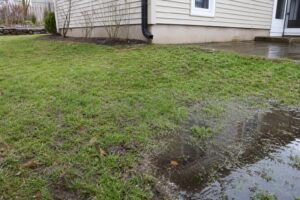
A sewer scope inspection is one of those home services you don’t think about until something gets gross or expensive. It’s a camera inspection of your home’s sewer line, and it can tell you what’s really going on underground when you can’t see it. If you’re buying a house, dealing with slow drains, or just trying to avoid a surprise sewage backup, this is one of the clearest ways to get answers. You’ll learn what a sewer scope inspection is, how it’s done, what problems it can spot, what the cost usually depends on, and what you’ll actually receive afterward so you can make a smart next move.
Best for: Buyers and homeowners who want to see the sewer line condition before problems become repairs and digging becomes the only option.
Not ideal when: The line is fully collapsed, there’s no safe access point, or active backup makes camera work unreliable and unsafe.
Good first step if: You have recurring clogs, slow drains, sewer odor, or you’re doing a pre-purchase inspection on an older home.
Call a pro if: You have sewage backing up, multiple drains are affected at once, or you can’t locate a cleanout or safe entry point.
Quick Summary
- A sewer scope inspection is a sewer camera inspection that looks inside the sewer lateral from an access point to the main sewer line.
- It can spot roots, breaks, offsets, bellies, corrosion, and clogs that basic drain snaking might miss.
- The camera usually has a distance counter, so findings can be tied to how far into the line they appear.
- Cost depends on access, line length, and whether you want extras like locating and a more detailed report.
- The deliverables typically include video, key photos, and notes you can use for repairs or negotiations.
What a Sewer Scope Inspection is (and What it Isn’t)
A sewer scope inspection is a sewer camera inspection used to view the inside of your home’s sewer line and spot defects, damage, root intrusion, or buildup. A small camera on a flexible cable transmits live video to a screen so problems can be documented and measured.
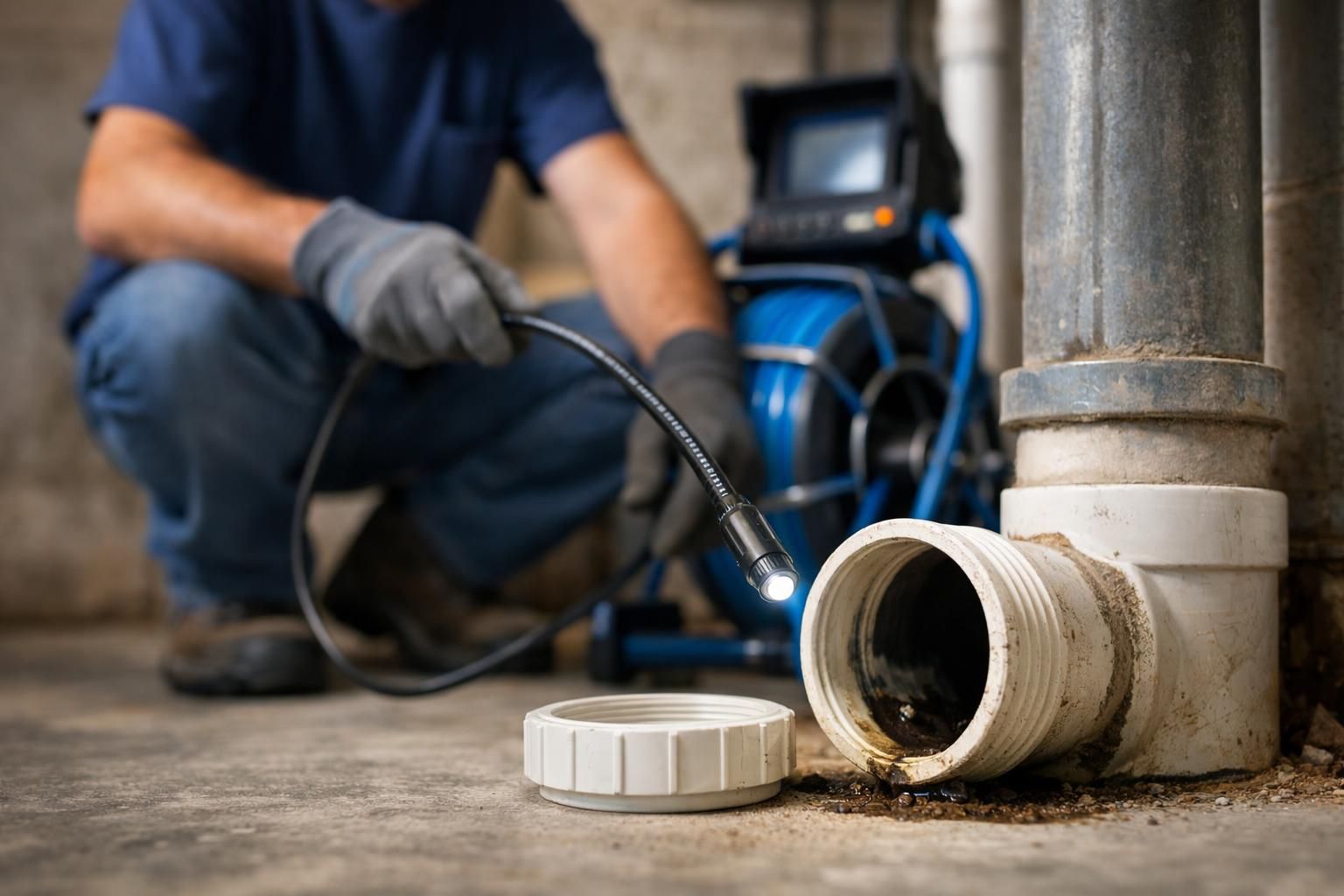
The main target is usually the sewer lateral, the buried pipe that runs from the house to the city main or to a septic connection. That’s different from smaller interior drain lines, like the pipes serving a sink or shower, which may be evaluated separately.
What it isn’t: it’s not a cleaning service, and it can’t guarantee the line will never clog. It also isn’t the same as a standard home inspection, since many home inspectors only scope sewers as a separate add-on.
How a Sewer Scope Inspection Works
A sewer scope inspection feeds a camera through a cleanout or other access point and guides it through the sewer line while recording video. The plumber confirms pipe material and condition, documents defects, and identifies blockages that could lead to backups.
A typical visit includes selecting the best access point, setting up equipment, and using basic PPE because it involves wastewater. The camera is pushed through the line on a stiff, flexible rod while the plumber watches a live feed. They pause to capture photos or clips and log distances using a counter that shows how far the camera has traveled. At the end, they save video and notes.
Heavy blockages or standing water can limit visibility. During an active backup, stabilization may be recommended before scoping.
Access Points (cleanout Vs. Pulling a Toilet)
The cleanest option is usually a cleanout, which is a capped pipe fitting designed for access. If you’re not sure what that is or where it might be, this guide on finding your sewer cleanout can help you picture it. A good cleanout lets the camera enter without disturbing fixtures.
If there’s no usable cleanout, a plumber may pull a toilet to use the toilet flange as an access point. That sounds dramatic, but it’s common in older homes. The tradeoff is extra labor and the need to reseal and reset the toilet correctly to prevent leaks and sewer odor.
What Problems a Sewer Scope Inspection Can Find
A sewer scope inspection can find structural damage, buildup, and installation issues that can lead to clogs, leaks, or full-on backups. The camera doesn’t guess. It shows you the inside of the pipe, which is where most sewer problems start.
Common categories of findings include:
- Blockage or clog from debris, grease, or foreign objects
- Tree root intrusion, where roots sneak in through joints or cracks
- Pipe material problems, like corrosion in older metal pipes
- Structural damage, like cracked pipe sections or pipe separation
- Misalignment, where sections no longer meet smoothly
- Standing water in line that suggests a sag or poor slope
A scope also helps answer the practical question: is this a one-time clog, or is there an underlying issue that will keep coming back? If you’re dealing with smells, you might also want to read about causes of sewer odor, since odor can overlap with venting and trap issues too.
The Most Common Defects (roots, Offsets, Bellies, Breaks)
The most common defects are the ones that either catch debris or let water escape. Tree roots are a big one, because even a tiny opening can invite growth over time. If you want the deeper “why,” this breakdown of tree roots in sewer lines explains the usual entry points.
Offsets happen when two pipe sections don’t line up, creating a lip that snags toilet paper and solids. Bellies, also called sags, are low spots where water sits instead of flowing out. And breaks can range from a crack to a collapsed pipe, which may stop the camera entirely.
Sewer Scope Inspection Cost (typical Price Range and What Affects It)
Sewer scope inspection cost depends more on access, time on site, and documentation than on one flat fee. That’s why pricing varies by house and why “sewer scope inspection near me” results can differ even within the same metro.
Common cost drivers include access difficulty (yard cleanout vs pulling a toilet), line length and bends, pipe condition (buildup or obstructions), and how much of the system is included (main lateral only vs any reachable branches). Scheduling can matter too: short-notice or after-hours appointments may cost more.
You’re not just paying for “a camera down a pipe.” You’re paying for interpretation, clear notes, and usable evidence for repair decisions. If you later need cleaning, this comparison of camera inspection vs hydro jetting helps clarify inspection versus cleaning services.
Add-ons You May See (locating, Reporting, Longer Lines)
Add-ons usually show up when you want the findings tied to the real world, not just a video. Locating means marking where a problem is in the yard, often by detecting the camera head’s signal from above ground. That can help plan repairs with less guesswork.
You may also see upgraded reporting, like a written inspection report with labeled photos, distance markers, and line location notes. And if the property has a longer sewer lateral, a detached unit, or an odd connection point, the inspection may take longer simply because there’s more pipe to cover.
When You Should Get a Sewer Scope Inspection
Get a sewer scope inspection when you need the true condition of the main sewer line, especially before a purchase or when symptoms suggest more than a simple clog.
Good times to schedule one include before buying an older home or a property with large trees, after repeated clogs or frequent snaking, when multiple fixtures drain slowly at once, and after a sewage backup (once safe). It’s also useful before major landscaping, paving, or additions, and after significant sewer work to confirm the line is open and properly sloped.
One slow sink can be a local branch issue, but whole-house sluggish draining or backups points to the main. For prevention context, see preventing sewer backups.
Homebuyers Vs. Homeowners (routine Checks and Warning Signs)
Homebuyers usually do a sewer scope as part of pre-purchase inspection due diligence, because the sewer lateral isn’t typically covered in a basic home inspection. If the scope finds defects, you can use that information for negotiation or a repair credit.
Homeowners often scope when they see warning signs like slow drains, gurgling, recurring clogs, or sewer odor. For routine checks, a simple rule of thumb is to scope when something changes, or when you’ve got reason to suspect age, roots, or past issues. If you’re constantly battling backups, you may also need to learn your options for cleaning vs repair vs replacement.
What You’ll Receive in the Report (video, Photos, Locations) and How to Use it
You’ll usually get recorded video plus a written summary that links what the camera saw to where it is in the line, turning footage into actionable information.
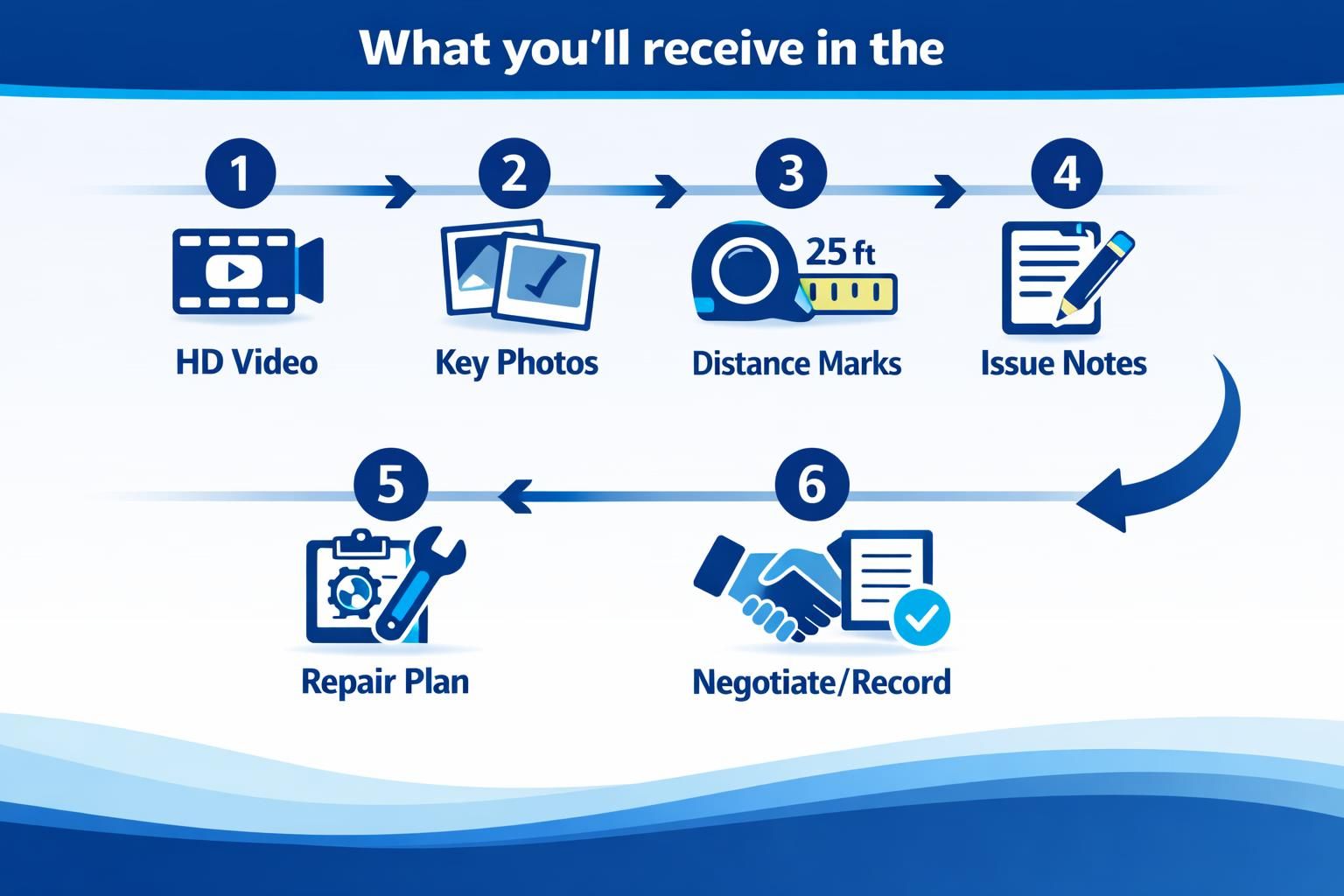
Typical deliverables include HD video, photos or clips of key defects, notes on pipe material and general condition, and distance-counter readings for findings (for example, “35 feet from the cleanout”). Some companies also include locating details, such as an estimated path, depth, or marked surface points, if that service was added.
Use the report to decide whether cleaning is enough, whether a spot repair is realistic, or whether replacement planning is needed. It also supports apples-to-apples quotes, since multiple plumbers can review the same evidence. For background, see how sewer camera inspections work.
Next Steps if Defects Are Found (plumber Follow-up, Negotiating Repairs)
If defects are found, the next step is matching the defect to the least disruptive fix that actually solves the cause. A soft clog might need cleaning. A belly might require regrading. A break or separation might require excavation or trenchless repair, depending on access and local conditions.
For homeowners, a plumber follow-up usually means getting a repair plan with clear locations and options. For buyers, it often means sharing the report with the seller and requesting repairs, a credit, or a price adjustment. The more specific the documentation is, the easier that conversation becomes, because you’re not arguing about opinions. You’re pointing at a problem in the pipe.
Conclusion
A sewer scope inspection is a straightforward way to see the real condition of a buried sewer line before you commit to repairs, a home purchase, or another round of guessing. If you’ve got slow drains, recurring clogs, odors, or you’re buying a home with older plumbing, scoping can give you clear answers and usable documentation. Your practical next step is to find the cleanout, list your symptoms, and schedule the inspection when the line is safe to view. With a good video and notes in hand, you’ll know what to fix and what can wait, without gambling on your sewer system.