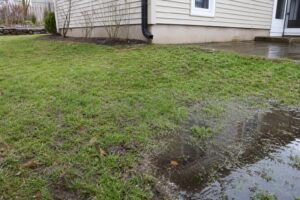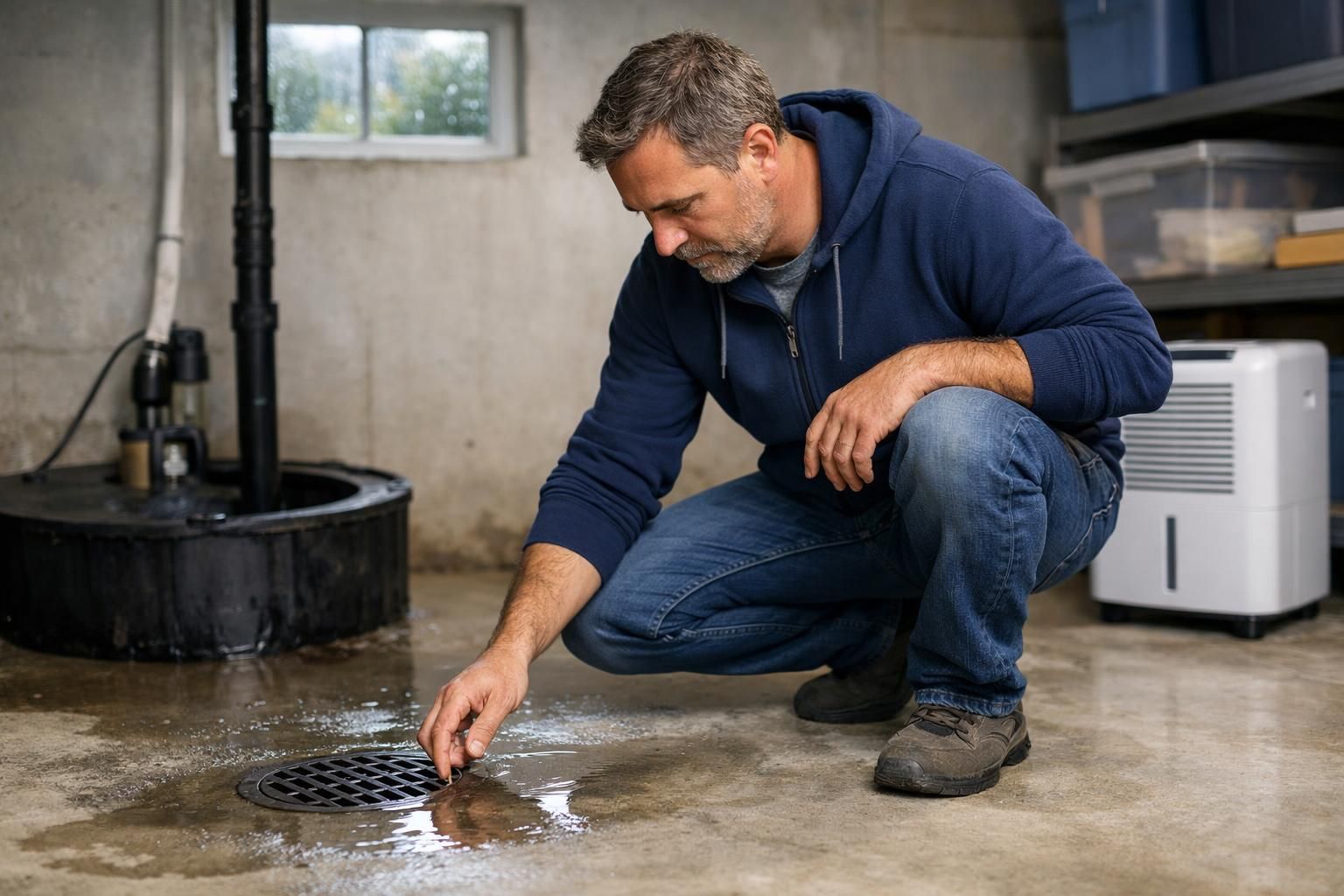
Basement water problems usually feel random. One storm, you’re fine. The next, you’re mopping at midnight. The good news is that basement flooding is often predictable once you know where the water is really coming from. This guide on how to prevent basement flooding walks you through the common sources, the simple checks that catch problems early, and the bigger fixes that stop repeat events. You’ll learn how roof runoff, yard drainage, groundwater seepage, and sewer backup each show up differently. And you’ll get practical drain and sewer tips that help you prevent basement flooding during heavy rain, not just “deal with it” afterward.
Best for: Homeowners who get basement water during storms and want clear steps to reduce risk from outside water and sewer issues.
Not ideal when: Your basement is actively flooding or you smell sewage, because safety and fast containment come first.
Good first step if: You can trace when flooding happens and where water shows up, so you can match the fix to the cause.
Call a pro if: Water is near electrical panels, you suspect sewer backup, or cracks and settlement suggest a structural problem.
Quick Summary
- Start by figuring out the source, because stormwater runoff, groundwater seepage, and sewer backup need different fixes.
- Keep roof water moving away with clean gutters (eavestroughs) and downspout extensions that don’t dump at the foundation.
- Fix the outside slope and window wells so rain can’t pool against your foundation wall.
- Seal obvious foundation cracks and gaps, but remember sealing alone won’t beat constant water pressure.
- Use a sump pump and drainage systems when water is rising under the slab or along the perimeter.
- Add alarms and smarter storage so a small leak doesn’t become a major water damage cleanup.
Identify the Most Likely Cause of Basement Flooding (so You Fix the Right Problem)
To fix flooding, identify the source: surface runoff, groundwater seepage, or plumbing/sewer backup. Symptoms overlap, but solutions don’t, so guessing wastes money.
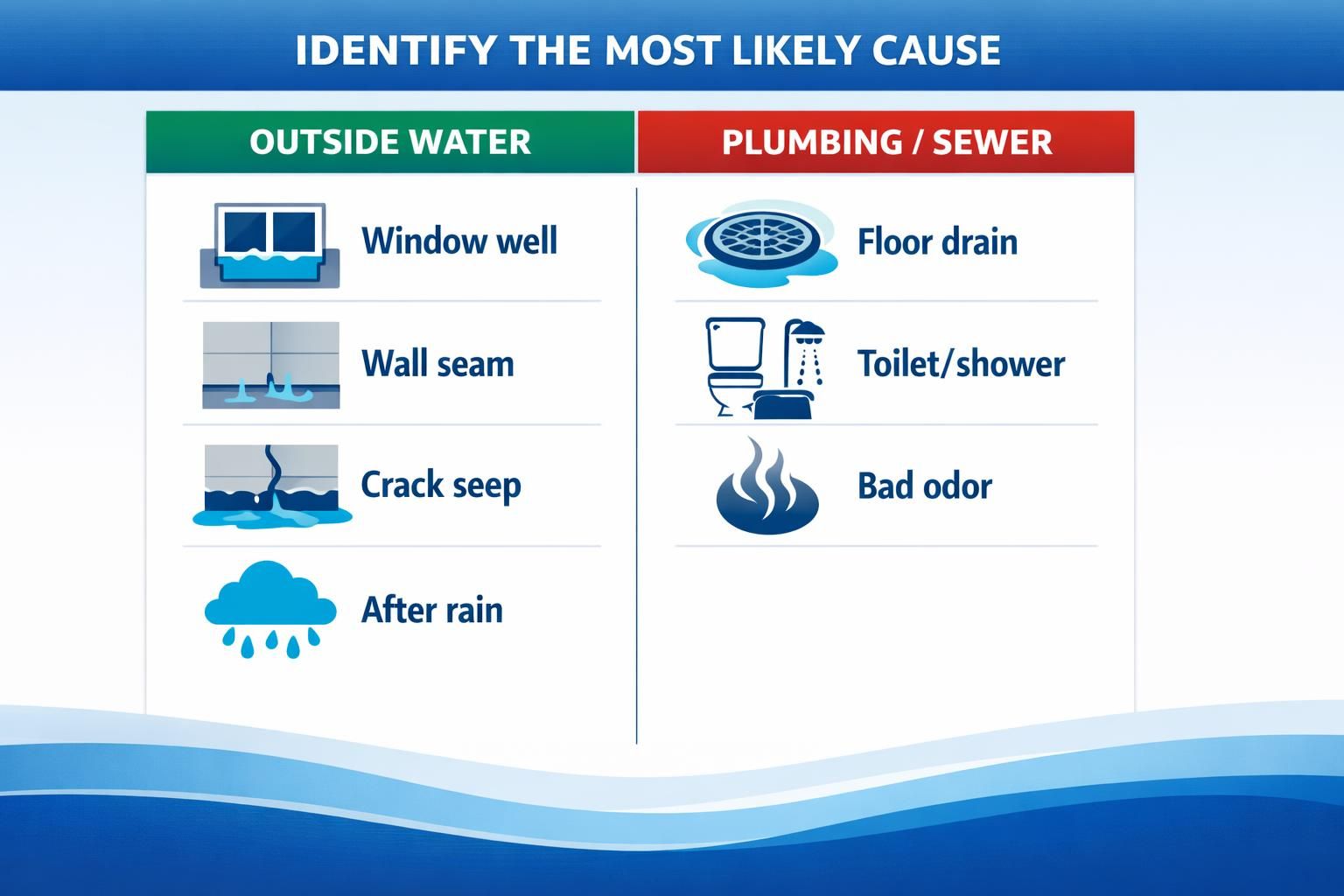
Use timing and location. Does it happen only during downpours, or after days of wet weather? Is water at a window well, along the wall-floor seam, or rising from a floor drain? During the next storm, do a quick audit: trace outdoor flow first, then map where water appears inside.
Rain/yard Drainage Vs. Groundwater Vs. Plumbing/sewer Backup
Rain and yard drainage problems appear quickly, like overflowing window wells or water washing down a wall after a downpour. Groundwater seepage builds after long rains and shows at the wall-floor seam or through small cracks. Plumbing or sewer issues often rise from a floor drain or fixtures, especially if dirty or foul.
Keep Roof Water Away From the Foundation (gutters, Downspouts, Extensions)
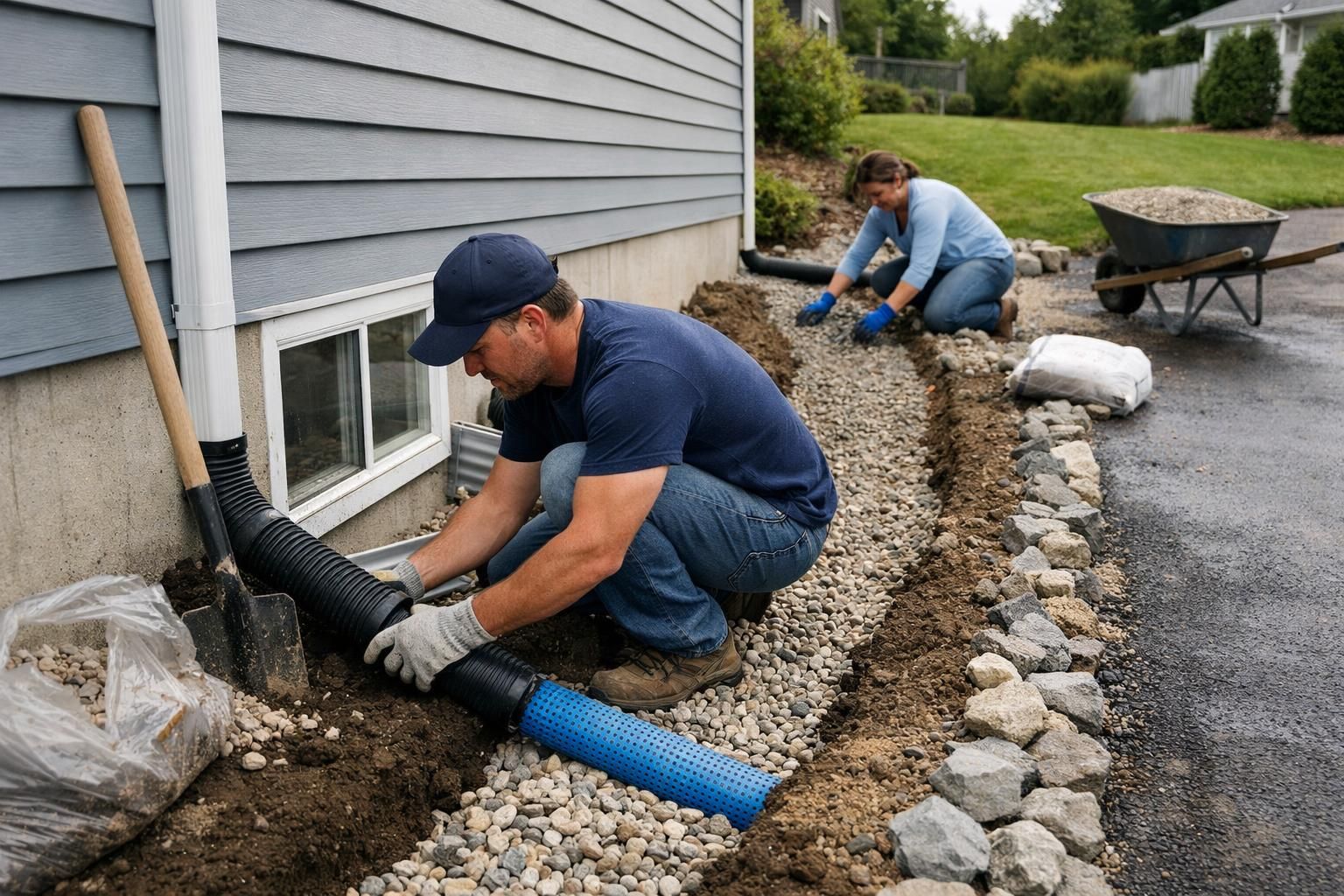
Many “mystery” basement leaks start at the roof. Rain collects on the roof, concentrates at downspouts, and saturates soil if it dumps beside the house. The goal is simple: catch water in gutters, move it through downspouts, and discharge it away from the foundation with extensions or splash blocks.
Check for clogged, leaking, or sagging gutters, and for disconnected or crushed downspouts. Erosion grooves below a downspout usually mark the trouble spot. Discharge should run well away and downhill, not toward window wells or a neighbor.
If downspouts connect to buried piping, confirm it actually drains. A blocked line can send water to the footing. Learn what a sewer cleanout is for access clues.
Quick Inspection Checklist Before Heavy Rain
Do this walk-around before a storm:
- Clear debris from gutters and note overflow stains.
- Confirm downspouts are connected and draining.
- Aim extensions away from the foundation.
- Look for erosion or puddling at outlets.
- Check window well drains and clear catch basin grates.
Improve Drainage Around the Home (grading, Window Wells, Driveways)
Exterior drainage fixes stop water from lingering against the foundation. Grading should direct surface runoff away from the house. Signs of trouble include muddy splash marks, persistent wet soil, or pooling near the wall.
Focus on collection points: downspout outlets, low spots, and hard surfaces. A driveway or patio that slopes toward the house can funnel water to the foundation, and a clogged channel drain can back water up.
Watch window wells, which act like bowls beside the wall. Keep them clear, ensure their drains aren’t clogged, and use a secure cover that sheds debris instead of trapping it.
What “proper Slope Away From the House” Looks Like
Proper slope means the ground drops as you move away from the foundation. Check by laying a straight board pointing outward and looking for daylight under the board near the wall. If settlement created a dip, add and compact soil, not mulch, so water can’t sit against the foundation.
Stop Water From Getting in (sealing Cracks, Waterproofing, Vapor Barriers)
Sealing helps when water follows cracks, gaps, or penetrations, but it won’t fix constant hydrostatic pressure. Inspect for visible cracks, damp lines, or white mineral deposits, plus gaps around pipes, wires, windows, and doors.
Seal small gaps with quality caulk or sealant. For active cracks, epoxy or polyurethane injection can stop leaks from the inside. Waterproofing may also mean coatings or membranes applied inside or, more effectively, outside the wall, though exterior work requires excavation.
For general dampness, use a vapor barrier where appropriate and control humidity with monitoring and a dehumidifier to reduce mold risk.
Install Systems That Remove or Redirect Water (sump Pump, Interior Drains, French Drain)
Water-management systems control where water goes once it reaches the foundation. A sump pump sits in a sump pit and pumps rising water outside through a discharge line, helping with groundwater under the slab. Interior perimeter drains collect water at the slab edge and route it to the pit, useful when leaks show at the wall-floor seam.
A French drain uses gravel and perforated pipe to intercept and redirect groundwater. It can be installed outside to stop water before it hits the wall, or inside to manage under-slab water.
Choose based on the driver: interior seepage often needs an interior drain plus sump pump, while saturated soil and runoff call for grading and downspout routing, sometimes with exterior drain tile. For sewer questions, see sewer camera inspection basics.
Sump Pump Essentials: Sizing, Discharge, and Battery Backup
A sump pump is only as reliable as its setup and testing. Use a sealed pit lid when possible, install a check valve, and route discharge water away from the foundation and freezing areas. Test twice a year by filling the pit until the float runs and confirming outdoor flow. Add a battery backup pump or backup power because storms can cut electricity and disable the main unit.
Prevent Sewer Backups (backwater/backflow Valves and Floor Drains)
Sewer backup prevention is about stopping wastewater from flowing the wrong direction when the main sewer is overloaded or blocked. During heavy rain, municipal sewers can get overwhelmed. Or your private line can be restricted by grease buildup, debris, or tree roots. When that happens, the lowest openings in your home become the exit point. In many houses, that’s a basement floor drain, shower, or toilet.
A backwater valve (sometimes called a backflow preventer) is a device installed on the sewer line that allows flow out, but closes if sewage tries to come back in. It can be a big help for basement flood prevention in sewer-backup-prone areas. But it must be accessible for maintenance, and it needs correct installation so it doesn’t create new clogs.
Add Early-warning + Reduce Damage if Water Gets in (alarms, Storage, Materials)
Early warning reduces damage because you can act while it’s inches, not feet. Use water alarms or leak sensors near the sump pit, the floor drain, and past leak spots. They won’t stop water, but they can prevent soaked drywall and ruined storage.
Make the basement harder to damage: use elevated shelving, keep paper and valuables off the floor, and pick flood-tolerant finishes when possible. Removable baseboards and water-resistant flooring simplify cleanup.
If water appears: avoid outlets and panels, and shut off power safely. Treat foul water as sewage and keep kids and pets away. If safe, stop controllable sources, move items up, and document conditions for insurance.
Review policy wording in advance, since groundwater and sewer backup coverage often differ. Ask your town about rebates for pumps or backwater valves.
Basement Setup Tips to Minimize Cleanup and Mold Risk
A basement that dries fast is less likely to grow mold. Keep a dehumidifier ready, drain it continuously if possible, and monitor humidity. After any water, start drying immediately with fans and dehumidification.
Store items in plastic bins, not cardboard. Leave a gap from exterior walls, and keep access clear to the sump pit, cleanouts, and the floor drain.
Conclusion
Basement flooding prevention works best when you treat it like a path the water follows, not a single leak to patch. Start by identifying whether you’re dealing with roof runoff, yard drainage, groundwater seepage, or sewer backup. Then handle the basics: gutters, downspouts, grading, and window wells. Add sealing where it fits, and use a sump pump or drainage system when water pressure is the real enemy. Finally, alarms and smart storage reduce damage when surprises happen. If you’re still unsure how to prevent basement flooding after a couple storms of observing, bring in a plumber or waterproofing pro to pinpoint the cause.