If you are wondering what causes a sewer smell in a house, the answer is usually not “the sewer” itself, but a pathway that lets odors travel from the plumbing system back into your living space. That pathway can be as simple as a dry drain trap, or as involved as a venting problem or a failing seal under a toilet. Many odor sources are predictable and can be narrowed down with a few safe checks. In this guide, you will learn how to tell a true sewer smell from ordinary drain funk, the most common causes, what you can inspect yourself, when cleaning actually solves the problem, and when it is time to call a pro.
- Sewer odors usually need both a source and a pathway into the home.
- Dry traps, biofilm, and venting problems are leading causes of recurring smells.
- A sewer gas smell from shower drain often points to a trap, buildup, or vent issue.
- Toilet seal problems can leak odor without obvious water on the floor.
- Cleaning helps when odor comes from buildup, but not when a seal or vent is failing.
Sewer smell vs normal drain odor
A true sewer odor is sharp, sulfur-like, or “rotten egg” smelling and can fill a room quickly. It may worsen when water runs or after the home has been closed up. This usually means sewer gases are entering through a trap that is not holding water, a venting problem, or a compromised seal, so sewer backup prevention is important.
Normal drain odor is more stale, musty, or sour and often stays limited to one fixture. It may fade after running water. Many “smells like sewer gas” complaints are actually bacteria and residue near the drain opening or in an overflow channel. Surface odor can respond to cleaning; sewer cleanout issues usually require repair.
Common causes of sewer smells
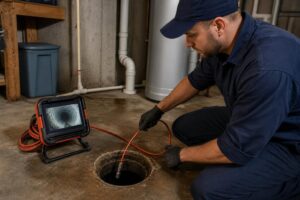
Most sewer smells come from repeat issues, and the pattern often points to the cause. A bathroom-only odor often involves a shower, tub, sink, or toilet. Odor near laundry or a basement can involve a floor drain, standpipe, or utility sink. Timing matters: smells after a vacation suggest trap evaporation, while odors tied to flushing, gurgling, or windy days can point to venting or Sewer camera inspection.
Think in systems: drains move wastewater away, vents stabilize pressure, and traps hold a water seal. When any part fails, odors can appear even if everything still drains.
Dry P trap and unused drains
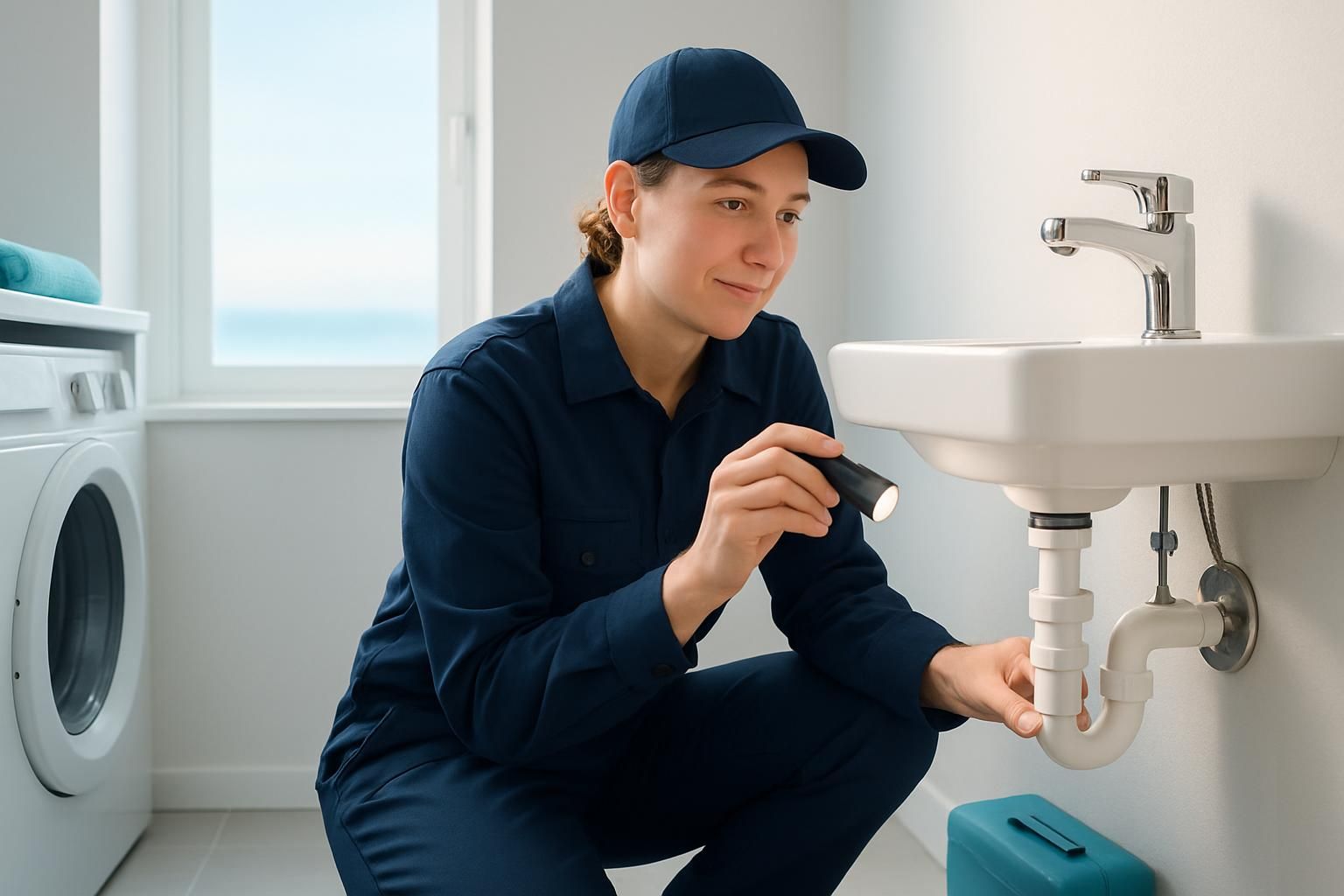
A P trap is the curved pipe under sinks and the built-in trap in tubs, showers, and floor drains. It holds water that blocks sewer gases. If a fixture is rarely used, that water can evaporate, leading to a dry p trap smell, common in guest baths, basement floor drains, and little-used utility sinks.
Dry traps can also happen from siphoning. If venting is poor, running one fixture can pull water out of a nearby trap. If a sewer gas smell from shower drain shows up after flushing a toilet or draining a sink, suspect siphoning rather than evaporation.
Biofilm and buildup in drain lines
Even with a full trap, residue can coat the first stretch of piping and smell foul. Soap scum, hair, skin oils, toothpaste, food, and detergent can form biofilm, especially in showers and bathroom sinks.
Biofilm odor is usually strongest right at the drain opening. It may improve after hot water runs and then return. Unlike true sewer gas, this type often responds to cleaning the drain opening, the stopper or strainer, the overflow opening, and any reachable surfaces.
Blocked vent pipe issues
Plumbing vents route gases above the roof and prevent pressure changes that empty traps. If a vent is blocked or restricted, drains may gurgle, trap water levels may drop, and odors can enter the home. Causes include debris, nests, and buildup.
Suspect venting when multiple fixtures smell, when gurgling follows flushing, or when odors seem weather-related. Because diagnosing vents may require roof access and testing, professional help is often the safer call.
Toilet wax ring or seal leaks
Toilets rely on a seal between the toilet base and the drain pipe. If the seal fails, odor can leak even if the toilet flushes normally. Water at the base may appear, but sometimes odor is the only sign, often strongest near the toilet and worse after flushing or when the bathroom has been closed.
Rocking toilets can stress the seal and make it worse. Avoid using caulk as a “solution,” since it can hide leaks and trap moisture against flooring.
Main line clogs and backups
A partial main line clog can cause odor in multiple drains and change how air moves through the system. Signs include slow drains in more than one fixture, gurgling in a lower-level drain when other fixtures run, or odors that intensify during heavy water use. In worse cases, you may see backup in a tub, shower, or floor drain.
Because main line issues can escalate to overflows, persistent odor combined with slow draining should be addressed promptly.
Safe DIY checks you can do today

Start by pinpointing where the smell is strongest and what triggers it. Check each drain opening and around toilet bases. Run water at one fixture at a time and note whether odor increases or gurgling appears elsewhere. This helps separate a single-fixture issue from a vent or main line problem.
Check the simplest causes first: dry traps and surface buildup. If a guest bath shower drain smells, run water long enough to refill the trap and see if the odor fades. In basements, check floor drains and rarely used sinks.
Here are practical checks most homeowners can do without special tools:
- Refill traps: run water for 30 to 60 seconds in rarely used sinks, tubs, showers, and floor drains
- Listen for gurgling after flushing or draining a full sink
- Inspect toilet stability: check for rocking and note if odor is strongest at the base
- Clean the drain opening: remove hair and debris from strainers and stoppers, and scrub reachable surfaces
- Check overflow openings: tub or sink overflows can hold residue that smells when water runs
- Note patterns: odors after absences suggest evaporation; odors during heavy use suggest venting or partial clogs
If you can localize the smell to one fixture and it improves after refilling a trap or cleaning, you likely have a manageable source. If multiple fixtures are involved or odor returns quickly, consider a main sewer line inspection.
When professional drain cleaning helps
Professional drain cleaning helps when odor is caused by buildup deeper in the line, partial blockages that hold decomposing residue, or recurring clogs that keep a pipe dirty. It can remove biofilm and debris beyond what you can reach, especially when the smell is concentrated at the drain and comes back soon after basic cleaning.
Cleaning is not a cure-all. If the real issue is a dry trap caused by siphoning, a blocked vent, a failing toilet seal, or a main line problem, cleaning alone will not stop the odor for long. The best approach is targeted: identify where odor is entering and match the fix to that pathway.
Snaking vs hydro jetting for odor sources
Snaking clears clogs by cutting through or pulling out obstructions. Sewer cleaning can help when odor is tied to a partial blockage that traps waste or when a branch line keeps catching hair and debris. But snaking may leave residue on pipe walls, so odors can return if biofilm remains.
Hydro jetting uses high-pressure water to scour pipe walls. For odor sources related to biofilm, grease, and heavy residue, jetting is often more effective because it cleans more thoroughly and can restore flow in narrowed pipes. The right method depends on pipe condition, access, and whether the problem is an obstruction versus coating and buildup.
When sewer gas is a safety concern

Sewer odors are unpleasant, but the bigger concern is that gases are entering living space. If the odor is strong, persistent, or irritating, treat it as an indoor air issue, not just a nuisance. Do not ignore a widespread smell that affects multiple rooms, appears suddenly, or intensifies.
Use caution and escalate quickly if you notice any of the following:
- Odor is overpowering or spreads rapidly through the home
- Multiple drains smell at the same time
- You also have slow drains, gurgling, or backups
- The smell is accompanied by headaches, nausea, or eye or throat irritation
- You suspect a failed seal at a toilet or a dry floor drain in a closed basement
In these situations, airing out the home and limiting water use can be reasonable short-term steps, but the priority is finding and fixing the pathway letting gases inside. If you are unsure, a professional inspection is the safest next move.
FAQs about sewer smells in the house
If a sewer gas smell from shower drain comes and goes, what does that mean? Intermittent odor often points to trap water level changes. If the shower is rarely used, evaporation can cause odor that disappears after running water, then returns days later. If it returns quickly or happens after flushing or draining other fixtures, siphoning from a venting issue is possible. Buildup can also come and go, smelling worse after hot showers and fading as the room airs out.
Why does my drain smells like sewer gas even after I clean the visible part? If cleaning the strainer and top of the drain does not help, the source may be deeper where biofilm clings to pipe walls. You may also be smelling true sewer gas from a dry or siphoned trap, which cleaning will not fix. A failing toilet seal or a venting problem can also make odor seem like it is coming from a different drain.
How do I know if it is a dry p trap smell or a bigger problem? Dry-trap odor usually improves after running water and refilling the trap, especially in unused fixtures. If it disappears and returns after days of non-use, evaporation is likely. If it returns within hours or after other fixtures run, suspect siphoning or venting. If multiple drains smell at once, or you also have gurgling and slow drains, it is more likely a system issue.
Can a toilet cause a sewer smell without leaking water? Yes. A failing wax ring or seal can leak odor without obvious water on the floor, especially if the leak is small or intermittent. The smell is often strongest near the base and may worsen after flushing. A rocking toilet can stress the seal. Because hidden moisture damage is possible, address it rather than trying to mask the odor.
Do I need drain cleaning if the smell is only in one bathroom? Not always. Start with trap refills, hair removal, and cleaning the drain opening and overflow. If odor persists and is concentrated at the drain, professional cleaning of that branch line can help remove buildup you cannot reach. If the bathroom also has gurgling, changing trap levels, or toilet-base odor, the fix may involve venting or resealing rather than cleaning.
Conclusion
Figuring out what causes a sewer smell in a house is mostly about finding the pathway that lets odor cross from the plumbing system into your rooms. Start with simple checks: refill any rarely used traps, clean drain openings and overflows, and listen for gurgling that suggests venting problems. If the issue is buildup, professional drain cleaning can remove biofilm and trapped residue that keeps odors coming back. If the source is a failed seal, a blocked vent, or a main line issue, cleaning alone will not solve it. Your next practical step is to locate the strongest odor point, test one fix at a time, and call a pro if the smell is widespread, persistent, or paired with slow drains or backups.