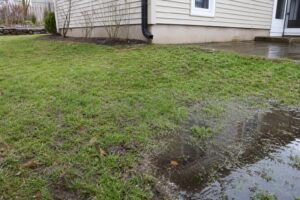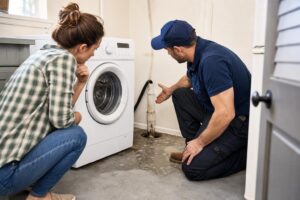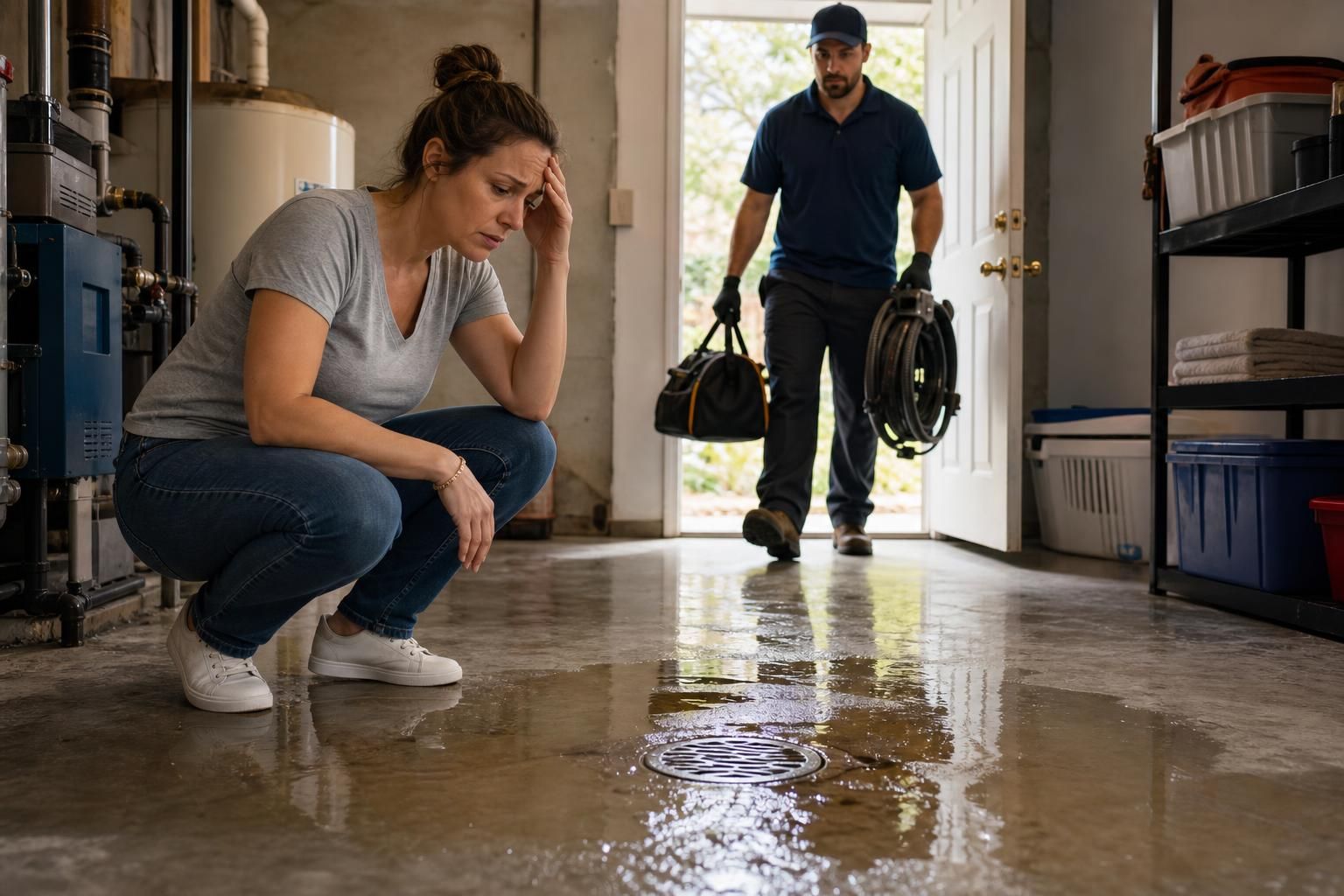
An emergency sewer backup means wastewater is coming back into your home instead of flowing away from it. If you see sewage in a shower, toilet, floor drain, tub, or basement, stop using water right away and contact emergency plumbing help. Don’t flush again to “test it.” Don’t run the sink. Don’t start laundry. More water can push more sewage into the house.
This guide walks you through what to do during a sewer backup in a calm order: how to spot a real emergency, how to reduce exposure, what to tell the plumber, and what you can expect once help arrives. Use it when sewage is visible, multiple drains are backing up, drains are gurgling throughout the home, or water rises after flushing a toilet.
What Counts as an Emergency Sewer Backup
A sewer backup becomes an emergency when wastewater or sewage comes up through drains, toilets, showers, tubs, or floor drains. This is different from one slow sink. A single slow drain can be a local clog, which means the blockage may be close to that fixture. A whole-home backup usually points to a bigger sewer line problem.
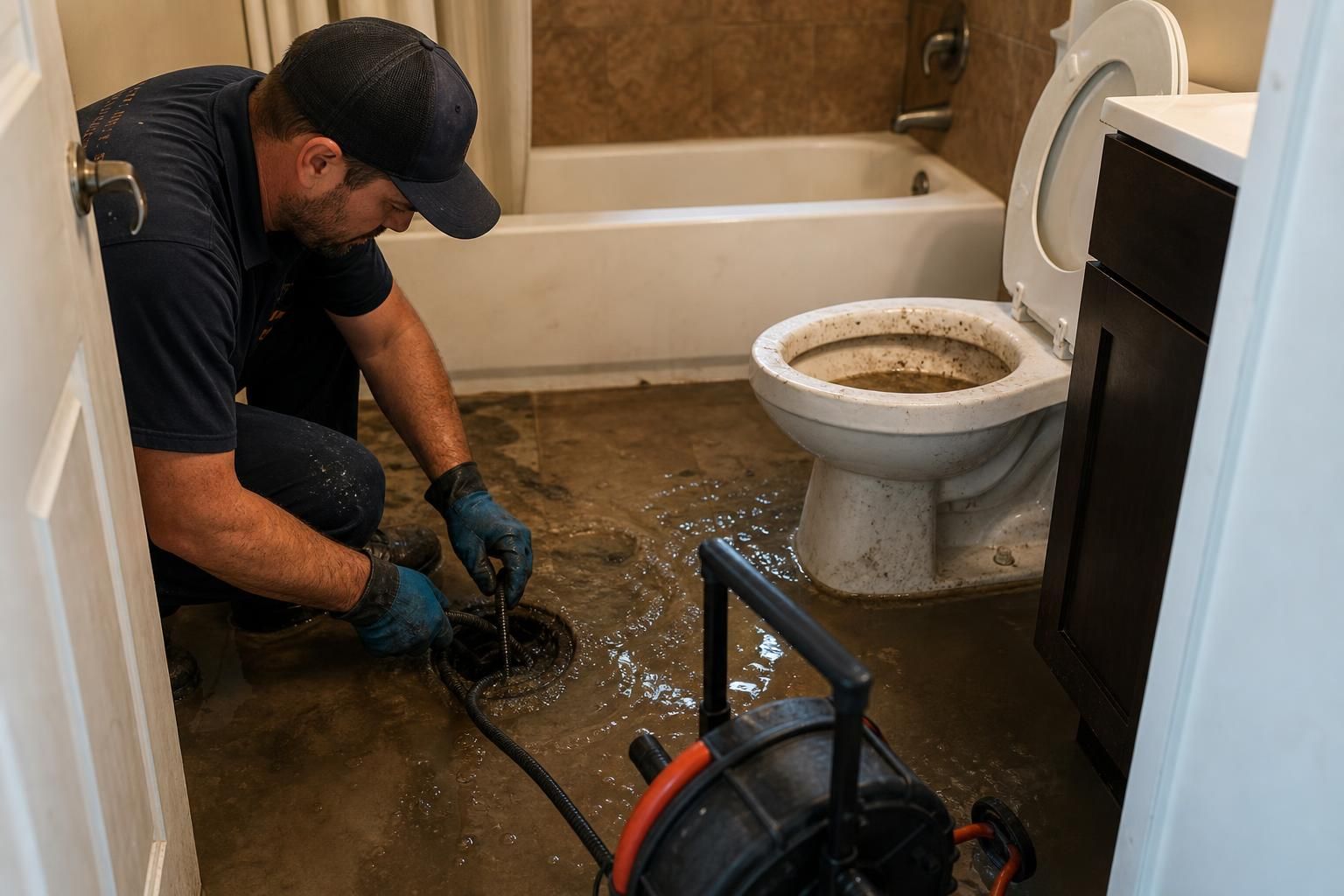
Watch for patterns. If a toilet and shower both back up at the same time, treat it as urgent. If water or sewage rises from a shower drain after someone flushes a toilet, that’s a strong warning sign. Multiple drains gurgling, draining slowly, or smelling bad before a backup can also signal trouble. If your outside cleanout is involved, sewer cleanout overflowing can mean the main sewer line is under pressure and needs prompt attention.
| Symptom | What it may mean | Urgency |
|---|---|---|
| One slow bathroom sink | Local fixture clog | Monitor and avoid harsh chemicals |
| Toilet and shower backing up | Possible main sewer issue | Emergency plumbing call |
| Sewage in basement floor drain | Wastewater entering the home | Keep away and call now |
| Gurgling in several drains | Air trapped by blockage | Stop water use and get help |
Stop Using Water Immediately
The first step during a sewage backup emergency is to stop adding water to the plumbing system. Every flush, shower, dishwasher cycle, and washing machine load can push more wastewater toward the blocked pipe and make the backup worse.
Take these steps:
- Stop flushing toilets.
- Turn off running faucets.
- Cancel dishwasher and washing machine cycles if safe.
- Tell everyone not to use sinks, tubs, or showers.
- Avoid plunging if sewage is rising elsewhere.
If you know where your main water shutoff valve is, you can turn it off to prevent accidental use. If not, where is the main water shut can help you learn what to look for before an emergency. Do not enter a sewage-covered area just to reach it. Safety comes first.
Safety Steps Around Sewage
Your main goal is to avoid contact with sewage and contain the area. Sewage can carry bacteria, viruses, and waste from toilets, tubs, and drains, so treat it as unsafe.
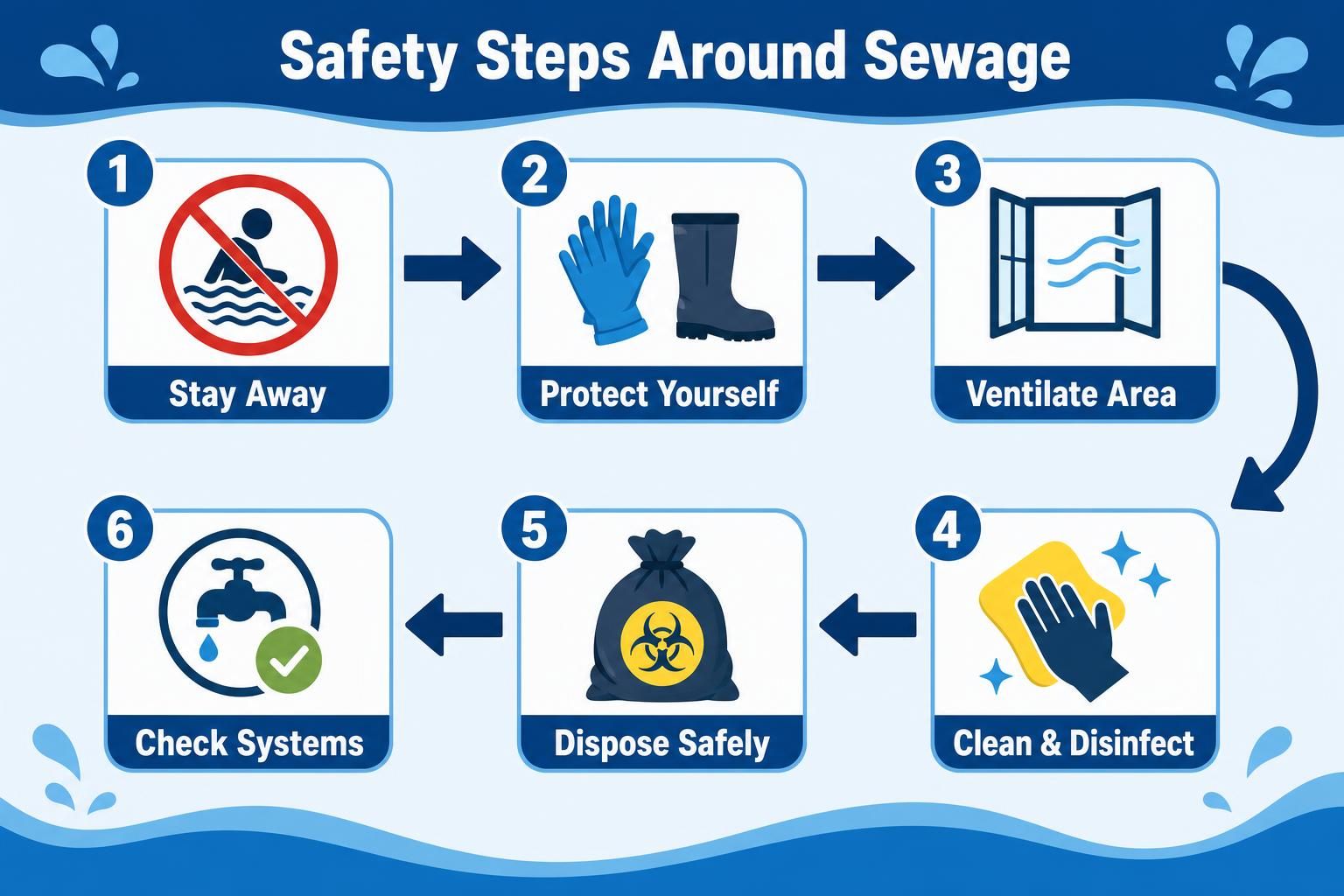
Move people away from the space and keep children, older adults, and pets out. Close doors if possible. If sewage is near outlets, cords, appliances, or standing water, do not step in. Call for help and wait in a safe place.
If you must get close briefly, wear rubber gloves and waterproof shoes, avoid touching your face or phone, and do not use towels meant for regular laundry. Do not run fans that spread odors or pour drain cleaner into affected drains.
Only move items if you can reach them without stepping into contaminated water. Bag small items if local rules allow. Larger cleanup should wait until the plumbing issue is controlled. Later, prevent basement flooding may help.
What Information to Share When Calling
The fastest emergency plumber sewer backup call is one where you clearly explain what is backing up, where it is happening, and what changed right before it started. Simple details are better than guesses.
From a safe distance, note:
- Which fixtures are affected, such as toilet, shower, tub, sink, floor drain, or basement drain
- Whether sewage is visible or it is just clear water
- Whether more than one drain is backing up
- What happened right before the backup, such as a toilet flush or washing machine drain cycle
- Whether drains were slow or gurgling earlier
- Whether you see water outside near a cleanout
You can also use when to call one to understand what an emergency plumber may ask and do on arrival.
How Plumbers Diagnose the Backup
Plumbers diagnose a sewer backup by finding where flow stops and whether the issue is a clog, pipe damage, or a main line problem. Your symptom pattern helps. One affected fixture may suggest a nearby clog, while several backed-up fixtures often point farther down the line.
The plumber may check toilets, tubs, basement drains, and cleanouts. A cleanout is an access point into the sewer line. They may use drain equipment to clear a blockage or run a sewer camera, which lets them see roots, buildup, breaks, bellies, and other obstructions inside the pipe.
Diagnosis often happens in stages: stop the active backup first, then confirm the cause. That matters because clearing soft buildup is different from fixing pipe damage. For more, see camera inspection vs hydro jetting.
Cleaning, Camera Inspection, and Next Steps
After the emergency is controlled, the next step is usually cleaning the line, inspecting the pipe, and deciding whether repair is needed. Cleaning removes the immediate blockage. Inspection shows whether the backup was a one-time clog or part of a larger sewer problem.
Common next steps include mechanical drain cleaning, hydro jetting, camera inspection, or sewer line repair. Hydro jetting uses high-pressure water to clean pipe walls, while snaking mainly breaks through or removes a clog. A camera inspection may reveal grease buildup, tree roots, broken pipe sections, or a low spot where waste collects.
Do not assume one cleared drain means the problem is solved. If the line keeps clogging, more evaluation may be needed. See sewer scope inspection for more.
FAQ
These answers cover the questions homeowners usually ask during an active sewer backup. Use them to make safer decisions while you wait for professional help.
If sewage is visible or multiple drains are involved, treat the situation as urgent. Don’t keep testing fixtures to see if the problem “clears itself.”
Is a Sewer Backup in the Shower Always an Emergency?
A sewer backup in the shower is usually urgent when water or sewage rises after a toilet flush, washing machine cycle, or another drain is used. The shower is often one of the lowest drains in the home, so wastewater may appear there first during a main sewer blockage.
Can I Plunge the Toilet During a Sewer Backup?
Don’t plunge if sewage is coming up in another fixture, like a tub or shower. Plunging can add pressure and move contaminated water into other drains. If only one toilet is clogged and no other drain is affected, it may be a local clog, but stop if anything backs up elsewhere.
What if Only One Drain is Backing Up?
One backed-up drain may be a local clog, especially if every other fixture works normally. Still, watch for warning signs. If nearby fixtures gurgle, drain slowly, or water appears in a shower or floor drain, stop using water and call a plumber to check for a bigger issue.
Should I Clean Sewage Myself Before the Plumber Arrives?
Don’t start major cleanup before the plumbing problem is controlled. You can keep people away, protect clean areas, and take photos from a safe spot if needed. Avoid direct contact with sewage. Once the backup is stopped, cleanup can be handled more safely and completely.
An emergency sewer backup is stressful, but your first moves are simple: stop using water, keep everyone away from sewage, and call for help with clear details about the affected fixtures. The more specific you are, the faster the plumber can start in the right place. If sewage is visible, multiple drains are involved, or a shower backs up after a toilet flush, don’t wait it out. Get the emergency under control first, then let inspection and cleaning determine the right long-term fix.