Seeing water around your heater is stressful, but you can usually narrow down what’s happening fast. A water heater leaking from bottom can be anything from a loose valve to a tank that’s reached the end of its life. The key is doing the right first steps so you don’t make the leak worse or create a safety problem. In this guide, you’ll learn how urgent the situation is, what to shut off, where to look for the leak, and when a simple water heater repair makes sense versus replacement.
Best for: Homeowners who see water under a heater and want quick, safe steps before deciding on repair or replacement.
Not ideal when: You smell gas, see electrical burning, or the area is flooding fast and you can’t stop the water.
Good first step if: You can safely shut off power or gas, stop the water supply, and dry the area to track the source.
Call a pro if: The tank itself is leaking, valves won’t close, you’re unsure about gas or wiring, or water damage is spreading.
Quick Summary
- A small puddle can come from a valve, fitting, or condensation, not just a failed tank.
- Your first job is safety: shut off power or gas, then shut off the cold water supply to the heater.
- “Leaking from the bottom” often means water is traveling down the jacket and dripping at the base.
- The drain valve and the temperature and pressure (T&P) relief valve are common leak points you can check.
- A water heater leaking from bottom of tank usually means replacement is the realistic fix.
Quick Answer: When a Leak is Urgent
A water heater leak is urgent when water is spreading, the supply won’t shut off, or there’s electrical or gas risk. If a puddle grows while you watch, treat it as immediate.
Urgent signs: flowing water, a shutoff that won’t stop it, water near outlets or wiring, abnormal hissing or roaring, gas smell, or scorch marks. A slow drip can still ruin finished floors. If you smell gas, leave and contact your gas utility or a licensed plumber. If water is near electrical parts, don’t stand in it, and only shut off the breaker from a dry, safe spot.
First Safety Steps Before Inspecting
Before inspecting a leaking water heater, shut down energy, stop incoming water, then relieve pressure. Treat it like turning off a stove before cleaning a spill.
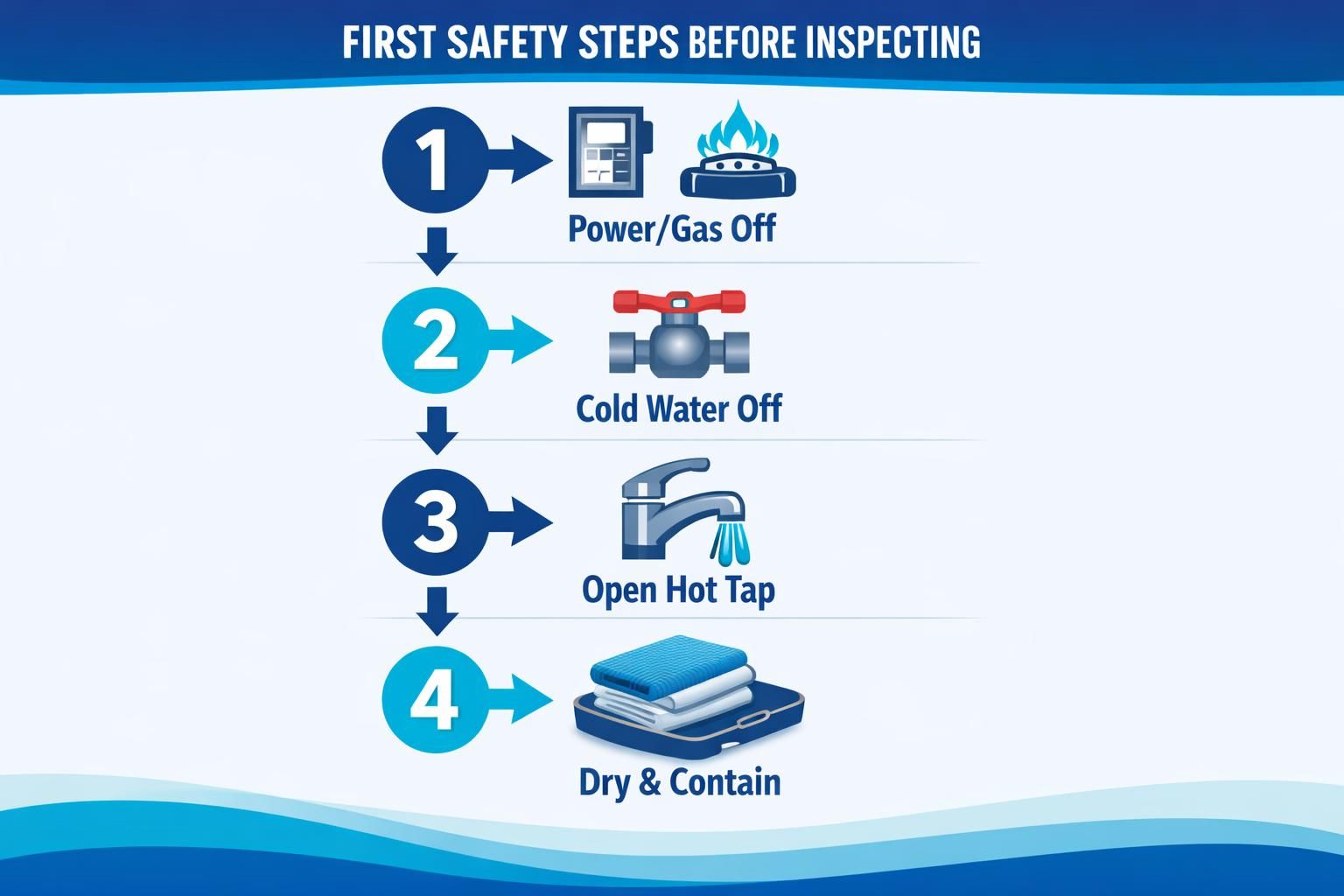
Do this in order: 1) Turn off power or gas. 2) Turn off the cold water supply. 3) Open a hot faucet for a minute. 4) Contain water and dry the area to spot new drips.
Electric: switch off the correct breaker; the thermostat dial is not a disconnect. Gas: turn the control knob to “Off.” Then close the cold inlet valve above the heater, open a hot tap to relieve pressure, dry the tank and floor, and watch for the first fresh drop. See water heater repair basics.
Water Heater Dripping From Bottom: Common Places Leaks Appear
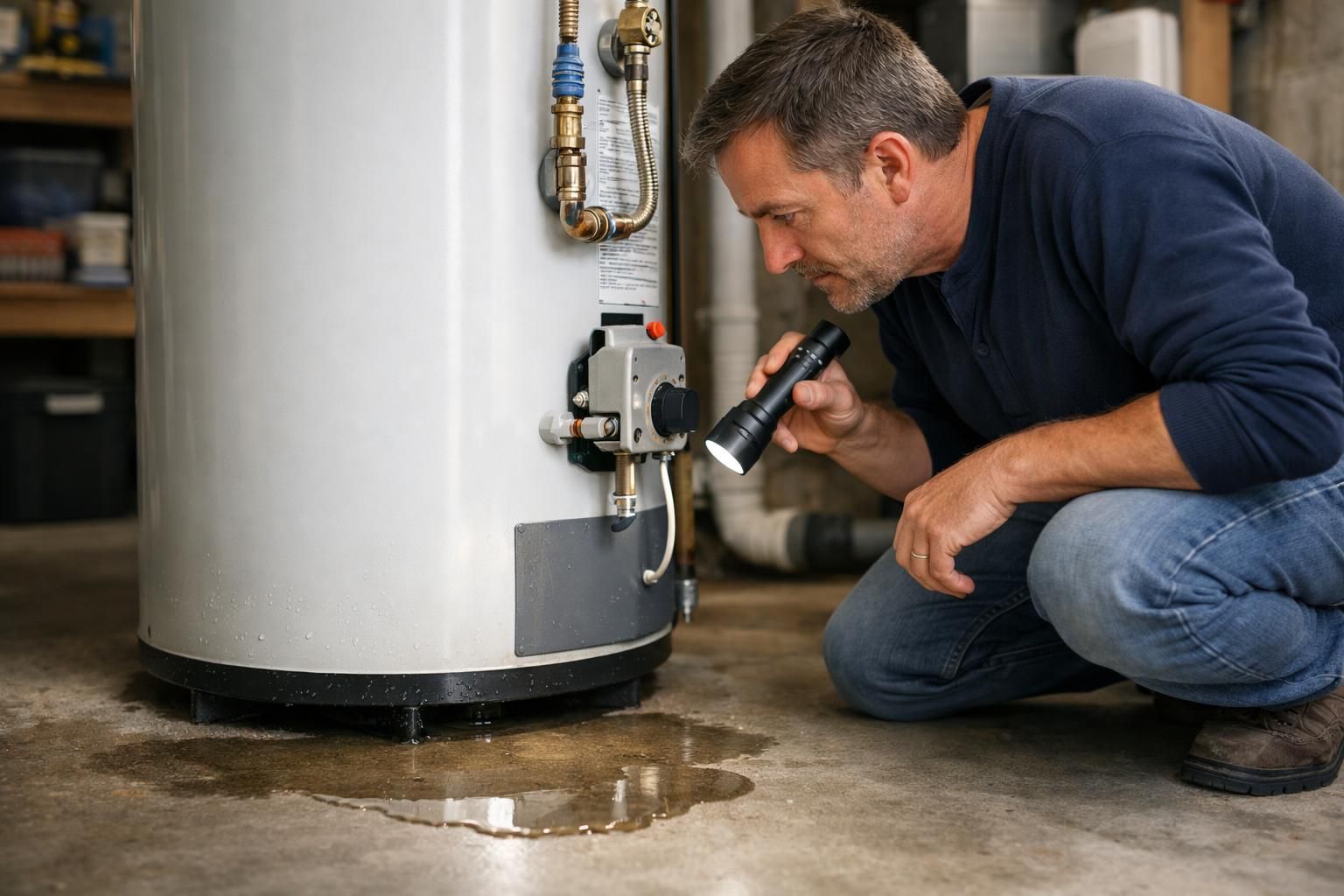
When a water heater is leaking at the bottom, the visible puddle does not always show where the leak started. Water from a loose connection, the temperature and pressure relief line, or another fitting can travel down the tank jacket and collect around the base. Dry the outside of the heater and the surrounding floor, then inspect the unit from top to bottom with a flashlight. The first place where fresh moisture appears is usually closer to the actual source.
Look for:
- Moisture or mineral crust on top pipes.
- Wet fittings and the shutoff valve above the heater.
- Wet trails down the tank side.
- The T&P valve and discharge tube.
- The drain valve and the base seam.
If the heater sits in a pan, note whether the pan is evenly wet or only on one side. If the pan is dry but the surrounding floor is wet, the water may be from a nearby pipe or appliance. Confirm the source before blaming the tank.
Drain Valve Leak
A drain valve leak usually shows as drips from the small spout near the tank bottom. The drain valve is the faucet used to empty the heater.
Test it with a dry paper towel on the valve opening and threads. If it wets immediately, that’s likely the source. Make sure the valve is fully closed by turning it gently clockwise. Don’t force it; older plastic valves can crack.
If it still drips, screw on a garden hose cap with a rubber washer. If the drip stops, the valve is seeping through the opening, not the tank body. Dry everything and watch where the first new bead forms, because water can track along threads and drip from a lower edge.
Temperature and Pressure Relief Valve
The temperature and pressure (T&P) relief valve is a safety device that opens if the tank overheats or pressure gets too high. It’s usually high on the tank with a discharge tube pointing down.
If water shows up at the base, the source can still be the valve. If the discharge tube is wet, the valve may be releasing.
Common causes include a worn valve, high house pressure, overheating from a control issue, or thermal expansion without an expansion tank. Never cap the tube. You can briefly test the lever to flush debris, but if it keeps dripping, shut the heater down and call a plumber. See common water line issues.
Water Heater Tank Leaking From Bottom
A water heater tank leaking from bottom seams or from beneath the outer jacket usually indicates a problem with the storage tank itself. This is different from a leaking water heater from bottom components such as the drain valve, because water escaping through the tank body may continue even after all visible valves and fittings have been dried.
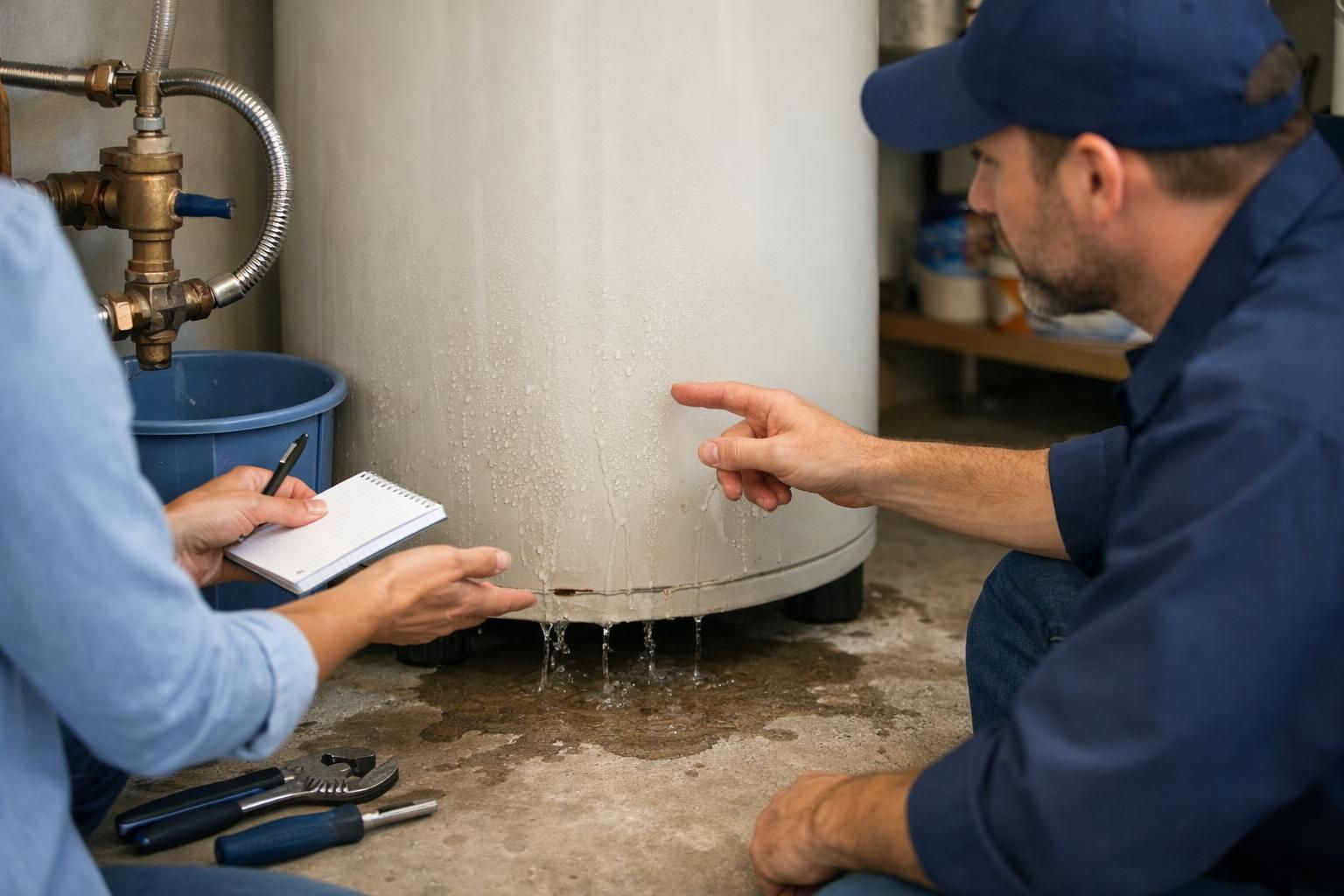
Look for water seeping from underneath the heater rather than from one specific valve, moisture that returns after the area is dried, rust or corrosion around the base, or a leak that becomes more noticeable while the tank refills. When the metal storage tank itself has corroded, patching it is generally not a reliable long-term repair.
Typical signs:
- Water seeps from under the heater, not one valve.
- Random wet spots on the outer jacket.
- Rusty or discolored water.
- The leak persists after drying and checking fittings.
Shutting off the cold inlet may slow damage, but it doesn’t “fix” a failed tank. If it keeps weeping even with the supply off, the inner tank is likely breached.
The tank isn’t reliably patchable. Sealants don’t hold under heat and pressure and can fail suddenly. Replacement is the normal, safe solution.
Hot Water Tank Leaking From the Bottom: Repair vs Replacement
Repair is likely when the leak is from a replaceable part; replacement is likely when the inner tank leaks or the unit is unsafe.
Often repairable: loose top connection, failing drain valve, dripping T&P valve after diagnosing the cause, or a bad shutoff valve.
Usually replacement: water from the bottom seam or under the base, rust streaks from under the jacket, wet burner area (gas) or wet element panels (electric), or multiple leak points.
Two quick checks: can you identify one dripping part, and does closing the cold inlet stop it? Clear yes suggests repair; continued seepage suggests replacement.
Whether a hot water tank leaking from the bottom can be repaired depends on where the water originates. A faulty drain valve, relief valve, shutoff valve, or pipe connection may be replaceable. Water emerging through the lower jacket or tank seam usually means the storage tank has deteriorated and replacement is the safer long-term solution.
If the source is not immediately visible, WaterWays Plumbing can inspect the unit and recommend the appropriate water heater repair or replacement service based on the condition of the heater.
What to Tell the Plumber
Give your plumber clear observations so they can bring the right parts.
If it’s safe, share: gas or electric, where water first forms, clear vs rusty water, whether closing the cold inlet stops the leak, whether the relief valve discharge tube is wet, whether the drain valve is dripping, and any unusual sounds or smells. Tell them what you already did, like turning off the breaker or closing the supply. Send two photos: a wide shot and a close-up of the wettest point. Mention recent pressure or valve problems. See signs you need service replacement.
FAQ
Why Does it Look Like the Leak is From the Bottom When it Isn’t?
Water runs down the jacket or along pipes and drips from the lowest edge. Dry everything, then watch for the first new drop. The highest wet point is closest to the source.
Why Is the Bottom of Hot Water Heater Leaking?
Water around the bottom of a hot water heater may come from a faulty drain valve, a pipe connection above the tank, the temperature and pressure relief discharge line, condensation, or corrosion inside the tank itself. Dry the heater and surrounding floor, then watch where fresh moisture first appears. Water coming directly from beneath the outer jacket or lower tank seam is more likely to indicate a damaged storage tank.
Is a Little Water Under the Heater Always a Leak?
Not always; it could be condensation, a spill, or water from another drain or appliance. Dry the area and recheck. A true leak keeps creating new water afterward.
Can I Keep Using Hot Water if My Hot Water Heater is Leaking?
Avoid using it unless you’ve confirmed a minor, controlled valve drip. Using hot water makes the heater cycle, increasing heat and pressure that can worsen a leak quickly.
How Do I Know if It’s the Drain Valve or the Tank?
Drain valve leaks form at the spout or threads. Tank leaks seep from under the base with no single drip point. Closing the cold inlet helps; tank leaks often continue.
What Should I Do if the Shutoff Valve Won’t Turn?
Don’t force it; old valves can break or leak at the stem. Shut off water at the main if you can do so safely, then call a plumber to replace the valve.
What Does “Water Heating Leaking From Bottom” Usually Mean?
Homeowners sometimes use the phrase water heating leaking from bottom when they notice water collecting beneath a tank-style water heater. The source may be the drain valve, a loose pipe connection, the relief discharge line, condensation, or the storage tank itself. If the leak is active or the source cannot be identified safely, shut down the unit and arrange a professional inspection.
Conclusion
If you’ve got a water heater leaking from bottom, your job is to make it safe first, then figure out where the water is actually starting. Shut off power or gas, close the cold inlet valve, and dry everything so you can track fresh drips. If the drain valve or the T&P relief valve is the culprit, a targeted water heater repair may solve it. But if water is seeping from under the tank or the base seam, plan on replacement and focus on limiting water damage while you wait for help.