Homeowners often hear that hydro jetting is a fast way to clear stubborn clogs, remove grease, and restore drain flow. A common concern is is hydro jetting safe for old pipes, especially in homes with decades-old plumbing and an unclear repair history. The short answer is that it can be safe, but only when the pipe is structurally sound and the water pressure and nozzle match the pipe material and condition. In this guide, you will learn what “old” really means in plumbing, which materials tend to tolerate jetting well, what warning signs make jetting risky, and how plumbers confirm safety before they start.
- Hydro jetting can be safe for older lines if the pipe is intact and the pressure is properly controlled
- Pipe material matters, but condition matters more than age alone
- Camera inspection is the simplest way to spot cracks, corrosion, offsets, and weak joints
- Risk rises in severely corroded, cracked, or partially collapsed pipes
- There are effective alternatives, from snaking to localized repair, when jetting is not a fit
Why pipe condition matters before hydro jetting
Hydro jetting uses high-pressure water to clean the inside of a drain or sewer line. Unlike an auger that cuts a narrow path through a clog, jetting is designed to clean the pipe walls by removing grease, scale, sludge, and some root growth, depending on the nozzle. That cleaning force is also the risk: thin walls, failing joints, misalignment, or existing cracks can turn routine cleaning into damage.
“Old pipes” are not automatically unsafe. A decades-old line in good shape can perform better than a newer line with corrosion, poor slope, shifting soil, or repeated backups. The safest approach is to match the method to the pipe’s actual state: material, joint style, repairs, alignment, and clog type. With evaluation first, hydro jetting is a controlled cleaning tool, not a gamble.
What counts as an old pipe
In plumbing, “old” can mean the home’s age, a section that predates remodeling, or a line whose interior has roughened over time. Age alone does not determine whether a pipe is safe to jet. A pipe can be old and stable with good alignment and minimal corrosion, while a newer section can be weakened by installation errors, soil movement, or stress at joints.
Plumbers focus on materials and typical failure patterns. Some lines mainly collect internal scaling that restricts flow but stay structurally sound. Others are more prone to cracking, deforming, or separating at joints. The “old” label matters most when it signals known weak points such as brittle joints, heavy corrosion, or fragile legacy materials.
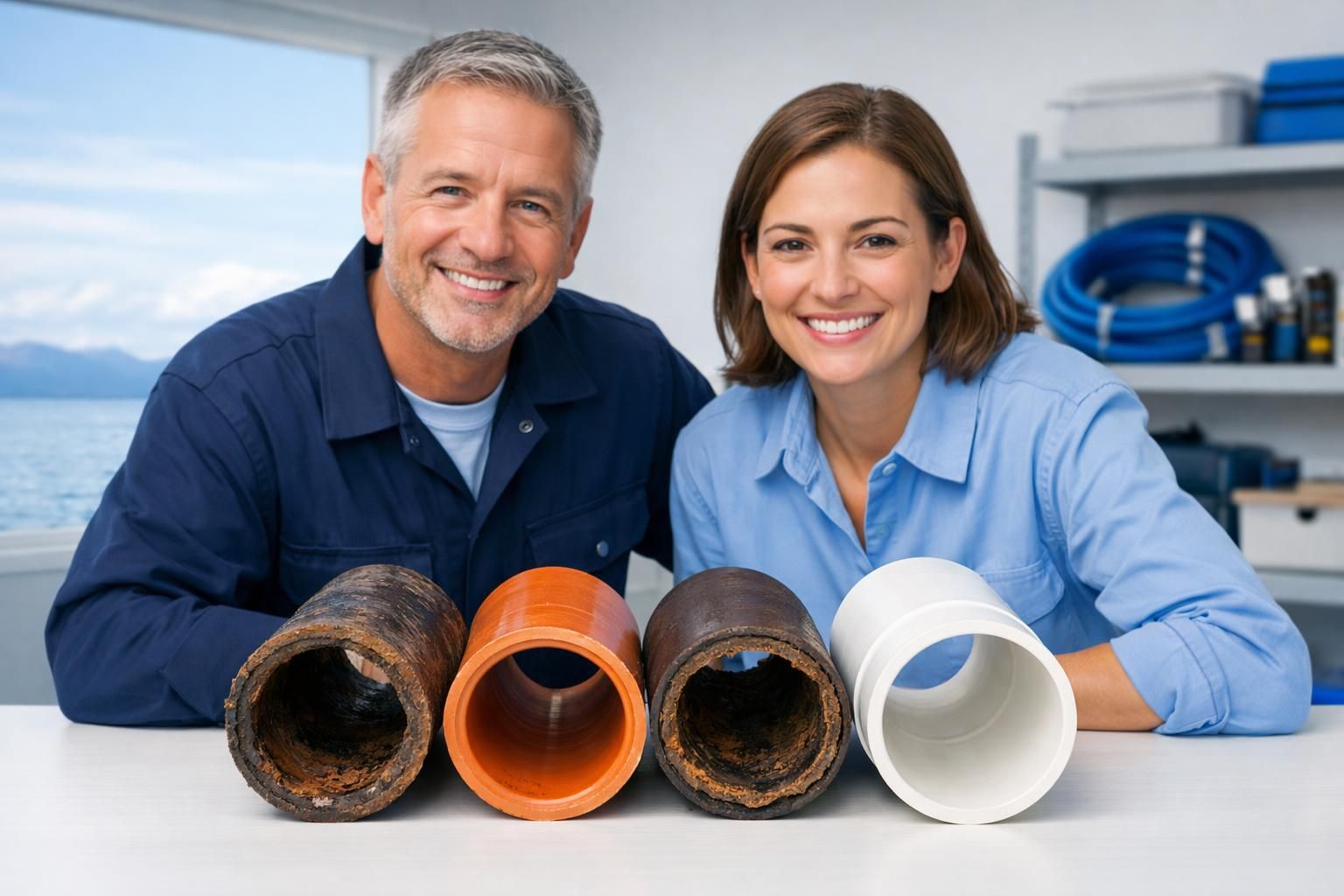
Cast iron, clay, orangeburg, and PVC
Hydro jetting cast iron pipes is common when the pipe is still sound but has internal scale. Cast iron can become rough inside and catch debris; jetting can remove buildup and improve flow. The main concern is advanced corrosion that thins the wall. In that case, aggressive jetting can dislodge fragile material or expose holes. With inspection and moderated pressure, cast iron often handles jetting well.
Hydro jetting clay pipes can be safe when the clay is intact and joints are aligned. The weak point is the joints, especially where ground movement has caused offsets or cracks. Roots often enter through those gaps, so jetting may restore flow without fixing the underlying joint problem.
Hydro jetting pvc pipes is generally safer because PVC is smooth and corrosion-resistant, but it can still be risky with poor installation, loose fittings, or offsets. A nozzle can catch an edge if a joint is misaligned or a fitting is compromised.
Hydro jetting orangeburg pipe is the highest concern. Orangeburg is fiber-based, can deform, and may soften or delaminate. Many plumbers avoid jetting it unless inspection shows it is unusually stable and settings are kept low.
When hydro jetting is typically safe
Hydro jetting is typically safe when the pipe is continuous, properly pitched, and free of structural defects. In those conditions, the water stream lifts residue and carries it downstream instead of stressing weak points. It is most effective for recurring slow drains caused by grease, soap scum, detergent residue, and mineral scale, rather than a single hard obstruction.
Jetting is also often safe as maintenance after a problem is corrected. For example, once roots are cut and the line is confirmed intact, a controlled jetting pass can flush remaining debris. Safety improves when the plumber uses a proper cleanout to control direction and avoid forcing equipment through tight bends.
Structurally sound pipe with buildup
The best candidate is a pipe that is structurally sound but restricted by buildup. These lines may be narrowed by grease or scale yet show no cracks, deformation, or collapse. Jetting works well because it cleans the interior surface rather than leaving a small channel that quickly clogs again. A cleaner interior also reduces snag points that trigger recurring backups.
Common situations where hydro jetting tends to work well include:
- Kitchen lines with recurring grease buildup and slow draining
- Main lines with sludge and scale buildup that remain aligned
- Commercial or multi-fixture drains with consistent residue accumulation
- Post-repair cleaning after a localized section is replaced and the rest of the line needs descaling
Even with a healthy pipe, technique matters. The right nozzle, appropriate pressure, and controlled passes can clean thoroughly without overstressing joints or forcing debris into weak spots.
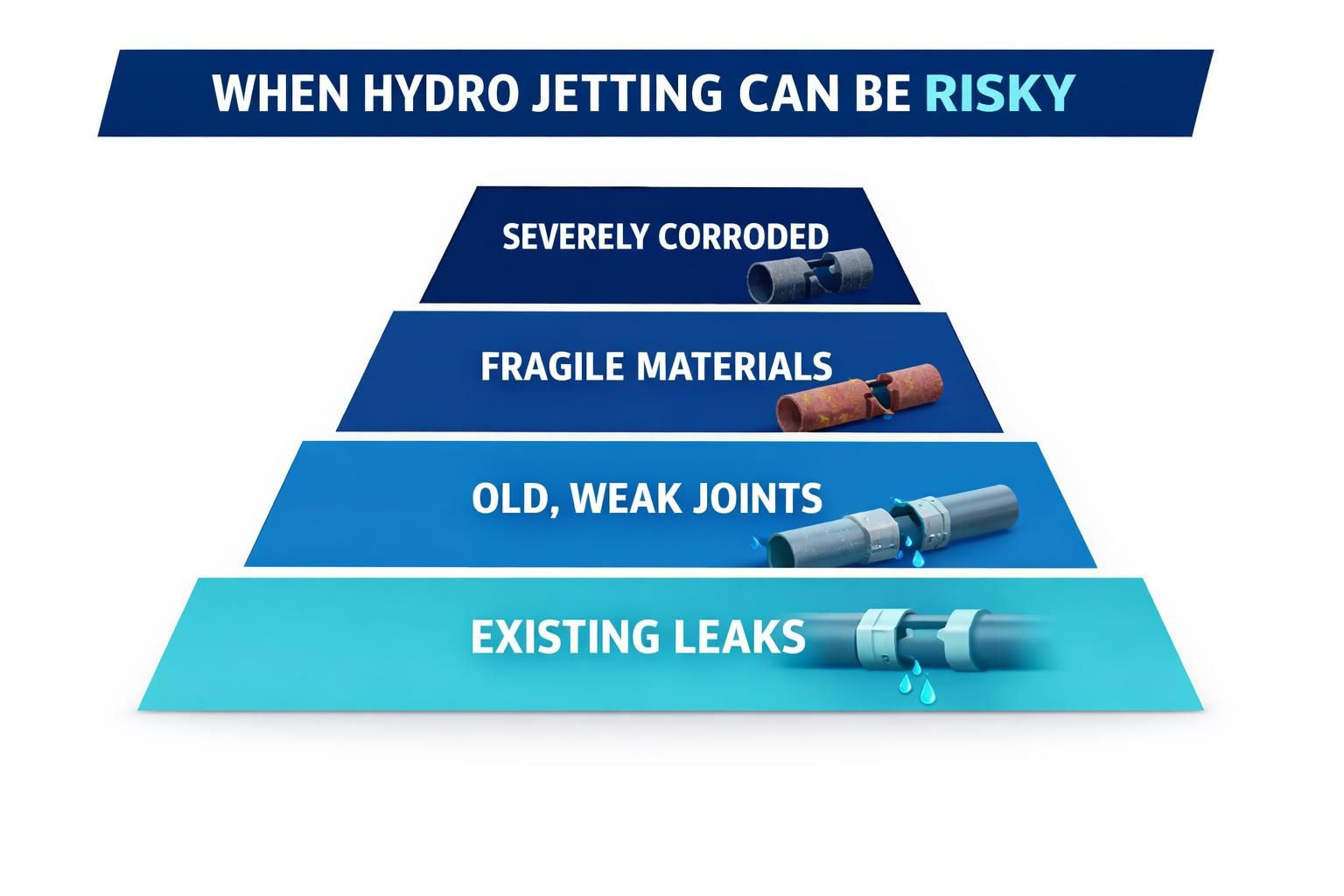
When hydro jetting can be risky
Hydro jetting becomes risky when the pipe is already failing or near failure. High-pressure water can exploit weak spots by entering cracks, worsening compromised joints, or dislodging fragile material. Often, jetting does not “break” a healthy pipe; it accelerates failure in a deteriorating one, turning a slow drain into a leak or major backup.
Risk also rises when the blockage is caused by a structural problem rather than surface buildup. If the line has a belly holding standing water, cleaning may be short-lived because debris keeps settling. If there is an offset joint or partial collapse, jetting may not pass safely, and forcing it can worsen misalignment.
Corrosion, cracks, and collapsed sections
Severe corrosion is a major red flag, especially in older metal lines. When corrosion has thinned the wall, jetting can strip loose layers and expose holes or weak seams. Cracks and fractures in clay or cast iron matter because pressure and vibration can worsen separation at joints. Collapsed sections are the clearest no-go: the blockage is a broken pipe, not removable debris.
Warning signs that suggest extra caution or an alternative approach include:
- Repeated backups that return quickly after snaking
- Visible corrosion flakes or rust-colored discharge in older cast iron systems
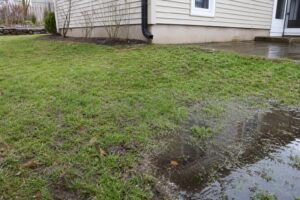
- Sunken areas in the yard above the sewer line or soggy patches
- Frequent root intrusion that points to separated joints
- Evidence of past spot repairs that suggest multiple weak segments
When these signs appear, the safer plan is to locate the failure point and repair it rather than relying on cleaning alone.
How plumbers check safety first
A careful plumber treats hydro jetting as part of a diagnostic plan, not the default. The goal is to identify what is inside the pipe and choose the least aggressive method that will solve the problem. This starts with symptom and history questions: how often clogs occur, which fixtures are affected, whether backups appear at the lowest drain, and whether the home may have clay, cast iron, PVC, or orangeburg.
They also evaluate access and downstream conditions. Cleanout location, direction of flow, and whether the system ties into a septic tank or municipal sewer affect how jetting is performed. Basic safety includes controlling where debris goes, confirming the line can carry flushed material away, and avoiding fixture damage.
Camera inspection and pressure control
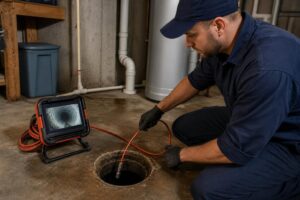
A sewer camera inspection is one of the most reliable ways to determine whether jetting is appropriate. It can reveal root intrusion, cracks, offsets, bellies, heavy scale, and joint condition. It also helps confirm pipe material when homeowners are unsure, which is critical for higher-risk materials like orangeburg. The camera also clarifies the blockage type, since grease, roots, foreign objects, and partial collapse require different solutions.
Pressure control is the other key safety factor. Jetting machines are adjustable, and experienced plumbers set pressure based on pipe size, material, and observed condition. They also choose nozzles strategically, typically starting gently and increasing only if the line tolerates it. Incremental passes reduce shock, help avoid forcing debris into weak joints, and allow the plumber to reassess as the line opens. In borderline cases, plumbers may re-camera after initial cleaning to confirm the pipe remains stable.
Alternatives if hydro jetting is not recommended
If jetting is not advised, other options can still solve the problem. A drain snake or cable auger can open a path through a clog with less overall scouring, which may be safer for fragile lines. For roots, mechanical cutting heads can remove intrusions, though roots often return unless the joint issue is corrected. For grease and sludge, enzyme-based maintenance products can help in some cases, but results vary and they are typically slower than mechanical methods.
If the camera shows a structural defect, repair is the lasting fix. Options include spot repair of a failed section, relining when the pipe is a good candidate, or full replacement when the material is beyond saving. With orangeburg, many homeowners choose replacement because long-term reliability is often the bigger issue than the immediate clog. A plumber can help compare short-term clearing versus long-term stability based on inspection results.
FAQs about hydro jetting on older plumbing
Homeowners often worry that hydro jetting is an all-or-nothing decision. In reality, it is a range of pressures, nozzles, and strategies, and the right choice depends on what the pipe can handle.
If you do not know your pipe material, start with an inspection. Older homes may have multiple materials due to renovations, and the weakest segment determines what is safe. If one section is compromised, the safest plan may be to repair that section first, then use jetting as a maintenance cleaning afterward.
Another common question is whether jetting will remove all roots. Jetting can help clear fine root hairs and flush debris, but thick roots entering through a separated joint usually require cutting first, and they will likely return unless the joint is sealed or the section is repaired. Finally, if you have repeated clogs, ask whether the real issue is buildup or grade and alignment. Cleaning helps buildup; it cannot correct a belly, offset, or collapse.
Conclusion
So, is hydro jetting safe for old pipes? It can be, when the line is structurally sound and the plumber confirms the pipe material, joint condition, and blockage type before choosing pressure and nozzle settings. Cast iron, clay, PVC, and orangeburg each behave differently, and the safest decision comes from inspection rather than guesswork. If you are dealing with recurring slow drains or backups in an older home, the practical next step is a camera inspection and a clear discussion of options: gentle jetting when appropriate, or targeted repair and alternative cleaning methods when the pipe shows cracks, corrosion, or collapse.