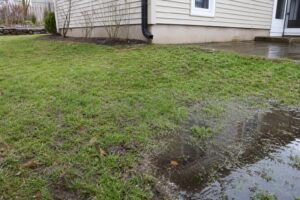
Figuring out sewer line repair vs replacement can feel weirdly high-stakes, because the problem is underground and the symptoms show up inside your house. A sewer line is the pipe that carries wastewater away. Your sewer lateral is the section that runs from your home to the main sewer. When that line cracks, clogs, or collapses, you’ll see slow drains, foul odor, or even a sewage backup. This guide breaks down the difference between repair and replace sewer line decisions in plain English. You’ll learn what “repair” really means, when replacement is the safer call, what drives sewer line repair vs replacement cost, and why a camera inspection is usually the first step.
Best for: Homeowners who want a clear way to choose between fixing a specific defect or starting over with a new line.
Not ideal when: You’re guessing without an inspection or you have active sewage backing up and need immediate help first.
Good first step if: You’re seeing slow drains, recurring clogs, odors, or a soggy yard and want a diagnosis before approving work.
Call a pro if: You have sewage coming up inside, yard sinkholes, or repeated backups that return right after cleaning.
Quick Summary
- Repair targets a specific problem spot, while replacement swaps out a whole run of pipe that’s failing in multiple places.
- Recurring backups, pipe collapse, or fragile older materials usually push you toward replacement, not another patch.
- Trenchless options can reduce digging, but they still require the right pipe conditions to work.
- Cost depends heavily on length (per linear foot), depth, and how hard it is to access the pipe under slabs or driveways.
- A sewer camera inspection is the fastest way to stop guessing and start making a decision you can defend.
Repair vs Replacement: the Quickest Way to Decide
You generally repair when the sewer line has one or two fixable defects, and you replace when the pipe is failing along a longer stretch or is structurally shot. Think of repair like fixing a flat tire. Replacement is like putting on four new tires because the tread is gone everywhere.
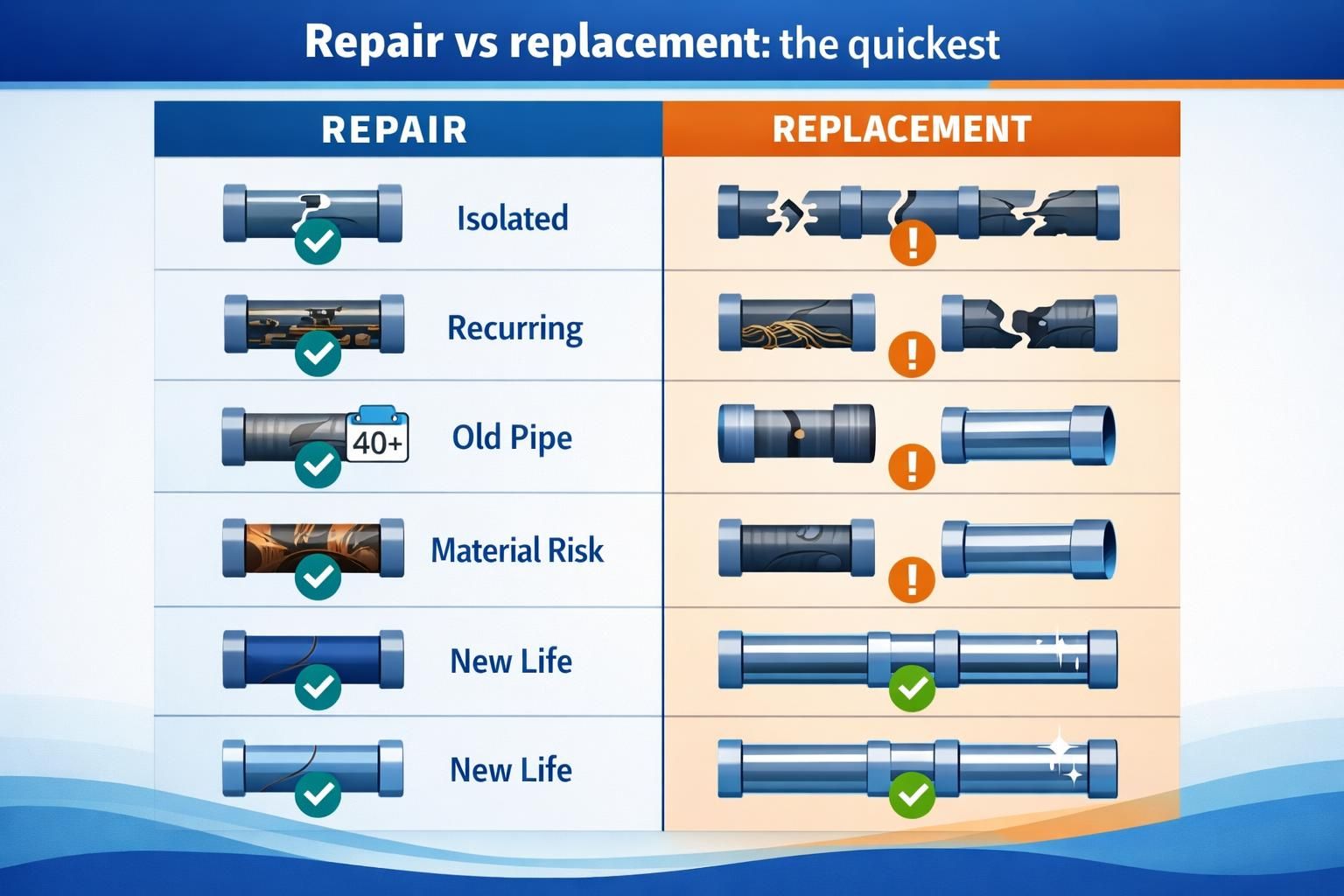
Here’s the clean way to decide: focus on what’s wrong, how widespread it is, and what the pipe is made of. A sewer line clog from grease or wipes might be solved with cleaning and a small fix. But a pipe collapse, major offset joints (when pipe sections shift apart), or a pipe belly (sag) that holds water usually won’t stay fixed with a simple patch.
| Option | Best for | Limits | Typical outcome |
|---|---|---|---|
| Repair | isolated crack or joint | can’t fix widespread decay | restores flow in one area |
| Replacement | repeated failures | more disruption | new pipe with fresh lifespan |
If you’re dealing with backups, also look at prevention steps in sewer backup prevention tips.
A Simple Decision Checklist (damage, Age, Material, Repeated Backups)
Use this checklist:
- Damage: One crack, small break, or root spot points to repair; collapse or multiple separations points to replacement.
- Age: Older lines with recurring issues often favor replacement.
- Material: Orangeburg and heavily corroded cast iron rarely hold repairs.
- Repeated backups: Quick returns after cleaning suggest deformation, sagging, or breaks that need replacement.
What Counts as Sewer Line Repair (and When it Works)
Sewer line repair restores function without replacing the full lateral. It works when most of the pipe is sound and the defect is limited, such as a crack, small leak, or root intrusion at a joint. It’s useful where access is hard, like under a walkway. PVC or ABS usually repairs cleanly. Repair doesn’t improve the rest of an aging line, so new weak points can become repeat jobs.
Spot Repair, Root Removal, and Lining—what Each Fixes
Spot repair replaces a short section with a break, crack, or offset joint. Root removal is cleaning: it clears a root clog, but roots often return if joints are open. For why they recur, see tree roots in sewer lines. Pipe lining is trenchless CIPP that forms a new pipe inside the old one for cracks and minor leaks, not collapse or severe bellies.
What Counts as Sewer Line Replacement (and When It’s Necessary)
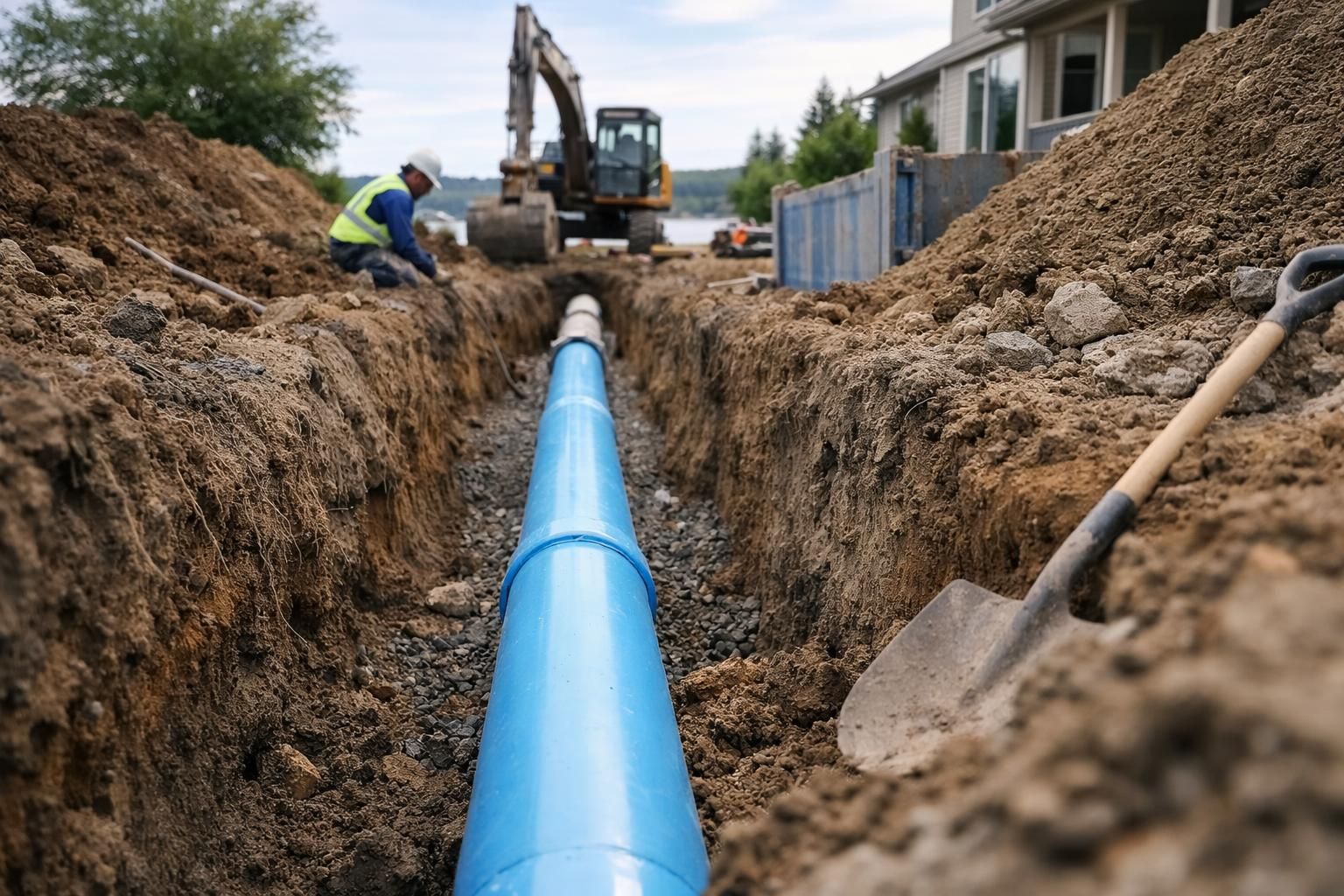
Sewer line replacement installs new pipe for a significant length, sometimes the full run to the main, by removing or bypassing the old line. It’s needed when the pipe has lost structure: collapse, repeated separations, severe corrosion, or long deformation that won’t drain. It’s also preferred for Orangeburg and failing clay with offset joints. Sewer gas smells may have other causes; see what causes sewer smell.
Full Excavation vs Trenchless Replacement (pipe Bursting)
Full excavation uses trenching to expose, remove, and replace the pipe. It’s dependable in most conditions but often increases restoration work for landscaping or hardscapes. Trenchless replacement commonly uses pipe bursting: a head fractures the old pipe while pulling in new pipe, typically PVC. It reduces surface disruption but still needs entry and exit pits. Bursting may not work with sharp bends, crowded utilities, or soils that make the pull risky.
Cost Comparison: Repair vs Replacement (what Drives the Price)
Sewer line repair vs replacement cost usually comes down to how much pipe is involved and how hard it is to reach, not just which option sounds “bigger.” Repair can be cheaper when it’s truly a single defect. Replacement can be the better value when you’d otherwise pay for multiple repairs, repeated cleanings, and ongoing emergencies.
Length matters because many estimates scale by linear foot, meaning per foot of pipe. So a short spot repair might be manageable, while replacing a long run can add up quickly. Cost by location also plays a role, because labor cost, permit requirements, and soil conditions vary.
If you want to save money, your best move is avoiding guesswork. Approving the wrong fix often costs more than approving the right fix once. Getting the pipe mapped and inspected also helps you avoid paying for restoration work you didn’t actually need.
For background on how cleaning fits into the plan, read sewer cleaning vs repair.
Depth, Access (driveway/slab), and Restoration Costs
Depth drives cost because deeper lines take longer to expose and shore safely. Location matters: under driveways, patios, or slabs is harder than in open soil. Access challenges affect repair and replacement, including concrete cutting and patching, narrow side yards, and landscaping or irrigation. Restoration also affects performance: poor backfill can settle, creating low spots and drainage issues near the work. Plan for surface repairs, not just pipe work.
Pipe Age and Material: How Long Repairs Will Realistically Last
Repairs last only if the surrounding pipe is still healthy, which depends on material and remaining lifespan. One bad joint in an otherwise solid line can hold for years. Near end-of-life material may make a repair short-lived. Older homes can have mixed materials and hidden weak points from corrosion or soil movement. Rule of thumb: repair fixes a defect; replacement fixes a worn system.
Clay, Cast Iron, Orangeburg, and PVC—what to Know
Clay pipe is rigid but jointed, so offset joints can catch debris and invite roots. Cast iron can corrode internally; if thinning is widespread, lining may not bond and spot repairs can chase new leaks. Orangeburg often triggers replacement because it deforms and can collapse unpredictably. PVC and ABS are smooth, corrosion-resistant plastics, so repairs and replacement sections typically integrate well and stay stable when installed correctly.
Inspection: What a Camera Scope Can (and Can’t) Tell You
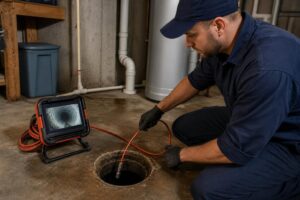
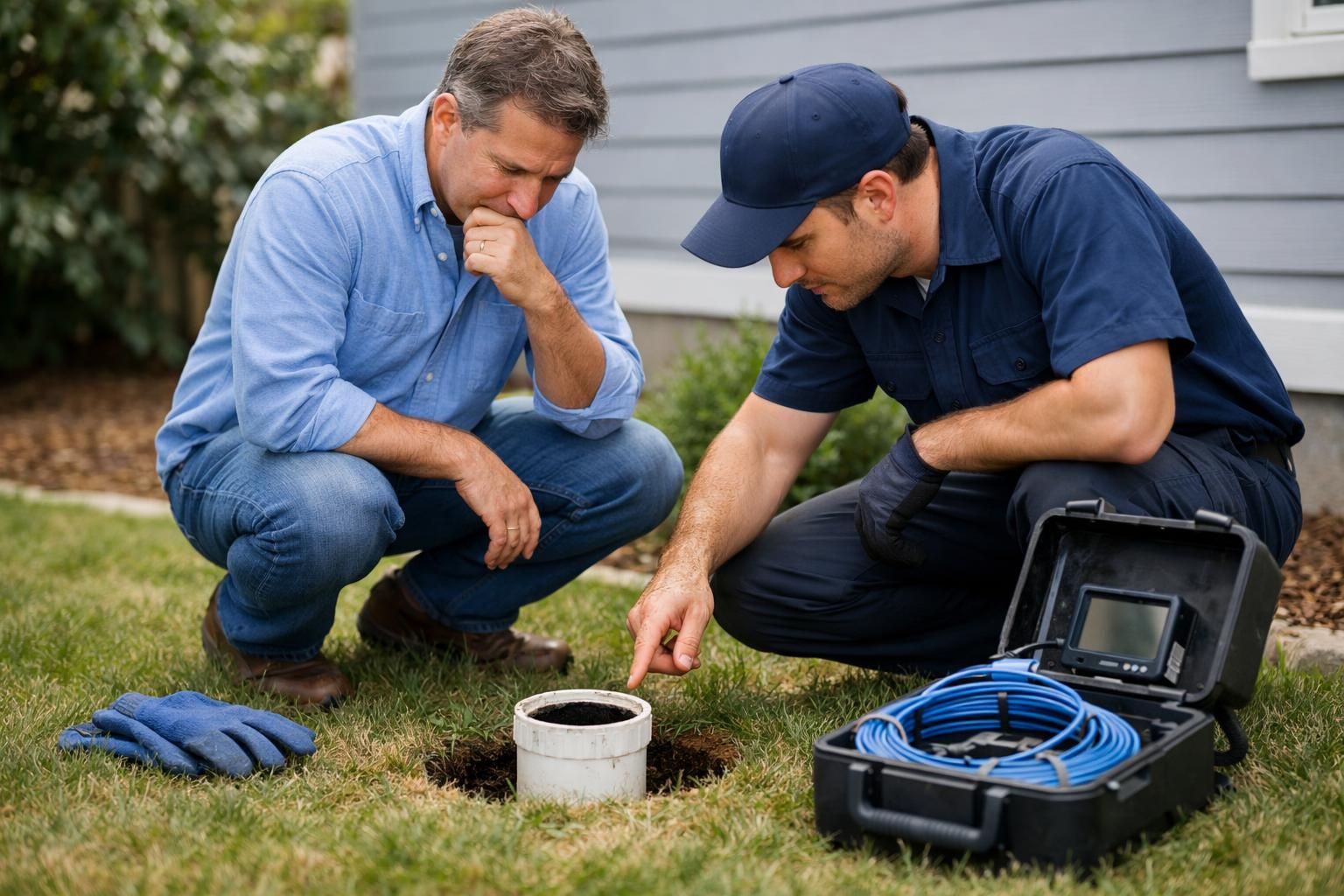
A camera inspection is the best first step because it shows inside the sewer line. A waterproof camera is pushed through the pipe so a plumber can see cracks, roots, standing water, corrosion, and blockages, and help locate the issue to limit excavation. If it’s only a blockage, it confirms the pipe isn’t collapsed before cleaning. See what a sewer cleanout is. Limits: sludge can hide defects, and it can’t show outside conditions or why a belly formed.
FAQs Homeowners Ask Before Approving a Major Sewer Job
What is the Difference Between Sewer Line Repair and Sewer Line Replacement?
Repair corrects a specific defect, like a crack, failed joint, or short broken section. Replacement installs new pipe for a long stretch or the whole lateral, which is better for widespread failures.
How Do I Decide Whether to Repair or Replace My Sewer Line?
Start with a camera inspection, then decide based on severity and spread. One bad spot in otherwise sound pipe suggests repair. Multiple breaks across the line, widespread corrosion, or recurring blockages usually point to replacement.
Can Trenchless Methods Be Used for Both Repair and Replacement?
Yes. Trenchless repair often means CIPP lining for cracks and leaks. Trenchless replacement often uses pipe bursting to pull new pipe. Both require suitable conditions and access pits.
What Signs Mean This is an Emergency?
Sewage backing up indoors, sewage-smelling yard flooding, or sinkholes over the pipe route are emergencies and may indicate collapse. Stop using water and call a plumber immediately.
Conclusion
If you’re stuck on sewer line repair vs replacement, make the decision evidence-first: get a camera inspection, find out the pipe material, and confirm whether the damage is isolated or widespread. Repairs are great when the rest of the line is still structurally sound. Replacement is the safer bet when the pipe is collapsing, repeatedly backing up, or made from a material that’s simply worn out. Your next step is simple: schedule an inspection, then approve the smallest scope of work that actually solves the problem.