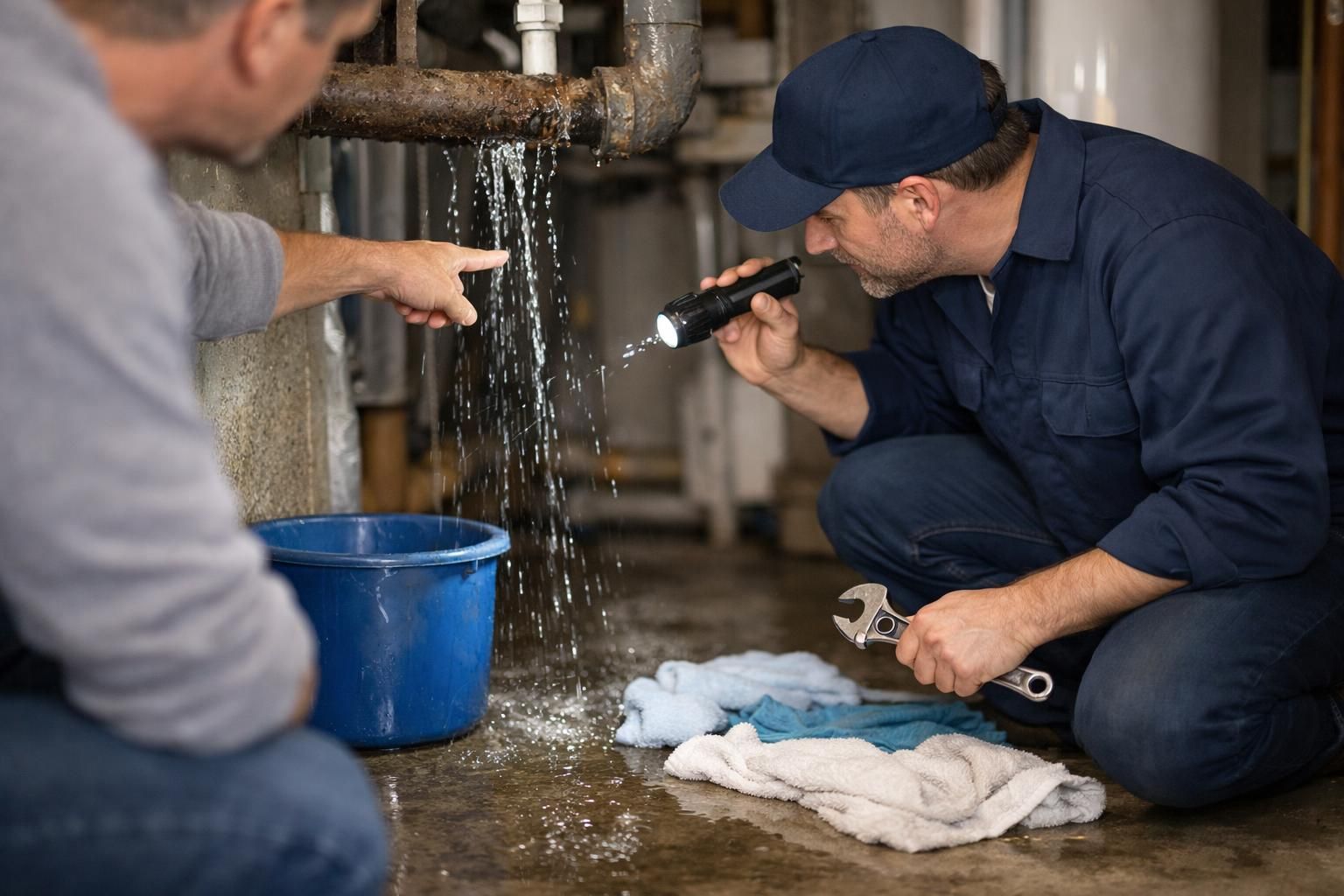
A plumbing problem can go from “annoying” to “my house is flooding” fast. That’s where an emergency plumber comes in. The tricky part is knowing what counts as a real emergency, what you should do in the first few minutes, and what’s safe to leave until morning. In this guide, you’ll learn how to spot a plumbing emergency, how to shut things down without making it worse, and what to expect from an emergency plumbing service after you call. We’ll also cover common after-hours fees and how to pick a reliable “emergency plumber near me” option when you’re stressed and short on time.
Best for: Active leaks, flooding, sewer backup, or sudden loss of water where fast action prevents damage and safety risks.
Not ideal when: The issue is slow, contained, and you can safely shut off a fixture valve without ongoing water damage.
Good first step if: You can locate the main water shutoff valve, stop the flow, and document the situation while waiting.
Call a pro if: Sewage is present, a pipe burst, water is near electricity, or you suspect gas or water heater trouble.
Quick Summary
- A plumbing emergency means fast damage, unsafe conditions, or loss of essential water service.
- Your first 10 minutes should focus on shutting off water and staying safe around power and gas.
- Containment is simple: buckets, towels, and a wet/dry vacuum can limit water damage mitigation.
- Sewer backups are urgent because sewage can be contaminated water (blackwater).
- After you call, expect dispatch triage, an ETA (estimated arrival time), and on-site inspection and diagnosis.
- Costs vary by timing, access, and repair complexity, so ask for estimate and upfront pricing.
Is This a Plumbing Emergency?
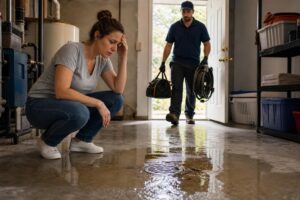
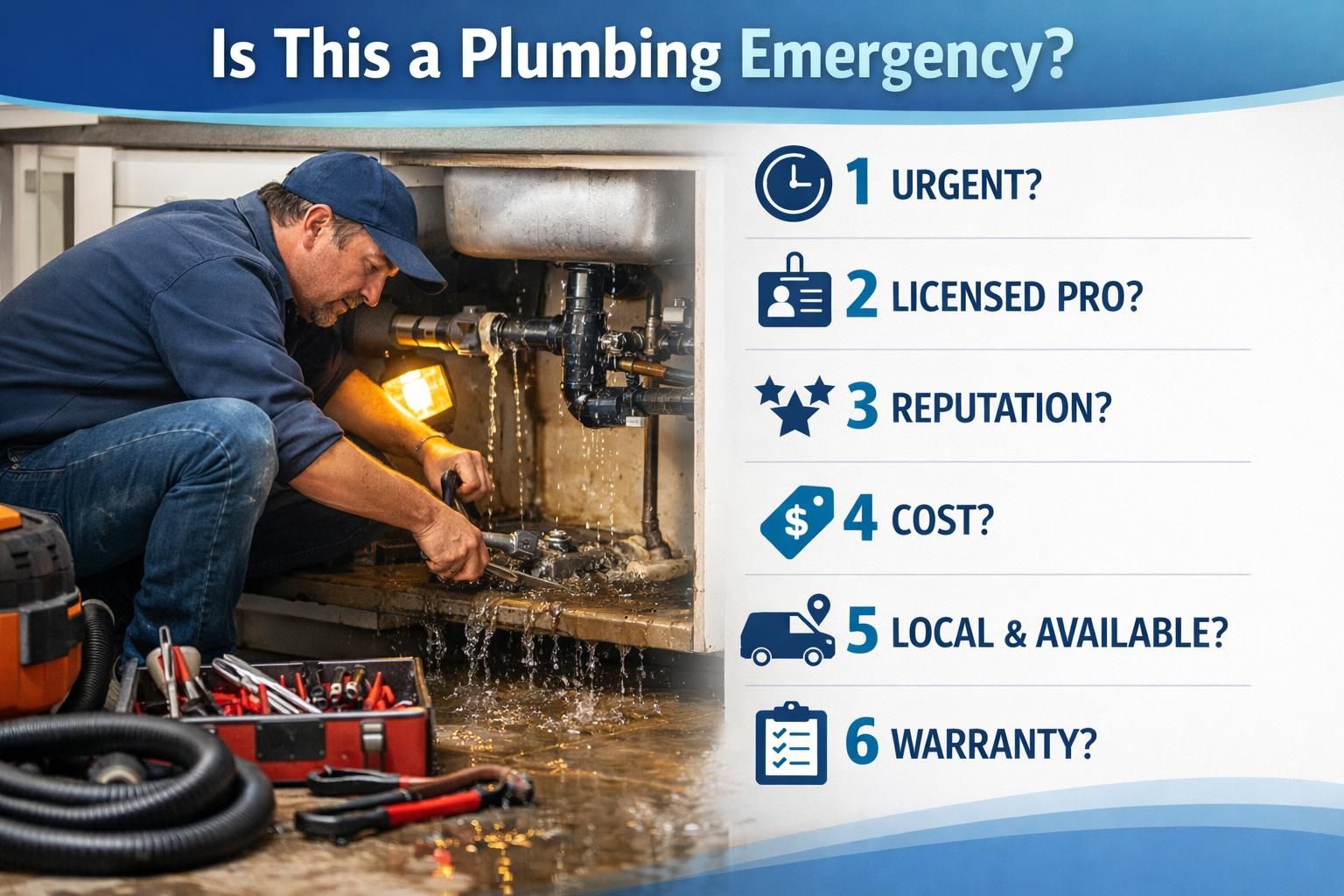
It’s a plumbing emergency if it’s causing active damage, creating a safety risk, or stopping basic water use. Treat spreading leaks, flooding near outlets, or any sewer backup as urgent. Use a speed-plus-impact rule: fast-moving or uncontrollable water means call now. If it’s slow, contained, and you can isolate it at a fixture shutoff valve, you often can schedule service for daytime.
Problems That Need Immediate Help
Problems need immediate help when they’re actively damaging your home or could harm you. Call right away for:
- Burst pipe or major leak you can’t stop
- Flooding, especially near a circuit breaker or outlets
- Sewer backup or overflowing toilet with sewage
- No water or sudden loss of water pressure across the house
- Water heater failure with leaking or pressure issues that could cause flooding, burns, or damage to nearby fixtures.
Issues That Can Usually Wait
Issues can usually wait when water is controlled and there’s no safety risk. These are common “schedule it” situations:
- A dripping faucet or minor seep into a bucket
- A slow drain clog affecting one sink but not overflowing
- A toilet that runs but still flushes
- No hot water with no leaking, if you can manage until daytime
- A small leak isolated at a fixture shutoff valve that you can fully stop by closing the valve and placing a towel or container underneath.
What to Do Right Now (First 10 Minutes)
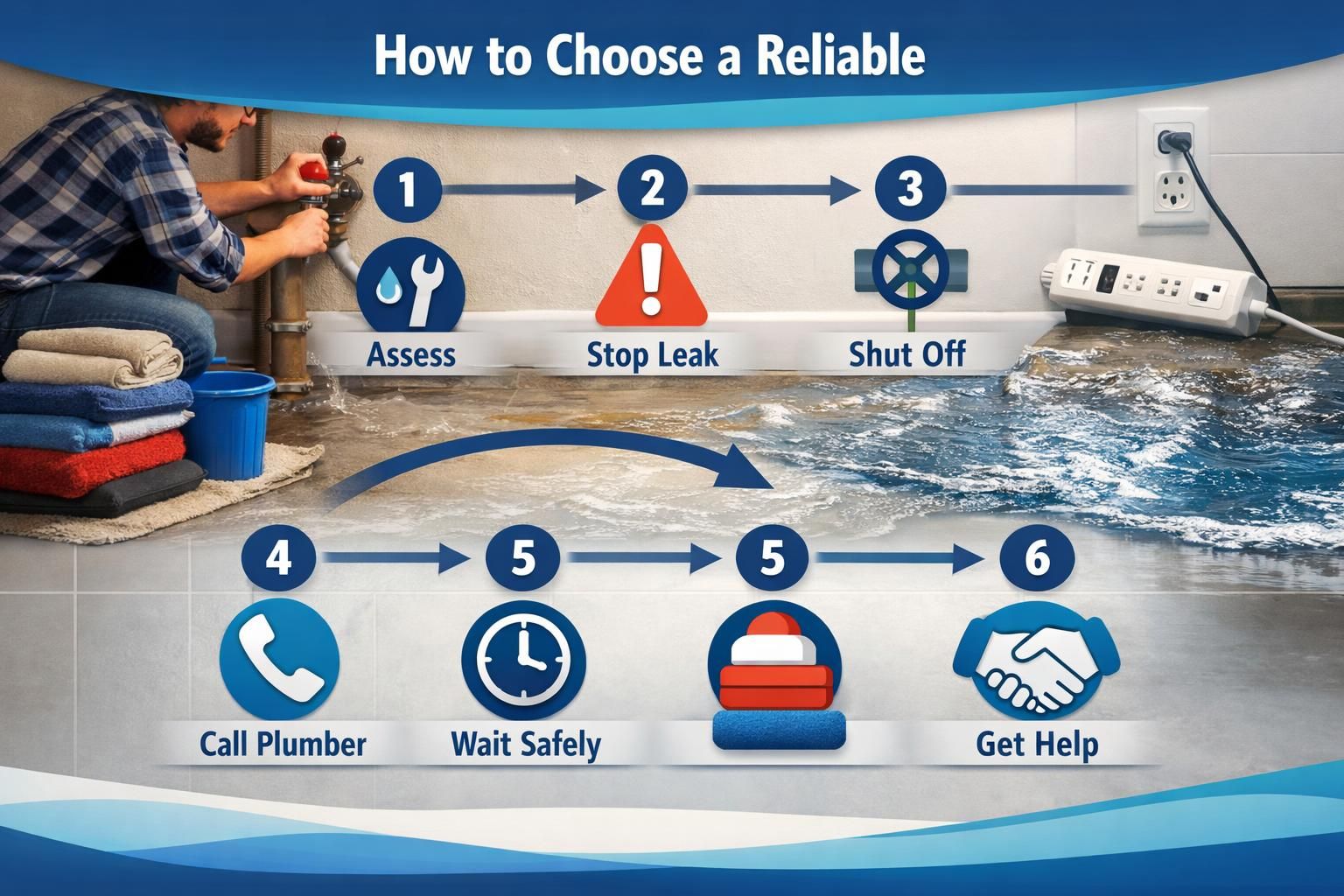
In the first 10 minutes, stop water, prevent hazards, and limit damage. Move calmly and focus on one action at a time so you don’t waste minutes searching for the main shutoff. While you act, gather details for dispatch: exact location, what you see and hear, and whether water is still flowing. Quick phone photos or video can document conditions and help the plumber understand the situation faster.
Shut Off Water (and When to Shut Off Gas/power)
Shut off water first. Use the fixture shutoff at a sink, toilet, or washer; if it doesn’t stop, close the main shutoff near where the water line enters by the meter. Turn clockwise until it stops. Shut off power at the breaker if water is near outlets, lights, or appliances. Shut off gas only if you smell gas or a gas appliance is involved. If unsure, go outside and call.
Contain Water and Protect Belongings
Stop spread first: put a bucket under drips, use towels as barriers, and vacuum standing water if you can. This reduces mold and swelling. Move rugs, papers, and electronics to a dry surface. If a ceiling is bulging, don’t puncture it. Place a container under the low point and keep people away from the area.
Most Common Emergency Plumbing Problems
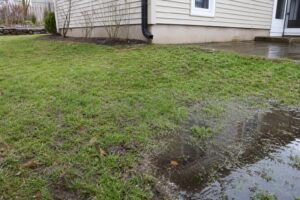
Common emergencies involve uncontrolled water or contamination. Burst pipes can flood rooms fast, hidden leaks can soak walls and floors, and sewer backups create unsafe conditions. Other urgent problems include frozen pipes that crack during thaw, sump pump failure during heavy intrusion, and sudden no-water across the home. If unsure, describe symptoms to dispatch; good phone triage can tell you what to shut off and what to avoid.
Burst Pipes, Major Leaks, and Flooding
Burst pipes are urgent because pressure keeps feeding the flood. Shut off the main water valve, then open a cold faucet to relieve pressure and drain remaining water. If it’s a supply hose, the fixture valve may be enough. Avoid tape or glue “fixes” that fail under pressure. If water is near lights or you hear sizzling, treat it as electrical risk and shut off power at the breaker before entering water.
Sewer Backups and Overflowing Drains/toilets
Sewer backup is urgent because sewage can carry contaminants. If a toilet is overflowing, shut off its fixture valve and stop using water throughout the house, since sinks or showers can worsen the backup. Avoid chemical drain cleaners; they can splash and burn. Recurring backups usually need professional drain cleaning, sometimes with hydro jetting help to remove heavy buildup from pipe walls.
What an Emergency Plumber Will Do When They Arrive
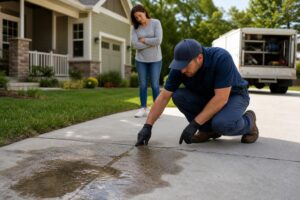
An emergency plumber will make the area safe, stop ongoing damage, and identify what failed. Expect a short walkthrough, questions about timing and symptoms, and checks of shutoffs and pressure. After diagnosis, they should explain options and provide an estimate. If parts or time are limited after hours, the priority is stabilization: stop leaks, restore basic function, and prevent repeat failure until a full repair can be scheduled.
Diagnosis Tools (camera, Leak Detection) and Typical Fixes
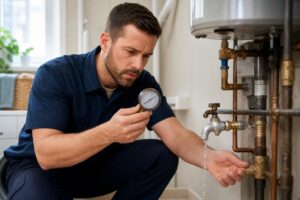
Tools match the issue. Drain and sewer problems may use a small camera to locate clogs, breaks, or blockages. Hidden leaks may require listening equipment and moisture checks to narrow the source with minimal opening. Typical emergency fixes include replacing a failed shutoff, repairing a pipe section, clearing a main stoppage, or stopping a toilet overflow. After control, toilet repair visit may be the next step.
Stabilization Vs. Permanent Repair (after-hours Realities)
After-hours service often focuses on stabilization to prevent damage, not complete rebuilds. A plumber may cap a line, bypass a failed section, or shut off the supply and schedule a permanent repair when parts and daylight are available.
Emergency Plumber Cost and After-Hours Fees
Emergency plumber cost rises after hours because you’re paying for immediate response and availability. You may see an after-hours fee plus flat-rate pricing or hourly labor; flat-rate is predictable, hourly can fit uncertain troubleshooting. Before work starts, ask: What is the dispatch fee, what does it include, and is there a minimum? Will you get an estimate first? What could change the price, such as difficult access, water damage, or corrosion found after opening a wall? Request the problem and fix in plain language.
Dispatch Fees, Hourly Vs. Flat-rate, and What Affects Price
Dispatch is the process of sending a technician, and the dispatch fee often covers that response and initial evaluation. Pricing can change based on:
- Time of day and after-hours fee policies
- Severity, like flooding vs. a contained leak
- Access, like tight crawlspaces or blocked shutoffs
- Parts needed, like valves, pipe sections, or water heater components
- Extra cleanup needs, especially with sewage contamination, which may require specialized equipment, protective measures, and additional disposal or remediation costs.
How to Choose a Reliable 24/7 Emergency Plumber
Choose a local 24/7 plumber who answers quickly and explains next steps. On the call, they should confirm your address, offer basic safety guidance, and give a clear ETA. Verify they are licensed and insured, and ask who will arrive. Describe symptoms, shut off status, and any sewage or electrical risk. If an old line is involved, ask about water service replacement options after stabilization.
Conclusion
When water is spreading, sewage is backing up, or you’ve lost essential service, calling an emergency plumber is about stopping damage and keeping your home safe. Shut off water fast, avoid electricity hazards, and document what you’re seeing so dispatch can triage the call and give you a realistic ETA. Once help arrives, expect quick stabilization first and a plan for permanent repair. If you’re facing emergency plumbing tonight, your best next step is simple: stop the flow, stay safe, and get clear answers before work starts.