Tree roots in sewer line problems are common where mature trees and buried drain piping share the same yard. Roots do not “seek” waste, but they do seek moisture and oxygen, and a sewer pipe can provide both if there is even a small opening. Early symptoms can look like routine clogs, so homeowners often treat the symptom and miss the cause. In this guide, you will learn why roots get into sewer pipes, the clearest warning signs, how plumbers confirm what is happening, and the best removal and repair options. You will also learn practical ways to reduce the chance of repeat intrusion.
- Root intrusion usually starts at joints, cracks, or deteriorated sections where moisture leaks out
- The most common early warning signs are recurring clogs, slow drains, and gurgling sounds
- A camera inspection is the clearest way to confirm whether roots are the cause and how severe the damage is
- Snaking can restore flow, hydro jetting can clear heavier growth, and pipe repair may be needed to stop repeats
- Prevention focuses on sealing defects, managing nearby trees, and monitoring the line before symptoms return
Why tree roots invade sewer pipes
Tree roots spread outward for water and oxygen. If a sewer line leaks even slightly, it creates a consistently damp area in the soil, which roots naturally explore. Roots typically cannot crush an intact modern pipe, but hydro jetting can remove roots that exploit weak points such as separated joints, small cracks, or deteriorated connections.
Once fine roots enter, they expand in the pipe’s steady moisture. Over time, the growth traps toilet paper, grease, and debris, turning a small intrusion into recurring blockages. Pipe age and material matter: older lines, pipes with many joints, and areas with shifting soil tend to develop more entry points, which is why problems often return after a basic clearing.
Symptoms of tree roots in a sewer line
Symptoms often begin mildly and worsen in cycles. You clear a clog, drainage improves, then slows again weeks or months later as roots regrow and catch debris. This repeating pattern is a major clue.
Other issues can look similar, including grease buildup, a sagging “belly” that holds water, foreign objects, or partial collapse. Focus on patterns that suggest a main sewer restriction rather than a one-time clog: multiple fixtures affected, symptoms that flare after heavy water use, and problems that return on a predictable timeline.
Recurring clogs and slow drains
A common sign is a clog that keeps coming back despite plunging or routine snaking. Drains improve temporarily, then slow again, often starting with the lowest fixtures. Roots act like a net inside the pipe, catching waste until the opening narrows.
Clues it’s the main line: several drains in different areas slow at the same time, or performance drops when large volumes drain (laundry, multiple showers). A single slow sink may be local; a whole-house pattern usually isn’t.
Gurgling and sewage smells
Gurgling happens when air is forced through water as it drains past a restriction. You may hear it after flushing, when the washer discharges, or when a tub drains quickly.
Odors can follow because wastewater lingers in the line. Smells often show up near low points like a basement bath, laundry area, or floor drain. Since odors can also come from dry traps or venting problems, odor plus recurring gurgling and slow drains is a stronger signal than smell alone.
Backups in tubs or floor drains
A main-line blockage often shows at the lowest opening. Wastewater may rise in a tub, shower, or floor drain, especially after running the washing machine or using multiple fixtures. The water may be dirty and smell like sewage, which differs from a simple tub clog.
If backups occur, stop using water to avoid overflow and contamination. Repeated backups may indicate not only obstruction but also pipe damage. With root intrusion, symptoms can worsen after heavy rain or irrigation because saturated soil can stress weak joints and openings.
How plumbers confirm roots are the cause
Because symptoms overlap with other drain problems, confirmation should come before choosing a fix. Plumbers usually ask which fixtures are affected, how often clogs return, and whether timing seems seasonal. They may check the sewer cleanout and observe how the system responds when water runs from different fixtures to determine whether the restriction is in the main line or a branch.
Correct diagnosis prevents wasted effort. Grease, a belly, or a failing pipe can require different solutions than roots. When roots are suspected, the most reliable approach is to inspect the line directly to confirm both the blockage and the pipe’s condition.
Camera inspection findings
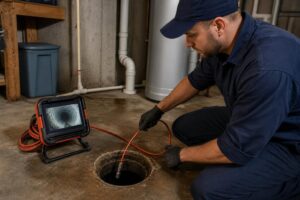
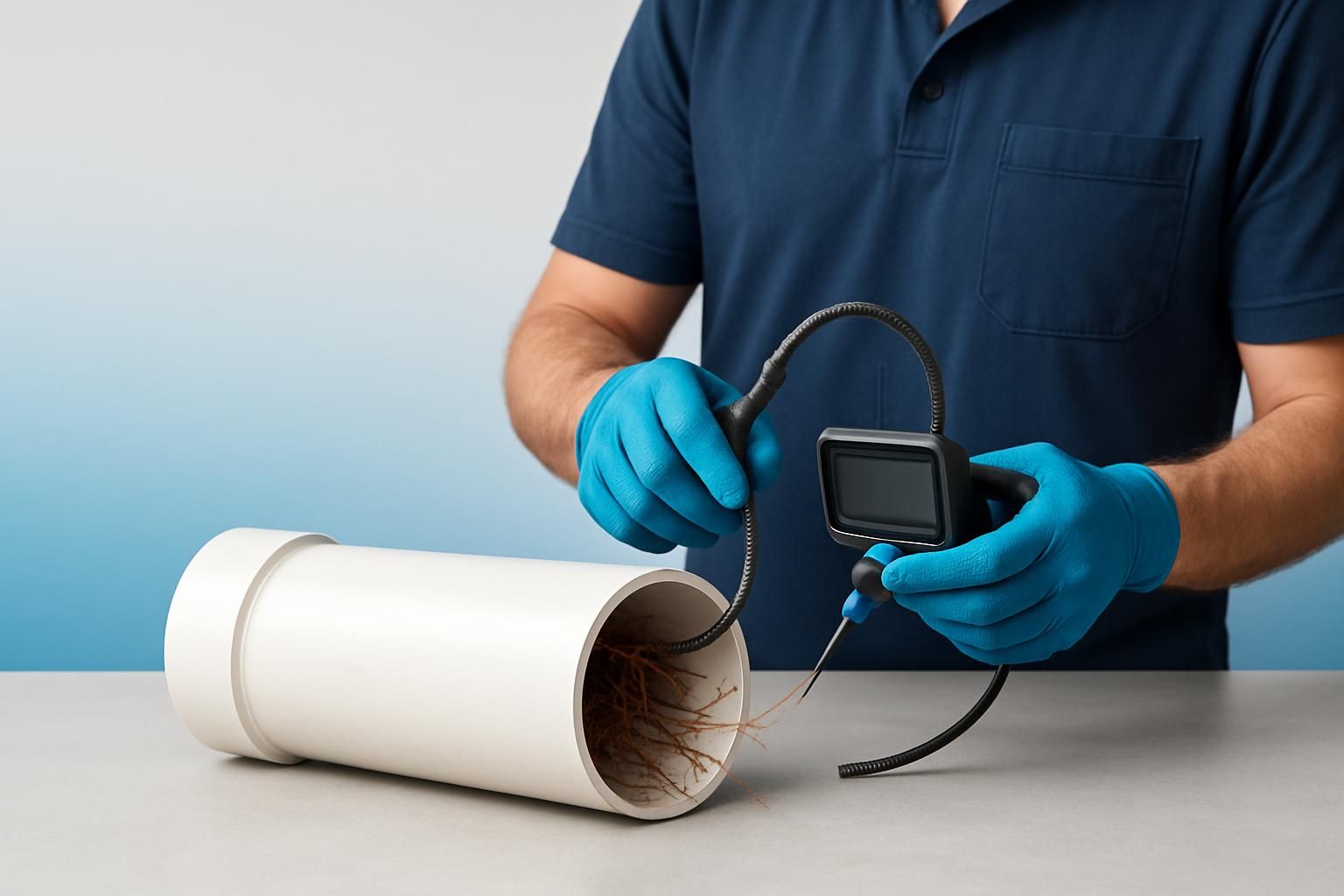
A sewer camera inspection shows what’s inside the sewer line and what condition the pipe is in. Early root intrusion can look like thin strands; advanced intrusion appears as thicker, tangled growth crossing the pipe. The camera also reveals whether the entry is localized (often at a joint) or spread across a longer section.
This matters because clearing roots without fixing the opening usually leads to repeats. Cameras can also identify issues that change the plan, such as separated pipe sections, offsets, standing water from a belly, corrosion, or heavy scaling. Many plumbers can estimate the location from a cleanout, which helps target repairs. When reviewing results, ask what was found, how long the affected area is, and whether the pipe appears structurally sound for sewer backup prevention.
Best ways to remove roots
Root removal usually follows a sequence: restore flow, remove as much growth as practical, then decide whether repairs are needed to prevent regrowth. The right method depends on root thickness, pipe material and age, and whether the line is already compromised. Overly aggressive cleaning can damage a failing pipe, so method selection should match pipe condition.
Clearing roots often solves the immediate blockage but not the entry point. If there is a crack or separated joint, roots can return. In many cases, clearing is step one, followed by either scheduled maintenance or structural repair based on how quickly symptoms return and what the camera shows.
Snaking and cutting
Mechanical snaking with a root-cutting head is a common first step to clear the main sewer line. The cutter chops through root masses to restore flow and is often done through a cleanout with minimal disruption. It is especially useful for fast relief during backups or severe slow drainage.
The limitation is that cutting rarely removes everything. Root remnants can stay on the pipe wall and regrow, and heavy intrusion may only be opened enough to pass water, not fully restore pipe diameter. A camera recheck after snaking helps confirm how clear the line is and whether visible pipe defects need repair rather than repeated cutting.
Hydro jetting for clearing heavy intrusion
Hydro jetting services use high-pressure water to scour the pipe interior. It can remove leftover root fibers and flush away sludge and debris that cling to roots. It is often chosen when intrusion is heavy, when there is also buildup, or when a more thorough cleaning is needed after mechanical cutting. A smoother interior drains better and is less likely to snag paper and waste.
Jetting is not appropriate for every line. If the pipe is old, brittle, cracked, or partially collapsed, pressure can worsen defects. That is why jetting is typically recommended only after a camera inspection. If jetting is performed, follow-up verification is valuable so you know the line is clear and the pipe is still intact.
Repair, lining, or replacement options
If roots are entering through a defect, long-term results usually require sealing that defect. Options range from targeted repairs to full renewal, depending on where the damage is and how extensive it is.
Common approaches include:
- Repair & Replacement
The best choice depends on pipe material, depth, access, and overall condition. If the camera shows multiple offsets, breaks, or grade problems that prevent proper flow, replacement is often the most reliable option. If the pipe is mostly intact but has entry points, lining or a targeted repair can stop intrusion and reduce the need for repeated cleanings.
How to prevent roots from returning

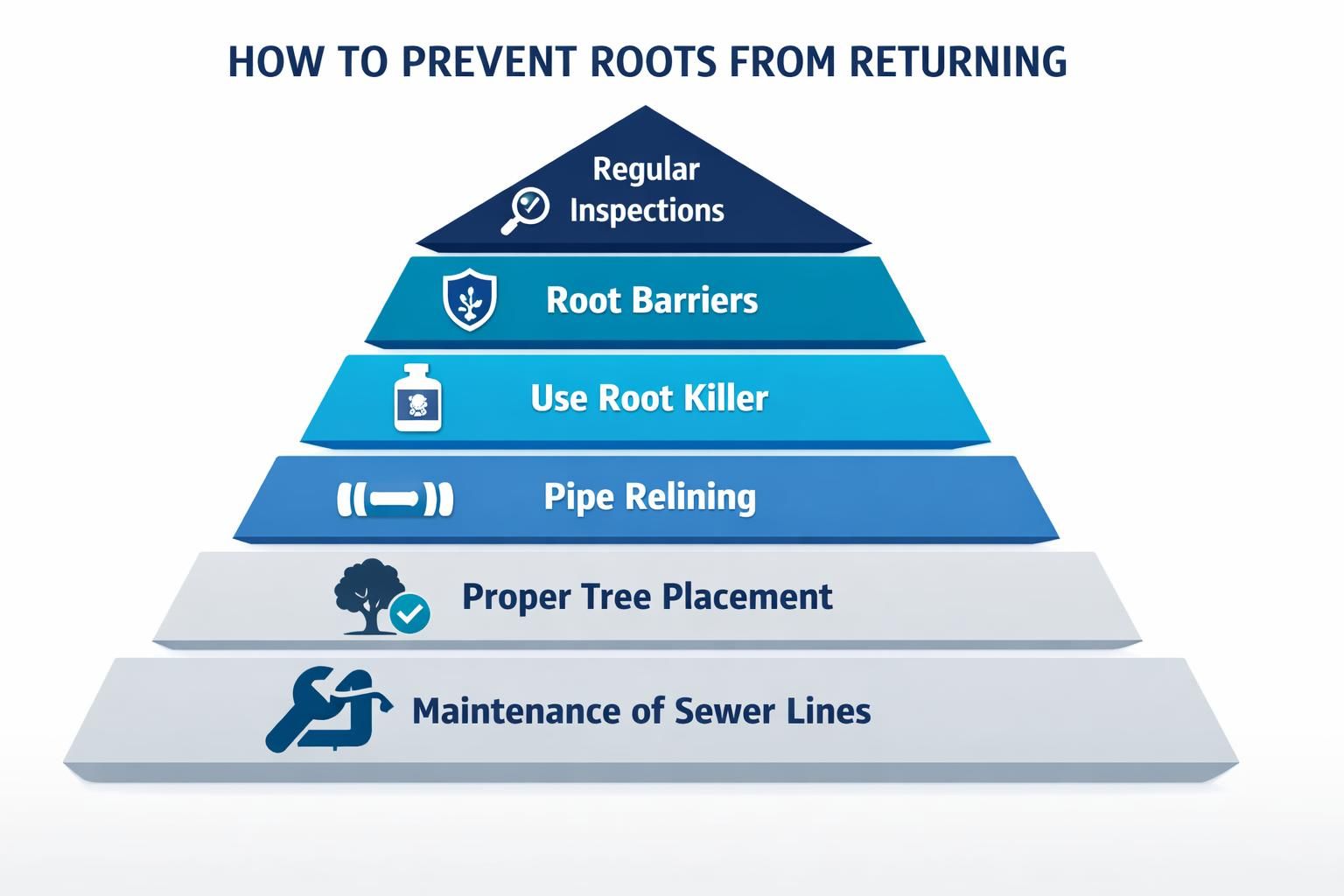
Prevention starts with the core issue: roots return if the opening remains. The most effective step is repairing or sealing defects so the pipe no longer leaks moisture into the soil. If you have had roots before, consider a follow-up plan instead of waiting for the next backup, such as periodic camera checks or scheduled cleanings based on how quickly your line tends to regrow.
Landscaping also affects risk. Avoid planting trees or large shrubs near the sewer route, especially fast-growing species with aggressive roots. If mature trees are already present, removal may not be necessary, but managing irrigation can help so the soil near the line is not constantly saturated. Improve drainage where possible to avoid persistent wet zones. Inside the home, avoid flushing wipes and dumping grease, because buildup and debris make it easier for minor intrusions to turn into major clogs.
FAQs about tree roots in sewer lines
Homeowners often ask what is urgent and what actually prevents repeats. Chemical root treatments can slow regrowth in some cases, but they are not a structural repair and do not fix cracks or separated joints. If the pipe continues to leak, roots can return.
DIY drain cleaners are another common question. Caustic or acidic products may not reach the main-line intrusion effectively, can damage some plumbing, and can complicate professional work later. If symptoms suggest a main sewer issue, reduce water use, avoid repeated chemical treatments, and schedule a proper diagnosis.
People also ask how quickly roots come back after clearing. It varies based on the size of the opening, how close roots are, and how thoroughly the line was cleaned. In general, the most dependable way to extend the time between problems is combining cleaning with repair or lining when defects are present.
Conclusion
Tree roots in sewer line issues tend to start small, then repeat in frustrating cycles until the entry point is addressed. If you notice recurring clogs, slow drains, gurgling, sewer smell, or backups in low fixtures, treat it as a main-line warning rather than a simple drain nuisance. The most practical next step is a camera inspection so you know whether roots are present, how severe the intrusion is, and whether the pipe is structurally sound. From there, clearing methods like cutting or hydro jetting can restore flow, and repair, lining, or replacement can stop regrowth. With the right fix and a prevention plan, you can keep tree roots in sewer line problems from becoming a recurring emergency.