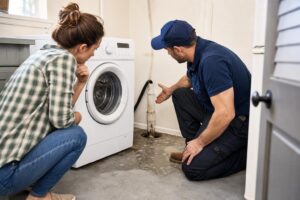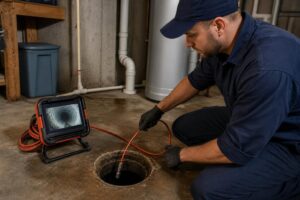
A cleanout is a plumbing feature you rarely notice until a drain slows or the sewer backs up. If you have ever wondered what is a sewer cleanout, it is an access point that lets you reach the main drain or sewer line for inspection, clearing clogs, or maintenance. Knowing where your cleanout is and how it works can save time during an emergency, reduce damage from backups, and help you communicate clearly with a plumber. In this guide, you will learn what a cleanout is, where it is commonly located, why it matters for drain and sewer work, and when it is appropriate to open one yourself.
- A sewer cleanout is an access fitting that provides direct entry into a drain or sewer line
- Cleanouts are often found near the foundation, in a yard, basement, garage, or near bathrooms and laundry areas
- Cleanouts make it faster and less destructive to clear blockages and inspect lines
- Opening a cleanout can release pressure, wastewater, and odors, so caution and preparation matter
- Plumbers may add cleanouts to improve access, meet code expectations, or reduce future repair costs
What a sewer cleanout is
A sewer cleanout is a fitting connected to a drain or sewer line that allows access for snaking, sewer cleaning, or camera inspection. It typically has a short pipe section with a removable plug or cap sized for service tools, so technicians can work without pulling a toilet or cutting pipe.
Cleanouts are often confused with vents, but they serve different jobs related to sewer odor. A vent manages airflow and helps traps hold water, while a cleanout is meant to be opened for service and positioned for direct entry into the line.
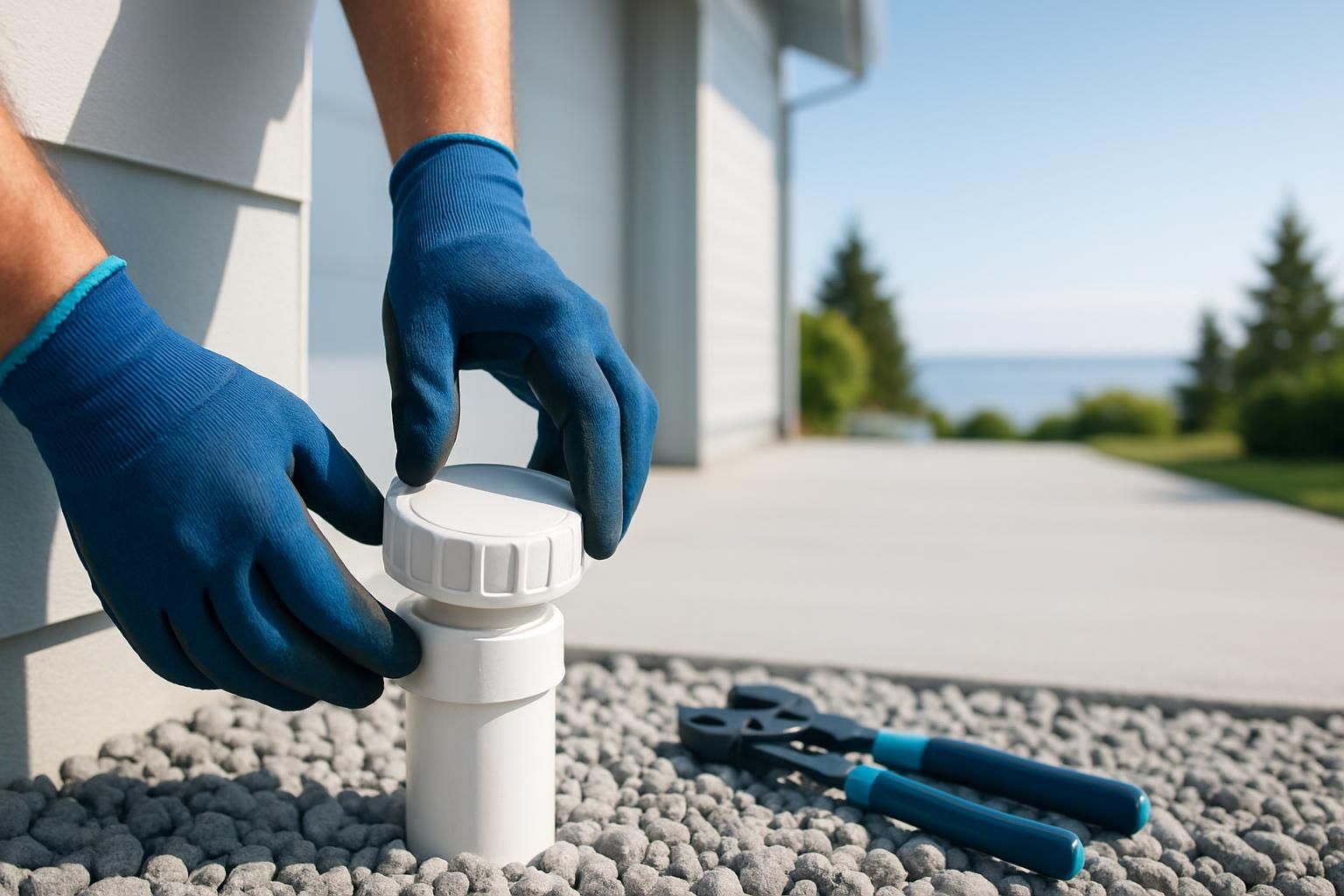
A common question is what is a sewer cleanout cap for drain cleaning. The cap seals the opening and is usually threaded plastic or metal, sometimes with a square or hex head for a wrench. Outdoors, it may sit in a small box at or slightly below grade to protect it while keeping it reachable.
Where to find a cleanout on your property
Cleanout locations vary by layout and plumbing design. Many homes have a main cleanout near where the building drain exits the house toward the sewer or septic connection, often close to the foundation.
Outside, walk the perimeter and look for a short pipe with a threaded plug or a round/rectangular valve box with a removable lid. Inside, check basements, crawl spaces, garages, and utility areas for a capped fitting on a larger drain pipe near where it leaves the structure.
If it is not obvious, trace the likely path from bathrooms, kitchen, and laundry toward the street or septic tank. Cleanouts are often placed where the main drain is easiest to access, including spots less likely to freeze.
Indoors vs outdoors cleanouts
Indoor cleanouts are common in basements, crawl spaces, garages, and utility rooms. They are convenient to reach, but opening one during a backup can spill wastewater indoors.
Outdoor cleanouts are often near the foundation or along the yard line toward the sewer connection. They are usually safer to open when you suspect a main sewer line backup because any overflow is more likely to stay outside. The downside is they can be hidden by soil, grass, mulch, or snow, and caps may be dirty or corroded.
Some properties have both. An indoor cleanout may serve a branch line while an outdoor cleanout serves the building drain or main run. Using the right one matters because tool direction and reach affect whether you can get to the blockage.
Why cleanouts matter for drain and sewer work
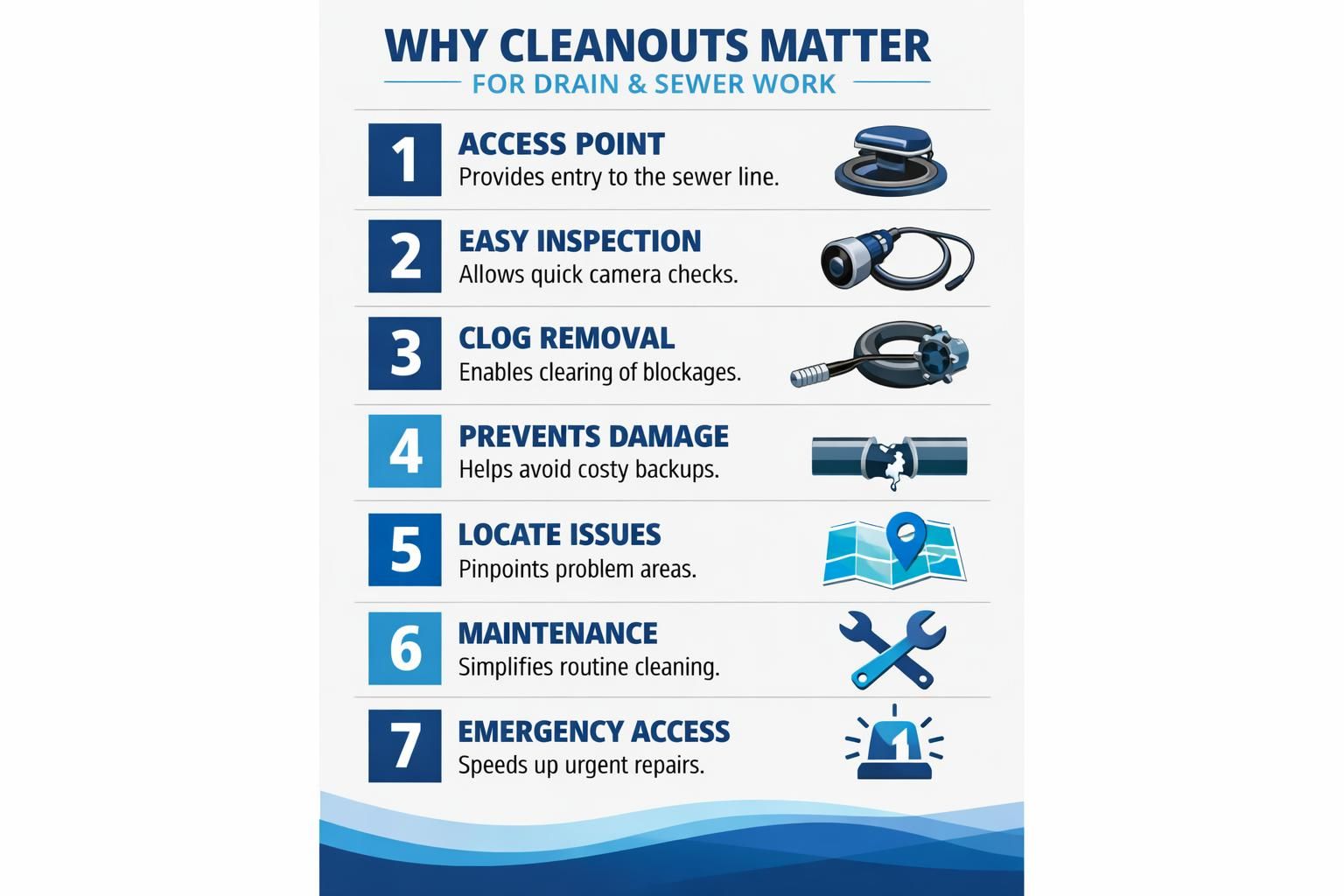
Cleanouts make drain and sewer service faster and less invasive. Without one, a technician may need to pull a toilet, open a trap, or cut pipe to address tree roots, which increases labor and follow-up repairs.
They also improve diagnosis. A cleanout makes it easier to run a camera and locate issues such as grease or scale buildup, roots, a low spot in the line, or a damaged joint. Better access reduces guesswork and helps prevent repeat clogs.
During an emergency backup, cleanouts can limit damage. When a main line blocks, sewage often escapes through the lowest opening, like a shower, tub, or floor drain. A cleanout provides a direct service point to clear the stoppage and may offer a more manageable location for overflow than an indoor fixture.
Can you open a cleanout yourself
In many cases, yes, but it depends on the symptoms and which line the cleanout serves. For a minor branch-line issue, opening the appropriate cleanout to check the line or use a small hand snake may be reasonable. For a main sewer backup, opening a cleanout can be risky because wastewater may be under pressure and surge out as the cap loosens.
Use the symptoms to guide you. Multiple fixtures backing up, gurgling in other drains, or sewage rising from a basement floor drain often points to a main line issue. In that situation, stop using water and call a plumber. If you decide to open the cleanout anyway, go slowly and be ready to retighten.
Also consider the condition of the cap. Older caps can be stuck, brittle, or cross-threaded. Forcing one can crack the fitting and turn a clog into a repair. If it will not loosen with reasonable effort, a professional can remove it and replace damaged parts.
Safety and mess control tips
If you open a cleanout, assume it could spill. Wear gloves and eye protection, and do not stand directly over the cap. Loosen it slowly to vent pressure. If you hear hissing or see water rising, pause. Indoors, protect flooring and nearby items first.
Practical steps that help reduce risk and cleanup include:
- Stop running water in the home and ask others to avoid using sinks, toilets, and showers
- Place a bucket or shallow pan near the opening, and keep towels or absorbent material ready
- Use a wrench that fits the cap shape to reduce slipping
- Loosen the cap in small increments to vent pressure between turns
- Keep a trash bag and disinfecting supplies nearby for cleanup
If overflow starts, tighten the cap back down and call a plumber. Do not keep opening it while sewage is pushing out. After any spill, clean and disinfect thoroughly and wash hands and tools carefully.
When a plumber may add a cleanout
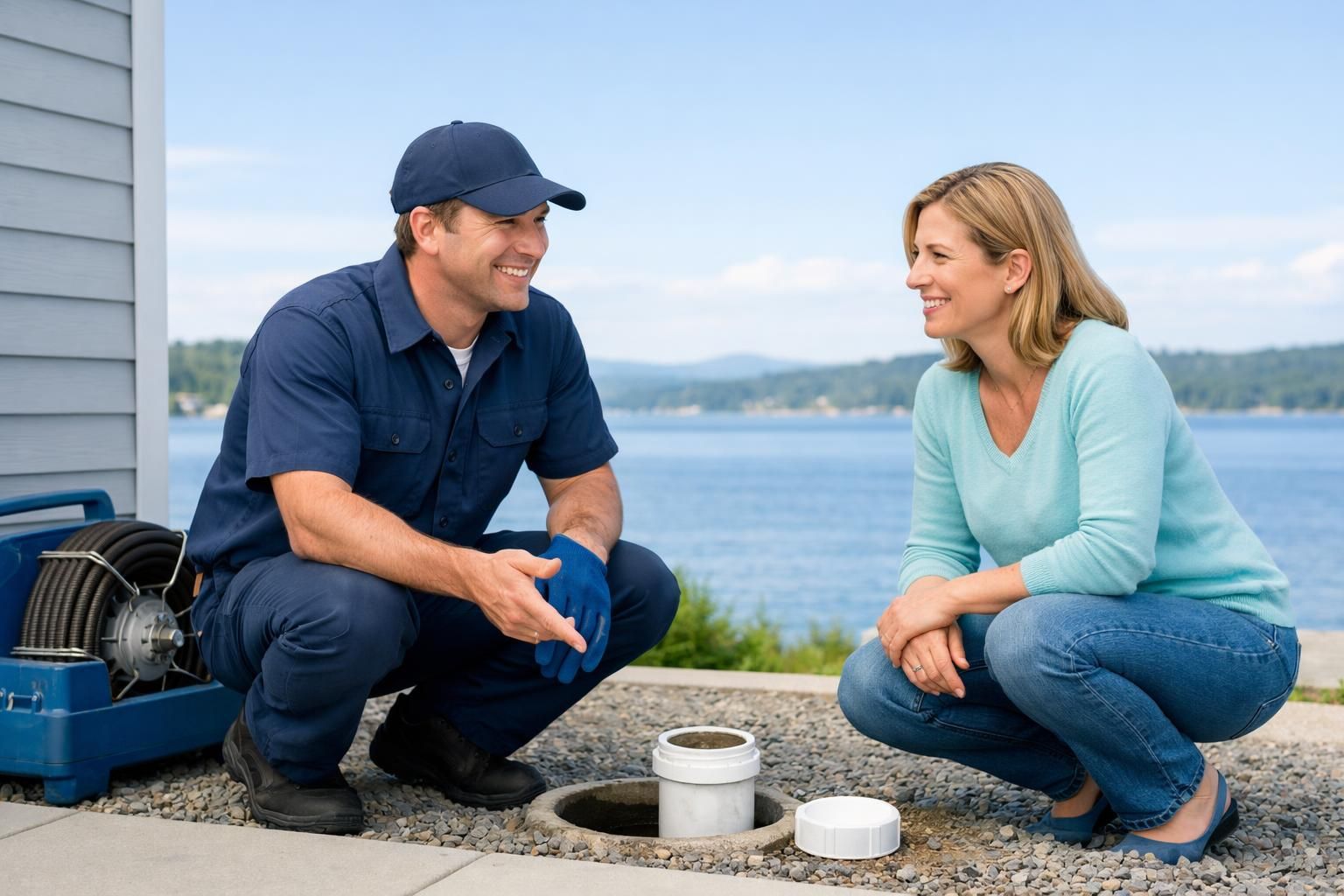
A plumber may add a cleanout when a system lacks accessible entry points or when repeated clogs show a need for better maintenance access. Older homes may have few cleanouts, leaving toilet removal as the most practical option. Adding a cleanout reduces disruption and can lower future service costs.
Cleanouts are also commonly added during remodeling, drain replacement, or sewer repairs, when a line is already open. Plumbers often place them near direction changes or where long runs would be difficult to service.
Sometimes the fix is smaller: replacing a corroded or stripped cap, improving the seal to prevent odors, adjusting height, or adding a protective box outdoors so the cleanout stays accessible after landscaping.
FAQs about sewer cleanouts
Homeowners often have practical questions once they locate a cleanout and start thinking about how it works. The answers depend on your plumbing layout, whether you are on a municipal sewer or septic system, and how accessible the line is. The goal is always the same: keep the cleanout accessible, sealed properly, and ready for service when needed.
Below are common questions that come up when people are learning how cleanouts fit into sewer and drain maintenance.
- Is a cleanout the same as a vent?
No. A vent manages air pressure and routes sewer gases through the roof. A cleanout is for physical access to the pipe and has a removable plug or cap.
- Should a cleanout be covered or buried?
It should be protected but accessible. A box at grade is common outdoors. Burying it under soil or hardscaping makes emergencies harder and increases the chance it gets damaged later.
- What is a sewer cleanout cap made of?
Caps can be plastic or metal. Plastic is common in newer systems, while metal is often found in older ones. What matters most is intact threads, a good seal, and the ability to remove it without breaking.
- Why do I smell sewer odor near the cleanout?
Common causes include a loose cap, damaged threads, a missing gasket (if used), or a crack in the fitting. Tightening may help, but ongoing odor should be inspected.
- Can I use a cleanout to clear a clog with a snake?
Often yes. It is one of the best access points for snaking, but results depend on whether it serves a branch or the main line and where the blockage is located.
Conclusion
A cleanout is a simple feature that makes a big difference when drains act up, because it provides direct access to the line for clearing clogs and inspecting problems without tearing into fixtures or walls. Understanding what is a sewer cleanout, where yours is located, and how to approach the cap safely is central to sewer backup prevention and reduces damage when something goes wrong. As a practical next step, locate your cleanout now, keep it visible and unobstructed, and make sure the cap is in good condition. If you suspect a mainline backup or cannot loosen the cap safely, stop using water and call a plumber for controlled, professional service.