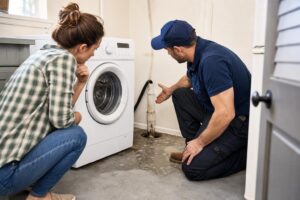
Learning how to clean main sewer line problems starts with identifying what is clogged, where it is, and what you can safely do. A slow tub, a gurgling toilet, or a floor drain that reacts after flushing can signal a developing main line restriction, but the right fix depends on the cause. In this guide, you will compare practical DIY checks, safe first steps, and the professional methods that restore flow when the clog is deeper. You will also learn why some quick fixes only hide symptoms and how to reduce repeat backups.
- Multiple drains backing up at once usually suggests a main line issue, not a single fixture clog
- Start with low risk checks and confirm there is no simple fixture-level blockage first
- Cleanouts can help with basic flushing and observation, but they do not remove roots or heavy buildup
- Snaking can reopen flow, while hydro jetting cleans pipe walls more completely
- A camera inspection is often the fastest way to stop guessing and target the real cause
- Prevention focuses on what goes down the drain and early warning signs you can act on
What the main sewer line does
The main sewer line carries wastewater from your home to the municipal sewer or a septic system. Because every drain and toilet feeds into it, a restriction can show up in unexpected ways, like a shower filling when the washing machine drains or a basement floor drain reacting after a flush — signs you need hydro jetting.
Main line issues often follow a pattern: when the blockage is downstream, wastewater pushes back toward the lowest openings first. That is why ground-level tubs, showers, and floor drains often overflow before upstairs fixtures. When multiple fixtures are affected, especially on the lowest level, treat it as a system problem and consider sewer cleaning until you prove it is not.
When you can try DIY steps safely
DIY drain cleaning steps make sense for early signs: slow drainage in more than one fixture, occasional gurgling, or brief backups that clear. The goal is to confirm the problem is not limited to one branch line and to try low risk actions that will not damage plumbing. If you have a cleanout and safe access, you can sometimes tell whether the restriction is downstream and, in mild cases, improve flow.
Avoid DIY attempts if sewage is backing up into living spaces, if you suspect a full blockage, or if you are unsure about the condition of an older line. Chemical drain openers are tempting, but they rarely solve main line causes and can be hazardous if the line later needs to be opened or snaked. If symptoms return quickly, stop repeating the same steps and move to professional diagnosis, including assessing hydro jetting cost.
Plunger and fixture level checks
Before you assume the sewer smell is from the main sewer line, confirm the blockage is not isolated. Start with the fixtures most likely to reveal a main line restriction: the lowest level toilet, tubs/showers, and floor drains. One slow sink is usually a local clog. If flushing a toilet makes a tub or floor drain gurgle, the restriction is more likely downstream.
Use the right plunger: a cup plunger for sinks and tubs and a flange plunger for toilets. Maintain a tight seal and use firm, controlled plunges. Then run water and see whether the improvement holds during normal use. If only one fixture improves while other low-level drains still act up, stop. That pattern often points to a developing main line restriction that plunging cannot resolve.
Basic cleanout flush tips
A cleanout is a capped access point, often near the foundation, in a basement, or outside. It can help with basic diagnosis and minor restrictions, but open it cautiously. If the line is holding wastewater, pressure can release suddenly, so keep your face and body away from the cap and protect the area.
If the cap opens without a forceful discharge, you can do a controlled flush to see whether water moves freely toward the street or septic:
- Use short bursts of water rather than leaving it running
- Watch for rising water at the cleanout, which suggests the blockage is downstream
- Stop if water returns toward you or the level continues rising
- Reseal the cap securely to prevent leaks and sewer odors
A cleanout flush may help with light buildup, but it will not remove roots or heavy grease/scale. If symptoms return soon, assume the restriction remains and move to a more targeted method.
Why DIY main line cleaning often fails
DIY methods often fail because main line problems are not like sink clogs. The run is long and may include bends, offsets, or transitions that catch debris. Even if you get a brief drain-down, you may only create a small channel through soft blockage while most material stays behind. Symptoms then return after laundry, long showers, or several flushes.
Misdiagnosis is another common reason. Grease, sludge, roots, and structural defects behave differently and need different solutions. Without seeing inside the pipe, it is easy to use the wrong approach or apply too much force. Aggressive attempts can damage older piping or leave a snake cable stuck, increasing cost and downtime.
Professional options to clean the main line
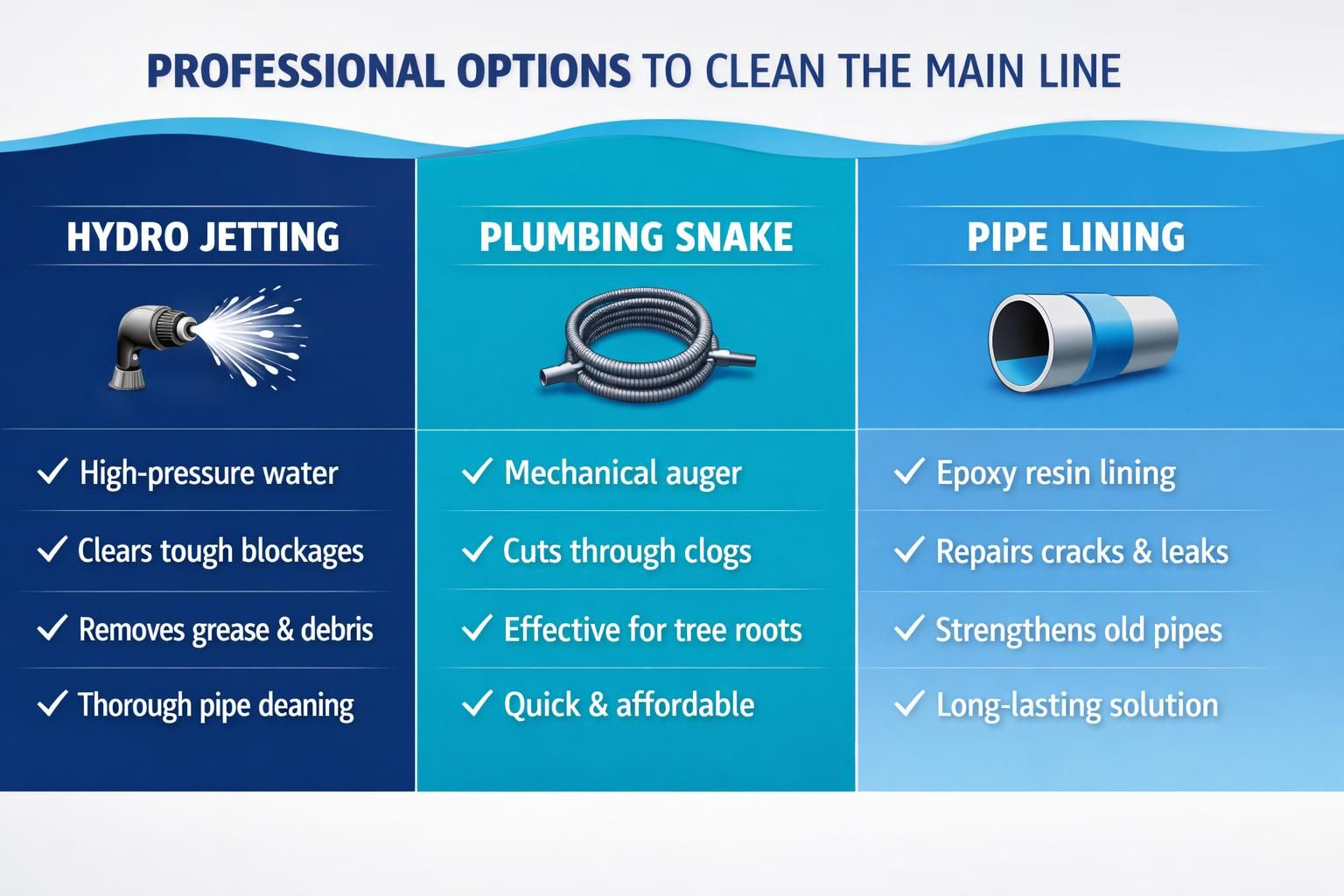
Professional cleaning restores flow and reduces recurrence by matching the method to the cause and the pipe’s condition. Plumbers have longer equipment, better cutting and cleaning heads, and safer access through cleanouts. Often, the best outcome comes from combining methods, such as opening the line with a snake and then cleaning with jetting, or using a camera first to confirm what is needed.
The biggest advantage is certainty. If backups keep returning, the restriction is not being removed fully, or the pipe has an underlying defect that cleaning cannot fix.
Snaking and root cutting
Main line snaking uses a power auger with a long cable fed through a cleanout to reach the blockage. Different heads can be used, including cutting blades for roots and tools for breaking up compacted material. Snaking is often the fastest way to reopen a blocked line and stop active backups.
The limitation is that snaking is not always full cleaning. It can punch through and restore flow while leaving buildup on pipe walls. Roots may be cut back but can regrow, and grease may be opened without being cleared. A better measure of success is sustained flow after normal use, not just an immediate drain-down. When roots are involved, snaking is often step one, followed by thorough cleaning, planned maintenance, or repair.
Hydro jetting for full pipe wall cleaning
Hydro jetting uses high-pressure water to scour the inside of the pipe and can remove roots. It is one of the best methods for slow or frequently backed-up sewer lines caused by widespread buildup such as grease, sludge, soap residue, and some scale. By cleaning the pipe walls, it restores more internal diameter, which helps reduce how easily debris catches and rebuilds into a clog.
Jetting is not right for every home. Pipe material and condition matter, and older lines may need inspection first to confirm jetting is appropriate. When used correctly, hydro jetting is closer to a full clean than snaking alone. It is also useful after root cutting to wash out loosened debris and extend the time between cleanings.
Camera inspection to confirm the cause
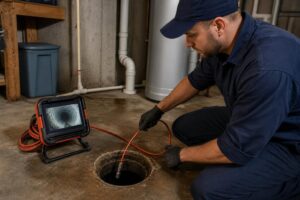
A sewer camera inspection removes guesswork. A camera is sent through the line to identify the problem: root intrusion, heavy buildup, a belly holding water, separated joints, or a partial collapse. It can also confirm whether the line was cleared after snaking or jetting.
For homeowners deciding whether to keep trying DIY steps, a camera inspection is often the most efficient next step. It turns symptoms into a visible cause and helps you choose the right fix. If structural issues are found, cleaning alone may only provide temporary relief, and you can plan repairs instead of repeating short-term clears. If the line is simply dirty, you can choose the most effective cleaning method and focus on prevention.
How to prevent main line clogs from returning

Prevention means limiting what enters the system and acting early when capacity starts to drop. Toilets should only receive toilet paper and waste. Kitchen drains should not receive grease, oil, fat, or heavy food scraps. Hot water may move grease briefly, but it cools downstream, sticks to pipe walls, and catches other debris.
Watch for patterns. Slow drainage that shows up during laundry day, long showers, or after several flushes can indicate the main line is losing capacity. Practical steps include:
- Keep grease, oil, and fat out of kitchen drains and dispose of them in a container
- Use drain strainers where practical to reduce hair and debris entering branch lines
- Avoid flushing wipes, paper towels, feminine products, and flushable items
- Use enough water to carry waste through the system, especially after heavy use
- Address repeated slowdowns early instead of waiting for a backup
- If roots are a known issue, plan periodic maintenance and consider long-term repair
If trees are near the sewer route, root intrusion may be an ongoing risk. In that case, prevention depends less on perfect habits and more on inspection, maintenance, and whether the line needs rehabilitation or replacement to keep roots out.
FAQs about cleaning the main sewer line
If multiple fixtures are backing up, is it always the main line?
Not always, but it is a strong clue. When several fixtures are affected, especially on the lowest level, the blockage is often in a shared section of piping, commonly the main line or a main branch just before it. If only one fixture is slow, it is more likely a local clog. You can narrow it down by observing whether flushing a toilet affects nearby tubs or floor drains, which suggests the restriction is downstream.
Are chemical drain cleaners safe for main line clogs?
They are usually a poor fit for main line problems. Main line clogs are often caused by roots, heavy buildup, or debris that chemicals do not dissolve well. Chemicals can also create hazards if the line needs to be opened or if someone later snakes the drain. If you suspect a main line restriction, safer first steps involve observation, plunging where appropriate, and using proper access like a cleanout.
What are signs the clog is urgent?
Sewage backing up into tubs, showers, or floor drains is urgent, as is water rising in a toilet bowl when other fixtures are used. Strong sewer odors combined with slow drainage can indicate trapped waste in the line. If you have a basement or ground-level bathroom, stop using water when backups appear, since continued use can push more wastewater into the lowest drains.
Is snaking or hydro jetting better?
It depends on the cause of the restriction and the condition of the pipe. Snaking is often best for breaking through a blockage quickly and for cutting roots, while hydro jetting is better for thorough pipe wall cleaning and removing widespread buildup. In many cases, they work best together. A camera inspection can help decide which method is most effective for your situation.
Conclusion
Choosing the best approach comes down to safety, symptoms, and certainty about the cause. Start with low risk checks, confirm whether the issue is isolated to one fixture, and use careful cleanout observation when available. But when multiple drains back up or symptoms keep returning, professional tools and diagnosis usually deliver the most reliable results. If you have been searching for how to clean main sewer line issues repeatedly, the practical next step is to stop guessing: schedule a sewer camera inspection or a service call that can confirm the cause, then use snaking or hydro jetting as appropriate to restore full flow and reduce repeat clogs.