Trenchless sewer repair is a way to fix a damaged sewer line with little to no digging, and it’s often used when you want to protect your yard, driveway, or landscaping. Instead of opening a long trench, the plumber usually works through existing access points, like a cleanout, and uses special equipment to repair the sewer pipe from the inside or replace it along the same path. So what does that mean for you? You’ll learn what trenchless repair can actually fix, the two main methods you’ll hear about, what the job looks like step-by-step, and what drives trenchless sewer repair cost. We’ll also cover when it’s a great fit and when digging is still the smarter call.
Best for: Homeowners with recurring backups or pipe damage who want to avoid tearing up landscaping, concrete, or hardscaping.
Not ideal when: The sewer pipe is fully collapsed, badly misaligned, or has a severe sag that blocks proper flow.
Good first step if: You have slow drains or odors and want a camera inspection to confirm the exact problem location.
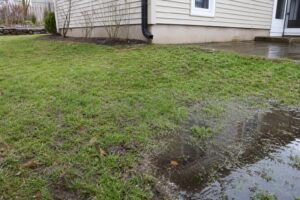
Call a pro if: Sewage is backing up into fixtures or you see sinkholes, soggy patches, or sudden yard settling near the line.
Quick Summary
- Trenchless repair fixes a sewer pipe with minimal digging by lining the inside or replacing the pipe through small pits.
- The two main methods are pipe lining (CIPP) and pipe bursting, and they’re chosen based on pipe condition.
- A sewer camera inspection guides the plan and helps confirm the repair worked afterward.
- Cost depends on access, depth, pipe condition, and how much of the line needs repair or replacement.
- Trenchless usually protects your property better than full excavation, but it can’t solve every type of failure.
What Trenchless Sewer Repair is (and What it Fixes)
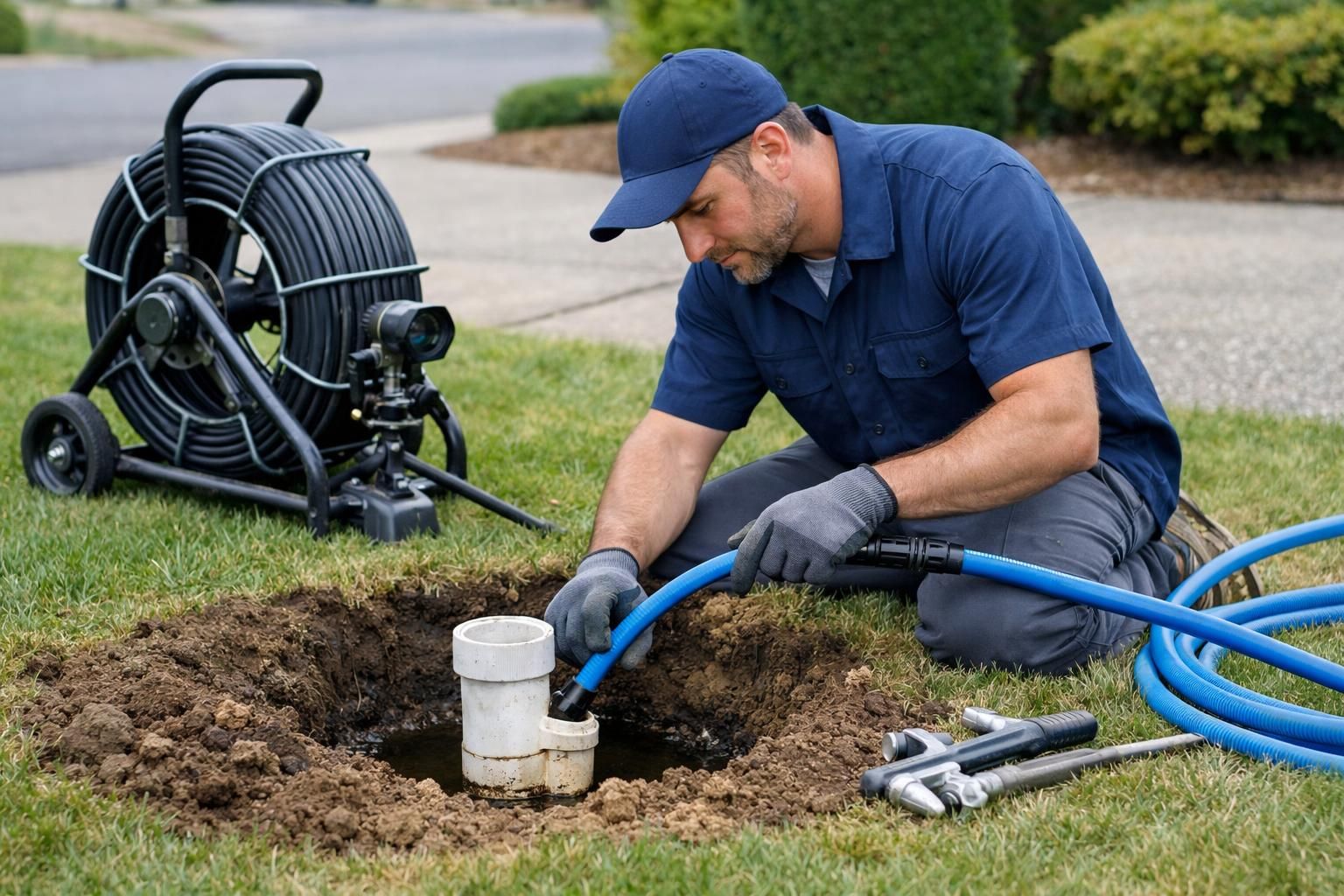
Trenchless sewer repair fixes a sewer line with minimal excavation, using small access points instead of digging the full run. The sewer line carries wastewater to the city main or septic system, and the lateral is the portion on your property.
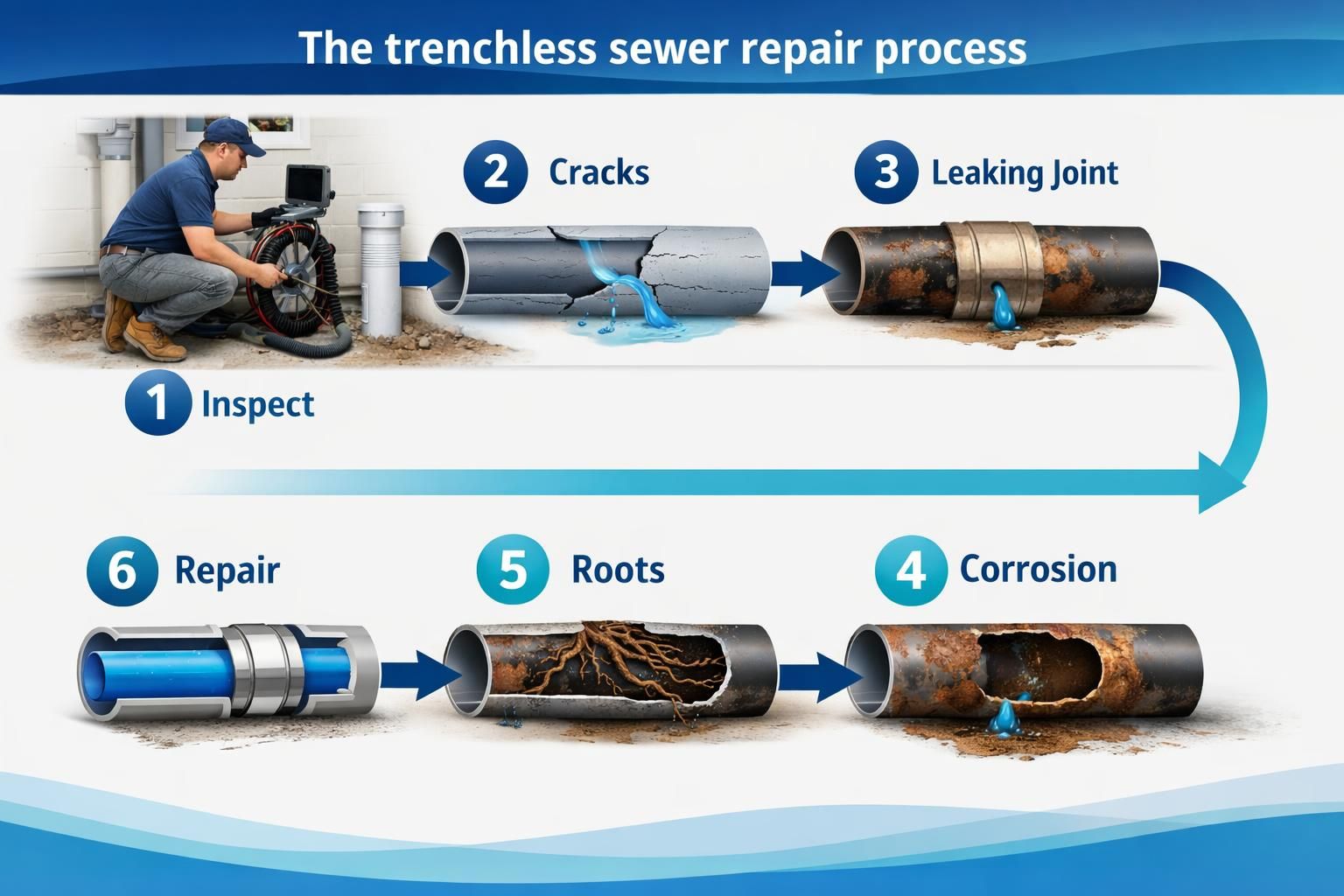
It often addresses cracks, corrosion, leaking joints, and root intrusion, which show up as slow drains, gurgling, odor, backups, or wet areas in the yard.
Repair versus replacement matters. Trenchless repair typically restores the existing pipe, often with CIPP lining. Trenchless replacement installs a new pipe along the same path, commonly with pipe bursting.
Trenchless Sewer Repair Methods Explained
The two main trenchless sewer repair methods are pipe lining and pipe bursting, and the right choice comes down to whether the existing pipe can still act like a stable “shell.” If the pipe is mostly intact but leaking or rough inside, lining is often the go-to. If the pipe is too damaged to keep, bursting replaces it.
| Option | What it does | Best for | Main limit | Typical outcome |
|---|---|---|---|---|
| Pipe lining (CIPP) | Creates a new inner pipe | Cracks, minor holes, corrosion | Needs a mostly intact host pipe | Sealed, smoother flow path |
| Pipe bursting | Breaks old pipe and pulls new one | Badly damaged or undersized pipe | Needs room to pull and displace soil | Full replacement on same route |
For many clogs, plumbers also recommend cleaning first so they’re not guessing. If you’re trying to understand where cleaning ends and repair begins, cleaning vs repair options can help you think it through.
Pipe Lining (CIPP / Relining)
CIPP (cured-in-place pipe) lining fixes a sewer pipe by forming a new pipe inside the old one. Think of it like putting a tough sleeve inside a worn-out jacket. A resin-impregnated liner, often using epoxy resin, is inserted, inflated to press against the pipe walls, and then hardened during the curing process.
Some systems use UV-cured lining, which uses a UV light curing system instead of relying only on ambient heat or hot water. UV curing can be useful when the crew wants more controlled, even curing along the run.
Pipe Bursting (replacement)
Pipe bursting is trenchless sewer replacement, not just a patch, because it installs a new pipe while breaking the old one apart. A bursting head is pulled through the existing line, fractures the old pipe outward, and drags a new pipe behind it.
This method is often chosen when the old sewer pipe has widespread failure, severe corrosion, or repeated breaks. It can also be used when upsizing is needed, but it still has limits if the route has sharp bends or obstacles that block the pull.
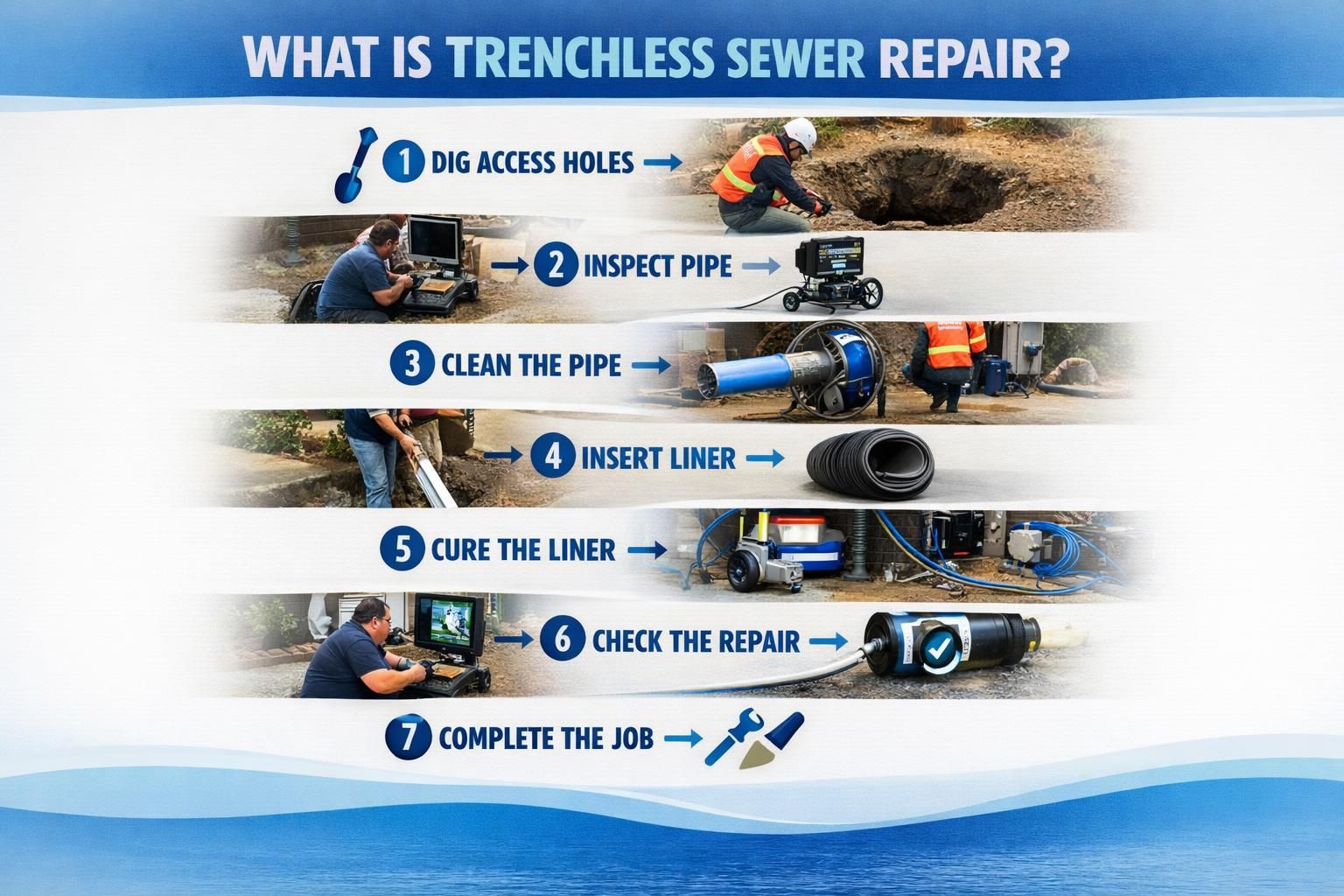
The Trenchless Sewer Repair Process (step-by-step)
Most trenchless jobs follow a controlled sequence: confirm the problem, prepare the pipe, install the fix, then verify with a camera. You’re paying for measurable steps, not a guess.
Typical process: 1. Camera inspection to locate damage and assess pipe condition. 2. Confirm access via cleanout or plan small entry and exit pits. 3. Clean the line (roots, grease, scale) so the repair seats properly. 4. Install the method: CIPP lining (repair) or pipe bursting (replacement). 5. Allow curing/cooldown, then reopen connections if needed. 6. Post-repair CCTV inspection to confirm full coverage and flow.
For inspection vs. cleaning, camera vs jetting basics explains the difference.
Camera Inspection and Cleaning
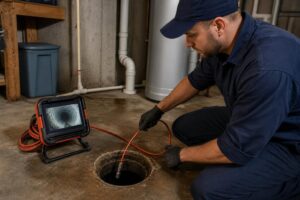
Camera work is what turns a symptom into a diagnosis, because it shows the exact location and type of damage inside the sewer line. The plumber feeds a small CCTV sewer camera through the cleanout and watches for cracked pipe walls, offset joints, root intrusion, and pipe belly (sag).
Cleaning comes next so the repair actually works. Roots and buildup have to be removed, often with a cutting head or hydro jetting, which is high-pressure water used to scour pipe walls. If you want a basic walkthrough before scheduling anything, clean your main line is a helpful starting point.
Installation, Curing, and Final Verification
Installation depends on the method, but the goal is the same: create a sealed, continuous path for wastewater. With lining, the liner (pipe sleeve) is positioned, expanded, and then hardened so it becomes a new inner pipe. With pipe bursting, the crew pulls the new pipe through as the old one breaks apart.
Curing is the “hardening” stage, and it can use time, heat, or UV light. After that, final verification matters because it confirms the liner didn’t wrinkle and connections weren’t blocked. A post-repair verification camera run should show a smooth interior with no gaps, standing water, or exposed breaks.
Trenchless Sewer Repair Cost (what Affects Price)
Cost varies with access, depth, pipe condition, and the method used. Lining and pipe bursting are priced differently because one rehabilitates the host pipe and the other replaces it.
Quotes may bundle camera diagnosis, cleaning, installation, and post-repair verification, or list them separately. Local factors can also change effort, including tight property lines, hard soil, or missing cleanouts.
When estimating, compare scopes, not just totals. Ask what length is covered, what prep is included, and how verification is documented, so bids are comparable.
Typical Price Ranges and Per-foot Pricing
Trenchless sewer repair cost is often quoted as a project total or as per-foot pricing, but per-foot numbers can be misleading without context. A short repair with difficult access can cost more than a longer run with easy access, because setup and prep work don’t scale neatly.
When you see “per-foot” in a quote, ask what’s included:
- Cleaning and descaling, or just the repair step
- Pre-repair inspection and post-repair verification
- Reinstating connections from toilets, sinks, or branch lines
- Permits and restoration around entry and exit pits, if used, and any additional costs for access challenges, traffic control, or unexpected line conditions.
Key Cost Drivers (length, Depth, Access, Pipe Condition)
Key drivers are length, depth, access, and pipe condition, because each changes time, materials, and equipment. Longer runs need more material and installation time. Greater depth can require larger pits, shoring, and more labor to reach access points safely.
Access is often decisive. A clear, well-placed cleanout speeds setup, while buried or missing cleanouts add steps. what a sewer cleanout is explains why it matters.
Condition determines method. Stable pipes can be lined, while collapses or severe offsets may require bursting or traditional excavation.
Trenchless Vs. Traditional Excavation: Pros and Cons
The choice is disruption versus flexibility. Traditional excavation (dig-and-replace) opens a trench, removes the old line, and installs new pipe with full access to grade and routing. Trenchless protects landscaping and hardscapes, but the existing line must be suitable.
Trenchless pros: minimal digging, often faster on site, lining creates a continuous interior with fewer joints, and camera verification is simple.
Trenchless cons: not suitable for collapse or major misalignment, lining can slightly reduce diameter, and success depends on a contractor experienced with specialized equipment.
Traditional excavation is more disruptive, but it can correct bellies, reroute around obstacles, and handle extreme failures.
When Trenchless Sewer Repair is (and Isn’t) a Good Option
Trenchless is a good option when the pipe is damaged but still maintains a usable path, so it can be lined from the inside or replaced along the same route. It’s especially helpful when you want to avoid tearing up driveways, patios, or mature landscaping.
Trenchless isn’t ideal when the failure is geometric rather than just leaks. A pipe belly (sag) can keep collecting water and solids, and a liner won’t restore proper slope. Total crush, severe blockage, or immovable obstacles can also rule it out.
For sewage backups, stop the overflow first, then use camera findings to decide on repair versus replacement.
Common Candidates (roots, Cracks, Corrosion)
Trenchless repair often works for roots, cracks, and corrosion because the pipe may be damaged yet still round enough to rehabilitate. Roots typically enter through joints or small cracks, then expand and trap debris, causing recurring clogs.
If roots keep returning, it helps to understand the entry points, not just repeat cleaning. roots in sewer line explains causes and warning signs.
Corrosion is common in older pipe, where the interior becomes rough and flaky. Lining can create a smooth new interior, improving flow and reducing leak paths.
Not a Fit (collapsed Pipe, Severe Belly/misalignment)
Trenchless is usually not a fit when a pipe is collapsed, crushed, or too deformed for tools to pass and for a liner to seat. Lining requires a continuous, reachable path, so a pinched-shut section can stop the job.
A severe belly (sag) is also a problem because standing water lets solids settle, creating backups even after lining. Severe misalignment, offsets, and sharp transitions can prevent liner insertion or damage it during install.
When these issues show up, options shift to pipe bursting, spot excavation to remove the worst section, or full excavation to correct grade and alignment.
How to Choose a Contractor and Prepare for the Job
A good trenchless contractor proves the diagnosis with a camera, explains why a method fits, and shows verification after the work. You don’t need deep plumbing knowledge; you need a clear plan and evidence.
To vet and prep: 1. Watch the camera footage and have them point to the failure. 2. Confirm repair vs. replacement and the reason. 3. Ask what prep is included: cleaning, roots, descaling. 4. Confirm access: cleanout or small entry/exit pits. 5. Ask for an after-video and written findings.
Clear access to the cleanout, move vehicles if the route crosses a driveway, and plan limited water use during critical stages. For odor symptoms, causes of sewer odor can help separate venting from line issues.
Conclusion
Trenchless sewer repair is a practical way to fix many sewer line problems while keeping digging to a minimum, and it’s especially useful when the pipe runs under landscaping or concrete you don’t want disturbed. Your best next step is simple: get a sewer camera inspection, ask which method fits the pipe’s condition, and make sure the contractor includes post-repair verification. If the line is intact enough, lining or bursting can solve cracks, leaks, and recurring root intrusion. But if the pipe is collapsed or has a severe belly, you’ll likely need a different plan. That’s how you make trenchless sewer repair a smart choice instead of a guess.