A slow drain in one sink is annoying. Multiple fixtures backing up at once can feel like an emergency because it often points to the main sewer line, the pipe that carries all household wastewater out to the street or septic system. If you are searching for how to clean main sewer line problems, the best approach is to match the method to the likely cause, then escalate safely when simple steps do not work. This guide explains what the main line does, when DIY is reasonable, what you can try without specialized equipment, why those attempts often fall short, and which professional options are designed to clear and confirm the real blockage.
- Multiple drains gurgling or backing up can indicate a main line issue, not a single fixture clog
- DIY steps are mainly for minor, early-stage slowdowns and only when you can do them safely
- If sewage is backing up, skip chemicals and focus on containment and diagnosis
- Snaking, root cutting, and hydro jetting solve different clog types, so picking the right method matters
- Camera inspection is the fastest way to confirm whether you are dealing with roots, grease, a belly, or a break
- Prevention is about habits, cleanout awareness, and early response to slow drains
What the main sewer line does
The main sewer line is the shared exit path for every drain in your home. Toilets, showers, sinks, laundry, and floor drains connect through branch lines to one larger pipe that carries wastewater by gravity to the municipal connection or a septic tank. Because everything converges, restrictions usually show up in more than one place.
With a partial blockage, you may see slow drains in several areas, intermittent gurgling, or a toilet that bubbles when another fixture runs. With a full blockage, the lowest drains become the overflow point, so basement floor drains, showers, or first-floor tubs may back up. That is why repeated fixture-level fixes often fail when the restriction is farther downstream.
When you can try DIY steps safely
DIY is most appropriate when you have early warning signs and no active sewage overflow. Examples include a new, house-wide slowdown with no history of frequent backups. If you can locate a cleanout and can manage spill risk, you can do a few low-risk checks before moving to professional equipment.
If there is standing sewage, strong odor, or water rising in a floor drain when you flush, stop water use. Avoid drain chemicals, and do not run more water into a line that is not draining. If the cleanout is damaged, hard to access, or located where a spill would cause major damage, skip DIY and call for service.
Plunger and fixture level checks
Before assuming the main line is blocked, confirm whether the issue is isolated. If one fixture is slow and the rest are normal, the clog is likely local. If several fixtures are affected, test the pattern: run water at a higher fixture and watch the lowest drain. If the lowest drain gurgles, rises, or burps air, the restriction is likely downstream in a shared line.
Plunging helps when the clog is close to a toilet or in a nearby branch. Use a flange-style toilet plunger, make a tight seal, and use steady strokes. If plunging improves one fixture but other drains stay slow, you may still have a partial main line restriction. If plunging triggers water in another fixture, stop and reassess.
Basic cleanout flush tips
If you have a main cleanout and conditions are safe, you can do a controlled check that may clear minor buildup. Stop all water use. Wear gloves and eye protection. If the cleanout is indoors, protect the area. Open the cap slowly, since a blocked line can release pressure.
Look inside. Standing wastewater at the cleanout usually means the clog is downstream. If it is mostly empty, the restriction may be upstream, intermittent, or still developing. For a cautious test, run a small amount of water from one fixture and watch whether it flows past the cleanout. Keep flow minimal and stop immediately if the level rises. Use this primarily for diagnosis, not to force a clog through with volume.
Why DIY main line cleaning often fails
Many main line clogs come from problems basic tools cannot fix. Grease and sludge can coat pipe walls over long distances, narrowing the line rather than forming one removable plug. Tree roots can enter through joints and create a net that catches paper and waste; clearing helps, but roots often return until the entry point is repaired. In older lines, a belly (a low spot) can hold water and solids, causing slowdowns that return even after you temporarily restore flow.
Reach and effectiveness are also limiting. Obstructions are often beyond what small augers can reach. Even longer cables can cut a narrow channel through soft material while leaving buildup on the walls, so the line clogs again. Lasting results typically require dedicated machines plus confirmation that the line is actually open and stable.
Professional options to clean the main line
Professional methods combine reach, cutting power, and confirmation. Instead of guessing, a technician can identify whether the line is restricted by roots, grease, scale, or a structural issue like an offset joint, belly, or break. The goal is to restore flow and reduce repeat clogs.
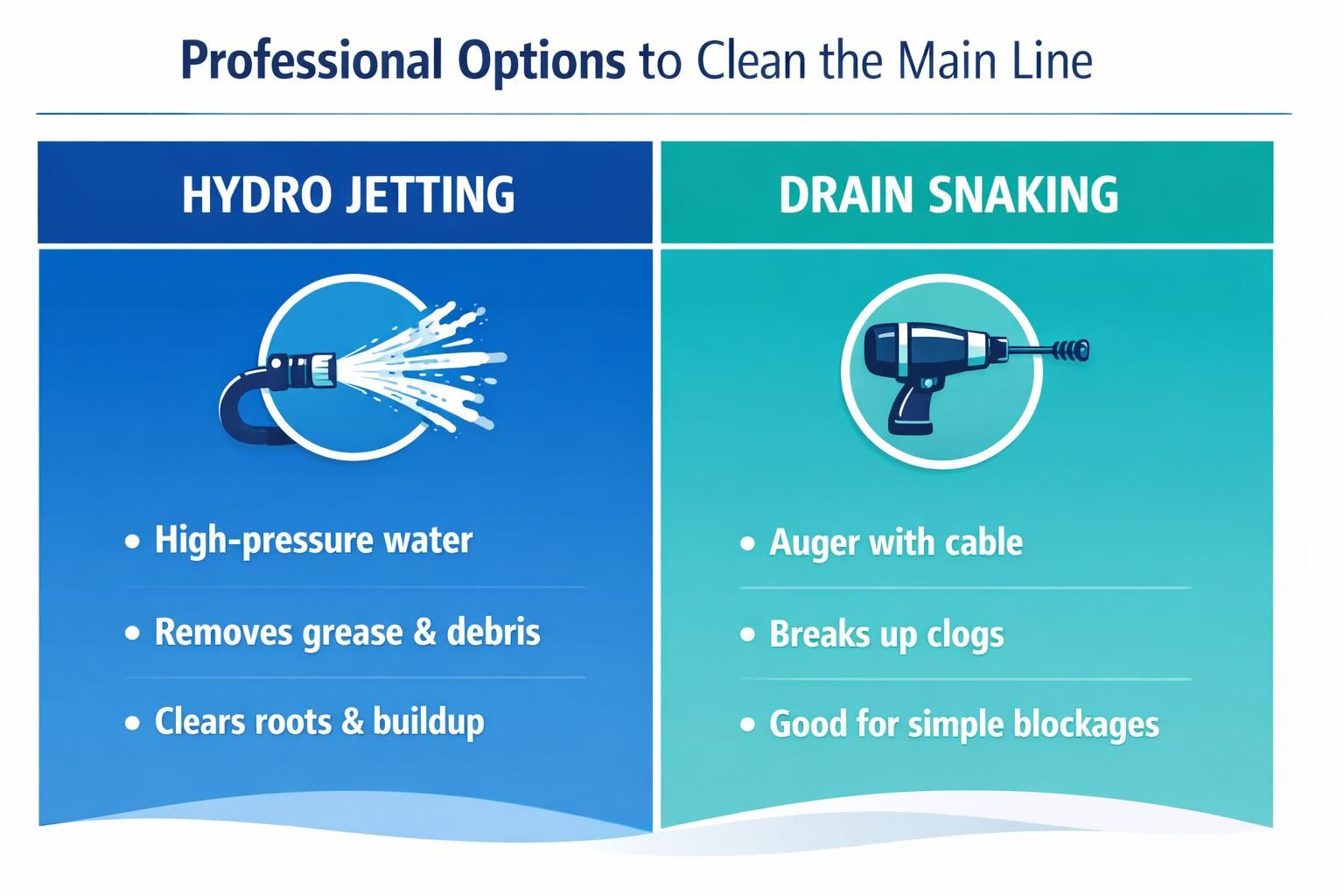
The best option depends on symptoms and pipe condition. Cable machines open and cut through obstructions. Hydro jetting removes widespread buildup from pipe walls. Camera inspection shows whether cleaning is enough or whether a structural problem needs repair. These methods are often combined to open, clean, then confirm.
Snaking and root cutting
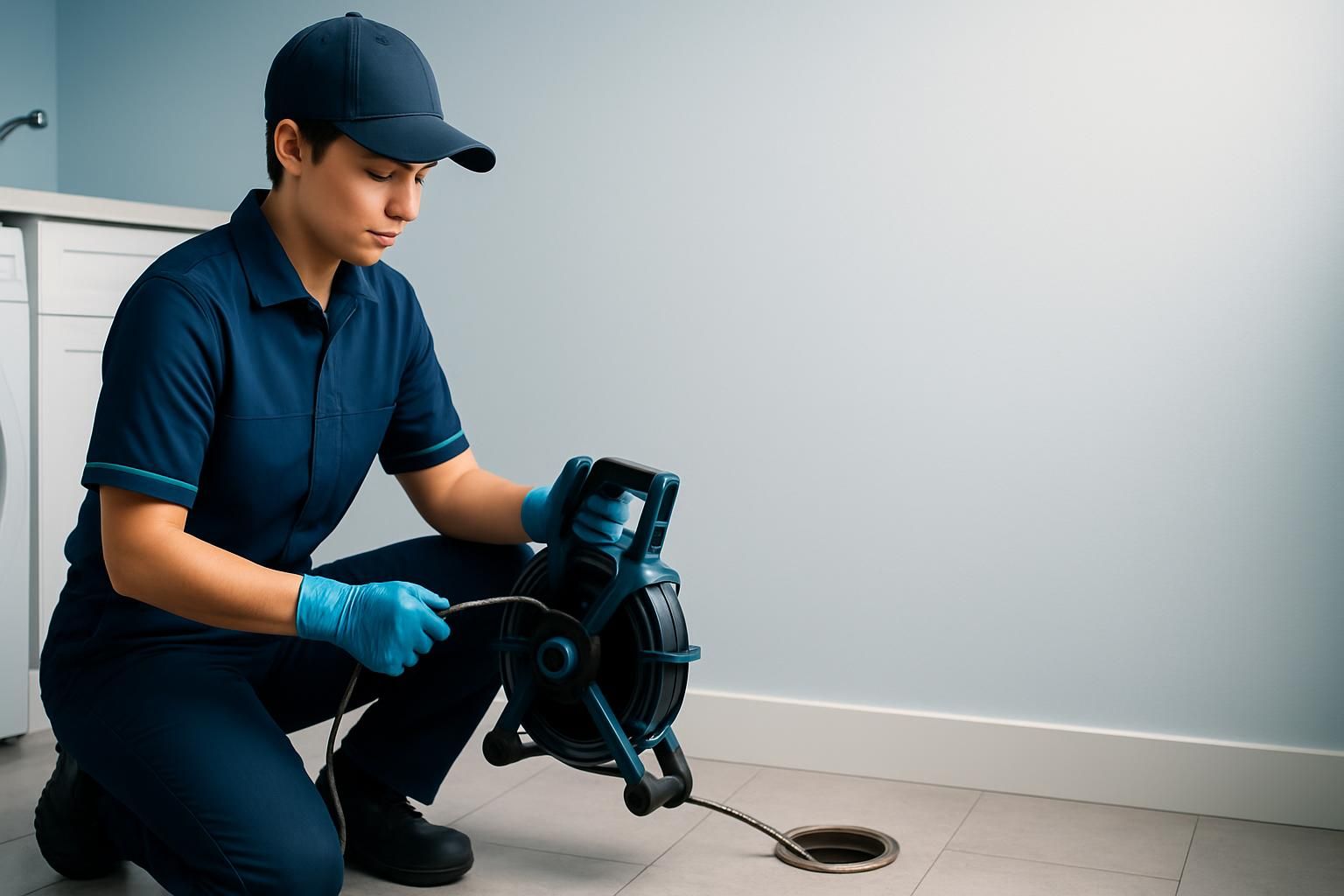
Professional snaking uses a heavy-duty cable machine built for long runs and larger pipe diameters. The cable is fed through a cleanout and advanced to the obstruction. Heads are chosen based on the suspected cause: a boring head to re-open flow, a larger cutter to scrape buildup, or a root-cutting head to remove fibrous intrusion.
Root cutting is the right tool when roots enter through joints or cracks. It can restore flow quickly, but it does not fix the entry point, so regrowth is common. Better service includes removing debris, flushing afterward, and confirming results. If backups are seasonal or you have mature trees near the line, root cutting is often the best first step, then planning repair if the same spot keeps returning.
Hydro jetting for full pipe wall cleaning
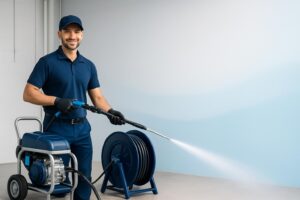
Hydro jetting uses high-pressure water through a specialized hose and nozzle to scour the pipe interior. Instead of punching a hole through a clog, it can remove grease, sludge, soap buildup, and fine root hairs along the walls. This makes it a strong choice when the issue is widespread restriction rather than one isolated blockage.
Jetting is not always appropriate. If the line is fragile, partially collapsed, or badly compromised, pressure can worsen weak areas. In many cases, jetting works best after a cable has opened the line so debris can move freely. Done correctly, it restores flow and can extend time between service calls.
Camera inspection to confirm the cause
A camera inspection sends a waterproof camera through the cleanout to view the pipe interior. It is the fastest way to stop guessing. The camera can reveal roots, grease buildup, standing water from a belly, offset joints, broken sections, or foreign objects. It can also confirm whether a prior cleaning fully cleared the line or only created a narrow channel.
The results guide next steps. If roots keep entering at one joint, you can plan targeted repair instead of repeated emergency snaking. If there is a belly holding water, cleaning may provide only temporary relief. If there is a collapse, you can avoid paying for repeated clearing and move toward repair. For anyone deciding how to clean main sewer line issues efficiently, inspection often provides the clearest path forward.
How to prevent main line clogs from returning

Prevention starts with limiting what goes down the drain. Grease, cooking fats, and oily residue cool and cling to pipes, especially when mixed with soap and food particles. “Flushable” wipes often do not break down like toilet paper and can snag on small imperfections. In older plumbing, small habits can build into major restrictions.
Use these practical habits to reduce risk:
- Dispose of grease in a container instead of rinsing it down the sink
- Use drain strainers to catch hair and food scraps before they enter branch lines
- Avoid flushing wipes, paper towels, feminine products, or excessive paper at once
- Run enough water after using the garbage disposal to carry fine particles through
- Respond early to slow drains in multiple fixtures before they become a backup
- If you have a cleanout, keep it accessible and clearly located for emergencies
If roots are a known issue, prevention may include periodic maintenance cleaning and evaluating whether repair is needed at the intrusion point. Pay attention after heavy rains or ground shifts, which can reveal alignment or settlement problems. Consistent habits and early response reduce the chances of a sudden main line blockage.
FAQs about cleaning the main sewer line
If multiple drains are slow, is it always the main line? Not always. Multiple slow fixtures can also come from a venting problem or a blockage in a major branch serving part of the house. The main line is more likely when the lowest drains react first, toilets gurgle as other fixtures run, or water use in one area triggers a reaction elsewhere. Watching the lowest drains and noting which fixtures are affected helps narrow it down.
Are chemical drain cleaners a good idea for main sewer line clogs? Rarely. Chemicals often do not reach the blockage effectively, especially with standing water, and they create hazards for anyone who later opens a cleanout or uses a cable machine. They may also damage some pipe materials and will not solve roots, heavy sludge, or structural problems. Mechanical clearing plus verification is usually safer and more effective.
How do I know if I have a cleanout, and why does it matter? A cleanout is a capped access point that allows direct entry for clearing and inspection. It is often outside near the foundation, or in a basement or utility area. A usable cleanout provides a straighter path to the main line and reduces the need to pull a toilet or work through smaller fixture drains. If you cannot find one, a professional can often locate it or recommend adding one.
What should I do first if sewage is backing up into the house? Stop using water immediately, including flushing toilets and running sinks. Protect floors and belongings, and keep people and pets away from contaminated water. Avoid forcing water through the system and avoid chemicals. If you have a safe outdoor cleanout, it can sometimes serve as a better overflow point than an indoor fixture, but only open it if you can do so without risk. In many cases, call a professional right away.
Conclusion
The best way to handle a suspected main line problem is to start with observation, confirm whether the issue is widespread, and use only safe, controlled DIY checks when conditions allow. Plunging and cleanout monitoring can sometimes restore flow for minor restrictions, but many main line clogs involve roots, heavy buildup, or pipe defects that require snaking, jetting, and inspection to solve fully. If your goal is how to clean main sewer line issues with fewer repeat backups, your most practical next step is to identify the likely cause, avoid risky chemical shortcuts, and escalate to the right professional method when simple attempts do not produce clear, stable improvement.